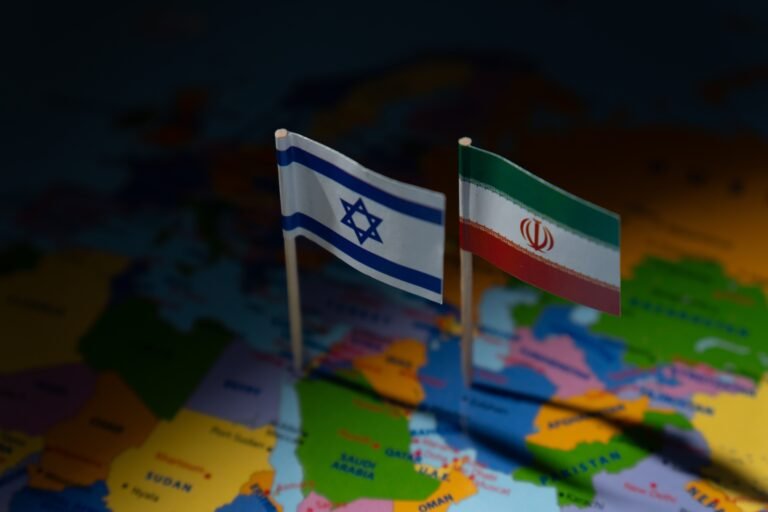
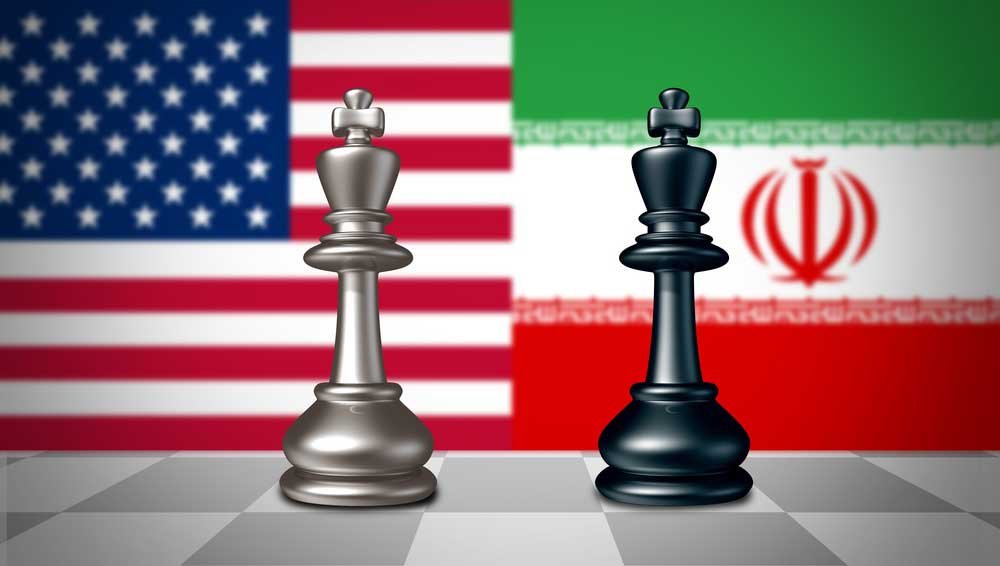
Washington went to war against Iran seeking to dismantle its nuclear capabilities, weaken its strategic position, and restore a form of American primacy in the Gulf.[i] Whether it has achieved those objectives remains unsettled. What is becoming clearer, however, is that the war has exposed structural realities that any future regional order will have to accommodate.
One possibility is that the conflict ultimately produces the opposite of what Washington intended: not the exclusion of Iran from the Gulf’s security equation, but a regional environment in which Iran’s geographic position, military capabilities, and economic weight make its participation increasingly difficult to avoid. That outcome is neither inevitable nor yet established. The Gulf states may respond to Iran’s use of coercive leverage by seeking greater accommodation with Tehran. They may instead deepen military coordination among themselves, diversify their external security partnerships, and invest in ways of reducing their vulnerability to Iranian pressure. The direction of the region will depend partly on which of these responses proves more durable.
From Iraq to the 2026 war
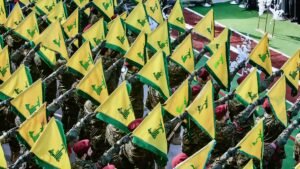
The U.S. invasion of Iraq in 2003 did more than remove Saddam Hussein from power. It dismantled the principal Arab state capable of counterbalancing Iranian power in the Gulf. No subsequent American policy fully replaced that function.[ii] What followed was not an improvised expansion of Iran’s influence. A Shia-majority political establishment took root in Baghdad; Hezbollah deepened its military capabilities in Lebanon; the Assad regime in Syria became a critical link between Tehran and the Mediterranean; and the Houthis developed the capacity to threaten maritime commerce in the Red Sea. By the early 2020s, Iran had assembled an extensive network of state and non-state relationships capable of projecting influence well beyond its borders.[iii]
Saudi Arabia recognized the implications of this shift early. Saudi officials repeatedly argued after the invasion that Washington had effectively handed Iraq to Tehran.[iv] Whether or not that interpretation captured the full complexity of post-2003 Iraq, it reflected a broader regional perception: the removal of Iraq as a counterweight had altered the balance of power in Iran’s favor.[v] Riyadh subsequently pursued several different strategies to manage that imbalance. It confronted Iranian influence in Yemen, supported closer Arab-Israeli security cooperation, and pursued stronger security ties with Washington. At the same time, Saudi Arabia ultimately chose to restore diplomatic relations with Tehran in 2023 through a China-brokered agreement.[vi] That normalization should not be understood simply as accommodation of Iran. It was a hedging strategy aimed at reducing the risks associated with permanent confrontation while preserving Saudi Arabia’s strategic autonomy.[vii]
American policy toward Iran since 2003 has oscillated between pressure and attempted accommodation. While the JCPOA represented an effort to constrain Iran’s nuclear programme through a negotiated framework,[viii] the subsequent maximum-pressure campaign sought to obtain broader concessions through economic coercion.[ix] The Abraham Accords represented a different approach, attempting to strengthen an American-backed regional architecture through diplomatic normalization and closer security cooperation among Israel and Arab states.[x] None of these strategies succeeded in removing Iran as a significant regional actor.
The Twelve-Day War of June 2025, the degradation of Hezbollah, the fall of the Assad regime, and the subsequent weakening of several elements of Iran’s regional network appeared to reduce Tehran’s strength. Yet these developments also altered its structure of deterrence. Iran increasingly had to rely on capabilities that were more directly under its control.
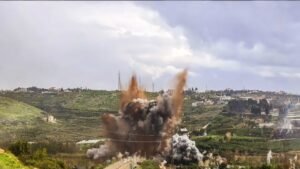
By early 2026, negotiations between Washington and Tehran had entered a fragile phase. The launch of Operation Epic Fury on 28 February, while negotiations were still ongoing, demonstrated the continuing primacy of coercion in Washington’s approach.[xi] U.S. and Israeli forces struck Iranian military and security assets, senior leaders, and nuclear infrastructure, while Iran responded with missile and drone attacks across the wider region. The conflict subsequently expanded beyond Iran’s borders, exposing precisely the dilemma that Gulf states had sought to avoid: any major U.S.-Iran confrontation would inevitably affect their territory, infrastructure, energy systems, and maritime trade.[xii] That dilemma has further complicated the strategic calculations of Gulf states.
Iran’s structural leverage
The weakening of Iran’s regional network has also had an unintended strategic effect. For years, Iranian power was often assessed primarily through the lens of its regional partners and aligned actors: Hezbollah in Lebanon, Iran-aligned actors in Iraq, the Houthis in Yemen, and the Assad government in Syria. The erosion of those relationships appeared to represent a significant reduction in Iranian power. Yet the subsequent conflict demonstrated that Iran’s strategic position cannot be reduced to the strength of its partners. Its geographic position, missile capabilities, energy resources, population, industrial base, and proximity to the Gulf provide Tehran with forms of leverage that are more difficult to eliminate.[xiii]
This does not mean that Iran emerged from the conflict stronger in every dimension. Its economy remains under severe pressure, its military infrastructure has suffered damage, and the war has imposed substantial human and material costs. It does mean that the degradation of Iran’s regional network did not resolve the strategic problem Washington has confronted for more than two decades: Iran remains a major state situated at the centre of the Gulf’s security and energy system.
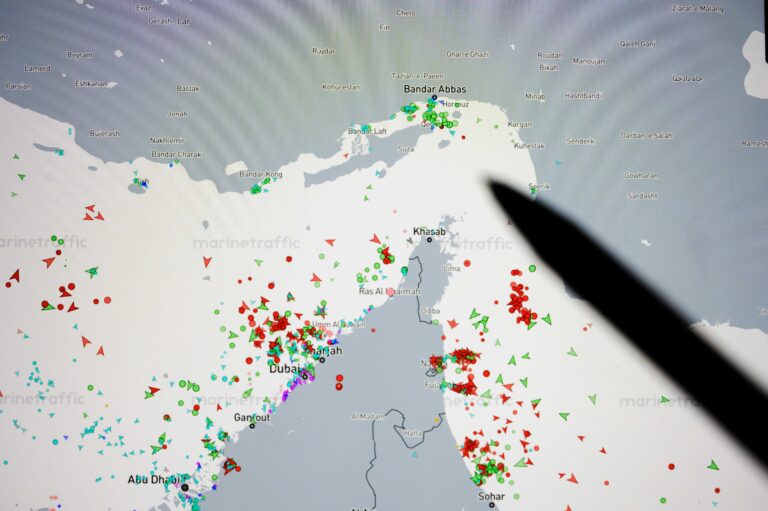
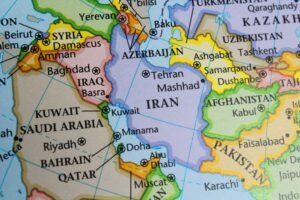
The Strait of Hormuz offers the clearest illustration. Iran’s position on one of the world’s most important energy chokepoints has long given it structural leverage. In 2025, roughly one-fifth of global petroleum liquids exports – around 20 million barrels per day – passed through the Strait.[xiv] Iran’s ability to disrupt shipping through the Strait demonstrated how quickly a conflict involving Iran could affect global energy markets. The consequences extended well beyond the immediate military theatre, affecting oil prices, shipping, insurance, energy-intensive industries, and the economic calculations of states far from the Gulf.[xv] For Iran, the Strait provides a form of leverage that cannot be eliminated simply through the destruction of missile sites, Iran-aligned regional networks, or military infrastructure. For the Gulf states, on the other hand, the same episode provides a powerful incentive to reduce their vulnerability to that leverage.
One possible response is accommodation. If Iran’s ability to disrupt maritime trade proves durable, then a stable regional order requires Tehran to have a stake in preserving the stability of the system. Under this logic, managed coexistence becomes preferable to permanent confrontation. There is an equally plausible counterargument. The more clearly Iran demonstrates its capacity to disrupt Gulf energy flows, the stronger the incentive for Gulf states to diversify their security partnerships, develop alternative export routes, strengthen missile and air defences, and reduce their dependence on Hormuz.[xvi] The UAE is already exploring precisely this kind of diversification, including alternative energy-export routes and expanded capacity on its eastern coast.[xvii]
The outcome will depend on whether Gulf governments ultimately conclude that their security is better protected by incorporating Iran into a regional security framework or by limiting their exposure to Iranian leverage while strengthening external and collective defences.
The Gulf’s dilemma
The Gulf states’ reaction to the war illustrates the limits of any simple theory of regional accommodation. Saudi Arabia, the UAE, Qatar, Kuwait, Bahrain, and Oman do not share identical strategic calculations. Their relationships with Washington, Tehran, Israel, and one another differ considerably. The war has reinforced that diversity rather than eliminated it.
The Gulf monarchies have strong reasons to avoid a direct confrontation with Iran. They also have strong reasons to resist Iranian coercion. In March, the UAE, Kuwait, Bahrain, Saudi Arabia, Qatar, and Jordan jointly condemned Iranian attacks and asserted their right to self-defence. By July, the GCC was still publicly condemning continued Iranian attacks and emphasizing the security consequences for member states.[xviii] These positions complicate any argument that the war has automatically pushed the Gulf toward Tehran, but they do not necessarily demonstrate the opposite either.[xix] The Gulf states can simultaneously reject Iranian attacks, preserve close security relationships with Washington, and recognize that long-term regional stability may require some form of engagement with Tehran.
Balancing against Iran does not necessarily mean attempting to exclude it permanently. The regional trajectory may therefore combine deterrence, hedging, selective accommodation, and diversification. Saudi Arabia’s own trajectory illustrates the complexity. Riyadh has continued to deepen its security relationship with Washington while maintaining its diplomatic opening to Tehran. At the same time, the war has intensified Saudi concerns about the reliability of external security guarantees. Analysts at the Center for Strategic and International Studies have noted that the conflict was a test of the enhanced U.S.-Saudi security partnership precisely because Saudi Arabia had not sought the war and had not been meaningfully consulted about it.[xx] The Carnegie Endowment has reached a related conclusion from a different angle: neither the Abraham Accords nor the presence of large U.S. bases proved sufficient to shield the Gulf states from the consequences of war.[xxi]
That combination – security cooperation with Washington alongside diplomatic engagement with Tehran – may prove more representative of the Gulf’s future than a simple shift toward either camp.
From disruption to order-building
The distinction between disrupting an order and constructing one is therefore essential. Iran has demonstrated repeatedly that it possesses the capacity to disrupt regional arrangements that exclude its interests. The more difficult question is whether it possesses the political, economic, and diplomatic capacity to help construct an alternative order and sustain it over time.
A state can possess veto power without possessing order-building power. It can make an arrangement impossible without being capable of creating a durable replacement.
Iran’s leadership transition following the death of Ayatollah Ali Khamenei provides an early test of this capacity. The appointment of Ayatollah Mojtaba Khamenei as supreme leader in March 2026 provided early evidence of institutional continuity under extraordinarily difficult wartime conditions.[xxii] But it would be premature to treat the smooth initial transition as proof of longer-term institutional resilience. That will depend on economic conditions, relations among political institutions, public support, reconstruction, and the new leadership’s ability to manage relations with the United States and Iran’s neighbours. The question is therefore not simply whether Iran can withstand pressure, but whether it can translate institutional continuity into a sustainable regional strategy.
Iran’s geographic position provides considerable structural leverage; its military capabilities offer coercive options; and its relationships with China, Russia, Pakistan, Iraq, and other regional actors provide diplomatic channels beyond Washington. But none of these automatically makes Iran an architect of regional security. For Tehran, the opportunity created by the current crisis therefore comes with an equally significant challenge: demonstrating that its security interests can be pursued through arrangements that other regional states are willing to accept. That would require more than deterrence. It would require diplomacy, reassurance, economic interdependence, confidence-building measures, and a willingness to recognize the security concerns of neighbouring states.
The broader geopolitical environment makes the answer particularly consequential. China has a major interest in the stability of Gulf energy flows and in preventing disruption to maritime trade. Pakistan has demonstrated that middle powers with relationships across opposing camps can potentially create diplomatic channels unavailable to the primary conflicting parties. Russia also retains a significant interest in the regional balance, although its preferences do not necessarily coincide with those of Tehran or the Gulf states.
These actors do not form a coherent alternative bloc. Nor does their involvement mean that American influence has disappeared. A plausible development is therefore a gradual diversification of the regional diplomatic architecture. The United States is likely to remain an indispensable military and economic actor in the Gulf. But the war may make it harder for Washington to operate as the region’s sole security arbiter. Washington may remain the most powerful external actor while becoming one participant in a more pluralistic regional balance.
The most plausible long-term outcome may therefore be neither Iranian hegemony nor Iranian exclusion. It may be something closer to Iranian veto power: a regional environment in which major security, energy, and maritime arrangements cannot be sustained without accounting for Iran’s interests and capabilities. That is a narrower claim than saying Iran will become the architect of the next regional order. It is also a claim more consistent with the evidence.
Iran’s structural importance does not depend on neighbouring states sharing Tehran’s views and regional priorities, and endorsing its policies. It requires only recognition of a geographical and strategic reality: Iran is too large, too geographically central, too militarily capable, and too deeply embedded in the Gulf’s security environment to be treated as an external variable. The question is whether that recognition becomes institutionalized. It could occur through regional security mechanisms, maritime arrangements, energy agreements, bilateral confidence-building measures, or broader multilateral diplomacy.
But none of these outcomes is guaranteed. Indeed, the current trajectory could move in the opposite direction if Gulf states conclude that their safest strategy is to reduce their dependence on Iran’s geography, strengthen their military capabilities, and deepen external security partnerships. The competition between these two trajectories – accommodation and balancing – will likely shape the next phase of the regional order.
The boomerang effect
Here lies the central paradox of the 2026 war becomes visible. For more than two decades, American policy sought to reduce Iran’s ability to shape the regional balance. The United States removed Iraq as Iran’s principal Arab counterweight, attempted to constrain Tehran through sanctions and diplomacy, encouraged regional normalization and security cooperation around Israel, and ultimately used military force to degrade Iran’s nuclear and conventional capabilities. Yet each phase of that strategy encountered the same underlying constraint. Iran could be weakened. It could be isolated. It could be deterred. But it could not easily be removed from the regional equation.
The 2026 war may therefore prove consequential not because it produced a decisive Iranian victory, nor because it established a new Iranian-led order, but because it made the limits of exclusion more visible. That does not mean Washington has lost the Middle East. Nor does it mean Iran has won it. The United States retains enormous military, financial, technological, and diplomatic capabilities. Gulf states continue to rely heavily on American security partnerships. And the Gulf monarchies have demonstrated that they are not prepared simply to accept Iranian coercion. But the regional system may be moving toward a more complicated balance in which no single external power can determine the terms of security on its own. For Washington, that would represent a significant adjustment. For Iran, it would represent an opportunity—but also a test.
The opportunity for Tehran is to translate structural leverage into diplomatic influence. The test is whether Tehran can persuade neighbouring states that Iranian participation makes the region more stable rather than more vulnerable. The answer remains unknown. What is increasingly difficult to sustain is the assumption that a durable Gulf order can be constructed by treating Iran as the excluded variable.
The 2026 war has not settled the future of the region. It has made that future more contested. And the central question is no longer whether Iran can disrupt an order built without it. It is whether Iran, its Gulf neighbours, the United States, China, Pakistan, and other regional actors can construct an arrangement in which their competing interests can coexist. If such an order eventually emerges, Iran may not be its sole architect. But it is increasingly difficult to imagine it being built without Iran.
[i] Center for Strategic and International Studies (2026). “Operation Epic Fury and the Remnants of Iran’s Nuclear Program”, CSIS, 28 February 2026, retrieved from: https://www.csis.org/analysis/operation-epic-fury-and-remnants-irans-nuclear-program.
[ii] Maloney, S. (2008). “How the Iraq War Has Empowered Iran”, Brookings Institution, 21 March 2008, retrieved from: https://www.brookings.edu/articles/how-the-iraq-war-has-empowered-iran/.
[iii] Brookings Institution (2020). “How the Iran-Iraq War Will Shape the Region for Decades to Come”, 9 October 2020, retrieved from: https://www.brookings.edu/articles/how-the-iran-iraq-war-will-shape-the-region-for-decades-to-come/.
[iv] Gulf News (2005). “Washington is handing Iraq to Iran, says Saud”, 22 September 2005, retrieved from: https://gulfnews.com/world/mena/washington-is-handing-iraq-to-iran-says-saud-1.301660.
[v] Riedel, B. and Harvey, K. (2020). “Why Is Saudi Arabia Finally Engaging with Iraq?”, Brookings Institution, 4 December 2020, retrieved from: https://www.brookings.edu/articles/why-is-saudi-arabia-finally-engaging-with-iraq/.
[vi] Ministry of Foreign Affairs of the People’s Republic of China (2023). “Joint Trilateral Statement by the People’s Republic of China, the Kingdom of Saudi Arabia, and the Islamic Republic of Iran”, 10 March 2020.
[vii] Alterman, J. B. (2023). “Why Did China Help Saudi Arabia and Iran Resume Diplomatic Ties?”, Center for Strategic and International Studies, 10 March 2023, retrieved from: https://www.csis.org/analysis/why-did-china-help-saudi-arabia-and-iran-resume-diplomatic-ties.
[viii] European External Action Service (2015). “Joint Comprehensive Plan of Action”, 14 July 2015.
[ix] U.S. Department of State (2018). “President Trump Announces U.S. Withdrawal from the JCPOA”, 8 May 2018.
[x] U.S. Government Publishing Office (2020). “The Abraham Accords Declaration”, 15 September 2020.
[xi] Rodgers, J. and Schiff, B. (2026). “Operation Epic Fury and the Remnants of Iran’s Nuclear Program”, Center for Strategic and International Studies, 28 February 2026, retrieved from: https://www.csis.org/analysis/operation-epic-fury-and-remnants-irans-nuclear-program.
[xii] Wehrey, F. and Johnson, C. H. (2026). “The Iran War Is a Stress Test for Gulf States”, Carnegie Endowment for International Peace, 23 April 2026, retrieved from: https://carnegieendowment.org/emissary/2026/04/iran-war-stress-test-gulf-states.
[xiii] Young, M. (2026). “A Military Balance Sheet in the U.S. and Israeli War with Iran”, Carnegie Endowment for International Peace, 23 April 2026, retrieved from: https://carnegieendowment.org/middle-east/diwan/2026/04/a-military-balance-sheet-in-war-with-iran.
[xiv] International Energy Agency (2026). “Strait of Hormuz”, retrieved from: https://www.iea.org/about/oil-security-and-emergency-response/strait-of-hormuz.
[xv] Abdallah, N. and Aboulhassira, E. (2026). “Iran Warns U.S. Energy Assets in Gulf Are Vulnerable After Latest Clashes”, 7 September 2026, retrieved from: https://www.reuters.com/world/middle-east/iran-says-announce-new-restricted-zone-gulf-coming-days-2026-09-07/.
[xvi] S. Rajaratnam School of International Studies (2026). “Alternatives to Hormuz: How to Export Gulf Oil and Gas”, Nanyang Technological University, retrieved from: https://rsis.edu.sg/rsis-publication/rsis/co26093/.
[xvii] Saba, Y. (2026). “UAE’s New Oil Pipeline Push to Double Export Capacity Bypassing Hormuz”, Reuters, 15 May 2026, retrieved from: https://www.reuters.com/business/energy/uae-accelerate-oil-pipeline-project-help-bypass-hormuz-2026-05-15/.
[xviii] Leber, A. and Worby, S. (2026). “Three Scenarios for the Gulf States After the Iran War”, 16 April 2026, Carnegie Endowment for International Peace, retrieved from: https://carnegieendowment.org/emissary/2026/04/gulf-states-gcc-iran-war-three-scenarios.
[xix] Ibid.
[xx] Ratney, M. and Alhenaki, A. (2026). “How the Iran War Weighs on the U.S.-Saudi Partnership and Prospects for Normalization with Israel”, 6 July 2026, Center for Strategic and International Studies, retrieved from: https://www.csis.org/analysis/how-iran-war-weighs-us-saudi-partnership-and-prospects-normalization-israel.
[xxi] Muasher, M. (2026). “The Iran War Is Uncovering the Weakness in U.S.-Gulf Ties”, Carnegie Endowment for International Peace, 1 April 2026, retrieved from: https://carnegieendowment.org/emissary/2026/03/arab-gulf-united-states-diplomacy-iran-war.
[xxii] Hafezi, P. and Lubell, M. (2026). “Iran Names Khamenei’s Son, Mojtaba, as New Supreme Leader, State Media Reports”, 8 March 2026, https://www.reuters.com/world/europe/trump-rejects-settling-iran-war-raises-prospect-killing-all-its-potential-2026-03-08/.