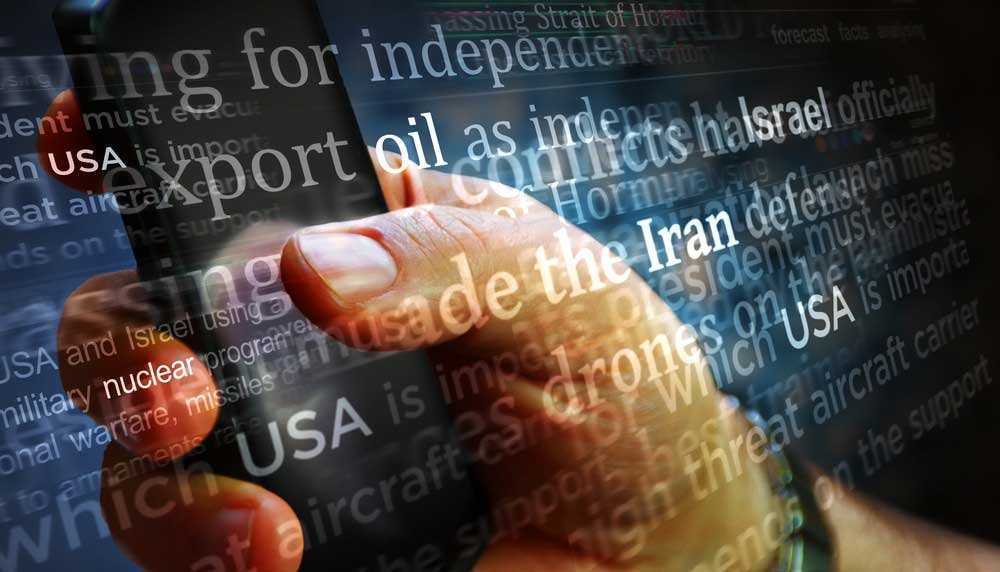
Since February 2026, the information war between the United States and Iran has saturated social media with competing strategic narratives conveyed through popular cultural references, synthetic media and digital visual content. Fast-forward to the 81st session of the United Nations General Assembly, Iran’s satirical information campaign[i] remains a central component of its strategic communication to undercut U.S. gravitas. In contrast, the digital artefacts of the United States continue to deliver a spectacle of dominance and military might.[ii] These contrasting approaches reflect how both countries have adapted their strategic communication to advance competing political objectives in the digital information environment.
The U.S. militainment aesthetic
Strategic communication from the United States remains unidirectional and follows a top-down approach. The official social media accounts of the POTUS, Donald Trump, and the White House deliver state narratives that are subsequently shared by MAGA supporters across platforms.
The posted videos have featured satellite imagery and drone footage of strikes that are intercut with clips from Hollywood movies such as Braveheart and television series, such as Breaking Bad.[iii] The campaign also makes references to video games. These include Grand Theft Auto[iv], Call of Duty[v], Wii Sports[vi], as well as children’s television programmes, such as SpongeBob SquarePants,[vii] and anime series, such as Dragon Ball Z. Sports imagery constitutes another visual dimension, as media propagated by the White House contains AI-generated bowling alley animations[viii] and references to the National Football League (NFL)[ix] and Major League Baseball[x] interspersed with real-life imagery of the war.
Taken together, this gamified aesthetic reveals how the visual grammar appropriated by the Trump administration packages the militarism as consumable online content. This genre of political communication is strategically explicable through the phenomenon of militainment, coined by Roger Stahl, which refers to an intersection between militarism and entertainment featuring the military.[xi]
The strategic significance of this framing lies in its capacity to shift attention from the political and humanitarian consequences of military operations towards their execution, presenting military dominance as an expression of national strength.
The hype videos incorporating characters from Pentagon-supported movies[xii], such as Top Gun, the Iron Man film series and other elements of popular culture[xiii], centre around leading figures that have appeared interchangeably as heroes, anti-heroes and even villains. In the U.S. messaging, moral legitimacy is therefore increasingly framed through narratives of strength, as hypermasculine archetypes are employed to convey military action as both necessary and justifiable.
The cinematic depiction of cutting-edge weaponry[xiv] is another characteristic of the campaign that bolsters the symbolic representation of strength. The White House has posted numerous videos that display rapid shots of stealth aircraft bombing Iranian sites,[xv] accompanied by triumphalist captions and pulse-pounding soundtracks playing in the background. These visual motifs reveal that the United States focuses on projecting military dominance and technological superiority of the armed forces by presenting U.S. engagement in the war as a media spectacle.
The fast-paced action vignettes appear geared towards appealing to younger, digitally engaged audiences familiar with sports, gaming culture and popular entertainment. According to former Press Secretary Karoline Leavitt, the White House videos generated over 2 billion impressions.[xvi] By drawing on the visual language of gaming culture and popular entertainment familiar to its domestic audience, this wartime communications strategy appears geared towards cultivating receptivity to the military offensive against Iran, although the extent to which digital engagement translates into public consent remains uncertain.
The Trump administration promotes greater receptivity to the United States’ messaging by amplifying nationalist sentiment which has remained a primary component of President Trump’s social media strategy.[xvii] The current campaign is an extension of this communicative pattern. Under the slogan of “Justice the American Way”[xviii], the Trump administration reframes[xix] American nationhood and patriotic identity through a populist-security discourse. This framing securitises perceived threats to American interests by presenting military action as a necessary response, thereby reinforcing the legitimacy of U.S. foreign policy. Social media, in turn, acts as an affective space through which these narratives seek to resonate with domestic audiences.
All in all, through gameplay scenes and meme snippets, the United States has leaned into an aestheticisation of warfare by framing the conflict as a “virtuous” or “clean war” that obscures the gravity of civilian costs, and thereby facilitates the sanitisation of the military operation.
During Operation Desert Storm, the first-hand footage from military equipment broadcasted on news networks encapsulated the technological precision of advanced American weaponry[xx] and remote-controlled strike capability, trivialising the collateral damage caused by the war through a video-game aesthetic.[xxi]
The participatory practices of liking, sharing and commenting afforded by social media platforms have transformed audiences from largely passive recipients into active participants in the circulation and amplification of state narratives.
This desensitising approach led to the war being dubbed the “Nintendo War”, as it ushered in an era of war games, such as Desert Strikes and the Conflict: Desert Storm series that simulate tactical shooting experiences and feature military technology. Later, the U.S. Department of Defence also ran “Millennium Challenge 2002”, a war game which simulated an outcome skewed to guarantee U.S. triumph over Iran’s forces.[xxii]
While the video-game aesthetic created through displays of sophisticated technology and remote-controlled attacks is a striking commonality between these historical precedents and the Trump administration’s latest campaign, the latter goes a step further by changing the role of its audience from spectators to active participants. In the digitised information environment, the participatory practices of liking, sharing and commenting afforded by social media platforms have transformed audiences from largely passive recipients into active participants in the circulation and amplification of state narratives, extending the reach of wartime strategic communication beyond conventional broadcast media.
Iran’s networked cultural adaptation
Iran has modified its information model by adapting its media operations to compensate for its conventional military asymmetry with the United States, seeking to contest American dominance in the political and informational dimensions of the conflict. Tehran’s strategic communication strategy has therefore developed over an extended period. In 2024, former Iranian Supreme Leader, Ayatollah Ali Khamenei, recognised the media’s capacity to shape public perceptions, urging Iranian storytellers to take this into account and consolidate a media and cultural-production apparatus.[xxiii]
Iran’s performance in the latest information war reflects this renewed approach. Tehran has been exploiting the mechanisms of the digital media ecosystem as an information frontier where the grammar of geopolitical messaging has become increasingly memeified. While Iran’s digital counteroffensive has revolved around a deluge of fabricated deepfake footage and doctored combat imagery[xxiv] as part of its broader disinformation campaign, it has also tapped into another mode of narrative amplification.
Using recognisable tropes and familiar characters in an audience strategy infused with satire, humour and parody, Iran has disseminated AI-generated propagandistic content designed to advance its strategic narratives. The campaign contains LEGO-style animations[xxv] overlaid with English rap diss tracks, as well as AI-generated content[xxvi] containing references to American pop culture, which together package the Iranian narrative into satirical retorts.
The overriding message of this campaign[xxvii] is that Iran is the bulwark of resistance against the “self-serving establishment” while presenting itself as a representative of the global majority. The campaign also satirises American leaders through references to the Epstein files, in addition to portrayals of Israel spurring the United States into the war.[xxviii] The videos have curated narratives of victimhood, civilian suffering, and strategic necessity to justify Iran’s deterrence posture against the perceived U.S.-Israeli aggression.
These narratives inflate Iranian military success and credibility while portraying U.S. and Israeli forces as unable to destroy Iran’s military capabilities.[xxix] The aesthetic is not entirely a departure from Iran’s traditional propaganda, as a stream of content also contains religious-ideological connotations and iconography of Shia Islam.[xxx] Together, these portrayals reinforce a strategic narrative directed at domestic audiences and allies within the Axis of Resistance.
The videos are further aimed at exploiting America’s domestic fissures surrounding public disaffection with perceived elite dysfunction, as well as at invoking anti-war sentiment by portraying the conflict as a strategic liability owing to its human costs and far-reaching economic consequences, thereby reinforcing the perception that the conflict runs counter to public interests.
These underlying messages reveal that the calculated postings are targeted towards both American and broader, Western audiences. They seek to exploit divisions between the American public and its leadership, as well as weakening the perceived legitimacy of the conflict among Western audiences. In this respect, Iran’s communication strategy seeks to convert domestic political grievances within adversarial societies into opportunities for narrative contestation.
Iran has amplified such political rhetoric by transmitting it in a culturally adaptive manner through the visual language of popular entertainment, which has attuned its messaging to prevailing conventions of digital culture. By embedding political narratives within familiar audiovisual formats, Tehran has sought to make its strategic communication more accessible to Western audiences. This audience-oriented approach has subsequently generated engagement, viewership and circulation, which constitute core components of the social media attention economy.
According to the Institute for Strategic Dialogue (ISD), pro-Iranian accounts on X accrued over 1 billion views, including 16 million likes and 3.5 million reposts.[xxxi] Rapid Response Mechanism Canada (RRM) has also reported that LEGO-style AI-generated content on TikTok outpaced other social media platforms.[xxxii] By demonstrating an understanding of the content that drives engagement among American and Western audiences, Iran has sought to exploit the dynamics of the digital attention economy to expand the visibility and circulation of its strategic narratives. However, the extent to which this visibility translates into political persuasion remains difficult to establish.
Iran's information strategy combines decentralised content production with coordinated narrative amplification.
Another critical aspect of Iran’s media strategy is to transcend traditional forms of political communication by leveraging decentralised, horizontal channels through which narratives originate and circulate in multiple directions, while maintaining plausible deniability.[xxxiii] The state’s cyber apparatus has been drawing from a pool of younger, tech-savvy content creators that are ideologically aligned with the state to produce platform-native content across both mainstream and alternative social media channels, such as Bluesky, Rumble, and Spotify, among others.
The Explosive Media group, known for producing the LEGO aesthetic of the Iranian campaign, has admitted that the Iranian government is a client[xxxiv] who has purchased the distribution rights to their content. Similar content creators have followed suit with the inclusion of more child-friendly intellectual properties.[xxxv] Gandocraft Studio is another animation group that has adopted a Minecraft aesthetic in its videos.[xxxvi] Access to inexpensive AI tools that are trained on Western data has essentially enabled these outlets to produce culturally appropriate content across platforms.
The Iranian state-controlled media and the embassy networks expand the reach of dissemination. Outlets such as Tasnim News and Iran Radio PS have played a role in the redistribution of Explosive Media’s videos to mainstream audiences. The Iranian diplomatic network has not only been reposting LEGO videos but has also become “meme factories” themselves by producing AI-generated media containing references to American cultural touchstones.[xxxvii] The pattern extends to memes that deride political leaders, as well as emotionally charged visuals that are interwoven with Iran’s political narrative.
Graphika has documented this coordination through a network-based model of narrative diffusion[xxxviii], in which content created by pro-Iranian actors and Iranian state media are seeded through state-affiliated (news media or embassy) accounts, replicated across platforms and amplified by accounts and media outlets associated with authoritarian states, including Russia and China. Cyabra’s analysis[xxxix] further reveals patterns of synchronised messaging and rhetorical emphasis identified through reused videos and captions, fixed hashtag clusters, and spikes in posting activity within specific timeframes.
Taken together, these patterns reveal that Iran’s information strategy combines decentralised content production with coordinated narrative amplification. The involvement of independent creators and state-affiliated media enables political messaging to circulate beyond official government channels, while maintaining a degree of strategic coherence and extending the campaign’s informational reach.
Conclusion
Through the use of artificial intelligence, these intertextual references[xl] and synthetic visual formats have become an increasingly prominent elements of the communicative logic through which both sides seek to simplify the conflict through popular-cultural analogies and entertainment aesthetics. Their emotional appeal helps amplify competing strategic narratives while obscuring the moral and informational ambiguities surrounding the conflict.
The aestheticisation of warfare through sporting imagery, military spectacle and familiar entertainment formats makes each side’s narrative compelling enough to capture attention and build reach. However, engagement is not necessarily a measure of persuasion. The US–Iran information contest therefore reveals how contemporary warfare is increasingly accompanied by a struggle for narrative dominance, in which conventional military asymmetries are reflected in contrasting strategies of digital influence. While the United States projects military superiority through spectacle, Iran seeks to contest American credibility through culturally adaptive messaging and networked amplification. In an information environment governed by algorithmic circulation and competition for attention, the strategic challenge lies not merely in achieving visibility, but in translating that visibility into political legitimacy and influence.
For policymakers, this evolution complicates efforts to distinguish genuine public sentiment from the algorithmic amplification of politically motivated content. It also raises questions about the effectiveness of conventional strategic communication in countering narratives that circulate through decentralised and culturally adaptive information networks.
[i] Iran in Ghana (2026). “Today at the UN…”, X, 24 September 2026, retrieved from: https://x.com/IRAN_GHANA/status/2103496540694118451.
[ii] The White House (2026). “Retribution will be through success”, X, 26 September 2026, retrieved from: https://x.com/WhiteHouse/status/2103674594838106299.
[iii] The White House (2026). “Justice the American way”, X, 6 March 2026, retrieved from: https://x.com/WhiteHouse/status/2029741548791853331.
[iv] The White House (2026). “Operation Epic Fury”, X, 6 March 2026, retrieved from: https://x.com/WhiteHouse/status/2029953667600646655.
[v] Stoddart, M. (2026). “White House posts so-called ‘hype’ videos combining real Iran war footage alongside movie, video game clips”, ABC News, 6 March 2026, retrieved from: https://abcnews.com/Politics/white-house-posts-called-hype-videos-combining-real/story?id=130825574.
[vi] The White House (2026). “Undefeated”, X, 12 March 2026, retrieved from: https://x.com/WhiteHouse/status/2032115039985881556?s=20.
[vii] The White House (2026). “Will not stop until the objectives are met”, X, 5 March 2026, retrieved from: https://x.com/WhiteHouse/status/2029657893155311927.
[viii] White House (2026). “Strike”, Instagram, 12 March 2026, retrieved from: https://www.instagram.com/p/DVw9OaolL4z/?hl=en.
[ix] The White House (2026). “Touchdown”, X, 6 March 2026, retrieved from: https://x.com/WhiteHouse/status/2030051395294941427.
[x] White House (2026). “Pure American dominance”, Instagram, 6 March 2026, retrieved from: https://www.instagram.com/p/DVjoQMhkUNG/?hl=en.
[xi] Stahl, R. (2010). Militainment, Inc.: War, media, and popular culture. Routledge.
[xii] Spy Culture (2017). “Pentagon-Hollywood Collaboration Database Excerpts”, retrieved from: https://www.spyculture.com/dod-hollywood-collaboration-database-excerpts/.
[xiii] Coster, H. and Reid, T. (2026). “SpongeBob, Iron Man and Call of Duty: Inside the US meme war against Iran”, Reuters, 7 March 2026, retrieved from: https://www.spyculture.com/dod-hollywood-collaboration-database-excerpts/.
[xiv] The White House (22026). “American strength”, X, 9 September 2026, retrieved from: https://x.com/WhiteHouse/status/2097769704643281287.
[xv] Ibid.
[xvi] Smith, A. and Engel, R. (2026). “The White House compares deadly conflict to video games and movies in memeified videos to win support for Iran war”, NBC News, 12 March 2026, retrieved from: https://www.nbcnews.com/politics/white-house/white-house-iran-war-social-media-videos-video-games-football-baseball-rcna263194.
[xvii] Schertzer, R. and Woods, E. (2020). “#Nationalism: The ethno-nationalist populism of Donald Trump’s Twitter communication”, Ethnic and Racial Studies, 27 January 2020, retrieved from: https://www.tandfonline.com/doi/full/10.1080/01419870.2020.1713390.
[xviii] The White House (2026). “Justice the American way”, X, 6 March 2026, retrieved from: https://x.com/WhiteHouse/status/2029741548791853331.
[xix] Lofflmann, G. (2021). “’Enemies of the people’: Donald Trump and the security imaginary of imagery of America First”, The British Journal of Politics and International Relations, 24(3), retrieved from: ‘Enemies of the people’: Donald Trump and the security imaginary of America First – Georg Löfflmann, 2022.
[xx] Dickey, C. (1991). “The Iraq War: Eyeballing the Nintendo Apocalypse”, Rolling Stone, 7 March 1991, retrieved from: https://www.rollingstone.com/culture/culture-news/the-iraq-war-eyeballing-the-nintendo-apocalypse-185625/.
[xxi] Black, G. (1991). “Rolodex Army Wages a Nintendo War: TV’s deskbound generals tune out on the crucial issues—morality, economics, values”, Los Angeles Times, 27 January 1991, retrieved from: https://www.latimes.com/archives/la-xpm-1991-01-27-op-163-story.html.
[xxii] Abbott, J. (2026). “What a War Game Already Told Us About Iran”, Just Security, 5 May 2026, retrieved from: https://www.justsecurity.org/137609/war-game-iran/.
[xxiii] Asharq Al-Awsat (2024). “Khamenei: Media Affects Enemy More than Missiles, Planes, Drones”, 27 March 2024, retrieved from: https://english.aawsat.com/world/4934751-khamenei-media-affects-enemy-more-missiles-planes-drones.
[xxiv] Thompson, S.A. and Cardia, A. (2026). “Cascade of A.I. Fakes about War With Iran Causes Chaos Online”, The New York Times, 13 March 2026, retrieved from: https://www.nytimes.com/interactive/2026/03/14/business/media/iran-disinfo-artificial-intelligence.html.
[xxv] Explosive Media (2026). “Stop lying loser…”, X, 23 September 2026, retrieved from: https://x.com/ExplosiveMediaa/status/2102536211919220925.
[xxvi] Iran Embassy SA (2026). “And today’s popular music: ‘blockade’ by Trump”, X, 13 April 2026, retrieved from: https://x.com/IraninSA/status/2043757392010076666.
[xxvii] Explosive Media (2026). “For all the crimes you committed against humanity…”, X, 28 March 2026, retrieved from: https://www.instagram.com/p/DWcm5t2DKux/?hl=en.
[xxviii] Explosive Media (2026). “The dust has settled on the US-Iran MoU, and the reality is clear…”, Instagram, 15 June 2026, retrieved from: https://www.instagram.com/p/DZnylbjyxgI/.
[xxix] Mahdi Hemmat (2026). “Project Freedom Fail”, X, 6 May 2026, retrieved from: https://x.com/HemmatMahdi/status/2051814394825474460.
[xxx] Explosive Media (2026). “Karbala will repeat every day…” Instagram, 4 August 2026, retrieved from: https://www.instagram.com/p/DbooQ4zAQhY/?hl=en.
[xxxi] Institute for Strategic Dialogue (2026). “How pro-Iran networks gained a billion views on war on propaganda”, 15 April 2026, retrieved from: https://www.isdglobal.org/digital-dispatch/how-pro-iran-networks-gained-a-billion-views-on-war-propaganda/.
[xxxii] Government of Canada (2026). “Explosive Media: Iranian state-linked AI Lego-style videos claiming that Tehran has ‘won the propaganda war’”, retrieved from: https://international.canada.ca/en/global-affairs/corporate/reports/rapid-response-mechanism/2026-explosive-media-iran.
[xxxiii] Grinchevskiy, A. (2026). “Trolling diplomacy: The evolution of digital statecraft from tweets to deepfakes”, Frontiers, 30 July 2026, retrieved from: https://www.frontiersin.org/journals/political-science/articles/10.3389/fpos.2026.1900207/full.
[xxxiv] Shea, M. and Kalus, L. (2026). “We spoke to the man making viral Lego-style AI videos for Iran…”, BBC News, 12 April 2026, retrieved from: https://www.bbc.co.uk/news/articles/cjd8jrd1vnyo.
[xxxv] Afand Studio (N.D.) Instagram, retrieved from: https://www.instagram.com/afandstudio/.
[xxxvi] Gandocraft (2026). “New CENTCOM strategy”, Instagram, 9 September 2026, retrieved from: https://www.instagram.com/p/DdC4GVpsI5e/?hl=en.
[xxxvii] Sikora, K. and Bodnar, J. (2026). “Iran’s diplomats launch a meme war”, Institute for Strategic Dialogue, 23 April 2026, retrieved from: https://www.isdglobal.org/digital-dispatch/irans-diplomats-launch-a-meme-war/.
[xxxviii] Graphika (2026). “Iran War: Monitoring the Online Threat Landscape”, 6 March 2026, retrieved from: https://www.graphika.com/blogs/iran-war-monitoring-the-online-threat-landscape.
[xxxix] Cyabra (2026). “The AI Propaganda War: Iran’s Digital Battlefield”, 9 March 2026, retrieved from: https://www.inss.org.il/he/wp-content/uploads/sites/2/2026/03/Cyabra-Research-Iran-AI-Driven-Information-Warfare-Epic-Fury.pdf.
[xl] Manor, I. (2026). “Public Diplomacy in an Age of Synthetic Intertextuality”, CPD, 28 May 2026, retrieved from: https://uscpublicdiplomacy.org/blog/public-diplomacy-age-synthetic-intertextuality.