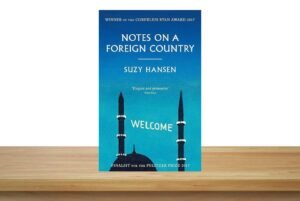
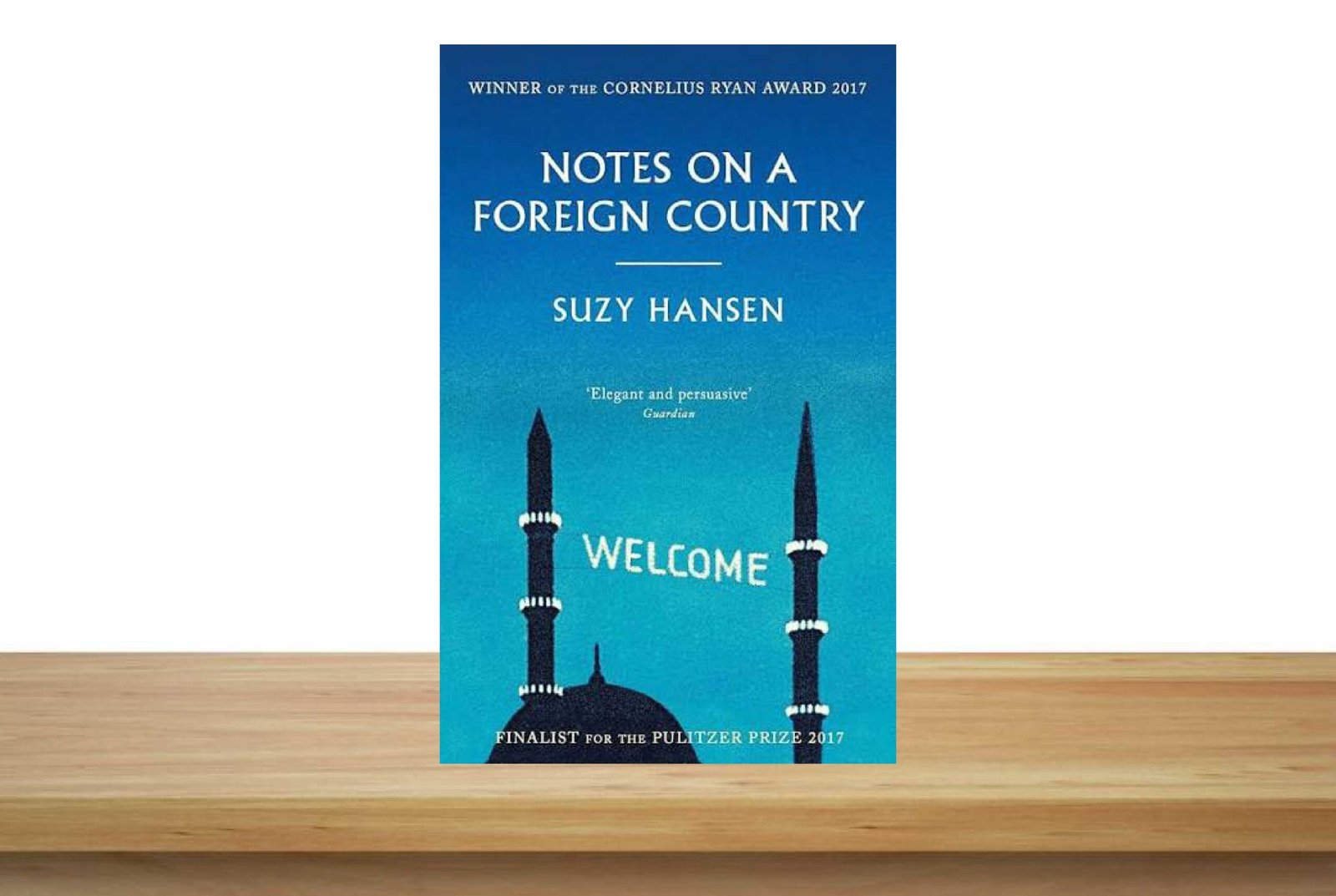
Suzy Hansen’s Notes on a Foreign Country is an ambitious examination of America’s place in the world, viewed largely through the experiences of an American journalist living abroad. While many such accounts focus on Latin America or the Middle East, Hansen puts Turkey front and centre.
This is an excellent choice. The author spent a number of years and – importantly – learned Turkish. Hansen spent a number of years in Turkey and – importantly – learned Turkish. Her writing and analysis on the country are among the strongest parts of the book, even if her often grim assessment of the AK Party sits uneasily with the extraordinary development Turkey experienced during its years in power.[i]
Early in the AK Party’s rule I backpacked across Turkey, bouncing between benches, friends couches, and the like. Returning to some of those same places around eight years later, the visible changes – the kind ordinary people notice – were staggering. Adana, for example, had acquired modern shopping centres and other infrastructure that had scarcely existed when I first visited.
These are changes people notice and Hansen correctly notes the historic changes of Turkey.
The author’s forays into Afghanistan and Egypt were less convincing. While I learned a few things from her reporting on Turkey, her reporting on Egypt included some broad generalizations. It also appears that, in her discussions of Suzanne Mubarak, people may have been telling her what they thought she wanted to hear. As someone who has often reported in Egypt, it is an issue that has beguiled me as well. Sources sometimes tell foreign journalists a version of the country that fits neatly with the questions they are being asked. There are many Egypts. It’s a reporter’s job to find the one not on the postcards.
She spends a lot of time critiquing U.S. policies and influence during the Cold War, from the Congo to Chile. However, she frequently tells these stories in the absence of any meaningful Soviet role. It’s a bit like describing rugby to someone for the first time and failing to mention that the other team is also trying to hit you, tackle and score. The result is an account of the Cold War in which Washington often appears to be playing largely against itself, causing long-term damage with little sense of the wider geopolitical contest.
For example, she quotes an obscure American report from Pakistan in the 1950s suggesting the U.S. support “Islam” as a counterbalance to Communism. This, to me, seems more like “let’s try everything until something sticks” than a smoking gun demonstrating some grand strategy. Arguably, in countries from Turkey to the Congo, the role of American missionaries has been just as important in driving American cultural and political influence abroad, but this receives barely a mention.
Some of her ideas are genuinely interesting, such as the role of Conrad Hilton and the possibility of seeing hotels as institutions of American imperialism.[ii] It is true that Conrad Hilton was a die-hard anti-communist and that American hotels abroad could serve as physical symbols of American modernity, commerce and influence. But where does that argument end? Should we think of Paris Hilton in the same way? There is an interesting argument here, but at times the book stretches an intriguing observation into something larger than the evidence can comfortably support.
American influence in Turkey did not begin with the Cold War. Douglas MacArthur was for one very impressed with the Turkish troops who fought in the Korean War[iii] but the relationship was far deeper. American Protestant missionaries established a permanent presence in Constantinople in 1831[iv], and their oldest surviving congregation still worships in Istanbul today.[v] Robert College – founded in Istanbul in 1863 was the oldest American missionary university founded abroad.[vi]
Her writing on the United States itself, and her attempts to grapple with the Trump era, are less compelling and break little new ground. By comparison, the Turkey material feels original, informed and rooted in years of observation rather than a framework imposed afterward.
If you are interested in Turkey, I do recommend this book. The author challenges a lot of the existing discourse and clearly knows the country well. She is also a great admirer of James Baldwin, who lived in Istanbul for a time, and it would be interesting to see her do a book-length piece on Baldwin’s relationship with Turkey, Istanbul and America. That subject seems particularly well suited to her interests and strengths.
Sure, it is too easy to say “Baldwin loved Istanbul.” Others have said about Baldwin’s time in Turkey that he felt more liberated as a black gay man in Muslim Turkey than he did in America (a Christian country).[vii] I would balance that against the fact that unlike in France where Baldwin learned to express himself in French, he never read Turkish. For now, the book to read is Magdalena Zaborowska James Baldwin’s Turkish Decade: Erotics of Exile precisely on 1961–71 period.[viii]
The author is a journalist, and like much journalism, the book opens with a great lead and a clear focus on Turkey – only to gradually shift out of focus as it goes on. I just wish that, unlike James Baldwin when he finally left Turkey, she had stayed closer to Turkey and to the material she knows best.
[i] Ozkan, H. (2015). “The Economic Upturn of Turkey under the A Party’s Governance”, Business and Management Studies, 2(3), retrieved from: https://www.researchgate.net/publication/276741712_THE_ECONOMIC_UPTURN_OF_TURKEY_UNDER_THE_AK_PARTY%27s_GOVERNANCE; OECD (2025). “OECD Economic Surveys: Turkiye 2025”, 10 April 2025, retrieved from: https://www.oecd.org/en/publications/oecd-economic-surveys-turkiye-2025_d01c660f-en.html.
[ii] Wharton, A.J. (2001). Building the Cold War: Hilton International Hotels and Modern Architecture, Chicago: University of Chicago Press.[iii] Kubat, M.C. (2023). “Battles of the First Turkish Brigade in the Korean War”, Journal of Korean Military History, 1(1), retrieved from: https://avesis.inonu.edu.tr/yayin/c098dbad-4ed1-4bbc-a749-4d8ef22ec2b2/battles-of-the-first-turkish-brigade-in-the-korean-war.
[iv] Goodell, W. (1820-1867). “Papers of William Goodell”, Library of Congress.
[v] Edmonds, A.G. (1986). The Union Church of Istanbul: A History, Istanbul: Istanbul Matbaasi.
[vi] Freely, J. (2009). A history of Robert College: The American College for Girls and Bogazici University, 1-2, Istanbul: Yapi Kredi Yayinlari.
[vii] Zaborowska, M.J. (2009). James Baldwin’s Turkish Decade: Erotics of Exile, Durham: Duke University Press.
[viii] Ibid.