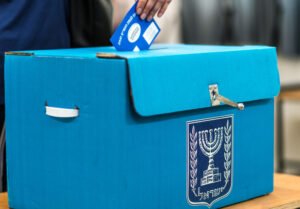
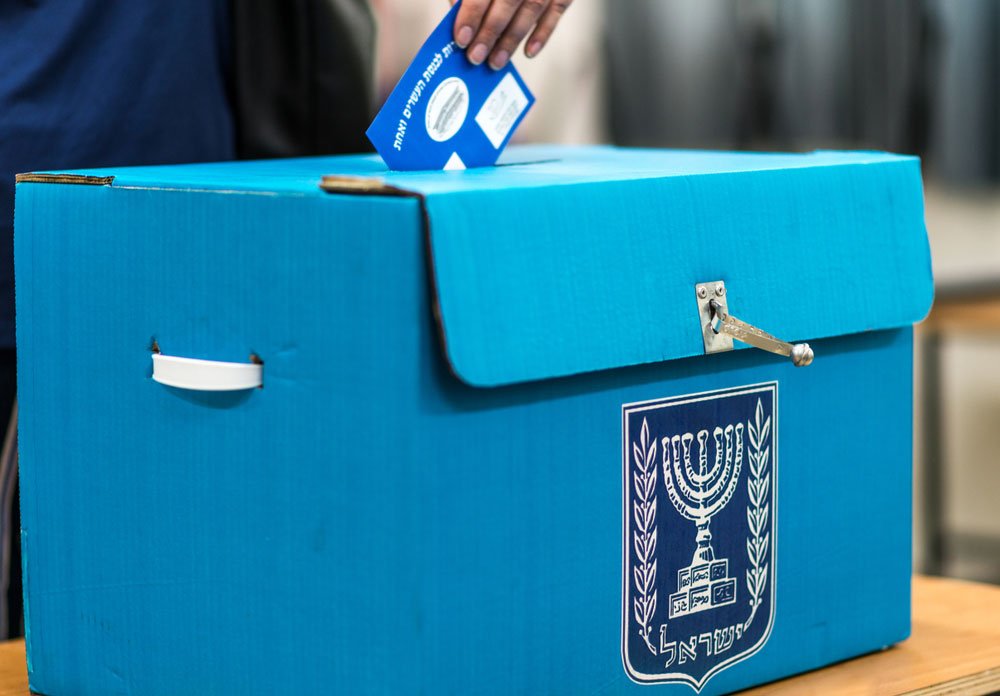
Israel’s 27 October election produced a clear rejection of Benjamin Netanyahu’s governing coalition but no mandate for an alternative. His bloc fell from 68 seats to 53, while the four-party opposition led by Gadi Eisenkot won only 48. The two Arab-majority parties, with a record 19 seats, hold the balance.[i] Together, the parties opposed to Netanyahu command 67 seats, and Yair Golan of the Democrats has urged them to govern on that basis. Doing so, however, would require Eisenkot, Naftali Bennett and Avigdor Liberman to reverse their pledges not to rely on Arab parties.[ii] An even less likely alternative, bringing in the ultra-Orthodox, would require abandoning the opposition’s promise to end the military exemption. Whether its leaders are prepared to pay either price will decide whether Israel gets a new government, a national unity coalition with Netanyahu, or a second election.
The election and the electorate
Israeli elections are routinely described as the most consequential in the country’s history, but the first vote since 7 October 2023 and the subsequent wars in Gaza, Lebanon and Iran carried unusual weight. Four in five Israelis regarded it as especially important or the most important in the country’s history.[iii]
Turnout reflected that assessment. At 77.9% of eligible voters[iv], the highest since 1999[v], every sector of Israel’s polarised society was mobilised. Tens of thousands of citizens resident abroad returned to Israel to cast their ballots, predominantly against the incumbent government[vi] (Israel does not permit voting by post or proxy). In Arab localities, turnout reached nearly 80%, up from just over half in 2022 and the highest level since Israel’s founding decades.[vii] Ultra-Orthodox voters mobilised to protect the military service exemption for yeshiva students, which the anti-Netanyahu opposition had pledged to abolish.[viii] On the Zionist right, meanwhile, many voted to prevent what they regarded as the greatest danger: a government dependent on Arab parties, some of whom reject Israel’s identity as a Jewish state and, in some cases, have shown support for its adversaries.
Beneath these competing motives, the election was also, like the five held between 2019 and 2022, a referendum on Netanyahu himself, and one that did not divide neatly between left and right. Both blocs are improbable coalitions. Netanyahu’s secular-nationalist, free market-minded Likud, rooted in the Mizrahi periphery, joined with welfare-oriented and largely non-Zionist ultra-Orthodox parties and a settler-led messianic right. Ranged against it were four Jewish majority parties drawing disproportionately on the more affluent, Ashkenazi centre of the country. They extended from Avigdor Liberman’s secular hawks, rooted among immigrants from the former Soviet Union, through Gadi Eisenkot’s security-establishment centrists and B’Yachad, the joint list of Naftali Bennett’s religious centre-right and Yair Lapid’s secular liberal Yesh Atid, popular with the Tel-Aviv middle class, to Yair Golan’s social democrats, who openly support a two-state solution.
The question of Netanyahu nonetheless drew together deeper disputes: who bears the burden of military service and economic growth, the independence of the courts, the future of the West Bank, accountability for the security failures of 7 October[ix], and Israel’s standing in the world.
The current stalemate
For the governing coalition, the result is a clear defeat, whatever the framing from Likud headquarters. Likud remains the largest party with 27 seats, five fewer than in 2022. Its partners hold 26 between them: United Torah Judaism and Otzma Yehudit seven each, Shas and Religious Zionism six each. Together they are eight seats short of a majority.[x]
Part of that shortfall, however, reflects the fragmentation of the right rather than a collapse in its support. Amcha Yisrael, a nationalist party founded only months before the vote by the former IDF general Ofer Winter, had polled at four seats but finished below the 3.25% threshold, and its votes were discarded. Commentators sympathetic to Likud estimate that splinter parties wasted around 4% of the right-wing vote, enough to account for much of the gap between 53 seats and a majority.[xi]
The distinction matters, because it is the basis of Netanyahu’s calculation that a second election, fought with a more consolidated right, could turn out differently.
The opposition has little more to celebrate. Pre-election polls, and several exit polls on election night, put the “change bloc” narrowly ahead. In the count, Eisenkot’s Yashar! finished more than 200,000 votes behind Likud, with 21 seats; the Bennett–Lapid list B’Yachad took 12, Golan’s Democrats eight and Liberman’s Yisrael Beiteinu seven.[xii]
For Eisenkot, coming second carries real costs. It allows Netanyahu to claim a popular mandate as leader of the largest party.
Several factors appear to explain the shortfall. Likud’s attacks on Eisenkot as the prospective head of a government reliant on Arab parties may have deterred centre-right voters, as did his perceived inexperience in politics.[xiii] For Eisenkot, coming second carries real costs. It allows Netanyahu to claim a popular mandate as leader of the largest party and, in any future unity negotiation, it strengthens Likud’s claim to the premiership or to the first turn in a rotation deal.
The Arab-Israeli vote
The most striking story of election night was the surge in Arab turnout. In 2022, many Arab voters stayed home and their parties ran divided, with Balad’s failure to clear the threshold costing them at least a seat. This time the two Arab-majority lists were as different from each other as any pairing in the Zionist camp. The Joint List, led by the legal scholar Yousef Jabareen, reunited three secular parties: the Arab-Jewish socialist Hadash, Ahmad Tibi’s nationalist Ta’al, and Balad, the most uncompromising of the three, which rejects Israel’s definition as a Jewish state in favour of “a state of all its citizens”.
Mansour Abbas’s Ra’am, the political arm of the southern Islamic Movement, is socially conservative but politically pragmatic. It concentrates on crime, housing and recognition for Bedouin villages, and has previously sat in government alongside centre-right Zionist parties. Abbas underlined that pragmatism by running separately from the Joint List and placing Yoav Segalovich, a former senior police officer and Yesh Atid deputy minister of public security, second on his slate, the first Jewish candidate in the party’s history.[xiv] The move was widely read as a bid to make Ra’am an acceptable coalition partner.
Arab turnout reached approximately 80%, against forecasts, including the Joint List’s own, in the low-to-mid 60s. In Umm al-Fahm it almost doubled, from 38.3% to 75.7%.[xv]
Several explanations for increased Arab participation are plausible. Violent crime in Arab towns has reached record levels, deepening a long-standing sense of neglect by the police and the state.[xvi] Four years of a government that included Itamar Ben Gvir and Bezalel Smotrich gave many Arab citizens motivation to vote.
On 28 October, Justice Noam Sohlberg, the Supreme Court judge chairing the Central Elections Committee, ordered the Shin Bet to investigate suspicions of foreign funding and election bribery after a briefing from its director, David Zini.[xvii] Israeli media reported allegations of Qatari, and possibly Turkish, money being used to boost Arab turnout.[xviii] On 4 November, the Shin Bet indicated that suspected foreign influence operations might have involved thousands of people, although their scale remained unestablished. Reports that the agency sought to question prominent Arab politicians, including Mansour Abbas and Ahmad Tibi[xix], brought the allegations closer to the parties themselves. The attorney general, however, challenged the agency’s handling of the inquiry, while the Central Elections Committee certified the results, finding no irregularities that compromised the vote or affected its outcome. The allegations remain unproven.
The investigation’s political consequences may nevertheless be considerable. Ra’am’s efforts to establish itself as an acceptable coalition partner have become harder, even as the election authorities have found no basis for overturning the result. Netanyahu’s claims of a stolen election have not prevented certification, but the continuing suspicions may deter opposition leaders from relying on Arab parties, further narrowing the already limited paths to an alternative government.
The coalition arithmetic
The deadlock comes less from the numbers than from promises made during the campaign coming back to haunt the candidates who made them.
The deadlock comes less from the numbers than from promises made during the campaign coming back to haunt the candidates who made them. On paper, a majority exists. The parties opposed to Netanyahu, including the Arab-majority parties, hold 67 seats, and Yair Golan has argued that they should simply govern as one, yet Eisenkot, Bennett and Liberman have all rejected this. Bennett says that after 7 October there is “no mandate” to govern with Arab parties. Eisenkot has set conditions for any partner: recognising Israel as a Jewish state, military or civilian national service for all citizens and the dismantlement of Hamas. The Joint List will not accept them, which effectively removes their 11 seats from any calculation.[xx] Golan has nevertheless opened discussions with the Joint List’s leaders about parliamentary cooperation[xxi], suggesting that the obstacle lies less in the Arab parties’ willingness to help remove Netanyahu than in the opposition’s willingness to accept their support.
Ra’am is a different case. Abbas served in Bennett’s 2021–22 government, has accepted Israel’s definition as a Jewish state and condemned the 7 October massacres. He has not met Eisenkot’s demand to call on the dismantlement of Hamas, and Ra’am’s eight seats alone would take the change bloc only to 56 (5 short of a majority). A Hebrew University poll of change-bloc voters taken as polls closed found 61% in favour of a government that included Ra’am. Twenty per cent preferred a new election, and only 12% a rotation with Netanyahu.[xxii]
On 3 November, Eisenkot, Bennett, Liberman and Golan agreed to begin coalition negotiations and coordinate their parliamentary strategy. They reaffirmed Eisenkot’s conditions for a governing coalition, including universal national service and the dismantlement of Hamas’s military capabilities, but offered no solution to their refusal to rely on Arab parties. The meeting demonstrated that opposition to Netanyahu could produce a common parliamentary strategy, but not yet a governing majority.
The other route runs through the ultra-Orthodox parties, which have split since the vote. Shas leader Arye Deri has reportedly ruled out joining an Eisenkot government without Likud; associates cite the price Shas paid in its own community for sitting in Rabin’s government during the Oslo years. In United Torah Judaism, by contrast, Rabbi Dov Landau, spiritual leader of the Degel HaTorah faction, has told its MKs that the Haredi community stands independent, belonging to “the bloc of the Torah world”, and should consider joining the opposition provided the status of yeshiva students is secured.[xxiii] The obstacle is fundamental. Ending the exemption was among the change bloc’s central commitments, and Liberman has repeatedly ruled out governing with the Haredi parties, although his latest remarks suggest he may be leaving some room for manoeuvre.[xxiv]
Netanyahu’s own position is weaker than his status as caretaker suggests. He needs eight more seats, and every opposition party campaigned on a pledge not to serve under him; Bennett and Liberman, the likeliest targets for defection, have so far held firm. His majority has long depended on ultra-Orthodox partners whose central demand, a law entrenching the draft exemption, he can no longer deliver.
This helps explain why Netanyahu, while claiming victory, has not behaved like a victor. Since election night, his public messaging has concentrated almost entirely on the Arab parties and on claims that the election was “stolen”. Netanyahu may not have instigated the Shin Bet inquiry, but he is its principal political beneficiary.
The alternative favoured by President Herzog is a national unity government with Likud and Yashar! at its core. Eisenkot, however, has said he will not serve with Netanyahu, whom he holds responsible for the failures of 7 October and with whom he disagrees on the Haredi exemption and a state commission of inquiry. A rotation agreement is the obvious compromise, but after what happened to Benny Gantz in 2020 it would be a hard sell to Eisenkot’s voters.
The Central Elections Committee certified the results on 4 November, and President Herzog has begun consultations with the parties. The four Jewish opposition parties have agreed to recommend Eisenkot, although the president is not obliged to choose the candidate with the most endorsements. The first test of their unity may come when the Knesset is sworn in on 10 November. Opposition leaders are considering replacing Likud’s Speaker, Amir Ohana, with Yair Lapid[xxv], giving them control of the legislative agenda and an opportunity to advance a state commission of inquiry into 7 October. They have the votes to do so with Arab support, but using them would expose the contradiction between their parliamentary strategy and their refusal to rely on Arab parties in government.
Precedents
Israeli history is a useful guide here, but only up to a point. Eisenkot’s candidacy rested partly on a familiar pattern. Twice the centre-left has unseated a Likud prime minister under a former chief of staff: Yitzhak Rabin defeated Yitzhak Shamir in 1992, and Ehud Barak defeated Netanyahu in 1999. In both cases a military record won over centrist and centre-right voters. The pattern broke in 2019, when Gantz, flanked by two other former chiefs of staff, failed to unseat Netanyahu.[xxvi] Eisenkot’s result likewise suggests that military credentials alone cannot draw enough right-leaning voters across.
The more instructive precedent may be what Rabin did after he won. His 1992 coalition of Labour, Meretz and Shas was among the narrowest Labour had formed. When Shas left the following year, the government survived on outside support from Arab-majority parties that never joined the cabinet, and that arrangement carried the Oslo Accords through the Knesset. It shows that a minority government dependent on Arab votes has been tried before. It also explains why Deri, who led Shas then, is so wary of repeating the experience.
The record of unity governments is mixed.[xxvii] The 1984 agreement between Shimon Peres and Yitzhak Shamir produced a rotation that was honoured; the 2020 agreement between Netanyahu and Gantz did not, collapsing over the budget before Gantz’s turn came.
Finally, the 2019–22 cycle shows how deadlock can itself become a strategy. Five elections in under four years left Netanyahu as caretaker prime minister for long stretches, and he lost office only when his opponents built a coalition that crossed the Arab-Jewish divide. That government held exactly 61 seats and lasted a year. The lesson both camps will draw is that time favours the incumbent unless the opposition is willing to do what it has so far refused to do.
Outlook
Any future government, whoever leads it, will have to settle the terms of military service in a way the last one could not.
The weeks ahead will test whether opposition to Netanyahu can become a basis for government. Whether the leaders follow, or wait for a second contest in the hope of a cleaner mandate, will determine whether this election ends an era or merely postpones its end.
The result also marks a structural change. Since 2009, almost every Netanyahu government has rested on an alliance between the nationalist right and the ultra-Orthodox parties. That alliance now holds 53 seats, and its two halves disagree on the issue that dominated the campaign. The nationalist right’s voters fill the combat units and the reserves; the ultra-Orthodox parties exist in large part to keep their own community out of both. Netanyahu, now 77, has held the alliance together through repeated crises, but its arithmetic has changed. Any future government, whoever leads it, will have to settle the terms of military service in a way the last one could not.
[i] Knesset (2026). “Results of the elections for the 26th Knesset”, 27 October 2025m retrieved from: https://main.knesset.gov.il/mk/elections/pages/electionsresults26.aspx.
[ii] Almagor, T. (2026). “To build new coalition amid deadlock, Eisenknot, Netanyahu and others may need to break key pledges”, The Times of Israel, 29 October 2026, retrieved from: https://www.timesofisrael.com/to-become-pm-eisenkot-and-netanyahu-may-need-to-break-key-promises/amp/.
[iii] The Jewish People Policy Institute (2026). “JPPI Israeli Society Index – September 2026”, 14 September 2026, retrieved from: https://jppi.org.il/en/34481-2/.
[iv] The Times of Israel (2026). “With all votes counted, Netanyahu’s bloc has 53 seats, Eisenkot’s 48, Arab parties 19.”, 30 October 2026, retrieved from: https://www.timesofisrael.com/with-all-votes-counted-netanyahus-bloc-at-53-seats-eisenkots-48-arab-parties-19/amp/.
[v] Center for Israel Education (2026). “Israeli Election Watch: Election Day Is Here”, 27 October 2026, retrieved from: https://israeled.org/israeli-election-watch-election-9/.
[vi] Soroka, L. (2026). “Netanyahu’s party tries to stop U.S. group helping Israelis abroad return to vote”, The Washington Post, 16 September 2026, retrieved from: https://www.washingtonpost.com/world/2026/09/16/israelis-abroad-return-home-crucial-elections/.
[vii] Rudnitzky, Dr A. (2026). “Then Rise in Voter Turnout in Arab Society in the Elections for the 26th Knesset”, The Israel Democracy Institute, 3 November 2026, retrieved from: https://www.washingtonpost.com/world/2026/09/16/israelis-abroad-return-home-crucial-elections/.
[viii] Almagor, T. (2026). “What pledges Eisenknot and Netanyahu need to break to become PM”, JTA, 29 October 2026, retrieved from: https://www.jta.org/2026/10/29/israel/what-pledges-eisenkot-and-netanayhu-need-to-break-to-become-pm.
[ix] The Times of Israel (2026). “Bennett, Golan pledge to back Eisenkot for PM, as bloc mulls which coalition to seek”, 2 November 2026, retrieved from: https://www.timesofisrael.com/bennett-golan-pledge-to-back-eisenkot-as-pm-as-bloc-mulls-which-coalition-to-seek/.
[x] Knesset (2026). “Results of the elections for the 26th Knesset.”
[xi] Haas, S. (2026). “Over 300,000 votes ‘wasted’ in Israel’s election: Who lost out and who escaped the damage?”, Ynet Global, 30 October 2026, retrieved from: https://www.ynetnews.com/article/sjjh87gtmg.
[xii] The Times of Israel (2026). “With all votes counted, Netanyahu’s bloc has 53 seats, Eisenkot’s 48, Arab parties 19.”, 30 October 2026, retrieved from: https://www.timesofisrael.com/with-all-votes-counted-netanyahus-bloc-at-53-seats-eisenkots-48-arab-parties-19/amp/.
[xiii] Schneider, T. and Horovitz, D. (2026). “Bereaved by war, determined to heal, protect and revive Israel: Gadi Eisenkot’s prime ministerial mission”, The Times of Israel, 6 October 2026, retrieved from: https://www.timesofisrael.com/bereaved-by-war-determined-to-heal-protect-and-revive-israel-gadi-eisenkots-prime-ministerial-mission/.
[xiv] Neev, K. (2026). “Ra’am’s Abbas announces ex-Yesh Atid MK as first Jewish candidate to join Arab party’s slate”, The Jerusalem Post, 31 August 2026, retrieved from: https://www.jpost.com/israel-election-2026/article-907172.
[xv] Lehmann, N. and Silkoff, S. (2026). “Arab parties revel as exit polls project historic gains, but kingmaker role still in doubt”, The Times of Israel, 28 October 2026, retrieved from: https://www.timesofisrael.com/arab-parties-revel-as-exit-polls-project-historic-gains-but-kingmaker-role-still-in-doubt/.
[xvi] The Jewish People Policy Institute (2026). “JPPI Israeli Society Index for February 2026”, 12 February 2026, retrieved from: https://jppi.org.il/en/28964-2/.
[xvii] Karmel, A., Fabian, E. and Berman, L. (2026). “Election panel director rejects claims of widespread voter fraud; Shin Bet: Foreign interference probe is ‘limited’”, The Times of Israel, 29 October 2026, retrieved from: https://www.timesofisrael.com/election-committee-director-rejects-claims-of-widespread-fraud-as-baseless/.
[xviii] Davidov, J. (2026). “Shin Bet probes suspected Qatari, Turkish funding to boost Arab turnout in Israeli election”, The Jerusalem Post, 29 October 2026, retrieved from: https://www.jpost.com/israel-election-2026/article-913187.
[xix] Graham-Harrison, E. and Kierszenbaum, Q. (2026). “Israel’s election commission rejects Netanyahu claims of voting fraud”, The Times of Israel, 4 November 2026, retrieved from: https://www.jpost.com/israel-election-2026/article-913187.
[xx] Schneider and Horovitz (2026). “Bereaved by war, determined to heal, protect and revive Israel…”
[xxi] Karmel, A. and Levaton, S. (2026). “Opposition chiefs meet, agree to launch coalition talks, but path remains unclear”, The Times of Israel, 3 November 2026, retrieved from: https://www.timesofisrael.com/opposition-chiefs-meet-agree-to-launch-coalition-talks-but-path-remains-unclear/amp/.
[xxii] Perets, S. (2026). “Majority of opposition voters back Eisenkot-led government with Arab party Ra’am”, The Jerusalem Post, 29 October 2026, retrieved from: https://www.jpost.com/israel-election-2026/article-913294.
[xxiii] Barsky, A. (2026). “Shas’s Deri rules out joining opposition bloc government without Likud as UTJ weighs talks”, The Jerusalem Post, 30 October 2026, retrieved from: https://www.jpost.com/israel-election-2026/article-913327.
[xxiv] Karmel and Levaton (2026). “Opposition chiefs meet.”
[xxv] Levaton, S. (2026). “Opposition parties to meet for coalition talks Tuesday, as leaders unite behind Eisenkot”, The Times of Israel, 2 November 2026, retrieved from: https://www.timesofisrael.com/liveblog_entry/opposition-parties-to-meet-for-coalition-talks-tuesday-as-leaders-unite-behind-eisenkot/.
[xxvi] Doucet, L. (2019). “Israel election: ‘Bibi the magician’ pulls off another trick”, BBC News, 10 April 2019, retrieved from: https://www.bbc.co.uk/news/world-middle-east-47881411.
[xxvii] The Knesset (N.D.) “National unity governments that have served in Israel”, retrieved from: https://main.knesset.gov.il/EN/About/Lexicon/Pages/unity-government.aspx.