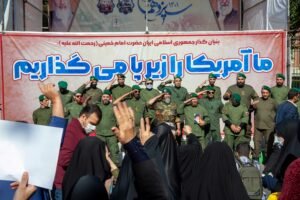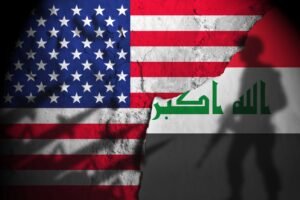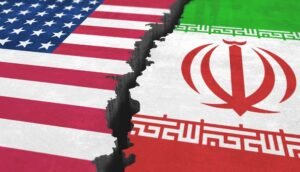
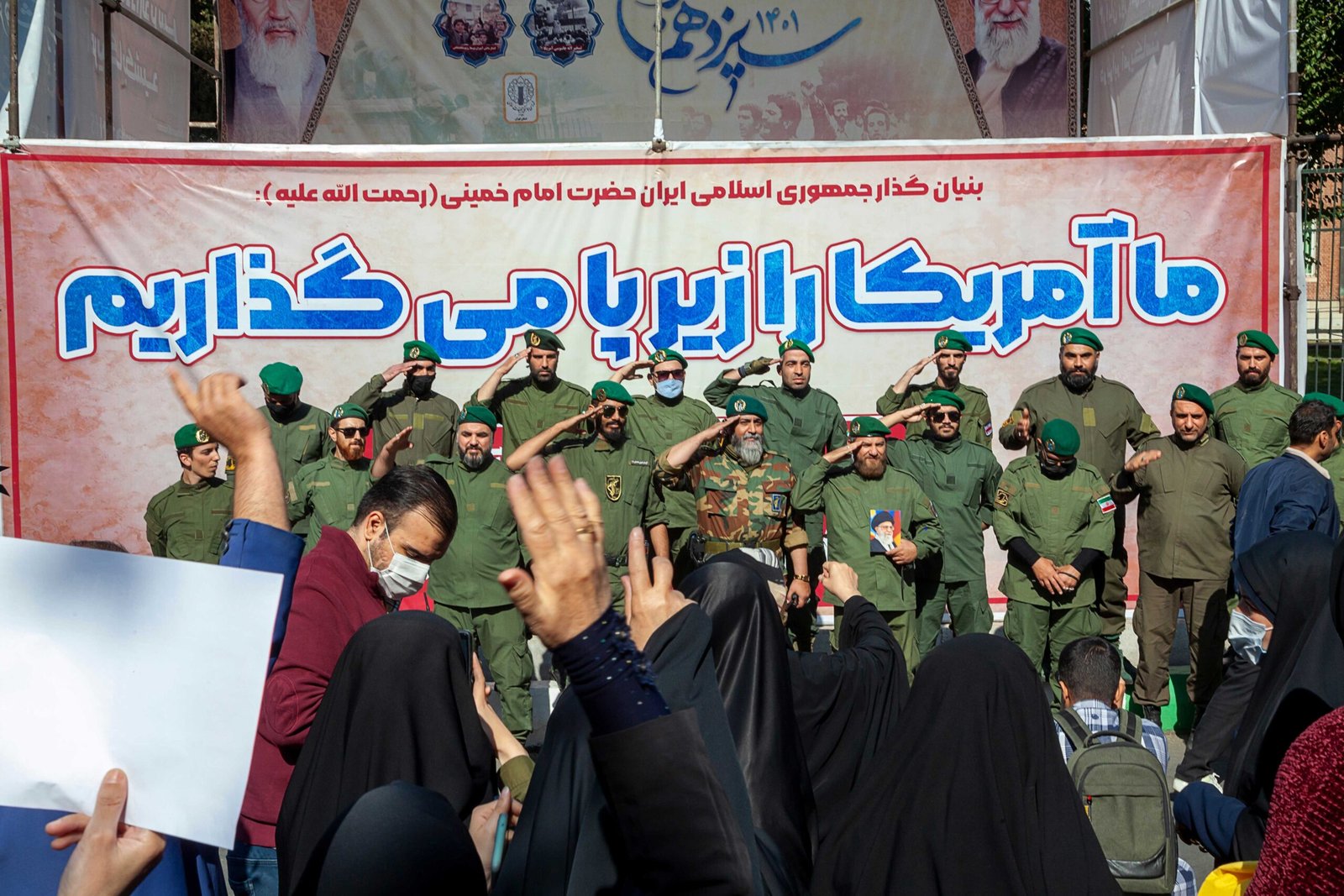
The Islamic Republic – historically dominated by its religious leadership – has increasingly come under military control[i] since the beginning of American and Israeli airstrikes on Iran in February 2026. Previously, Ali Khamenei, the former Supreme Leader of Iran, exercised ultimate authority over the civilian government, religious council, and the armed forces.
Against the backdrop of Khamenei’s assassination[ii], his son and successor, Mojtaba Khamenei, has reportedly been absent from public view[iii] throughout the war, and there have been doubts[iv] about whether the new Supreme Leader is in charge of Iran. The Iranian Revolutionary Guards Corps (IRGC) is leading many of the press conferences and conducting autonomous strikes without consulting with the civilian government.
Without a Supreme Leader capable of exercising effective authority over the armed forces, Iran is quietly transforming from a theocracy into a military dictatorship, potentially bringing greater repression and fewer opportunities for diplomatic engagement to contain regional tensions.
Khamenei’s assassination and the implementation of the Mosaic doctrine
During the first several hours of the 2026 Iran war, Ali Khamenei and much of the religious and military leadership were killed in a series of decapitation strikes conducted by Israel and the United States.[v] However, despite these early operational successes, the IRGC had prepared for such a scenario and responded by activating its existing contingency plans.
Under Iran’s Mosaic defence doctrine[vi], the centralized command structure, previously under Ali Khamenei’s authority, was designed to devolve operational authority[vii] to 31 regional commanders and their units. The doctrine aims to preserve military command continuity[viii] during wartime, ensuring that the elimination of senior leaders does not incapacitate the entire command structure.
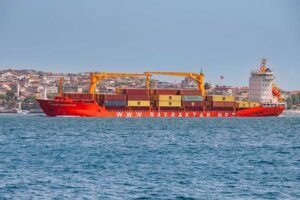
During the war, the autonomous IRGC units have been responsible for devastating strikes on energy facilities and other infrastructure in Gulf states[ix], and disrupted shipping traffic through the Strait of Hormuz[x] for more than eight months. Furthermore, the IRGC has kept its missile program intact, preserving missile facilities within fortified mountainous terrain.
Despite tens of thousands of airstrikes[xi], the IRGC, the regular Iranian army and affiliated militias remain operational despite sustained airstrikes. Ali Khamenei had exercised ultimate authority over the IRGC[xii], an authority the civilian government has been unable to replicate. American assumptions of a quick collapse may have transformed Iran into a military dictatorship.
The Islamic Republic as a de facto military dictatorship
After the United States and Iran negotiated a Memorandum of Understanding (MoU)[xiii] through mediation convened by Pakistan and Qatar, the negotiations broke down during the summer. According to a report[xiv] by The New York Times, hardline IRGC factions continued attacking civilian maritime vessels[xv] in the Strait of Hormuz during the negotiations, contributing to the breakdown of the MoU.
During that same period, Iran’s civilian government focused on sanctions relief[xvi] and was caught off guard by the hardline stance[xvii] of several IRGC factions. However, the civilian government has minimal authority to rein in the hardline militarists[xviii] without Mojtaba Khamenei’s intervention. With the new Supreme Leader reportedly recovering and absent from public view, the IRGC appears to be exercising increasing autonomy over military and political decisions.
One factor that maintained cohesion within the Islamic Republic’s political systems was a powerful Supreme Leader who was respected by religious, military, and civilian authorities alike. In 2026, Mojtaba Khamenei has yet to demonstrate the political and religious authority[xix] exercised by his father and Ruhollah Khomeini.
Whereas the Supreme Leader, religious factions, and civilian leadership ordered crackdowns and massacres against Iranian civilians, it is ultimately the IRGC and its affiliated militias and supporters that directly carry them out. With the IRGC controlling substantial military and security capabilities, political power in Tehran now increasingly resides with hardline military factions, and the U.S. may have miscalculated[xx] by prematurely eliminating the one person who kept the hardliners under control.
Parallels with Imperial Japan
Iran’s de facto transformation into a military dictatorship following Ali Khamenei’s assassination is now bears parallels to Imperial Japan during World War II.[xxi] Imperial Japan’s parliament (Diet) was side-lined, as the military increasingly dominated political decision making while Emperor Hirohito retained formal authority as figurehead.[xxii]
Akin to Imperial Japan, Mojtaba Khamenei’s apparent inability to exercise visible leadership has coincided with growing IRGC autonomy, while the civilian government has exercised limited influence over the course of the war[xxiii], as illustrated by the role of IRGC hardliners in derailing the MoU.
The IRGC is leading an asymmetrical military campaign.[xxiv] Seeking to deter further attacks by raising the regional costs of the conflict, the IRGC has adopted tactics comparable to those of Imperial Japan. Iran has struck not only energy infrastructure[xxv], but also water desalination plants[xxvi] and civilian airports[xxvii] in Gulf states.
Simultaneously, the United States is conducting a campaign dominated by airstrikes[xxviii], reflecting the considerable military and political risks of deploying ground forces. This recalls American concerns about casualties during Operation Downfall[xxix], the proposed invasion of mainland Japan in 1945. Instead, for now, the Trump administration is enacting a naval blockade[xxx] in order to compel Iran to capitulate or accept a negotiated settlement on terms favourable to Washington, recalling aspects of the American strategy against Japan.
As during the Allied naval blockade of Imperial Japan[xxxi], when Japanese military leadership continued to resist surrender[xxxii] despite widespread civilian malnutrition and economic degradation, the IRGC has maintained a hardline stance on limited negotiations even if tens of millions of Iranians suffer. The IRGC is hoping its war of attrition and asymmetrical warfare will eventually force the United States to end the war favourably on Tehran’s terms.[xxxiii]
The IRGC’s ability to restrict shipping through the Strait of Hormuz remains one of its most valuable strategic assets. Still, with global energy exports nearing pre-war levels[xxxiv], Iran may face growing pressure to escalate the war through attacks on additional regional military or economic targets.
What comes next
The 2026 Iran war has unfolded as neither the U.S. nor Iran’s hardline factions anticipated. Rising energy prices stemming from the war could undermine President Trump and the Republican Party ahead of the November midterm elections.[xxxv] Meanwhile, the naval blockade[xxxvi] threatens to push Iran’s economy towards a breaking point.
Nevertheless, despite imposing significant costs on the U.S. military and retaining leverage through the Strait of Hormuz and its Houthi allies near Bab al-Mandeb[xxxvii], the IRGC could push Iran towards economic collapse while worsening malnutrition and public anger[xxxviii] over the naval blockade. As hardline officers consolidate their control and continue making maximalist demands that Washington is unlikely to accept, the ongoing conflict could result in a total war with heightened civilian casualties in the region.
The war could follow a trajectory similar to that of Imperial Japan during World War II, where hardline flag officers were willing to accept heavy civilian casualties[xxxix] in order to exhaust U.S. forces in the Pacific. The IRGC and its affiliates, which have already violently suppressed their own people, may seek to prolong the conflict in anticipation of mounting economic and political pressure on Washington. A major Republican defeat in the midterm elections could also constrain Trump’s ability to secure congressional funding[xl] for continued military operations.
The IRGC, now exercising de facto leadership over the country akin to Imperial Japan’s militaristic control, appears determined to maintain a maximalist foreign policy and an uncompromising domestic stance – overriding civilian and religious authority and contributing to the prolonged diplomatic impasse in the war. With both Washington and Tehran refusing to compromise amid a devastating naval blockade, the IRGC may be forced into another prolonged round of military strikes, with potentially grave consequences for Iranian civilians and the wider region.
[i] Farhadi, E. (2026). “Iran: From clerical rule to military capture”, DW, 11 June 2026, retrieved from: https://www.dw.com/en/iran-from-clerical-rule-to-military-capture/a-77509196.
[ii] Burke, J. (2026). “’Sixty seconds, that’s all it took’: the clinical Israeli-US operation to kill Ali Khamenei”, The Guardian, 1 March 2026, retrieved from: https://www.theguardian.com/world/2026/mar/01/how-israeli-sleight-and-us-might-led-to-the-assassination-of-ali-khamenei.
[iii] Tabriz, A.M. (2026). “Iran leaders’ absence gives war camp room to shape policy”, Iran International, 22 August 2026, retrieved from: https://www.iranintl.com/en/202608192049.
[iv] Amwaj Media (2026). “The Power struggle behind Khamenei’s new appointments”, 26 August 2026, retrieved from: https://amwaj.media/en/article/inside-story-the-power-struggle-behind-khameneis-new-appointments.
[v] Alterman, J.B. (2026). “Why Decapitation Will Not Solve the United States’ Iran Problem”, CSIS, 3 March 2026, retrieved from: https://www.csis.org/analysis/why-decapitation-will-not-solve-united-states-iran-problem.
[vi] The Soufan Center (2026). “Iran’s ‘Mosaic Defense’ Strategy: Decentralization as Resilience Factor”, 9 March 2026, retrieved from: https://thesoufancenter.org/intelbrief-2026-march-9a/.
[vii] Carvalho, A. and Rego, J. (2026). “Mosaic Defense and Dispersed Command: Iran Strikes Back”, Small Wars Journal, 21 May 2026, retrieved from: https://smallwarsjournal.com/2026/05/21/mosaic-defense-dispersed-command/.
[viii] Bae Systems (N.D.) “What is Mosaic Warfare?”, retrieved from: https://www.baesystems.com/en-us/definition/what-is-mosaic-warfare.
[ix] Dougherty, M. and Levine, J. (2026). “Iran Conflict Exposes Gulf Security and Energy Vulnerabilities”, Legis1, 7 October 2026, retrieved from: https://legis1.com/news/iran-conflict-gcc-states-battered-by-as-us-policy.
[x] McBride, J. (2026). “America’s Suez Canal Conundrum”, Manara Magazine, 13 April 2026, retrieved from: https://manaramagazine.org/2026/04/americas-suez-canal-conundrum/.
[xi] The Times of Israel (2026). “War in numbers: US hit tens of thousands of targets in Iran, but capabilities remain”, 10 April 2026, retrieved from: https://www.timesofisrael.com/war-in-numbers-us-hit-tens-of-thousands-of-targets-in-iran-but-capabilities-remain/.
[xii] Parpanchi, M. (2026). “A wartime succession in Iran: why the IRGC backed Mojtaba Khamenei”, Iran International, 4 March 2026, retrieved from: https://www.iranintl.com/en/202603048311.
[xiii] Bell, F. (2026). “Why Iran Signed the MOU and What It Preserved”, Manara Magazine, 8 July 2026, retrieved from: https://manaramagazine.org/2026/07/why-iran-signed-the-mou-what-it-preserved/.
[xiv] Fassihi, F. (2026). “How Iran’s Hard-Liners Prevailed and Sabotaged U.S. Peace Deal, New York Times, 13 September 2026, retrieved from: https://www.nytimes.com/2026/09/13/world/middleeast/iran-hard-liners-sabotaged-peace-deal.html.
[xv] Zaman, H. (2026). “The IRGC and the Collapse of the Strait of Hormuz Deal”, RealClear Defense, 27 July 2026, retrieved from: https://www.realcleardefense.com/iran/articles/the-irgc-and-the-collapse-of-the-strait-of-hormuz-deal-2026-07-24.
[xvi] Squire Patton Boggs (2026). “Iran deal uncertainty threatens sanctions relief”, retrieved from: https://www.squirepattonboggs.com/insights/publications/iran-deal-uncertainty-threatens-sanctions-relief/.
[xvii] Morady, F. (2026). “Iran’s ‘hardliners’: who they are, what they believe and why they matter”, The Conversation, 8 July 2026, retrieved from: https://theconversation.com/irans-hardliners-who-they-are-what-they-believe-and-why-they-matter-284691.
[xviii] Hussein, D. (2026). “Hardline Faction Reemerges in Iran and Calls for an ‘Islamic Government’”, Alhurra, 18 August 2026, retrieved from: https://alhurra.com/en/34494.
[xix] Tabriz, A.M. (2026). “The Absent Leader: How Iran Is Constructing the Image of Mojtaba Khamenei”, Iran Wire, 5 October 2026, retrieved from: https://iranwire.com/en/features/158466-the-absent-leader-how-iran-is-constructing-the-image-of-mojtaba-khamenei/.
[xx] Jayasundera, S. (2026). “America’s Miscalculation Has Unleashed a Region It Can No Longer Control”, Eurasia Review, 21 September 2026, retrieved from: https://www.eurasiareview.com/21092026-americas-miscalculation-has-unleashed-a-region-it-can-no-longer-control-oped/.
[xxi] Miyake, K. (2026). “Today’s Iran is like Japan in 1944”, The Canon Institute for Global Studies, 12 March 2026, retrieved from: https://cigs.canon/en/article/20260319_9780.html.
[xxii] Atomic Heritage Foundation (N.D.) “:Emperir Hirohito”, retrieved from: https://ahf.nuclearmuseum.org/ahf/profile/emperor-hirohito/.
[xxiii] Harrison, R. (2026). “Iran’s Strategic Thinking: Lessons Learned and What Comes Next”, Middle East Institute, 28 September 2026, retrieved from: https://mei.edu/publication/irans-strategic-thinking-lessons-learned-and-what-comes-next/.
[xxiv] Feldstein, S. (2026). “The Unintended Consequences of Iran’s Asymmetric Strategy and America’s AI War”, Carnegie Endowment, 13 May 2026, retrieved from: https://carnegieendowment.org/research/2026/05/the-unintended-consequences-of-irans-asymmetric-strategy-and-americas-ai-war.
[xxv] McBride, J. (2026). “The Energy Crisis from the Iran War Shows How Vulnerable Taiwan is to a Naval Blockade”, Atlas Institute for International Affairs, 27 April 2026, retrieved from: https://atlasinstitute.org/the-energy-crisis-from-the-iran-war-shows-how-vulnerable-taiwan-is-to-a-naval-blockade-2/.
[xxvi] Shehabi, M. (2026). “War on Iran: The Dangers of Attacking Water Desalination Plants in the Gulf”, Arab Center Washington DC, 28 April 2026, retrieved from: https://arabcenterdc.org/resource/war-on-iran-the-dangers-of-attacking-water-desalination-plants-in-the-gulf/.
[xxvii] Nereim, V. (2026). “Iran Launches Attack on Kuwait, Enflaming Tensions in Region”, The New York Times, 3 June 2026, retrieved from: https://www.nytimes.com/2026/06/03/world/middleeast/iran-kuwait-airport-strike.html.
[xxviii] Al-Smadi, M. (2026). “Projected Military Scenarios of a War Between The United States and Iran and Their Regional Implications”, Politics & Society, 1 April 2026, retrieved from: https://politicsociety.org/2026/04/01/projected-military-scenarios-of-a-war-between-the-united-states-and-iran-and-their-regional-implications/?lang=en/.
[xxix] Naval History and Heritage Command (2021). “Operations Downfall and Ketsugo”, retrieved from: https://www.history.navy.mil/about-us/leadership/director/directors-corner/h-grams/h-gram-057/h-057-1.html.
[xxx] Council on Foreign Relations (2026). “United States Blockades Strait of Hormuz After U.S.-Iran Talks”, 13 April 2026, retrieved from: https://www.cfr.org/articles/united-states-blockades-strait-of-hormuz-after-u-s-iran-talks?gad_source=1&gad_campaignid=23819513442&gbraid=0AAAAAD-E15kquk1GFOH8I3QMQwyMHhf72&gclid=CjwKCAjwirLWBhBBEiwAlItbEouI1HiFPYTtfmaMz9Vf2BXonPBBu_T5s3v8Vk5UoJmMGAYrEhWcExoC–YQAvD_BwE.
[xxxi] Lott, A.S. (1959). “Japan’s Nightmare-Mine Blockade”, U.S. Naval Institute, retrieved from: https://www.usni.org/magazines/proceedings/1959/november/japans-nightmare-mine-blockade.
[xxxii] History Guild (2026). ”The Uncountable Crimes of Imperial Japan”, 16 February 2026, retrieved from: https://historyguild.org/the-uncountable-crimes-of-imperial-japan/?srsltid=AU7gw4W_nQr25eWEfHv0LmhYk39qQgnpYmmCUQvuomA52Vt98Bg3a6SR.
[xxxiii] The New Region (2026). “Iran reaffirms war-end conditions amid warnings of possible US attacks”, 8 October 2026, retrieved from: https://thenewregion.com/posts/6746/iran-reaffirms-war-end-conditions-amid-warnings-of-possible-us-attacks.
[xxxiv] Ghaddar, A. (2026). “Gulf oi l flows rise to average 81% of pre-war rate in September, data shows”, Reuters, 6 October 2026, retrieved from: https://www.reuters.com/business/energy/gulf-oil-flows-rise-average-81-pre-war-rate-september-data-shows-2026-10-06/.
[xxxv] Peoples, S., Bedayn, J. and Cooper, J.J. (2026). “Rising gas prices frustrate voters. Trump says it’s an ‘inexpensive price to pay’ for the Iran war”, PBS News, 21 September 2026, retrieved from: https://www.pbs.org/newshour/politics/rising-gas-prices-frustrate-voters-trump-says-its-an-inexpensive-price-to-pay-for-the-iran-war.
[xxxvi] The Economist (2026). “America’s blockade is breaking Iran’s economy”, 8 October 2026, retrieved from: https://www.economist.com/middle-east-and-africa/2026/10/08/americas-blockade-is-breaking-irans-economy.
[xxxvii] Lever, A. and Warner, L.A. (2026). “The Impacts of the Houthis’ Advance Could Extend Well Beyond Saudi Arabia”, Carnegie Endowment, 23 September 2026, retrieved from: https://carnegieendowment.org/emissary/2026/09/houthis-bab-al-mandeb-impacts-saudi-arabia-somaliland.
[xxxviii] McLaughlin, R. (2026). “Maritime Blockade and Its Starvation Effect: A Key Material Element in the Crime of Genocide?”, Lieber Institute, 15 September 2026, retrieved from: https://lieber.westpoint.edu/maritime-blockade-starvation-effect-key-material-element-crime-genocide/.
[xxxix] Arens, M.P. (N.D). “Operation Ketsu-go”, in Amphibious Corps Planning for Operation Olympic and the Role of Intelligence in Support of Planning.
[xl] Zengerle, P. (2026). “US Senate rejects Democratic-led resolution to curb Trump’s Iran war powers”, Reuters, 24 September 2026, retrieved from: https://www.reuters.com/world/us/us-democrats-tee-up-pre-election-war-powers-vote-some-republicans-break-with-2026-09-24/.