The US-Saudi nuclear energy deal, also known as a 123 Agreement, is the culmination of Riyadh’s decades-long effort to diversify its energy mix, reduce the massive amount of oil and gas consumed domestically and free more hydrocarbons for export and higher-value uses.
Electricity demand in the kingdom has grown rapidly due to population growth, urbanization, air conditioning and energy-intensive water desalination plants. With local energy consumption projected to surge threefold by 2030, continued reliance on fossil fuels for domestic electricity production risks reducing Saudi Arabia’s export revenues, compressing its fiscal space to finance the Vision 2030 and achieve strategic autonomy.
According to the International Energy Administration (IEA), natural gas and oil account for about 58% and 41% of Saudi Arabia’s electricity generation respectively.[i] By replacing just a fraction of fossil fuels with nuclear power, Riyadh can redirect the displaced crude and gas to higher-value industrial sectors, diversifying its economy and pushing non-oil exports.
Nuclear energy is expensive.[ii] Implementing such a project requires enormous upfront investment, long timeline and sophisticated regulatory institutions. In comparison, solar energy is exceptionally attractive, especially for Saudi Arabia, which has abundant sunlight and large tracts of land that make the country suitable for constructing some of the world’s lower-cost solar projects.
Riyadh is not choosing between renewables and nuclear; it is pursuing both as part of its dual-track strategy. Through the Vision 2030 programme, Saudi Arabia initially set a target of generating 9.5 gigawatts (GW)[iii] of renewable energy. By the end of 2025, the total capacity of proposed renewable energy projects had reached approximately 64GW[iv] with solar projects in Shaybah and Najran producing electricity at just $1.04 cents/kWh and $1.09 cents/kWh.[v] While the United States is emerging as the kingdom’s partner in civil nuclear energy, China has become indispensable to Riyadh’s energy transition[vi] through its low-cost solar panel manufacturing and dominance in clean-energy supply chains.
At the same time, Saudi Arabia is undergoing a rapid industrial transformation. Heavy industries such as mining, petrochemical and manufacturing require stable, continuous electricity at scale. As nuclear reactors provide uninterrupted baseload power and high-temperature industrial heat that solar and wind technologies struggle to deliver, the kingdom has been seeking a nuclear energy cooperation deal with the U.S. to advance its economic ambitions.
Earlier, the Biden administration offered Riyadh a civil nuclear cooperation agreement and security guarantees[vii], tying it with Saudi normalization with Israel. Riyadh signalled to proceed with the “grand bargain” yet following Hamas’ 7th October attacks and Israel’s military operations in the Gaza Strip and beyond, it reverted to its prior stance in February 2024, calling for an independent Palestinian state[viii] before establishing formal diplomatic relations with Israel. As nuclear negotiations with Washington stalled, Saudi Arabia signed a memorandum of understanding (MOU) with Beijing[ix] on nuclear safety and security at the first China-GCC Forum on Peaceful Use of Nuclear Technology.
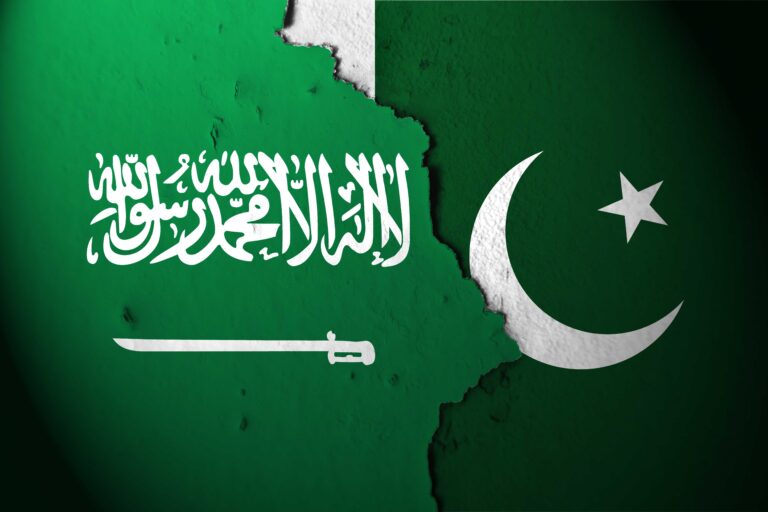
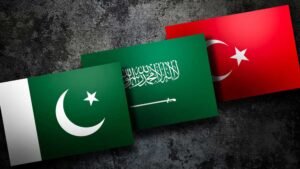
Saudi Arabia knew that the most effective way to shield its nuclear ambitions from potential sanctions and international scrutiny over proliferation risks was to secure a nuclear cooperation deal with the United States. The MOU with Beijing gave Riyadh the crucial leverage to push back against the United States’ precondition and showcase that it had alternatives if America remained inflexible. Saudi Arabia further indicated its determination to pursue an independent foreign policy by signing a mutual defence pact with Pakistan in September 2025 that vowed to consider an aggression on either as an aggression against both.
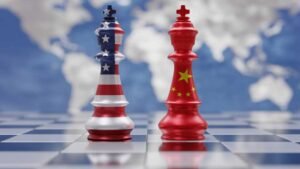
Unlike many countries struggling to navigate intense U.S.-China rivalry, the kingdom has successfully turned the great-power competition to its advantage, using its ties with Beijing to extract concessions from Washington.
The nuclear energy deal is being celebrated as a “win”[x] in the United States against China and Russia even as the U.S. has 123 Agreements with dozens of countries, including China.[xi] It rather represents Saudi Arabia’s diplomatic triumph given it has secured a pathway for nuclear cooperation without any commitment to formalize ties with Israel. Unlike many countries struggling to navigate intense U.S.-China rivalry, the kingdom has successfully turned the great-power competition to its advantage, using its ties with Beijing to extract concessions from Washington.
Meanwhile, China is already deeply embedded in the regional energy infrastructure and economic landscape. In addition to strengthening collaboration with Gulf nations in the renewable sector, China has overtaken[xii] the U.S. and European Union to emerge as the GCC’s largest trading partner while demonstrating its utility as a peace broker – such as in the case of the Saudi-Iran rapprochement.
The United States cannot realistically expect Saudi Arabia to exclude China from its energy transition since Beijing has capabilities, scale and cost advantages that are difficult to replicate elsewhere. Through the agreements such as the civil nuclear deal, Washington could, however, ensure that China’s role in the kingdom does not extend beyond trade, infrastructure and green technology and the United States retains an outsized influence in shaping Saudi Arabia and the region’s future economic and strategic trajectory.
Still, by conditioning the nuclear agreement with Saudi Arabia’s participation in the Abraham Accords, President Donald Trump has once again vindicated that Riyadh’s approach is heading down the right path. If Washington continues to make access to nuclear technology contingent on political concessions, it risks ceding more ground to China in the region. The Middle Kingdom may not replace the United States as Riyadh’s principal strategic ally but it will create an opportunity for the Beijing to establish itself as Saudi Arabia’s long-term partner in the region.
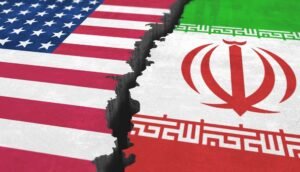
Amid an intense and ongoing U.S.-Iran conflict, the Washington-Riyadh nuclear agreement has gained renewed attention. Yet, Saudi Arabia’s focus remains on accelerating Vision 2030, which requires diplomatic engagement with Tehran, security guarantees and civil nuclear cooperation with Washington and deepening economic ties with Beijing. This omnidirectional diplomacy enables Riyadh to manage threats from Iran’s regional proxies, acquire advanced weapons from the U.S. and maintain strong trade ties with its largest crude buyer and technology partner, China.
Saudi Arabia is doing precisely what Trump’s National Security Strategy and National Defense Strategy expect from its regional allies. Even before these strategies called on regional allies to assume greater responsibility for their own defence,[xiii] the kingdom had signed a mutual defence pact with Pakistan. Adapting to Trump’s transactional approach, Crown Prince Mohammed bin Salman during his visit to the White House last year raised his investment pledge in the United States from $600 billion to nearly $1 trillion[xiv], targeting infrastructure, technology and industry. Through these initiatives, Riyadh diversified its security partnerships without abandoning Washington as a primary security anchor while broadening its relationship with the United States on a more solid, durable foundation.
The kingdom’s approach can be summed up in one word: pragmatism. As the United States redefines its role in the Middle East, Saudi Arabia is adjusting just as quickly. By avoiding getting pulled in the regional conflicts and expanding cooperation with Washington beyond defence and security into higher-growth sectors such as artificial intelligence, cloud computing and semiconductors, Riyadh is aligning itself with the “America First” agenda, Trump’s blueprint emphasizing investment, technology and industrial renewal.
In return, Riyadh is securing critical strategic assets like advanced weapons, civil nuclear cooperation and frontier chips to accelerate its Vision 2030’s goals of economic diversification and digital leadership while elevating collaboration with China on trade, manufacturing and clean-energy infrastructure.[xv] This multi-faceted approach allows Saudi Arabia to successfully leverage the distinct capabilities of the two major powers to pursue its own national strategic objectives and foster its own modernization.
[i] IEA (2023). “Saudi Arabia: Sources of electricity generation”, retrieved from: https://www.iea.org/countries/saudi-arabia/electricity.
[ii] Plummer, D. (2025). “Power Play: The Economics Of Nuclear Vs. Renewables”, Forbes, 12 February 2025, retrieved from: https://www.forbes.com/sites/dianneplummer/2025/02/12/power-play-the-economics-of-nuclear-vs-renewables/.
[iii] Vision 2030 (2016). Retrieved from: https://www.vision2030.gov.sa/media/rc0b5oy1/saudi_vision203.pdf.
[iv] Visison 2030 (2025). “Vision 2030 2025 Annual Report”, retrieved from: https://www.vision2030.gov.sa/en/annual-reports.
[v] The Renewable Energy Institute (2025). “Saudi Arabia Awards $2 Billion Contracts for Five Renewable Energy Projects”, retrieved from: https://www.renewableinstitute.org/saudi-arabia-awards-2-billion-contracts-for-five-renewable-energy-projects/.
[vi] Vanderbilt, D. (2026). “From Zero to Fourteen Gigawatts: Saudi Arabia’s Renewable Energy Sprint”, Saudi Vision 2030, 18 April 2026, retrieved from: https://vision2030.ai/analysis/renewable-energy-sprint/.
[vii] Blanchard, C.M. (2024). “Possible U.S.-Saudi Agreements and Normalization with Israel: Considerations for Congress”, 27 August 2024, retrieved from: https://www.congress.gov/crs-product/R48162.
[viii] Ministry of Foreign Affairs of the Kingdom of Saudi Arabia (2024). “The Ministry of Foreign Affairs states the discussions between the Kingdom Saudi Arabia and the United States of America on the Arab-Israeli peace process”, 2 July 2024, retrieved from: https://www.mofa.gov.sa/en/ministry/statements/Pages/The-Ministry-of-Foreign-Affairs-stated-that-regarding-the-discussions-between-Saudi-Arabia-and-the-US.aspx.
[ix] Hu, Y. (2025). “China, Saudi Arabia strengthen nuclear safety collaboration”, Global Times, 21 April 2025, retrieved from: China, Saudi Arabia strengthen nuclear safety collaboration – Global Times.
[x] Atlantic Council (2026). “Reading between the lines of the new US-Saudi nuclear agreement”, 22 July 2026, retrieved from: https://www.atlanticcouncil.org/dispatches/dispatches-epertsreact-wide-template-20260818/.
[xi] U.S. Department of State (N.D.) “123 Agreements”, retrieved from: https://www.state.gov/bureau-of-international-security-and-nonproliferation/releases/2025/01/123-agreements/.
[xii] Middle East Council on Global Affairs (2026). “China-GCC Relations in an Emerging Multipolar Order”, retrieved from: https://mecouncil.org/publication/china-gcc-relations-in-an-emerging-multipolar-order/.
[xiii] The White House (2025). “National Security Strategy of the United States of America”, November 2025, retrieved from: https://www.whitehouse.gov/wp-content/uploads/2025/12/2025-National-Security-Strategy.pdf.
[xiv] The White House (2025). “Fact Sheet: President Donald J. Trump Solidifies Economic and Defense Partnership with the Kingdom of Saudi Arabia”, 18 November 2025, retrieved from: https://www.whitehouse.gov/fact-sheets/2025/11/fact-sheet-president-donald-j-trump-solidifies-economic-and-defense-partnership-with-the-kingdom-of-saudi-arabia/.
[xv] Soliman, M. (2025). “Saudi Arabia’s AI ambition, and what it means for the United States”, Middle East Institute, 5 June 2025, retrieved from: https://mei.edu/publication/saudi-arabias-ai-ambition-and-what-it-means-united-states/.