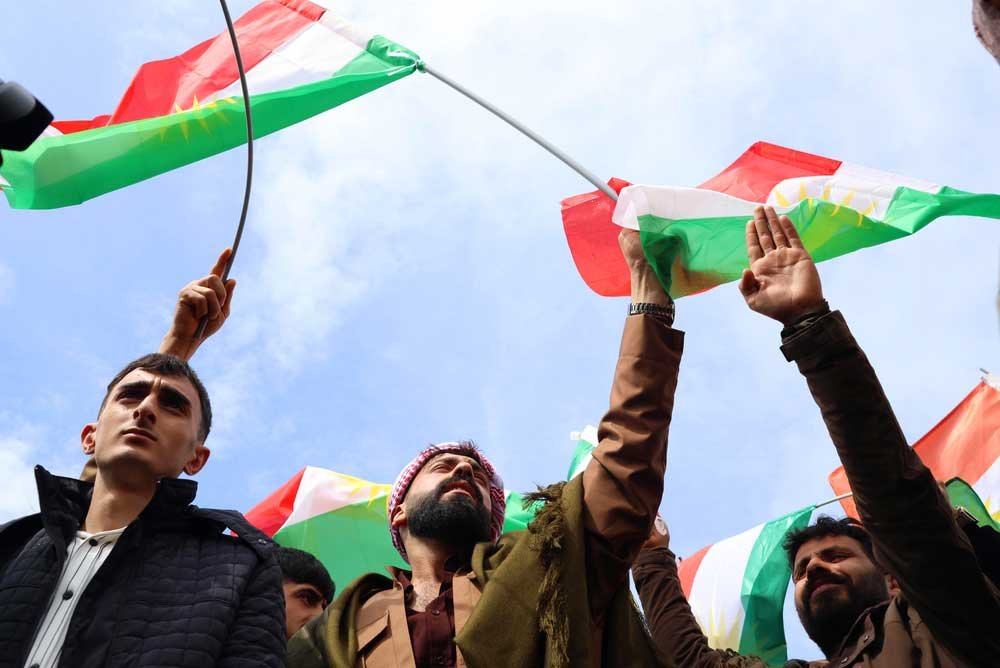
The Turkish Parliament’s ratification on 10th August of what became known as the “Framework Law” – officially titled the “Law on Strengthening National Solidarity and Social Integration” (Law No. 7595)[i] – represented a strategic turning point in Turkish domestic politics and a development that could influence the country’s foreign policy. The legislation enjoyed broad support, securing a majority of 468 votes out of 600.[ii] The law entered into force on 18th August, following President Recep Tayyip Erdoğan’s approval and its publication in the Official Gazette.
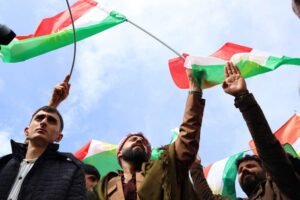
The law aims to end the armed conflict with the Kurdistan Workers’ Party (PKK) by establishing a legal framework for the disarmament and reintegration of its fighters. Significantly, it brings the Turkish parliament into a political process that had previously been dominated by the executive and security institutions, marking a shift in the mechanisms through which the conflict is being addressed.
The current process dates to October 2024, when Nationalist Movement Party (MHP) leader Devlet Bahçeli called for Abdullah Öcalan, the imprisoned PKK leader, to play an active role in ending the conflict in exchange for amnesty and an opportunity to engage in political activity.[iii] Negotiations between Turkish intelligence officials and Öcalan, who has been imprisoned on İmralı Island since 1999, subsequently accelerated. Procedural steps nevertheless remained stalled until parliament passed the Framework Law, which provided a legal basis for advancing the process. Both domestic and international factors have shaped its development.
Erdoğan’s approach to the issue appears shaped in part by domestic political considerations, particularly the risk that concessions to the PKK could weaken his support among nationalist voters. The process could also serve Erdoğan’s domestic political interests by creating an avenue for securing Kurdish support for constitutional amendments, including potential changes affecting presidential elections. Following the NATO summit in Ankara in July[iv], and amid stronger US support for Turkey’s regional role and position within the alliance, Erdoğan moved to reactivate the process.[v] In doing so, he moved away from his previous position that parliament should not legislate on measures benefiting PKK members before the organization had fully disarmed.[vi] Instead, he gave parliament the green light to pass the “framework law,” linking its implementation to rigorous monitoring and verification mechanisms overseen by the intelligence services to ensure the PKK’s complete renunciation of armed activity.
The approaching 2028 presidential election creates a limited window for negotiating political compromises or constitutional amendments.
Erdoğan has also sought to capitalize on several domestic factors. First, the approaching 2028 presidential election creates a limited window for negotiating political compromises or constitutional amendments before electoral considerations come to dominate the political agenda. Second, competition over Erdoğan’s eventual succession has intensified uncertainty within the governing camp.[vii] Third, the talks with Öcalan have created the possibility of broader political understandings that could affect both the reconciliation process and future constitutional negotiations.
Under the existing legal framework[viii], the Turkish National Intelligence Organization (MIT) is tasked with preparing periodic reports assessing whether the PKK has ended its armed activities and dismantled its organizational structure. The reports are submitted to the National Security Council, chaired by Erdoğan. Following the Council’s approval, individual cases can be reviewed, subject to exclusions including those involving murder or life sentences.
Accordingly, the cases of those who meet the criteria are addressed through the postponement of prosecutions, investigations, and penalties, depending on the nature of the crimes attributed to them. Although the government maintains that these measures do not constitute a “general amnesty,” their practical effect resembles a form of conditional legal relief for approximately 3,500 to 3,600 prisoners and some 2,000 fighters in mountainous regions to return to their families and resume their normal lives.[ix] The law explicitly excludes those convicted of premeditated murder, as well as the organization’s leadership cadre, who are expected to seek asylum in Iraq or Europe.
The pro-government Turkish newspaper Hürriyet reported in late September that a four-way coordination mechanism has been established, involving Ankara, Baghdad, Erbil, and Sulaymaniyah, under the supervision of the Turkish National Intelligence Organization (MIT).[x] According to this mechanism, members of the Kurdistan Workers’ Party (PKK) will surrender their weapons to authorities in Erbil, Sulaymaniyah, or the central government in Baghdad. The weapons would then be inventoried, with the records retained by MIT.
According to the newspaper, under the proposed mechanism and outside Turkish borders, between 7,000 and 8,000 members of the PKK are expected to surrender their weapons and return to Turkey, particularly those who came from Iraq and Syria, coinciding with the announcement of the decision to dissolve the Syrian Democratic Forces (SDF).[xi]
In a parallel development, it is noted that the PKK enjoys a popular base estimated at 70,000 to 80,000 people in Europe[xii], including the organization’s leadership, and some of them could return to Turkey as soon as the law comes into effect.
In Sinjar, some 2,200 individuals[xiii] are reportedly expected to join the Iraqi army. In addition, approximately 8,000 residents of Makhmour camp[xiv] – families originally from southeastern Turkey – could return to Turkey.
In the same vein, the evacuation of PKK camps and hideouts will be subject to rigorous field monitoring, beginning in the Haftanin and Gara regions of Iraqi Kurdistan. Once the evacuation of these sites and the dismantling of the PKK’s organizational presence have been verified, the MIT will submit a detailed report to the Turkish National Security Council, which will then issue an official decree formally determining that the PKK’s organizational presence has ended.
Despite the potential significance of the process in ending four decades of conflict, Erdoğan has sought to retain substantial control over its implementation. The legislation does not itself guarantee broader political or democratic reforms, contributing to opposition concerns about how the process will be implemented. At the same time, opposing legislation tied to disarmament and an end to armed violence carries significant political costs, helping explain the breadth of parliamentary support.
Erdoğan’s influence over the process is evident in three areas. First, there is no independent third-party mechanism for monitoring implementation. Verification therefore remains largely in the hands of Turkish state institutions, giving the executive substantial influence over determinations of compliance. Second, MIT remains the principal state interlocutor with Öcalan, while the authorities tightly control access to him, including visits and correspondence. Third, the scope of any political concessions remains closely tied to the government’s broader political calculations. This gives Erdoğan leverage in negotiations with Öcalan and the Peoples’ Equality and Democracy Party (DEM Party), particularly over constitutional amendments and the timing of future elections.
Regionally, Ömer Çelik, the official spokesperson for the Justice and Development Party (AKP), affirmed that the goals of a “terror-free Turkey” and a “terror-free region” are inseparable and intertwined.[xv] He indicated that the parliament’s ratification of this law constitutes a firm response to imperialist and Zionist hegemonic projects, emphasizing that the repercussions of this decision will extend to the Iraqi, Syrian, and Iranian arenas.
Ankara seeks to alleviate the burden this issue has imposed on its foreign policy for the past four decades, thereby expanding its room for maneuver within the current regional balance of power.
Çelik’s remarks also point to the regional dimension of Ankara’s evolving approach to the Kurdish question. Through a security and geopolitical shift linked to developments in neighboring countries, Ankara seeks to alleviate the burden this issue has imposed on its foreign policy for the past four decades, thereby expanding its room for maneuver within the current regional balance of power. The most prominent strategic goal is to block any potential Israeli influence in Kurdish circles in the region.[xvi] [xvii] [xviii]
The Turkish-Kurdish reconciliation process faces a number of fundamental challenges, both internal and external. The most prominent of these can be summarized as follows:
First, internal PKK cohesion. Iranian influence over some PKK-linked actors could complicate implementation, particularly if factions opposed to disarmament resist Öcalan’s directives.[xix]
Second, the Syrian conflict. Turkey’s efforts to integrate the Syrian Democratic Forces (SDF) into Syrian state structures intersect with the PKK’s broader regional interests. Continued instability in northern and eastern Syria could strengthen incentives among some armed actors to retain their capabilities, complicating full disarmament.
Third, domestic nationalist opposition. Moves to constitutionally expand Kurdish rights could intensify tensions between Turkish nationalist and Kurdish constituencies, potentially generating political and social resistance to the process.
Fourth, Fourth, fragile political support. The government has yet to articulate clearly the ultimate political objectives of the process, while opposition support remains largely focused on disarmament and security. That support could weaken as negotiations move toward more politically sensitive questions, including Öcalan’s status, the “right to hope,” and constitutional reforms.
Fifth, limited transparency. The terms of the negotiations and their intended outcomes remain unclear. This creates room for competing interpretations, inflated expectations, and political disputes that could impede implementation.
The potential paths for the settlement process can be summarized in three main scenarios. One possibility is a split within the Kurdistan Workers’ Party (PKK) between a faction that refuses to lay down arms and another that adheres to Abdullah Öcalan’s directives. Despite such divisions, Erdoğan could initiate part of the Framework Law by granting amnesty to a limited number of PKK members imprisoned in Turkey, while linking further progress in the reconciliation process to securing Öcalan’s support in the upcoming elections and his endorsement of the desired constitutional amendments.
Another possibility is an escalation of tensions on the ground due to opposition to efforts to enshrine Kurdish rights in the constitution. Such tensions could paralyze the process and prevent the implementation of its provisions. In this case, Erdoğan could again attempt to win over the Kurdish voting bloc and secure Öcalan’s support in the elections, with the aim of resuming the reconciliation process after consolidating his political position.
A final scenario is the failure of the process if popular discontent intensifies and the PKK refuses to lay down its arms. This could lead to a resumption of armed clashes between Turkish security forces and PKK members. The risks of such an outcome would be compounded by security disturbances in Iran and their direct repercussions on Iraq and Syria, where the relevant actors could seek to exploit any resulting security vacuum to consolidate their influence on the ground.
[i] Grand National Assembly of Turkey (2026). “Minutes of the General Assembly of the Grand National Assembly of Turkey”, [in Turkish], retrieved from: https://www.tbmm.gov.tr/Tutanaklar/Tutanak/24290.
[ii] Kizil, N.T. (2026). “Turkiye’s terror-free initiative law enters into force”, Daily Sabah, 18 August 2026, retrieved from: https://www.dailysabah.com/politics/legislation/turkiyes-terror-free-initiative-law-enters-into-force
[iii] Abdulkarim, F. (2025). “Kurdish Dynamics: What Will Bahceli’s Initiative Bring?”, Russian Council, retrieved from: https://russiancouncil.ru/analytics-and-comments/columns/middle-east/kurdskaya-dinamika-chto-prineset-initsiativa-bakhcheli/.
[iv] Gasco, R. and Pavia, A. (2026). “Dispatch from Ankara: Turkey is establishing its own role in ‘NATO 3.0.’”, Atlantic Council, 13 July 2026, retrieved from: https://www.atlanticcouncil.org/dispatches/dispatch-from-ankara-turkey-is-establishing-its-own-role-in-nato-3-0/.
[v] Gunes, S. (2026). “In 2026 Ankarqa Summit, NATO 3.0. finds the Turkey it needs”, The Amargi, 14 July 2026, retrieved from: https://www.theamargi.com/posts/in-2026-ankara-summit-nato-3-0-finds-the-turkey-it-needs.
[vi] Krzyzanowska, Z. and Michalski, A. (2026). “Turkey: selective amnesty fro PKK members”, Centre for Eastern Studies, 11 August 2026, retrieved from: https://www.osw.waw.pl/en/publikacje/analyses/2026-08-11/turkey-selective-amnesty-pkk-members.
[vii] BirGun (2026). “The Palace’s statement: ‘The election will be held for Erdogan’: How will ‘reasonable’ boundaries be crossed?”, 19 September 2026, retrieved from: https://www.birgun.net/haber/the-palaces-statement-the-election-will-be-held-for-erdogan-how-will-reasonable-boundaries-be-crossed-735685.
[viii] Fraser, S. (2026). “Turkey’s parliament approves a pardon-like bill for thousands of PKK militants”, AP, 10 August 2026, retrieved from: https://apnews.com/article/turkey-parliament-bill-pkk-peace-effort-a9addfb69c8126f1d661d4f37ef74827.
[ix] Al Jazeera (2026). “Turkiye approves pardon-like bill for thousands of PKK fighters”, 10 August 2026, retrieved from: https://www.aljazeera.com/news/2026/8/10/turkiye-approves-pardon-like-bill-for-thousands-of-pkk-fighters.
[x] Sener, N. (2026). “Ankara-Baghdad-Erbil-Sulaymaniyah mechanism for the delivery of weapons”, Hurriyet, 31 August 2026, retrieved from: https://www.hurriyet.com.tr/yazarlar/nedim-sener/silahlarin-tesliminde-ankara-bagdat-erbil-suleymaniye-mekanizmasi-43290592.
[xi] BasNews (2026). “PKK Disarmament Plan: 2,200 Fighters To Join Iraqi Army”, 31 August 2026, retrieved from: https://www.hurriyet.com.tr/yazarlar/nedim-sener/silahlarin-tesliminde-ankara-bagdat-erbil-suleymaniye-mekanizmasi-43290592.
[xii] Wittrock, P. (2008). “How the PKK Operates in Europe”, Der Spiegel, 11 July 2008, retrieved from: https://www.spiegel.de/international/world/kurdish-propaganda-and-patriotism-how-the-pkk-operates-in-europe-a-565298.html.
[xiii] BasNews (2026). “PKK Disarmament Plan: 2,200 Fighters to Join Iraqi Army”, 31 August 2026, retrieved from: https://www.basnews.com/en/babat/918621.
[xiv] Frantzman, S.J. (2026). “Yazidi fighters disarm in Iraq’s Sinjar after a decade of division – what comes next? – analysis”, The Jerusalem Post¸ 14 September 2026, retrieved from: https://www.jpost.com/middle-east/article-908504.
[xv] Haberler (2026). “AK Party Spokesperson Celik’s message on the ‘framework law’: A clear will was demonstrated”, 11 August 2026, retrieved from: https://en.haberler.com/ak-party-spokesperson-celik-s-message-on-the-2296721/.
[xvi] Dag, V. (2026). “Turkey’s approach to the Kurds shapes regional security dynamics”, The Jerusalem Post, 29 April 2026, retrieved from: https://www.jpost.com/opinion/article-894409.
[xvii] Presidency of the Republic of Turkiye (2026). “Terror-free Turkiye process is the name of a strategic state vision regarding our country’s new century”, retrieved from: https://www.iletisim.gov.tr/english/haberler/detay/terror-free-turkiye-process-is-the-name-of-a-strategic-state-vision-regarding-our-countrys-new-century.
[xviii] Mis, N. (2026). “Strategtic meaning of grand Turkiye consensus”, Daily Sabah, 20 September 2026, retrieved from: https://www.dailysabah.com/opinion/columns/strategic-meaning-of-grand-turkiye-consensus.
[xix] Hussein, D. (2026). “Ankara and the PKK: What Iran Wants, and What It Can Still Do”, Al Hurra, 6 July 2026, retrieved from: https://alhurra.com/en/25550.