From the analysis of the historical evolution and contemporary orientations of foreign policy, it is clear that the traditional geopolitical narrative, which confines Greece to the role of a passive “bridge” between the European Union and the Middle East, has become obsolete. This conceptual framework, which has dominated Western diplomatic circles for decades, implies the existence of a static actor through which the political decisions and economic incentives of more powerful states are channelled. However, under the weight of intense systemic pressures and the rapid destabilisation of the regional subsystem, a fundamental structural realignment of Greek defence and diplomatic doctrines has been observed in recent years.[i] This realignment, which can be defined as the “Middle Easternisation” of Greek grand strategy, demonstrates Athens’ shift away from exclusive dependence on Euro-Atlantic institutions towards regional balancing tools that increasingly resemble the strategic choices of Gulf states.[ii]
To fully understand this shift, it is necessary to analyse the inherent weaknesses and institutional constraints of the European security system. Historically, a key premise of Greek national security was the assumption that full integration into Euro-Atlantic institutions and membership of the EU would provide a sufficient, almost automatic deterrent umbrella against revisionist pressures in the Eastern Mediterranean.[iii] That assumption was severely tested during the successive crises of the past decade. When tensions over maritime delimitation, sovereign rights, energy exploration, and naval confrontations reached their peak in 2020, Brussels’ response remained centred on diplomacy, conditionality, and the management of a possible EU-Turkey agenda, rather than on the projection of power.[iv]
The EU only offered, for the most part, normative declarations, diplomatic mediation efforts, and the prospect of ongoing economic dialogue. These tools of soft power, although often effective in lower-intensity disputes, proved inadequate in the face of a hard security logic. Greece gradually concluded that diplomatic correctness, when not accompanied by credible military deterrence, risks becoming a structural vulnerability.[v] Under these circumstances, waiting for the formation of a unified and robust European security policy was a luxury that the country’s national security could no longer afford. Consequently, Greek foreign policy began to incorporate elements of realpolitik more commonly associated with Gulf countries’ strategic practice. As Saudi Arabia and the United Arab Emirates have sought to reduce one-dimensional dependence on a single security provider through diversified and overlapping partnerships, Greece too adopted a more flexible balancing strategy in the Eastern Mediterranean.[vi]
The “Middle Easternisation” of Greek strategy is not limited to declarations but has been implemented through concrete patterns of military cooperation, joint defence planning, and political signalling that often sit alongside, rather than strictly within, NATO frameworks. The turning point that demonstrated the practical application of this new doctrine came in the summer of 2020. During the most serious crisis in the Aegean and the Eastern Mediterranean, one of the most immediate and tangible displays of solidarity did not come from traditional partners, but from Abu Dhabi. The redeployment of UAE aircraft and personnel to Souda Air Base in Crete[vii] for joint training with the Greek armed forces carried tactical value, but above all strategic symbolism, because it visibly inserted an Arab partner into a Mediterranean security setting.[viii]
This move was followed by the November 2020 agreement on joint cooperation in foreign policy and defence between Athens and Abu Dhabi, which Greek officials described as a strategic upgrade in bilateral relations[ix]. For Greece, the significance of the agreement lay not only in its formal content, but in the political signal that a member state of the EU and NATO had developed an explicitly security-oriented strategic understanding with an Arab power at a moment of regional tension.[x]
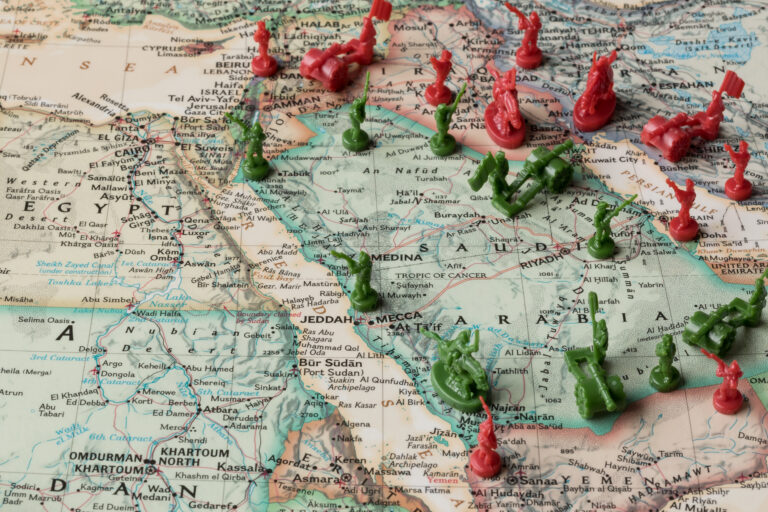
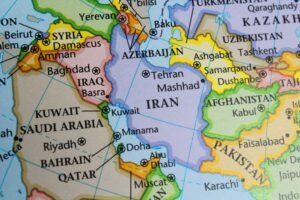
This disruptive dynamic expanded rapidly, incorporating Saudi Arabia into an emerging security axis. Athens deployed a Patriot anti-aircraft and anti-missile battery, together with the necessary personnel to operate it, to Saudi Arabia in 2021[xi] under an Armed Forces Status Arrangement Agreement. Greek officials framed the mission as a contribution to the protection of critical Saudi energy infrastructure[xii] and, by extension, broader energy security. This defence cooperation was validated in March 2026, when Greek Defence Minister Nikos Dendias confirmed that the battery made its first confirmed combat interception against Iranian ballistic missiles. At The military interoperability of the Athens-Riyadh axis deepened through recurring bilateral exercises.[xiii] This includes the Eye of the Falcon exercise[xiv], as well as the Hellenic-Saudi Strategic Partnership Council[xv] from 2025, which points to longer-term cooperation in defence, maritime navigation, communications, information technology, and energy connectivity.[xvi]
In the field of international relations theory, the emergence and consolidation of this axis calls for a re-examination of concepts such as the regional security complex. Academic literature has traditionally treated the Eastern Mediterranean and the Persian Gulf as distinct, if interacting, subsystems of International Relations. Yet the political and military initiatives of Athens, Riyadh, and Abu Dhabi increasingly blur this separation.[xvii] Through the intertwining of strategic interests and the integration of selected defence capabilities, these states are contributing to a more continuous arc of security cooperation. The structural logic behind this merger is intelligible from the perspective of defensive realism and regional security complex theory: the actors involved confront revisionist pressures, asymmetric threats, and the challenge of protecting critical maritime and energy corridors.[xviii]
By linking Greece’s naval and air-power projection capabilities in the Eastern Mediterranean with the economic and geopolitical weight of Saudi Arabia and the UAE, this axis multiplies the deterrent value of each participant. It also creates a mechanism for the exchange of strategic depth.[xix] For Gulf states, Greece offers an exceptionally capable and reliable gateway into the Mediterranean – and European – environment. For Greece, the Gulf is no longer merely a distant market, but an alternative centre of gravity that offers investment, energy partnerships, and forms of diplomatic and military solidarity that can be faster and more operationally direct than European consensus-building mechanisms.[xx]
In the longer term, the consolidation of this axis may also serve as a catalyst for greater strategic autonomy across the broader Middle East and North Africa. Athens’ cooperation with Riyadh and Abu Dhabi demonstrates that middle regional powers increasingly possess the political will and operational capacity to construct interregional security arrangements without relying at every stage on direct American guidance or mediation.[xxi] In that sense, the partnership reflects a broader process of the regionalisation of security, in which local actors assume greater responsibility for deterrence and stability in their immediate strategic environment.[xxii]
At the same time, Greece’s ability to manage and deepen this relationship is not without constraints. As is often the case, power resources do not automatically translate into political outcomes, especially when asymmetric threats, shifts in the energy market, or wider economic disruptions intervene. The long-term effectiveness of this evolving security complex therefore depends on the internal cohesion of the participating states and on sustained political commitment across changes of government and wider regional realignments.[xxiii]
In conclusion, the dominant narrative that described Greece as a neutral and passive bridge has become increasingly difficult to sustain. In its place has emerged a more active and explicitly realist geopolitical actor. The “Middle Easternisation” of Greek strategy – expressed through the adoption of more flexible balancing practices and the forging of a deeper Athens-Riyadh-Abu Dhabi alignment – constitutes one of the more important strategic shifts in the Eastern Mediterranean in recent years. It also serves as a warning to Brussels and Washington: where Western institutional mechanisms are perceived as slow, procedural, or overly risk-averse for frontline security environments, states will search for alternative, more operational partnerships. Greece appears to have been among the first European states to recognise and internalise that logic in a systematic way.
[i] Grigoriadis, I.N. and Tsourapas, G. (2022). “Understanding Greece’s New Foreign Policy towards the Arab World: Instrumentalisation, Balancing, and Emerging Opportunities,” Mediterranean Politics, 29(3), 307-330, retrieved from: https://doi.org/10.1080/13629395.2022.2148193.
[ii] Karagiannis, E. (2020). “The Silent Rise of Greece as a Mediterranean Power,” Royal United Services Institute, 16 November 2020, retrieved from: https://www.rusi.org/explore-our-research/publications/commentary/silent-rise-greece-mediterranean-power.
[iii] Council of the European Union (2020). “European Council Conclusions on External Relations, 1 October 2020,” 1 October 2020, retrieved from: https://www.consilium.europa.eu/en/press/press-releases/2020/10/01/european-council-conclusions-on-external-relations-1-october-2020/.
[iv] Adar, S. and Toygur, I. (2020). “Turkey, the EU and the Eastern Mediterranean Crisis: Militarization of Foreign Policy and Power Rivalry,” SWP Comment, 62, retrieved from: https://www.swp-berlin.org/publications/products/comments/2020C62_EasternMediterraneanCrisis.pdf.
[v] Grigoriadis and Tsourapas, “Understanding Greece’s New Foreign Policy.”
[vi] Lyristis, M. (2025). “Forging a Strategic Axis: The Deepening Partnership between Greece and Saudi Arabia,” HAPSc Policy Briefs Series, 6(1): 198-203, retrieved from: https://doi.org/10.12681/hapscpbs.43206.
[vii] Hellenic National Defence General Staff, (2020). “Redeployment of United Arab Emirates Personnel and Assets to the 115 Combat Wing in Souda,” 27 August 2020, retrieved from: https://geetha.mil.gr/metastathmeysi-prosopikoy-kai-meson-ton-inomenon-aravikon-emiraton-iae-stin-115-pm-stin-soyda/.
[viii] Dendias, N. (2022). “Minister of Foreign Affairs Nikos Dendias’ Speech at the Session of the Parliamentary Standing Committee on National Defence and Foreign Affairs,” Embassy of Greece in the United Arab Emirates, 15 March 2022, retrieved from: https://www.mfa.gr/missionsabroad/en/uae-en/news/minister-of-foreign-affairs-nikos-dendias-speech-at-the-session-of-the-parliamentary-standing-committee-on-national-defence-and-foreign-affairs.html.
[ix] Dendias, “Minister of Foreign Affairs Nikos Dendias’ Speech.”
[x] Prime Minister of the Hellenic Republic (2020). “Information Note on Prime Minister Kyriakos Mitsotakis’ Visit to Abu Dhabi and the Agreements That Were Signed,” 18 November 2020, retrieved from: https://www.primeminister.gr/en/2020/11/18/25315.
[xi] Hellenic Republic Ministry of National Defence (2021). “Minister of National Defence Nikolaos Panagiotopoulos Attends the Departure Ceremony of the Greek Contingent to Saudi Arabia,” 14 September 2021, retrieved from: https://www.mod.mil.gr/en/minister-of-national-defence-nikolaos-panagiotopoulos-attends-the-departure-ceremony/.
[xii] Hellenic Republic Ministry of National Defence (2026). “The Minister of National Defence Nikos Dendias Participates in 4th East Macedonia and Thrace Forum and Meets the Permanent Representative of the USA to NATO, Ambassador Matthew G. Whitaker,” 19 March 2026, retrieved from: https://www.mod.mil.gr/en/the-minister-of-national-defence-nikos-dendias-participates-in-4/.
[xiii] Hellenic National Defence General Staff (2021). “Redeployment of Royal Saudi Air Force Personnel and Assets to the 115 Combat Wing in Souda,” 13 March 2021, retrieved from: https://geetha.mil.gr/metastathmeysi-prosopikoy-kai-meson-tis-vasilikis-aeroporias-tis-saoydikis-aravias-stin-115-pteryga-machis-stin-soyda/.
[xiv] Saudi Press Agency (2022). “Saudi and Greek Air Forces Start Eye of the Falcon-3 Exercise in Greece,” 12 November 2022, retrieved from: https://spa.gov.sa/2400455; Lyristis, “Forging a Strategic Axis.”
[xv] Prime Minister of the Hellenic Republic (2025). “Agreed Minutes of the 1st Meeting of the Hellenic-Saudi Strategic Partnership Council in Al Ula Governorate, Kingdom of Saudi Arabia,” 13 January 2025, retrieved from: https://www.primeminister.gr/wp-content/uploads/2025/01/FINAL-MINUTES-GR-ALT.pdf.
[xvi] Hellenic Republic Ministry of National Defence (2023). “Statement by the Minister of National Defence Nikos Dendias after the Meeting with His Saudi Arabian Counterpart, Prince Khalid bin Salman, in Riyadh,” 9 November 2023, retrieved from: https://www.mod.mil.gr/en/statement-by-the-minister-of-national-defence-nikos-dendias-after/; Saudi Press Agency (2021). “Falcon Eye 2 Exercise Manoeuvres between Saudi, Greek Air Forces Kicked Off,” 25 May 2021, retrieved from: https://www.spa.gov.sa/w1562236.
[xvii] Lyristis, “Forging a Strategic Axis.”
[xviii] Buzan, B. and Waever, O. (2003). Regions and Powers: The Structure of International Security, Cambridge: Cambridge University Press.
[xix] Prime Minister of the Hellenic Republic, “Agreed Minutes of the 1st Meeting of the Hellenic-Saudi Strategic Partnership Council.”
[xx] Lyristis, “Forging a Strategic Axis.”
[xxi] Prime Minister of the Hellenic Republic (2025). “Prime Minister Kyriakos Mitsotakis’ Participation at the 1st High Level Strategic Cooperation Council between Greece and Saudi Arabia,” 13 January 2025, retrieved from: https://www.primeminister.gr/en/2025/01/13/35651.
[xxii] Lyristis, “Forging a Strategic Axis.”
[xxiii] Lyristis, “Forging a Strategic Axis.”