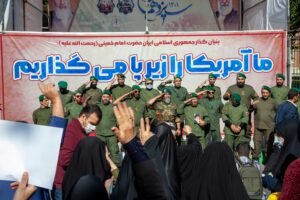
Since the outbreak of the conflict, speculation has continued to intensify over whether negotiations involving the United States, Iran, Israel, and Lebanon could produce a broader settlement. Iran initially advanced a 10-point proposal, while Washington responded with a wider 15-point framework, highlighting that both sides were offering opening positions rather than final terms. The first round of talks in Islamabad ended after 21 hours without a breakthrough.[i]
Several core disputes remained unresolved. On the nuclear file, U.S. demands appeared to move beyond limiting enrichment toward dismantling Iran’s programme altogether. At the same time, the Strait of Hormuz emerged as a central point of strategic leverage. In Lebanon, diplomatic tracks also deepened divisions: formal peace negotiations between Israel and the Lebanese government were welcomed by Israel’s ambassador to Washington and reportedly moved forward, yet proposals for a ceasefire with Hezbollah were rejected. Simultaneously, Hezbollah chief Naim Qassem said that talks between Israel and the Lebanese government were themselves unacceptable.[ii]
Following the failed negotiations, tensions rose sharply with the introduction of a U.S. naval blockade, followed by the closure of the Strait of Hormuz.[iii] A second round of talks has since been proposed involving the United States, Iran, Lebanon, and Israel, although Tehran has shown hesitation about participating. Far from signalling an imminent resolution, these developments suggest a widening diplomatic impasse alongside the growing risk of renewed escalation.
Negotiations
Washington has shown readiness for both peace and escalation both prior to talks and after. Before the talks commenced, signals of a possible ground invasion emerged, which were followed by the announcement of a naval blockade and mine-sweeping operations. Iran’s response was immediate, warning that any military presence near the Strait would be met with force. Taken together, this suggests the conflict is widening rather than being contained.
The U.S. has consistently said it destroyed Iran’s nuclear sites during the June war in 2025 –hitting Fordow Fuel Enrichment Plant and Natanz Nuclear Facility with bunker-buster bombs, and striking Isfahan Nuclear Technology Centre with Tomahawk missiles. Donald Trump even described the operation as a “complete obliteration” of Iran’s enrichment capacity.[iv]
However, the shift in language after the talks is what appears most striking. It goes even further – it is no longer just about stopping Iran from building a weapon. The language suggests Iran would not be allowed to have any nuclear capability at all, even for civilian use, which Tehran has always insisted on.[v] This marks a clear departure from the Joint Comprehensive Plan of Action (JCPOA), which focused on limiting Iran’s programme rather than eliminating it entirely. That shift matters. It shows this is not just about limits anymore, but total rollback – and that makes any deal much harder to reach.[vi]
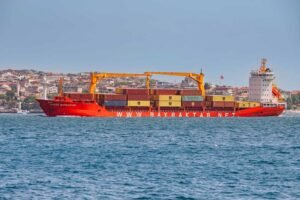
Diplomatic efforts remain on edge as both sides cling firmly to their postures. While Trump has expressed support for a lasting and comprehensive settlement – extending the ceasefire deadline and warning against a rushed agreement – his emphasis on securing the “best” possible deal depicts that Washington is unlikely to accept terms it sees as sub-optimal. Meanwhile, Tehran has rejected U.S. claims of internal division while simultaneously making assertive moves at sea, seizing two vessels attempting to pass through the Strait of Hormuz[vii]. The action highlights Iran’s willingness to continue leveraging its control over this critical chokepoint in negotiations. Ultimately, the mix of diplomatic outreach and escalating pressure from both sides suggests a negotiation process that remains highly fragile, with neither party prepared to make the concessions needed for a breakthrough.
Hormuz as a strategic lever
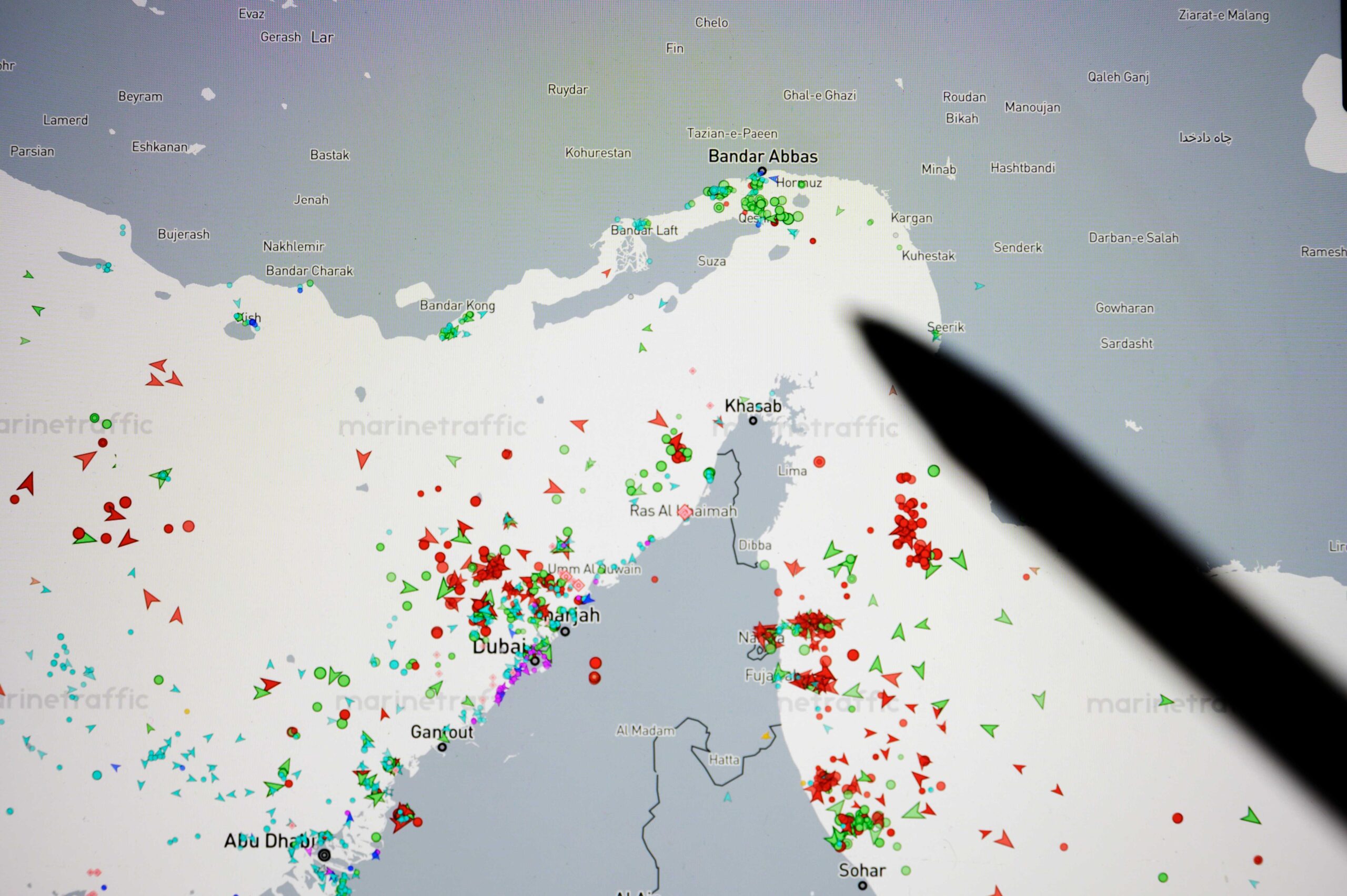
Iran’s strategy has combined both kinetic and non-kinetic methods, from targeting oil installations and critical infrastructure to impose economic costs, to leveraging key maritime chokepoints to widen the conflict’s impact. This has effectively internationalised the war, pulling global energy markets into the equation. But its real pressure point lies in non-kinetic leverage. Rather than relying only on direct confrontation, Tehran is using geography as a tool of power.
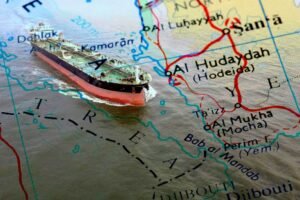
The Strait of Hormuz, in particular, has become Iran’s most valuable card. By laying sea mines, targeting vessels, and introducing transit fees, Iran is asserting control over one of the world’s most critical energy routes.[viii] That control not only raises the cost of continued escalation for the U.S. and its allies, but also gives Tehran an asymmetric advantage it is unlikely to give up easily. Its inclusion of Hormuz control in its ceasefire demands reinforces this – suggesting that for Iran, the waterway is not just a bargaining chip, but a core pillar of its negotiating position.[ix]
A different approach is being adopted by the U.S., moving beyond diplomacy and applying pressure through different means, including directly targeting Iran’s strongest point of leverage. While Donald Trump has been adamant about keeping the Strait of Hormuz open, the latest move does the opposite in practice. The announcement by U.S. Central Command to impose a blockade on all maritime traffic entering and exiting Iranian ports signals a more aggressive strategy.[x] Even if freedom of navigation through Hormuz is technically maintained, the pressure is being redirected. By restricting access to Iranian ports, Washington is effectively trying to turn Iran’s maritime advantage against it, undermining its ability to use trade routes as leverage while still avoiding a full closure of the Strait.[xi]
This is less about escalation in the traditional sense, and more about containment. The U.S. is not shutting down Hormuz, but it is tightening control around it – limiting Iran’s room for manoeuvre while keeping global shipping lanes formally open. However, the repercussions are high, particularly on two fronts. Economically, it places increased pressure on global energy markets, and strategically, it risks renewed escalation. On the economic front, this is disastrous for both the Iranian and the global economy, particularly in key states that import their oil from Iran, such as China. The repercussions are highlighted in price increases of both U.S. crude oil and brent crude oil, the international standard – which has spiked by 8 percent to $104.24 a barrel, and settled at $102.29 after the announcement of a potential U.S. blockade. Forecasts for global economic growth may be downgraded, which, coupled with rising inflation projections, would severely impact emerging markets, according to IMF and World Bank officials.[xii]
The balance of power
On the military front, retaliation from Iran, as well as from its proxy group in Yemen – the Houthis – who have played a brief role since the beginning of the war, is highly likely. While the United States can assert dominance over the Strait of Hormuz through naval and air power, sustaining that control is far more complex. Enforcing a prolonged blockade would pull U.S. forces into constant proximity to Iranian territory, where Tehran holds advantages through asymmetric tactics. The deployment of approximately 3,500 additional U.S. troops under CENTCOM prior to the talks signals preparation for a range of escalation scenarios, including the possibility of limited ground involvement.[xiii] While this does not point to an imminent invasion, it suggests that option has not been fully ruled out. Iran’s geography further complicates this: its mountainous terrain, strategic depth, and ability to launch missiles and drones from inland positions would make any ground operation costly and prolonged rather than a quick tactical success. At the same time, Iran is unlikely to respond in a conventional way. Instead, it would rely on asymmetric tactics through the IRGC, including fast boat attacks, naval mines, anti-ship missiles, and drones – capabilities that have long formed the core of its military strategy. Even a single successful strike on a civilian or military vessel could quickly escalate tensions and disrupt global markets.[xiv]
Ultimately, the fact that the 20th April follow-up talks in Islamabad failed to take place amid Iranian hesitation and disputes over preconditions highlights how distant the parties remain from any meaningful diplomatic breakthrough. Instead of building on the fragile ceasefire, both Washington and Tehran have intensified their rhetoric, with renewed threats and warnings replacing substantive progress. As ceasefire deadlines approach and negotiations remain in limbo, developments across key fronts such as Lebanon further reflect a region moving away from de-escalation. What once appeared to be a narrow opening for diplomacy now seems increasingly overshadowed by strategic posturing, making renewed escalation more likely than a durable settlement.
[i] Jones, S. (2026)., “JD Vance Says Talks Failed Due to Iran’s Refusal to Give Up Nuclear Programme,”The Guardian, 12 April 2026, retrieved from: https://www.theguardian.com/world/2026/apr/12/jd-vance-says-no-deal-us-iran-pakistan-talks-islamabad.
[ii] Al Jazeera (2026). “Lebanon, Israel to Meet Again Thursday for Direct Talks, US Says,” Al Jazeera, 20 April 2026 , 2026, retrieved from: https://www.aljazeera.com/news/2026/4/20/lebanon-israel-to-meet-again-thursday-for-direct-talks-us-says.
[iii] BBC News (2026). “Iran War: Tehran-US Peace Talks Take Place as Trump Claims Navy ‘Clearing’ Route to Red Sea” (live coverage), BBC News, retrieved from: 11 April, 2026, https://www.bbc.com/news/live/cn4v0xm9y0kt.
[iv] Al Jazeera Staff (2025). “US Bombs Iran’s Nuclear Sites: What We Know So Far,” Al Jazeera, 22 June 2025, retrieved from: http://aljazeera.com/news/2025/6/22/us-bombs-irans-nuclear-sites-what-we-know-so-far.
[v] Williams, H. and Rodgers, J. (2026). “Options for the United States to Resolve the Iran Nuclear Challenge,”Center for Strategic and International Studies, 2 April 2026, retrieved from: https://www.csis.org/analysis/options-united-states-resolve-iran-nuclear-challenge.
[vi] Maloney, S. (2026). “How to End the Iran Crisis,” Foreign Affairs, 13 April 2026, https://www.foreignaffairs.com/iran/how-end-iran-crisis.
[vii] The New Arab Staff & Agencies (2026). “Trump Says Wants ‘Best Deal’, Iran Denies Fractured Leadership.” The New Arab, 24 April 2026, retrieved from: www.newarab.com/news/trump-says-wants-best-deal-iran-denies-fractured-leadership.
[viii] The New Arab Staff and Agencies (2026). “Iran Closes Strait of Hormuz, Raising Fears Over Mined Waterway,” The New Arab, 9 April 2026, retrieved from: https://www.newarab.com/news/iran-closes-strait-hormuz-raising-fears-over-mined-waterway.
[ix] Labh, N. (2026). “How to Keep the Strait of Hormuz Open in the Long Term,” Chatham House, April 2026, retrieved from: https://www.chathamhouse.org/2026/04/how-keep-strait-hormuz-open-long-term.
[x] BBC News (2026)., “Iran War: Tehran-US Peace Talks Take Place as Trump Claims Navy ‘Clearing’ Route to Red Sea” (live coverage), BBC News, accessed 21 April 2026, retrieved from: https://www.bbc.com/news/live/cn4v0xm9y0kt.
[xii] Al Jazeera (2026). “US Military Threatens to Blockade All Iranian Ports Starting on Monday,” 13 April 2026, https://www.aljazeera.com/news/2026/4/13/us-military-threatens-to-blockade-all-iranian-ports-starting-on-monday.
[xiii] Al Jazeera Staff (2026).“Pentagon Readies for Weeks of US Ground Operations in Iran: Report,” Al Jazeera, 29 March2026, retrieved from: https://www.aljazeera.com/news/2026/3/29/pentagon-readies-for-weeks-of-us-ground-operations-in-iran-report.
[xiv] Marzbanmehr, A. (2026). “The Strait of Hormuz: Global Economic Shock and the Limits of Military Power,” Al Jazeera Centre for Studies, 17 March 2026, retrieved from: https://studies.aljazeera.net/en/analyses/strait-hormuz-global-economic-shock-and-limits-military-power.