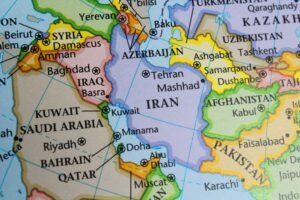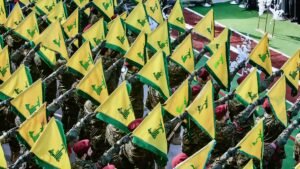
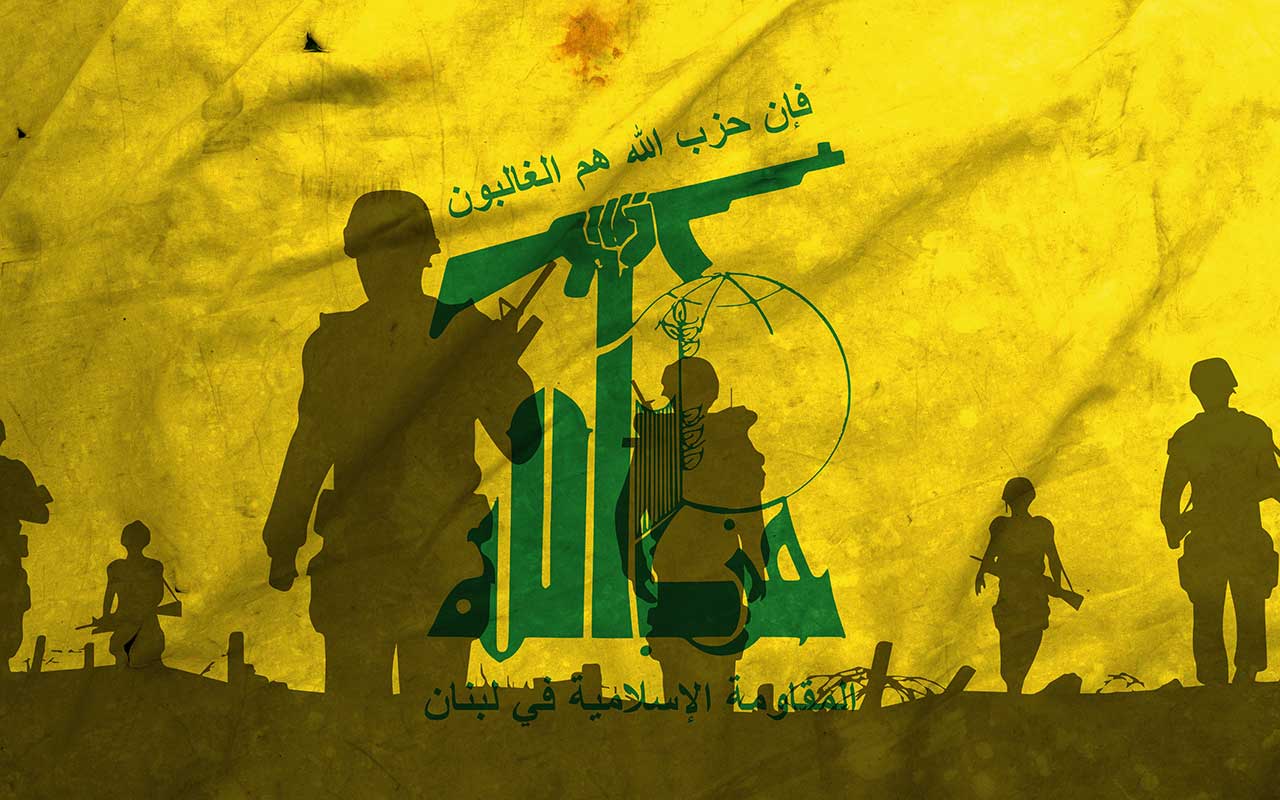
Born of overlapping conflicts, Hezbollah emerged from the Islamic Revolution in Iran and the Lebanese civil war. Clerics, officials, and fighters had already formed Islamist networks before 1979 and proto-Hezbollah groups prior to the Israeli invasion of Lebanon.[i]
From the beginning, Iranian and Lebanese leaders fused “ideology, (pseudo)historical narratives, sociocultural programs, political objectives and more.”[ii] Hezbollah was never purely external nor purely domestic. It has long operated as a hybrid and transnational organization. Efforts to grapple with the self-styled Party of God often rest on false choices: attempting to decapitate the regime in Tehran as a substitute for comprehensive policy; repeating past interventions in Lebanon without broader regional policies; or engaging Hezbollah as merely another Lebanese political party.[iii]
Awakening: The Shia of Lebanon before conflicts
Like many communities on the margins of empires and states, Lebanon’s Shia long suffered under local elites and central authorities.[iv] By the mid-20th century, Shia leaders began advancing communal interests in the Republic of Lebanon (itself a post-Ottoman creation shaped by local and European actors).[v]
Against that backdrop, Imam Musa al-Sadr, an influential cleric, helped move the Shia from the periphery toward the centre of Lebanese politics in the 1960s and 1970s.[vi] After establishing the Supreme Shia Council, working with some elites to increase Shia influence in the system, he cofounded the Movement of the Deprived, working with other Lebanese to reform that system altogether. As factions in Lebanon became more militant, though, moderates like Sadr struggled regardless of their strategy.[vii]
During the 1970s, Lebanon descended into war. Shia communities suffered across multiple fronts: Palestinian factions used Lebanon as a base for attacks on Israel; Israeli reprisals fell heavily on the south, which the Shia bore the brunt of. Finally, Lebanese militias armed Shia fighters without integrating them into political leadership.[viii] Though committed to protecting his community, Sadr was no pacifist. Declaring that “guns are the ornament of men,” the cleric established “the Battalions of the Lebanese Resistance”– a militia soon known by its Arabic acronym, “Amal,” which doubled as a word for “hope.”
They could only hope for a moment. On 31 August 1978, Sadr disappeared during a visit to Libya. Having gained political influence through presence, Sadr cast a shadow over the Shia in his absence (his legacy magnified, now part of communal myth and of longer cycles of acquiescence, assertion, occultation, and manifestation).[ix]
And while he was a man of peace, the cleric had prepared the community for war. The Shia of Lebanon had awakened.
Awakening after awakening? Shia militants rise in conflicts
The Islamist militants began in the Bekaa Valley. Returning from studies in Najaf or fleeing repression in Iraq (under Saddam Hussein) and Iran (under the Shah), clerics established seminaries and spread neo-Islamist ideologies in Lebanon. For instance, Lebanese cleric Abbas al-Musawi established a seminary around Baalbek and mentored young men (including Hassan Nasrallah, who would go on to serve as Hezbollah secretary-general for three decades). Others such as Sobhi Tufaili created Islamist committees and associations.[x]
While clerics created schools, fighters joined and established camps. At first, Shia fighters fought for Lebanese and Palestinian militias across the board (from ultranationalist Lebanese groups to leftist, secular pan-Arab ones). After a world tour of militant movements,[xi] for instance, the Iranian Mustafa Shamran moved to Lebanon and helped to train Islamist militiamen.[xii] Ali Akbar Mohtashami trained with militias in Lebanon before going on to serve as the Iranian ambassador to Syria, paramilitary overseer in the Bekaa Valley, and interior minister in Tehran itself. The Lebanese Imad Mughniyeh joined Palestinian factions in those years.[xiii]
These actors formed overlapping networks linking clerical authority, militant experience[xiv][xv] and Iranian patronage.[xvi] Using his diplomatic position, Mohtashami coordinated arms flows, facilitated Iranian Revolutionary Guard deployments to the Bekaa,[xvii] and helped organize operations ranging from resistance campaigns to terrorist attacks.[xviii]
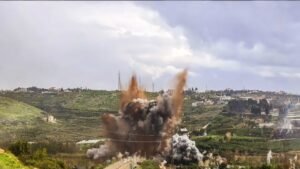
Invading Lebanon in 1982, Israeli forces defeated Palestinian factional forces, crushed the Syrian military, and besieged Beirut. Ostensibly eliminating old adversaries, they created conditions for new ones to emerge.
Shia, and other Lebanese, reacted in different ways. Some accommodated them while others resisted.[xix] Among Shia Islamists, the invasion acted as a catalyst. Managing complex personal views, factional loyalties, and external machinations, Khomeinists decided to fight these new invaders.[xx] Having sought to lead the Amal Movement or tie it to booster a still-nascent Iranian regime, some clerics left the organization to create Islamic Amal. Having served in various militias, fighters now joined Islamist groups (whether new, such as Islamic Amal, or old, such as the Call). Operating openly, they also recruited fighters from various factions (essentially defectors) and off the street.
These groups began clashing with Israeli forces and others around Beirut. In turn, the Iranian and Syrian regimes boosted their support for the nascent Islamist militia. Struggling to respond to Israel’s invasion, the Syrian regime allowed Iranian leaders to deploy 1,500 revolutionary guard members in the Bekaa and hosted hundreds of others who shuttled between training grounds in Lebanon and a base in Syria.[xxi]
As Islamists fought on the ground, the Iranian regime and Lebanese leaders created overlapping oversight groups. Weeks after the Israeli invasion, leaders created a so-called Committee of Nine to coordinate Islamist operations.[xxii] Within a few months, they had connected units operating in the Bekaa Valley, Beirut, and beyond. Launching an “Islamic Resistance” under different banners, they attacked Israelis and rejectionist rivals alike. Coalescing, Hezbollah executed the first suicide attack under its umbrella in November 1982:[xxiii] a bombing of the Israeli military headquarters in Tyre, in which 75 Israeli troops and 15 prisoners died.[xxiv] Traveling to Tehran around that time, the Islamists met with the Supreme Leader, returned to the Bekaa Valley, and created a “Council for Lebanon.” Including three Lebanese and two Iranians, the council reflected Iranian-Lebanese hybridity and was the ultimate precursor of Hezbollah as the world has since known the organization.[xxv]
Against the world: Revolution, rejection, and armed struggle
“The solution to Lebanon’s problems,” a cleric declared at a Beirut mosque in 1985, “is the establishment of an Islamic republic, as only this type of regime can secure justice and equality for all of Lebanon’s citizens.”[xxvi] As a follow-up Hezbollah condemned militias, rejected the Lebanese political order, and declared a new-old vision for the Levant. Once again, the organization pursued a transnational, hybrid goal.
Casting the local as global and coloring the global as local, Hezbollah leaders set out on a path to clash with others in Lebanon.[xxvii] Recognizing Ayatollah Khomeini as their spiritual leader, they adopted a doctrine of guardianship that even other Shia Islamists – never mind other Shia, other rejectionists, or other Lebanese – rejected. They attacked enemies both foreign and domestic by perpetrating suicide bombings and seizing hostages. Increasingly pursuing its own transnational agenda, Hezbollah repeatedly fought against the Syrian regime and the Amal Movement. In 1985, Hezbollah “lent key support to the Palestinians and thwarted Syria and Amal” in the so-called “war of the camps.”[xxviii] Hezbollah and the Amal Movement again battled from 1988 to 1990, when factions in Lebanon all fought “wars of brothers.”[xxix]
With American, European, and Arab support, Syrian leaders inserted themselves as the ultimate arbiters in Lebanon at the end of the civil war and during the postwar period. After compelling or coaxing Lebanese leaders into the Taif Accord, Syrian president Hafiz al-Assad and others shaped the post-conflict transition to perpetuate their control in Lebanon. In turn, they manipulated the processes to disarm, demobilize, and reintegrate militias.[xxx] Instead of disarming Hezbollah, the Syrian regime used it as a proxy against the Israeli military. While Assad the elder controlled the group carefully,[xxxi] his son Bashar al-Assad began cooperating more closely with Hezbollah and relying on it in campaigns against others while rising in the regime and then taking over in 2000.[xxxii]
During these years, Hezbollah never separated itself from Iranian mullahs. Even when the group entered politics, Hezbollah did so at the direction of the Supreme Leader in Iran.[xxxiii] Having rallied against the constitutional order, Hezbollah leaders could not agree on whether to participate in postwar Lebanese politics. Intervening, Khamenei resolved the dispute, pushed them into parliament in 1992, and set them on a strategic course that they have taken ever since: Hezbollah would work within the existing order, even as it sought to reshape it in order to protect its arms and influence its core constituents.[xxxiv] Fighting against Israel, Hezbollah essentially secured local, regional, and global recognition of its status. Beyond significant armed exchanges in 1993 and 1996, Hezbollah pressured Israeli and Lebanese proxy forces in guerilla campaigns, and triggered Israel’s eventual withdrawal in 2000.[xxxv]
The party of guns: Hezbollah since the Cedar Revolution
For the past two decades, Hezbollah has sought to preserve its position amid shifting regional dynamics. It has deepened its role in Lebanese politics to maintain, not surrender, its armed capabilities.
The group has worked to stop, slow, or reverse the Cedar Revolution of 2005, the Syrian uprising of 2011, and other movements such as the regionwide October Revolts of 2019. At every turn, the group behaved as a hybrid, transnational organization. Rather than creating consensus, which Lebanese leaders sought before and after the Cedar Revolution, Hezbollah chose to protect its position and patrons without relinquishing its arsenal.
Repeatedly attacking Israeli forces after the Cedar Revolution, Hezbollah eventually triggered the July War of 2006.[xxxvi] Both sides claimed success, spinning the death and destruction to their advantage despite muddled results in the long term. [xxxvii]
Paralyzing politics and using covert violence in the ensuing years, Hezbollah’s leaders then openly attacked Lebanese factions in May 2008.[xxxviii] They thus revealed, decisively, what others in Lebanon had long struggled to discern in their domestic political game: They would use their guns against others.[xxxix] When the government tried to respond to the group’s parastate operations,[xl] Hezbollah attacked Beirut and Mount Lebanon. Defeated Sunni, cornered Druze, and marginal Christian Lebanese leaders agreed on a patchwork peace deal and a quasi-constitutional understanding.
Cooperating with the Syrian regime and Lebanese partners, Hezbollah then compelled Lebanese leaders to lurch from capitulation to capitulation while dressing it all up as the typical Levantine politics of compromise. For instance, Hezbollah basically set aside the results of successive parliamentary elections to create cabinets; exercised a veto within a national-unity government it forced on others and then toppled that cabinet anyway. It also cultivated rejectionist influence in the state, including the bureaucracy, judiciary, and security agencies and colluded with others to “extract billions” from the economy.[xli]
During the Arab Spring in 2011, the Syrian regime cracked down on protestors who took to the streets of Damascus and other cities, towns, and villages.[xlii] Hezbollah intervened decisively in support of the Assad regime to protect its strategic position in the Levant, even at the expense of its rhetorical commitment to resistance.
For over a decade, Hezbollah operated across the region, supporting allied militias and extending Iranian influence. It thus lost fighters, assets, resources, and legitimacy.[xliii] Domestically, it confronted protest movements, including the 2019 uprisings, often through coercion.[xliv] It fought with state security forces, factions, and citizens alike throughout the early 2020s. And it engaged Israeli forces in a series of tit-for-tat exchanges that the organization tried to calibrate and perhaps even believed legitimized its armed enterprise all over again.[xlv]
Following Hamas’s 7 October 2023 attacks, Hezbollah again tried to engage in calibrated conflict with Israel. Nasrallah contorted himself to burnish Hezbollah’s campaign in his propaganda while cadres calibrated responses to contain consequences on the ground. Whether they fell into a trap of their unique deterrence dynamic with Israel, failed to appreciate changes in the Israeli psyche after 7 October, or just followed orders from Tehran, the organization lost the war it had developed to wage and yet perversely worked so hard to avoid. This time, Israeli forces defeated Hezbollah militarily and degraded its leadership, capabilities, and infrastructure significantly.[xlvi]
Then came another defeat. Mere weeks after Hezbollah’s last defeat, Syrian rebels swept through Damascus and uprooted a regime that had ruled for fifty years. In turn, Hezbollah lost the strategic depth, supply lines, training grounds, and political cover it had already spent so much effort to preserve – a Pyrrhic defeat, if there ever was one.
The vicious cycle: Back to the beginning
Hezbollah has lost a great deal since its moment in the sun: Nasrallah, hundreds of leaders, thousands of fighters, much of its arsenal, and (broad-based) legitimacy. Even so, Hezbollah persists. And the organization’s core characteristics remain unchanged: It continues to operate as a hybrid, transnational organization.[xlvii]
Having woven together Islamic and rejectionist, Iranian and Lebanese, and regional and local identities, ideologies, institutions, and experiences from the beginning, Hezbollah’s leaders will not vacate their positions soon.[xlviii] A half-century later, Hezbollah and Israel have only doubled down on the patterns of policy that they have maintained since they began their operations. War continues. Underlying conflicts remain unresolved. Ostensible objectives remain unachieved. Israeli leaders have not been able to eliminate Hezbollah with force. And Hezbollah has not been able to defend itself or protect its claimed community, failing except in one task that it has stamped for itself from the beginning: engaging in resistance as an end unto itself.
[i] Interviews with Lebanese historians and social scientists. Consider, also, Saad-Ghorayeb, A. (2003). “Factors Conducive to the Politicization of the Lebanese Shi‘a and the Emergence of Hizb’ullah,” Journal of Islamic Studies, 14(3), 273–307. http://www.jstor.org/stable/26200277; and Daher, A. (2019). Hezbollah: Mobilization and Power. Oxford University Press, pp. 46-49.
[ii] Elghossain, A. (2026). “Vision 1979: Hezbollah’s latest folly and its consequences,” L’Orient Today. https://today.lorientlejour.com/article/1497375/vision-1979-hezbollahs-latest-folly-and-its-consequences.html.
[iii] Khatib, L. (2021). “How Hezbollah holds sway over the Lebanese state,” Research Paper, Chatham House, retrieved from: https://www.chathamhouse.org/sites/default/files/2021-07/2021-06-30-how-hezbollah-holds-sway-over-the-lebanese-state-khatib.pdf; Elghossain, A. (2026). “Vision 1979: Hezbollah’s latest folly and its consequences,” L’Orient Today, retrieved from: https://today.lorientlejour.com/article/1497375/vision-1979-hezbollahs-latest-folly-and-its-consequences.html.
[iv] Over the past five centuries, Shia in Lebanon lived under clan leaders in the Bekaa Valley and feudal families in southern Lebanon; other local leaders, including Sunni princes, Druze nobles, and Maronite chiefs; area administrators, usually perched in Tripoli, Sidon, Damascus, and Acre; and Ottoman imperial, French mandatory, and Lebanese republican leaders ostensibly acting as central authorities.
[v] Under the French Mandate, Shia leaders pushed for and received recognition from the state. They also worked with elites in other communities to secure representation in the republic and develop religious institutions, charitable associations, and jurisprudential schools in the post-Ottoman period. From Lebanese independence to the civil war, clerics such as Abdel Hussein Sharafiddine, Mohsen Amin, and Mohamed Mehdi Shamseddine. After them, of course, Musa Sadr and Mohamed Hussein Fadlallah. On one front, secular lords increased Shia stakes in the state and constitutional order; on another front, clerics established and increased the influence of religious, jurisprudential, and social institutions. They secured legal recognition as community during the 1930s (though, Shia leaders had sat on various intercommunal councils and dispute-resolution bodies for two centuries). In the Lebanese republic’s power-sharing system, they secured the position of speaker of parliament (1947); about a fifth of the parliamentary, ministerial, bureaucratic, and judicial posts (evolving, from the 1940s to the 1970s); and various councils, foundations, and institutions (by the 1970s, putting on par with other non-Christian communities under law).
[vi] See, generally, Ajami, F. (1984). The Vanished Imam: Musa al Sadr and the Shia of Lebanon and Norton, AR (1987). Amal and the Shi’a: Struggle for the Soul of Lebanon.
[vii] A Melkite Catholic bishop, Gregoire Haddad, cofounded the movement. The two clerics had hoped to create a cross-communal movement of the dispossessed of all backgrounds, rather than seeking naively to transcend identity or transform Lebanon overnight. They failed, anyway. Alagha, J. (2006). The Shifts in Hizbullah’s Ideology: Religious Ideology, Political Ideology, and Political Program. p. 27.
[viii] Family, clan, and factional loyalties cloud ostensibly effective analysis that social scientists have conducted in Lebanon, whether during the prewar period or in our time. Even now, for instance, Lebanese rally around local leaders who – in changing allegiances, in working with or against national political parties – warp everything from opinion polling to votes. Phalange leaders and advisors have sometimes claimed about 13 percent of the party’s members or supporters (they have been imprecise) were Shia Lebanese, on the eve of the Lebanese civil war. Others have assessed that about six percent of Phalangists were Shia at the time. Consider, for instance, Entelis, John P. (1973). “Structural Change and Organizational Development in the Lebanese Kata’ib Party.” Middle East Journal 27(1), 21–25. Due to personal, factional, and clan loyalties, Shia Lebanese long worked with the National Liberal Party of former Lebanese president Camille Chamoun. Others with different ideological impulses joined leftist movements throughout the 1960s and 1970s, including the Lebanese Communist Party. International Crisis Group. (2007). “Hizbollah and the Lebanese Crisis,” Middle East Report No. 69.
[ix] For a more convincing, evidence-based account that supports a long-held minority view in Beirut, consider Bird, K. (2014). The Good Spy: The Life and Death of Robert Ames, pp. 204-206.
[x] Tufaili joined an Islamist movement in Iraq, fled the Baathist regime, pursued advanced studies at Qom, and took up the cause of the Islamist opposition to the Shah in Iran.
[xi] Shamran played a pivotal part in creating Hezbollah and the factions and networks that preceded it more generally. Before settling in Lebanon, Shamran spent the 1960s and 1970s training with, fighting alongside, and organizing operations on behalf of rejectionist groups in Cuba, Egypt, the Levant, and beyond. Chehabi, Houshang and Abisaab, Rula J. (2006). Distant Relations: Iran and Lebanon in the Last 500 Years. I.B. Tauris, p. 182. Samii, Abbas W. (1997). “The Shah’s Lebanon Policy: The Role of the SAVAK.” Middle Eastern Studies. 33(1), pp.66-91.
[xii] Joseph Alagha, J. (2006). The Shifts in Hizbullah’s Ideology: Religious Ideology, Political Ideology, and Political Program. p. 33.
[xiii] Council on Foreign Relations. (2006). “Backgrounder. Profile: Imad Mughniyeh”, retrieved from: https://www.cfr.org/backgrounders/profile-imad-mugniyah; and “The Man Who Holds the Hostages.” (1989). TIME Magazine, retrieved from: https://time.com/archive/6702139/the-man-who-holds-the-hostages/.
[xiv] These men included Abbas al-Musawi, Hussain al-Musawi, Subhi Tufaili, and Imad Mughniyeh.
[xv] Moyal, A, et al. (2023). “Brokering in hierarchies versus networks: How organizational structure shapes social relations,” Journal of Experimental Social Psychology, 109, retrieved from: www.sciencedirect.com/science/article/pii/S0022103123000720.
[xvi] Interviews with Lebanese historians and social scientists.
[xvii] The Syrian regime balked at a decision to launch a joint, full-scale invasion to counter the Israelis.
[xviii] Lengel, A. (2003). “Judge: Iran Behind ’83 Beirut Bombing,” The Washington Post, retrieved from: https://www.washingtonpost.com/archive/politics/2003/05/31/judge-iran-behind-83-beirut-bombing/b4e3c60e-2921-45fa-a9fd-a1c48ce81e44/.
[xix] Some greeted the invaders with rice and rose petals, hoping one foreign force might free them from another. Others ducked, waiting for Lebanese elites to begin their inevitable machinations – some later collaborating with the Israelis, others later trying to oust them. Daher, A. (2019). Hezbollah: Mobilization and Power. Oxford University Press, pp. 42-46. Daher does a masterful job of explaining how leads of various camps within the Shia Islamist network reacted to the Israeli invasion of 1982.
[xx] Daher, A. (2019). Hezbollah: Mobilization and Power, Oxford University Press, pp. 29-46.
[xxi] Author interviews with residents of the central Bekaa Valley. See, also, Friedman, T. (1984). “Lebanon: The Iranian Presence,” The Washington Post, retrieved from: https://www.nytimes.com/1984/02/12/magazine/lebanon-the-iranian-presence.html.
[xxii] While the committee included representatives of ostensibly different groups, the men were really leaders who had created or joined Islamic Amal and the Call.
[xxiii] After the Zorea Commission’s findings, Israeli authorities long attributed the explosion to a gas leak. However, Hezbollah has for decades commemorated its Martyrs Day on anniversary of the attack (November 11). Hirst, D. (2010). Beware of Small States. Lebanon, Battleground of the Middle East. p. 196. Reopening the investigation in the 2020s, the Israelis created a commission including officials from the military and police. In 2024, the joint commission found that a Lebanese suicide bomber had perpetrated the attack. Bob, Y.J. (2024). “Shin Bet, IDF: Lebanese suicide bomber, with Iran, caused 1982 Tyre Disaster,” The Jerusalem Post, retrieved from: https://www.jpost.com/middle-east/article-808861.
[xxiv] Alagha, J. (2006). The Shifts in Hizbullah’s Ideology: Religious Ideology, Political Ideology, and Political Program, pp. 31-35.
[xxv] Hezbollah leaders and Lebanese scholars have published various works detailing the organization’s origins, devoting particular attention to the period between 1982 and 1985. For a crisp English-language review, consider Daher, A. (2019). Hezbollah: Mobilization and Power. Oxford University Press, pp. 50-52.
[xxvi] Hezbollah’s Open Letter of February 16, 1985 (available in print and online, in Arabic and English).
[xxvii] Not only did they depart from and clash with the Amal Movement, which had become essentially secular and nationalist ideologically even as it remained a vehicle for Shia communally, but Hezbollah leaders and scholars departed from or clashed with Shia clerics and Islamists of different stripes—including prominent Lebanese clerics who otherwise influenced them individually or shaped their sense of Shia assertion. Consider, for instance, the way in which Hezbollah diverged from Grand Ayatollah Mohammad Hussein Fadlallah. Saouli, A. (2014). Intellectuals and Political Power in Social Movements: The Parallel Paths of Fadlallah and Hizbullah. British Journal of Middle Eastern Studies, 41(1), 97–116.
[xxviii] Boustany, N. (1985). “Shiites Battle Palestinians In Beirut.” The Washington Post, retrieved from: https://www.washingtonpost.com/archive/politics/1985/05/21/shiites-battle-palestinians-in-beirut/7973a939-ff29-4787-936f-38f0f19cdf11/; Norton, A. R. (2007). “The Role of Hezbollah in Lebanese Domestic Politics.” The International Spectator, 42(4), 475–491, retrieved from: https://www.tandfonline.com/doi/full/10.1080/03932720701722852#d1e145.
[xxix] Norton, A.R. (2007). “The Role of Hezbollah in Lebanese Domestic Politics”, The International Spectator, 42(4), 475–491, retrieved from: https://www.tandfonline.com/doi/full/10.1080/03932720701722852#d1e145.
[xxx] Interviews with retired Lebanese generals, from the military and two security services.
[xxxi] The Syrian regime and associated forces, including Lebanese security services and factions, killed and injured Hezbollah fighters in a massive clash in 1987; killed Hezbollah supporters during a protest in 1993; and, in a potential covert campaign to sow unrest, triggered duels between Hezbollah, Amal, and other partisans in 1998. More generally, while pressing Hezbollah and the Amal Movement to partner together, the Syrians also boosted the latter in the cabinet, parliament, bureaucracy, and municipalities—in no small part to limit Hezbollah and boost its own more reliable, or at least dependent, partners.
[xxxii] Blanford, N. (2006). Killing Mr. Lebanon: The Assassination of Rafik Hariri and its Impact on the Middle East, retrieved from: https://www.amazon.com/Killing-Mr-Lebanon-Assassination-Hariri/dp/1845112024.
[xxxiii] Beyond that, after Khamanei earned higher status as a religious reference, essentially allowing others in the world to follow or emulate him, Hezbollah promptly recognized and subscribed to his authority. In so doing, Hezbollah went from Khomeini to Khamanei in Iran as it went from Abbas Musawi to Hassan Nasrallah in Lebanon.
[xxxiv] One of their founders, the cleric Tufaili, left the organization after this decision. He has since clashed with Hezbollah, set up a splinter group of what was once a splinter group, and condemned its attachment to Supreme Leaders as both un-Islamic and un-Lebanese.)
[xxxv] Compare the work of Joseph Alagha, J. (2006). The Shifts in Hizbullah’s Ideology: Religious Ideology, Political Ideology, and Political Program, with that of Daher, A. (2019). Hezbollah: Mobilization and Power. Oxford University Press.
[xxxvi] Schiff, Z. (2006). “Kidnap of Soldiers in July Was Hezbollah’s Fifth Attempt,” Haaretz, retrieved from: https://www.haaretz.com/2006-09-19/ty-article/kidnap-of-soldiers-in-july-was-hezbollahs-fifth-attempt/0000017f-e09a-d9aa-afff-f9da2e180000.
[xxxvii] Human Rights Watch (2007). Why They Died: Civilian Casualties in Lebanon During the 2006 War, retrieved from: https://www.hrw.org/report/2007/09/05/why-they-died/civilian-casualties-lebanon-during-2006-war.[xxxviii] From the Cedar Revolution (2005) to Hezbollah’s plunge into the Syrian war (2013), unknown assailants killed or tried to kill more than a dozen people who had opposed the Syrian occupation of Lebanon; organized the Cedar Revolution; worked to establish and empower an international investigation into previous assassinations; or had the misfortune of being lawmakers while factions feuded over the parliamentary quorum for a presidential election. Victims included the Syrian-Palestinian writer Samir Kassir; Lebanese Communist Party leader George Hawi; Gebran Tueni, a Lebanese lawmaker and journalist; Pierre Gemayel, a Lebanese lawmaker; Walid Eido, a Lebanese lawmaker with the Future Movement; Antoine Ghanem, a Lebanese lawmaker Party; Lebanese Armed Forces brigadier general Francois Hajj; Internal Security Forces Captain Wissam Eid, who played a pivotal part in the Hariri investigation itself; police intelligence chief Wissam Hassan; and former minister Mohammad Chatah.[xxxix] Conversation with Lebanese analyst, whose apartment was at the site of a particularly intense skirmish in 2008. The analyst had long believed, or hoped, that Hezbollah would not risk triggering sectarian tensions that would undermine its standing in the long run. He also assessed, and conveyed to factional leaders, that Hezbollah would be able to overrun Beirut within “two weeks at most.”
[xl] The cabinet tried to restrict a Hezbollah fiberoptic telecommunications network and to fire an airport security chief close to the organization. Druze chieftain Walid Jumblatt likely triggered the crisis by threatening to withdraw his ministers if the government didn’t move forward. Not only did he later admit that he underestimated Hezbollah’s likely response, but he broke away from the erstwhile 14 March coalition and avoided provoking the Syrian regime or Hezbollah for years.[xli] Geukjian, O. (2017). Lebanon after the Syrian Withdrawal: External Intervention, Power-Sharing and Political Instability, p. 116.
[xlii] Report of the independent international commission of inquiry on the Syrian Arab Republic (2012), Human Rights Council, U.N. General Assembly (finding that the Syrian regime was committing “gross human rights violations”). https://docs.un.org/en/A/HRC/S-17/2/Add.1 Among scores of useful books and thousands of detailed articles and reports on the early months of the Syrian revolution, consider Al-Haj Saleh, Y. (2017) The Impossible Revolution: Making Sense of the Syrian Tragedy; Yassin-Kassab, R. and Al-Shami, L. (2018). Burning Country: Syrians in Revolution and War; Dagher, S. (2019). Assad or We Burn the Country: How One Family’s Lust for Power Destroyed Syria; Phillips, C. (2016). The Battle for Syria: International Rivalry in the New Middle East; and Lesch, D. (2012). Syria: The Fall of the House of Assad.
[xliii] If Lebanese and Arabs had once cheered or at least begrudgingly admired the organization, whether for the way it ousted the Israelis in 2000 or for giving as good as it got during the July War, they now regarded Hezbollah as an oppressor that had assassinated their leaders, killed their partisans, and suppressed their protests. Even so, notwithstanding what some exiles and elites have declared, Shia Lebanese were never primed to ditch the organization in those years. Nor will they ditch the organization now, under Israeli guns or due to the agitation of old elites, factional rivals, false revolutionaries, and diaspora fops. Even after Hezbollah’s military defeat in 2024, more than two-thirds of Shia in Lebanon do not believe that only the Lebanese Armed Forces may maintain weapons. Conversations with Lebanese, of different communities and places of origin, in Beirut and elsewhere. See, also, “Most Lebanese Say Only Army Should Have Weapons” (2025). Gallup Survey, retrieved from: https://news.gallup.com/poll/699071/lebanese-say-army-weapons.aspx.
[xliv] Haboush, J. (2019). “Hezbollah and Amal change tactics and ratchet up violence amid ongoing protests,” Middle East Institute, retrieved from: https://mei.edu/publication/hezbollah-and-amal-change-tactics-and-ratchet-violence-amid-ongoing-protests/.
[xlv] Consider Blanford, N. (2020). “Twenty years after the Israeli withdrawal from Lebanon, Hezbollah faces host of challenges,” MENASource, Atlantic Council, retrieved from: https://www.atlanticcouncil.org/blogs/menasource/twenty-years-after-the-israeli-withdrawal-from-lebanon-hezbollah-faces-host-of-challenges.
[xlvi] Interviews with former Lebanese ministers, lawmakers, and generals. The quote is from a Lebanese general. Expressing a similar sentiment, an American journalist in the Levant described Hamas as the proverbial “dog that caught the bus.”
[xlvii] “Hezbollah’s Qassem pledges allegiance to Mojtaba Khamenei,” L’Orient Today, retrieved from: https://today.lorientlejour.com/article/1498684/hezbollahs-qassem-pledges-allegiance-to-mojtaba-khamenei.html. Refer generally to Alagha, J. (2006). “The Shifts in Hizbullah’s Ideology: Religious Ideology, Political Ideology, and Political Program”; Daher, A. (2019). Hezbollah: Mobilization and Power. Oxford University Press; and Saad-Ghorayeb, A. (2003). “Factors Conducive to the Politicization of the Lebanese Shi’a and the Emergence of Hizb’ullah,” Journal of Islamic Studies, 14(3), 273–307, retrieved from: http://www.jstor.org/stable/26200277.
[xlviii] In addition to other sources the author has cited extensively, consider reviewing Saouli, A. (2024). “Identity, Anxiety, and War: Hezbollah and the Gaza Crisis,” Al-Muntaqa, Doha Insitute, retrieved from: https://almuntaqa.dohainstitute.org/en/issue015/Documents/almuntaqa-15-2024-Saouli.pdf; and Steele, B. (2008). Ontological Security in International Relations: Self-Identity and the IR State (New York: Routledge).