A U.S.-Iranian agreement to reopen the Strait of Hormuz would be welcome news. By all accounts, however, the hard part is yet to come: establishing parameters for the Iranian nuclear programme. President Donald Trump’s notorious impatience and Iran’s equally infamous obstinance, fuelled by unrealistic overconfidence on both sides, are just two of the many factors that could cause an impasse. Tehran’s misreading of the Libyan experience is a third potential roadblock.
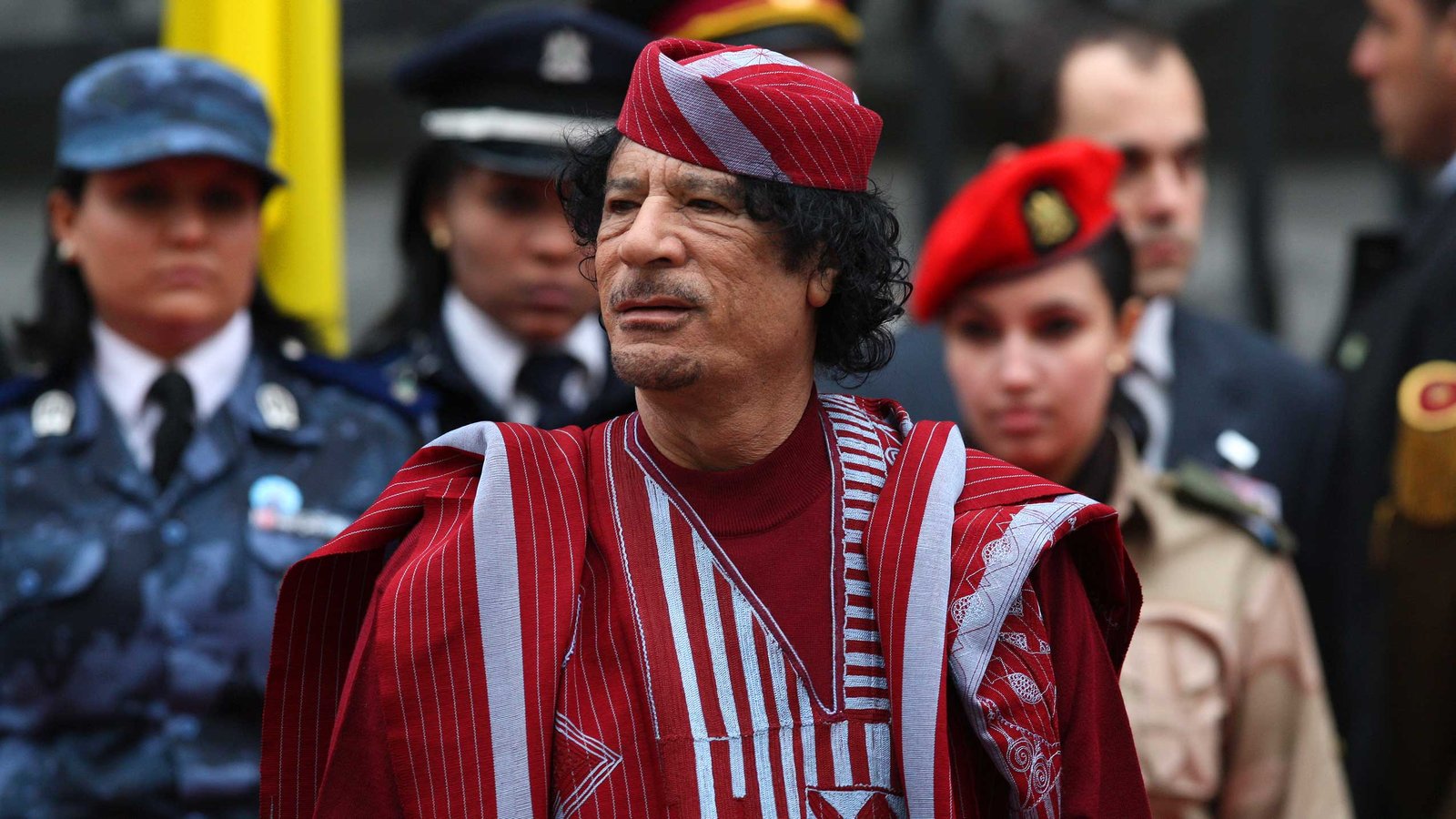
Spanish philosopher George Santayana’s admonition[i] that “those who cannot remember the past are condemned to repeat it” apparently found an unlikely adherent in Ayatollah Ali Khamenei. The late leader of Iran scathingly criticized Muammar Qaddafi in a public sermon delivered in 2011 for having “collected all his nuclear equipment on the heels of empty threats, loaded it onto a ship and handed it over to the Westerners, saying to them: ‘Take it!’ Then they decided to attack Libya and take their oil.”[ii]
Khamenei would have been wiser to consider Professor Francis Gavin’s observation that “analogical reasoning is a core feature of how humans understand the world, and comparing the present to the past, if done well, can be fruitful” – but “unfortunately, analogies are often not used well.”[iii] Simply put, Khamenei misinterpreted the so-called Libya model. There is a very real danger that the current Iranian leadership will as well.
My January 2004 sojourn in Libya, before the United States had a diplomatic mission there, was one of the most memorable months in my 33-year diplomatic career. I was in Tripoli for the concluding round of negotiations that ultimately convinced Libya to relinquish its nuclear, chemical, and biological weapons programmes.
The high point of my time there came in the cover of darkness very early in the morning of 26 January, when I watched Libya hand over “about 55,000 pounds of documents and components from [its] nuclear and ballistic missile programs” to be transported to the United States on an unmarked C-17 military transport aircraft.[iv]
It was not a foregone conclusion that Libya would decide to end its pursuit of weapons of mass destruction (WMD) and turn over what it possessed. Libyan conduct during the talks was, however, a textbook example of how not to negotiate. Libyan negotiators openly squabbled among themselves in front of the joint U.S.-UK team across the table.
There were two distinct sides. The head of Libyan intelligence, Musa Kusa, had earned his undergraduate degree at Michigan State University and was the principal advocate within the regime for improving relations with the West so that sanctions would be removed.[v] (Former U.S. official Elliott Abrams aptly described him as “an easy and relaxed conversationalist – until one recalled that as Qaddafi’s intelligence chief, Kusa had plenty of blood to answer for.”[vi]) Qaddafi’s brother-in-law, the decidedly less urbane Abdullah Senussi[vii], was the head of military intelligence and fervently opposed handing over anything. At the end of the day, Kusa was able to convince Qaddafi.
While Iranian decision-making at the senior-most echelons remains opaque, it is safe to assume that discussions about how to proceed echo what we had heard in Tripoli over two decades before. Hard liners are undoubtedly advocating that Iran should acquire nuclear weapons to deter future attacks.
They likely share Ayatollah Khamenei’s misunderstanding of Qaddafi’s demise. His decision to forsake WMD programmes was not the reason for his overthrow and eventual death in 2011. I observed Qaddafi’s downfall closely from my vantage point in Tunisia, where I was the U.S. ambassador at the time. Brutal repression, corruption, gross economic mismanagement, and phenomenally poor governance were the factors that ended his 42 years in power, not the absence of a nuclear arsenal.
A forgiving soul might excuse Iranian policymakers for their lack of familiarity with Libya. But they knew full well that Bashar al-Assad’s regime was so hollow that its possession of another form of WMD (chemical weapons) could not save it from ignominious collapse in December 2024. That assessment is precisely why the Iranian leadership opted against throwing good money after bad and intervening on his behalf.
The Iranian leadership will better serve the country’s national interests by realizing that all of the nuclear weapons in the world would not have saved the Qaddafi regime. But addressing poor governance and crippling economic mismanagement – and ending endemic corruption and ruthless repression – might have allowed Qaddafi to hang on to power.
Iran’s leaders have the same opportunity, but it is an open question whether they will take it. As the saying goes, charity begins at home. So does regime survival.
[i] Virginia Tech (N.D.) “History Repeating,” ECHO – The Voices of Virginia Tech’s College of Liberal Arts and Human Sciences, retrieved from: https://liberalarts.vt.edu/magazine/2017/history-repeating.html.
[ii] Azodi, S. (2026). Iran and the Bomb: The United States, Iran, and the Nuclear Question, Bloomsbury, p.143.
[iii] Gavin, F. (2025). Thinking Historically: A Guide to Statecraft and Strategy, Yale University Press, p.84.
[iv] Squassoni, S. and Feickert, A. (2004). “Disarming Libya: Weapons of Mass Destruction,” Congressional Research Service, retrieved from: https://www.everycrsreport.com/files/20040422_RS21823_9c2b81fe3a3385f6aa0d78a8ac41e3e8cd0cb7ad.pdf.
[v] Al Jazeera English (2011). “Profile: Moussa Koussa,” YouTube, retrieved from: https://www.youtube.com/watch?v=wOj9F7kMgds.
[vi] Abrams, E. (2011). “The Defection of Musa Kusa,” Council on Foreign Relations, retrieved from: https://www.cfr.org/articles/defection-musa-kusa.
[vii] BBC (2015). “Profile: Abdullah al-Senussi,” retrieved from: https://www.bbc.com/news/world-middle-east-17414121.