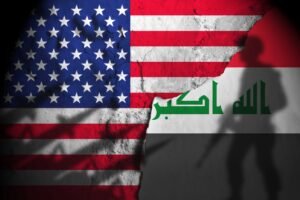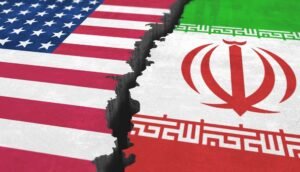
After several days of military exchanges of fire between Iran and the United States, the interim agreement no longer appears merely fragile. It has effectively broken down. President Donald Trump has declared that the interim accord is over and warned of further U.S. strikes. Washington says Iran violated the ceasefire through attacks on commercial vessels near the Strait of Hormuz, while Tehran says renewed U.S. attacks have voided the deal and returned the conflict to an existential stage. The dispute over who broke the agreement first matters, but it should not hide a deeper problem.[i] [ii]
The collapse of the old understanding does not mean diplomacy has disappeared. Mediators have reportedly proposed a short ceasefire to revive or replace the interim framework, and Iranian officials have met with mediators in Pakistan while the fighting continues. This shows that both sides may publicly treat the previous agreement as finished, but neither side has fully abandoned the search for a new political exit.[iii]
The return of fighting has widened the political context around the conflict. NATO Secretary General Mark Rutte described the renewed U.S. attacks as “absolutely necessary,” arguing that Iran was violating the ceasefire. This does not mean NATO has formally become a belligerent party to the war, but it does show how quickly diplomatic space narrows when escalation resumes.[iv]
Iran emerged from the conflict in a stronger position than many expected. It survived the war, forced diplomacy back onto the table, and turned the Strait of Hormuz into a central factor in international calculations. Yet Iran now risks losing this round by giving too much space to symbolic rhetoric and exaggerated confidence in deterrence. Leverage is useful only if it is converted into political gain.
The denial of diplomacy
Over the past five decades, one pattern in Iranian politics has become clear: Iran can create pressure, but it often struggles to translate that into diplomatic results. Victory is rarely achieved on the battlefield. Soldiers fight so that diplomats can negotiate from a stronger position.
Iranian politics, especially after the Islamic Revolution, often treated resistance and endurance as victory in themselves. This is understandable in a country repeatedly exposed to war, sanctions, and external pressure. But resistance is a means, not an outcome. If diplomacy is delayed until the advantage created by resistance is exhausted, achieving victory becomes harder.
This does not mean Iran lacks diplomatic tradition. On the contrary, Iranian history contains strong examples of statecraft during moments of weakness. Even when military power was limited, Iranian political actors managed to use diplomacy to reduce the consequences of defeat, preserve territory, and prevent greater foreign domination. The problem is not the absence of diplomacy in Iranian history but the post-revolutionary tendency to treat diplomacy as a kind of retreat.
Lessons from earlier confrontations
The hostage crisis following the establishment of the Islamic Republic offers a relevant early example. The seizure of the U.S. embassy created a revolutionary spectacle and opened a long confrontation with Washington. However, the crisis ended after 444 days through negotiations brokered by Algeria and formalised through the Algiers Accords. Even one of the most symbolic acts of revolutionary defiance ended through diplomacy.[v]
The Iran-Iraq War showed the cost of delaying that lesson. After the initial defence of the country and the recapture of lost territory, the slogan of “war until victory” continued to dominate political language. Yet, by July 1982, the United Nations had already called for a ceasefire and withdrawal in Resolution 514. Iran did not convert its battlefield recovery into a diplomatic settlement at that stage. The war continued for years, becoming more costly and more isolating.[vi]
The eventual end came not through the promised battlefield victory, but through Resolution 598 and the acceptance of ceasefire diplomacy. The resolution demanded an immediate ceasefire, withdrawal to internationally recognised boundaries, and negotiations toward a settlement. Iran’s painful acceptance of that path showed that even a war fought with enormous sacrifice ultimately had to be settled politically.[vii]
The clearest tangible success in Iran’s long confrontation with the West was also diplomatic. Whatever its shortcomings, the JCPOA gave Iran sanctions relief, international recognition of a negotiated nuclear framework, and a period of economic hope. The agreement was imperfect, and Washington’s later withdrawal damaged Iranian trust deeply. But it remains the strongest example of Iran gaining practical benefits not through military victory, but through negotiation from a position it had built over time.[viii]
The current danger
The recent war created a similar moment. Iran was struck by the United States and Israel and suffered serious losses, including major political and military figures. Many expected the Iranian system to collapse quickly. It did not. Iran resisted long enough to force a return to negotiation, and the interim memorandum showed that the conflict could not be resolved by military pressure alone.[ix]
That survival created significant leverage. It exposed the limits of Israel and the U.S.’ ability to impose a decisive political outcome, created pressure on oil markets, and made the Strait of Hormuz an active instrument of deterrence. It also opened the possibility of major economic gains if a new agreement can be built after the collapse of the interim understanding.
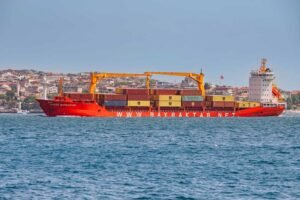
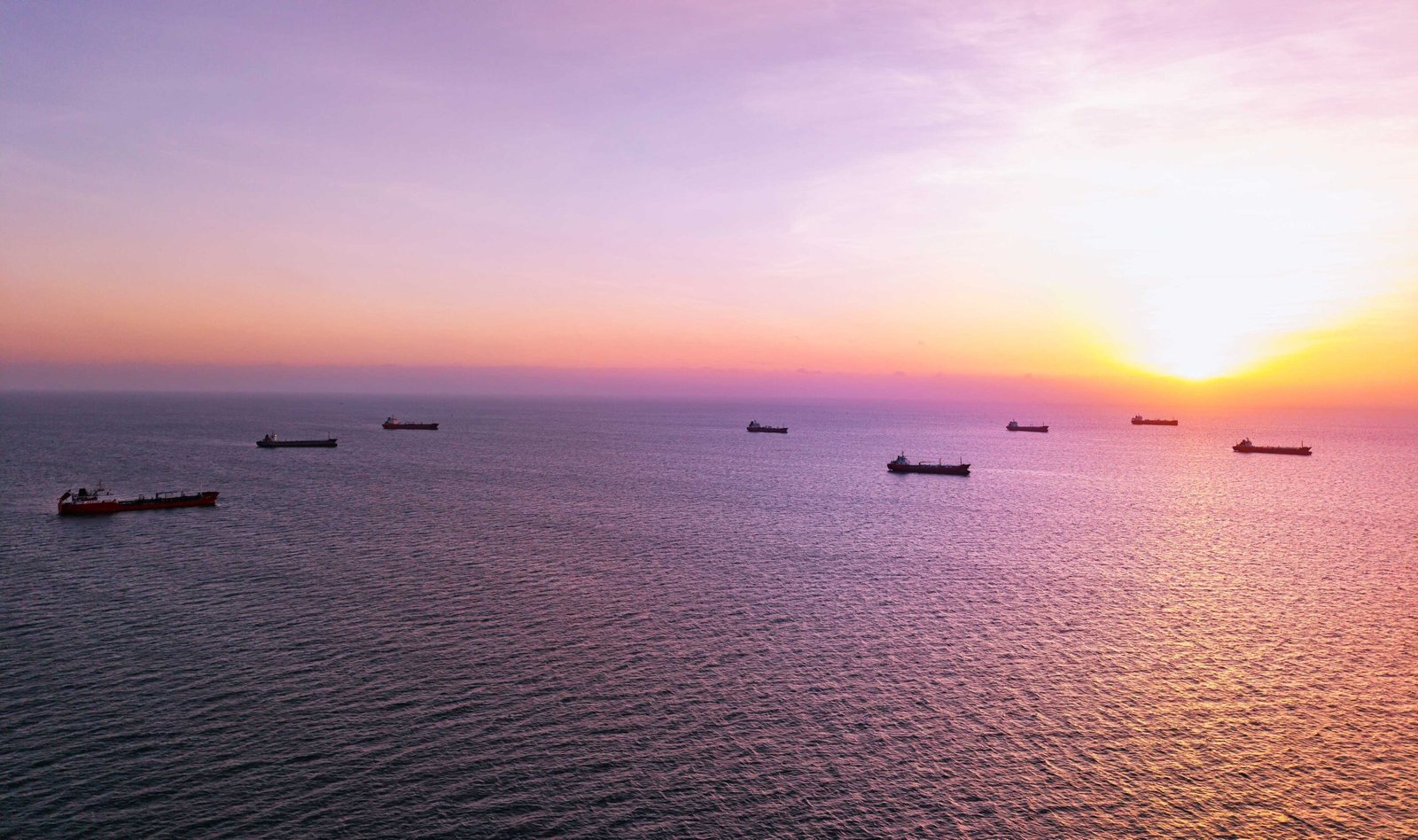
But this is exactly where the danger begins. The Strait of Hormuz is a powerful card, but a card can be exhausted. Recent fighting and disruption around shipping have turned the Strait from a negotiating issue into the centre of the conflict. If Iran plays this card too often or too carelessly it may turn deterrence into a liability. Attacks on commercial shipping, even when framed by Tehran as responses to U.S. violations, can push neutral states away from Iran, give Washington wider justification for military action, and encourage neighbouring countries to develop alternatives that reduce Iranian leverage.[x]
Iran’s neighbours may tolerate pressure when they believe it will quickly lead back to diplomacy. They will be less willing to tolerate open-ended disruption. A country can use geography as leverage, but if that leverage becomes permanent uncertainty for others, those others will eventually organise around it.
This is why the current moment is so important. Iran fought well enough to return to negotiations. It now needs to avoid treating that achievement as a final victory. The purpose of deterrence is not simply to show that Iran can cause pain. It is to create enough pressure for diplomacy to deliver something useful for the country.
When to stop fighting
The lesson is not that Iran should avoid resistance. A state under attack has to defend itself. The lesson is that resistance that is not converted into diplomatic gains becomes wasteful. It can create pride, but not necessarily results. It can prove endurance, but not produce sanctions relief, security guarantees, economic openings or regional stability.
Successful leaders know when to fight and when to pursue diplomacy. Only those who do not understand the power of diplomacy treat it as defeat. If Iran again allows hardliners to turn a diplomatic opening into another test of battlefield slogans, it may repeat an old pattern: surviving the confrontation, but losing the moment when survival could have become success.
Iran has created political leverage. Now its politicians must allow diplomats to use it, perhaps through a new framework rather than the one that has now collapsed. Otherwise, a country that fought well may once again fail to win politically.
[i] Reuters (2026). ‘Trump says interim accord with Iran to end war is over’, 8 July 2026, retrieved from: https://www.reuters.com/world/europe/trump-says-interim-accord-with-iran-end-war-is-over-2026-07-08/.
[ii] Al Jazeera (2026). ‘Iran says peace deal voided, fighting “existential war” after US attacks’, 15 July 2026, retrieved from: https://www.aljazeera.com/news/2026/7/15/iran-says-peace-deal-voided-fighting-existential-war-after-us-attacks.
[iii] Choukeir, J., Abdallah, N. and Elwelly, E. (2026). Reuters, ‘Iranian forces target Bahrain and Kuwait after US hits Iran’s south’, 21 July 2026, retrieved from: https://www.reuters.com/world/middle-east/iranian-forces-target-bahrain-kuwait-after-us-hits-irans-south-2026-07-21/.
[iv] Reuters (2026). ‘New US attacks on Iran were absolutely necessary, NATO chief says’, 8 July 2026, retrieved from: https://www.reuters.com/world/middle-east/new-us-attacks-iran-were-absolutely-necessary-nato-chief-says-2026-07-08/.
[v] National Museum of American Diplomacy (1981). ‘Declarations of Algiers Pen’, retrieved from: https://diplomacy.state.gov/items/declarations-of-algiers-pen/.
[vi] United Nations Digital Library (1982). “Security Council Resolution 514 (1982)”, adopted 12 July 1982, retrieved from: https://digitallibrary.un.org/record/31564?ln=en.
[vii] United Nations Digital Library (1987). “Security Council Resolution 598 (1987)”, adopted 20 July 1987, retrieved from: https://digitallibrary.un.org/record/137345?ln=en.
[viii] Council on Foreign Relations (2023). ‘What Is the Iran Nuclear Deal?’, 27 October 2023, retrieved from: https://www.cfr.org/backgrounders/what-iran-nuclear-deal.
[ix] Zengerle, P. (2026). ‘White House sends text of interim US-Iran agreement to US Congress’, Reuters, 18 June 2026, retrieved from: https://www.reuters.com/world/middle-east/white-house-sends-text-interim-us-iran-agreement-us-congress-2026-06-18/.
[x] Disavino, S. (2026). ‘Oil prices firm as investors weigh fresh attacks against potential US-Iran ceasefire’, Reuters, 21 July 2026, retrieved from: https://www.reuters.com/business/energy/oil-prices-dip-mediation-efforts-offset-us-iran-strikes-2026-07-21/.