The Ikhwan al-Muslimin, known as the Muslim Brotherhood (MB), has passed through three broad phases of development in Sudan. The first centred on the formative phase of the MB as a social and religious organization; the second on the pursuit of political power; and the third, visible in the present conflict, on the continuing influence of Islamist networks within and alongside Sudan’s military, the Sudanese Armed Forces (SAF).
Precision about actors is essential at the outset. The Sudanese Islamist arena has never been monolithic. The Muslim Brotherhood proper, the harder-edged network that Dr Hassan al-Turabi built through the National Islamic Front (NIF), the regime that Bashir constructed around the National Congress Party and its security organs, and the Islamist officers and militias now fighting alongside the SAF overlap in personnel and ideology, yet they are distinct actors with different histories and, at times, competing agendas. This article uses the term MB for the broader movement while distinguishing these currents where the distinction bears on the analysis.
For thirty years, under the then President of Sudan General Omar al-Bashir (1989–2019), the MB-aligned Islamic Movement served as the ideological and operational backbone of the regime. Today, the Sudanese MB and its allied Islamist networks are active participants in Sudan’s civil war, using the conflict as an opportunity to reclaim state influence. Through the NIF and its successor networks, Islamist cadres systematically penetrated the SAF, judiciary and civil service, and elements of those networks remain embedded within state institutions. The present war that erupted on 15th April 2023 between the SAF and the Rapid Support Forces (RSF) offers Brotherhood-linked and other Islamist actors an opportunity to recover political and institutional influence.
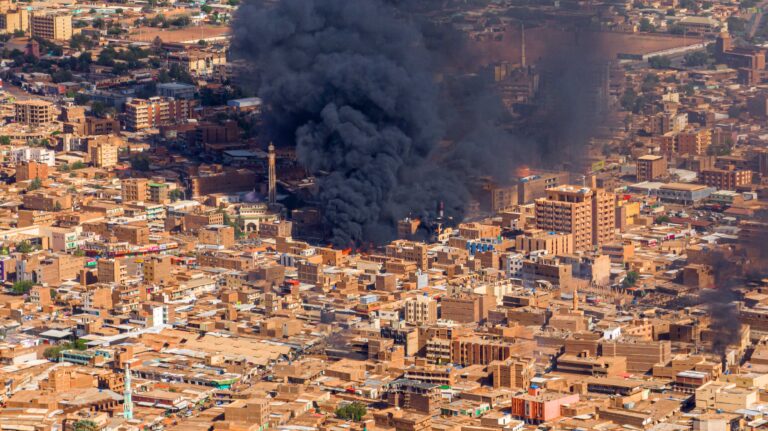
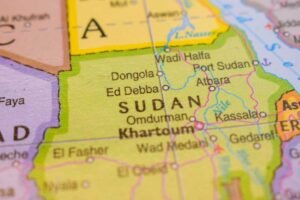
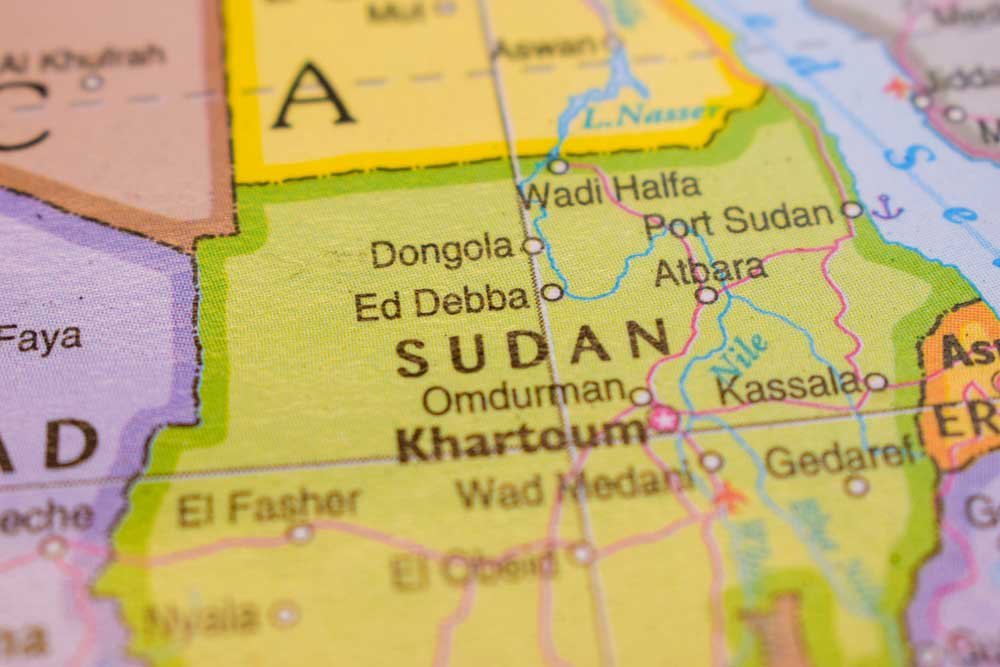
Today, the war between the SAF, led by General Abdel Fattah al-Burhan, and the RSF, commanded by General Mohamed Hamdan Dagalo, is causing tens of thousands of deaths, severe famine and expanding drone warfare that continues to uproot thousands of civilians daily. The SAF controls Sudan’s northern, eastern and central regions, including reclaimed areas of Khartoum, while the RSF maintains a heavy presence in western regions such as Darfur. The widespread use of deadly drone strikes in urban safe zones has sharply increased civilian casualties. With 14 million people displaced, severe funding shortages for UN aid and an acute risk of regional refugee spillover into neighbouring Chad, the conflict persists.
The Islamist networks embedded in the state survived, and outlived, their principal architect.
The war cannot be read through an Islamist lens alone, nor as a simple confrontation between two armies. The RSF grew out of the Janjaweed and draws its core strength from Darfuri Arab tribes, above all the Rizeigat, from whose Mahariya branch Dagalo himself hails, while the SAF officer corps has historically drawn disproportionately from riverine northern elites. Both sides recruit, arm and build alliances along tribal, ethnic and regional lines.[i] The RSF campaign against the Masalit in El Geneina in 2023[ii] and the massacres that followed the fall of El Fasher reproduced the ethnically targeted violence of the Darfur genocide, and in Kordofan communal loyalties, land disputes and herder-farmer tensions shape mobilisation on both sides. The Islamist networks examined in this article operate within this tribal and regional mosaic and exploit it; they do not supersede it.
The context
The ideological influence of the MB founder Hassan al-Banna spread from Egypt to Sudan during the 1940s and 1950s. The MB exploited student networks, visiting Egyptian lecturers and other intellectual circles. The Sudanese branch of the MB was established in 1954.[iii] A social organisation of ideologically committed rank and file, the MB infiltrated the universities and professional bodies in Sudan. Over time, MB members occupied key positions in government, the military and the judiciary.[iv] Eventually, the MB infiltrated the Sudanese Armed Forces and the intelligence community.
To capture power through a coup, the National Islamic Front (NIF), the political vehicle of the Islamist network led by Dr Hassan al-Turabi, allied with Islamist-oriented military officers led by Brigadier General Omar al-Bashir. After it captured power on 30th June 1989, the regime advocated an Islamic constitution and the implementation of Sharia.
Although Sharia was introduced under Nimeiri through the September Laws in 1983, the post-1989 regime entrenched and extended the Islamisation project.
These initiatives marginalised the non-Arab and non-Muslim communities of Sudan. Turabi opened Sudan to Islamists, including foreign fighters from around the world. With the anti-Soviet multinational Afghan war (1979–1989) coming to an end, Benazir Bhutto wanted the foreign fighters removed from Pakistan. From Peshawar, they flew into Sudan and established their headquarters. After the al-Qaeda leader Osama bin Laden relocated to Sudan, he established his businesses there and lived in Khartoum. The capital turned into a safe haven for militants. This open-door policy was Turabi’s particular project, institutionalised through the Popular Arab and Islamic Congress he convened in Khartoum from 1991, rather than an agreed position of the Brotherhood as a whole.
After 1989, the NIF-backed regime pursued an extensive Islamisation programme, including the education system. Islamist ideological principles increasingly shaped state institutions and public policy, deepening political and social divisions in Sudan.
Turabi himself warrants differentiated treatment. He had broken with the mainstream Sudanese Brotherhood as early as the 1960s, and the NIF represented one current within a wider Islamist field, the most ambitious and the most internationally oriented. Sudan’s embrace of transnational Islamist and militant actors in the 1990s was closely bound to his personal project and standing. His differences with other Brotherhood figures over strategy and doctrine were persistent, and his alliance with Bashir ruptured in December 1999[v], when the president dissolved parliament and stripped him of his powers. Turabi founded the opposition Popular Congress Party, spent much of the following decade in and out of detention, and died in 2016 estranged from the regime he had helped create.[vi] The Islamist networks embedded in the state survived, and outlived, their principal architect.
Khartoum’s political and economic marginalisation of peripheral and predominantly non-Arab communities contributed to the emergence of armed rebellion in Darfur, where the Sudan Liberation Movement and Justice and Equality Movement took up arms against the government in February 2003. Khartoum responded with a scorched-earth campaign, unleashing the Arab Janjaweed militia against non-Arab groups such as the Fur, Masalit and Zaghawa. Between 200,000 and 400,000 people died from violence, hunger and disease, and two million civilians were forced from their homes into refugee camps. The horrific scenes of ethnically motivated attacks against non-Arab communities, involving mass executions, widespread sexual violence and the destruction of villages, prompted the United States to term the atrocities a “genocide”.[vii]
The military coup of 25th October 2021 created conditions for a significant Islamist institutional and financial recovery.
The military coup of 25th October 2021 created conditions for a significant Islamist institutional and financial recovery. General Burhan dissolved the civilian-led transitional government, and in its aftermath the Empowerment Removal Committee, the body created after Bashir’s fall to recover assets accumulated by the Islamic Movement, was halted and its rulings annulled. One month before the coup, on 23rd September 2021, that committee had confiscated four Sudanese companies linked to Hamas: the property firm Hassan & Al-Abed, the agricultural venture Al-Bidaya, the Paradise Hotel and the money transfer house Al-Fayha. According to the committee, these entities had received preferential treatment in tenders, tax forgiveness and unrestricted transfers to Gaza.[viii] Once the military took power, that effort was reversed. The Hamas financier Abdelbasit Hamza, arrested and sentenced to ten years’ imprisonment after Bashir’s removal, was released, and the seizure of his holdings was undone, with a former Sudanese official stating that Burhan “returned all of these assets to the same people.”[ix] The unfreezing restored the Islamist financial infrastructure in Sudan roughly two years before the Hamas assault on Israel of 7th October 2023. Washington designated Hamza, along with his Sudan-based Zawaya Group for Development and Investment and Larrycom for Investment, only on 18th October 2023, by which time the network he directed had been operating unencumbered since the coup.[x]
After a devastating 18-month siege, the regional capital of El Fasher fell to the RSF, leading to widespread massacres, extreme starvation and indicators of a renewed genocidal path documented by UN investigators. The Brotherhood-linked Islamist militia, the al-Baraa Bin Malik Brigade, fights on the front lines, operating with functional autonomy while backing the state’s military campaign. Although the United States designated the Muslim Brotherhood in Sudan, together with the al-Baraa Bin Malik Brigade, on 16th March 2026, the MB and the Brigade have opposed compromises and negotiated settlements, contributing to obstacles to ending a conflict that has produced the world’s largest humanitarian crisis.[xi] Iran’s Islamic Revolutionary Guard Corps (IRGC) has also provided weapons and training to the Brigade.[xii]
The conduct of the war has also crossed the chemical threshold. In January 2025, The New York Times reported that United States officials had concluded the SAF used chemical weapons, understood to be chlorine gas, at least twice against the RSF. The State Department formally determined in May 2025 that the Sudanese government had employed chemical weapons in 2024 and imposed sanctions under the Chemical and Biological Weapons Control and Warfare Elimination Act. In September 2026, a leaked intelligence dossier reported by The New York Times and The Washington Post exposed the scale of the programme: a secret military unit manufactured nearly 300 chlorine-based munitions over six months in 2024, stockpiled principally at Merowe air base, drawing chlorine from imports and from a civilian water treatment plant in Omdurman supplied by international aid organisations. Intercepted communications published in the reporting suggest that the army leadership had knowledge of the programme and that later messages ordered the removal of traces and residue from military facilities.[xiii]
Background
Islamist movements have adopted different strategies according to their political environments. In Sudan, Turabi’s movement increasingly pursued a state-centric strategy aimed at capturing institutional power, whereas the Egyptian Muslim Brotherhood historically placed greater emphasis on gradual social organisation, education (tarbiya) and electoral mobilisation.
Under leaders such as al-Turabi in the 1960s, the group transitioned into open political activism through entities like the NIF, eventually entrenching itself deeply within Sudan’s state apparatus and military. The contrast with Egypt is instructive. Whereas Turabi’s NIF allied with military officers to seize state power in the 1989 coup, the Egyptian Muslim Brotherhood entered electoral politics after the 2011 uprising through the Freedom and Justice Party and subsequently won parliamentary and presidential elections.
How the threat evolved
Fragmentation, institutional collapse and prolonged insecurity create favourable conditions for clandestine networks, recruitment, logistics and eventual expansion.
With Africa emerging as the global epicentre of terrorism and extremism, will Sudan too witness the resurgence of al-Qaeda and the Islamic State? At present, Sudan’s highly contested battlefield may constrain al-Qaeda and the Islamic State from establishing a large, overt territorial presence. Yet the same fragmentation, institutional collapse and prolonged insecurity create favourable conditions for clandestine networks, recruitment, logistics and eventual expansion.
Egypt’s broader Islamist milieu also produced more radical organisations distinct from the mainstream Muslim Brotherhood, including al-Gama’a al-Islamiyya and Egyptian Islamic Jihad. Egyptian Islamic Jihad, led by figures including Ayman al-Zawahiri, eventually merged with al-Qaeda, while al-Gama’a al-Islamiyya followed a more fragmented trajectory, with some figures and factions gravitating toward transnational jihadism while others later renounced violence. Sudan subsequently provided sanctuary and operating space to militants from these Egyptian jihadist networks, who used the country as a base from which to organise against the Egyptian government.
In an attempt to destabilise Egypt, they even tried to assassinate the Egyptian President Hosni Mubarak when he was visiting Ethiopia on 26th June 1995.
Al-Qaeda’s clandestine operations in Sudan from 1991 to 1996 provided bin Laden with the experience and a template to replicate in Afghanistan from 1996 to 2001. Before al-Qaeda established training camps in Afghanistan, Osama bin Laden established training camps on the Soba and Al-Damazin farms in Sudan.
From April 1991 to May 1996, bin Laden was a guest of al-Turabi, then the regime’s chief ideologue, and his military ally Bashir. Under their patronage, bin Laden provided training in Sudan to Islamists from Algeria, Libya, Morocco, Tunisia, Egypt, Somalia and elsewhere to fight their governments. Once trained, they returned to their homelands sufficiently indoctrinated to fight their governments in order to establish Sharia.
The timely safe haven in Sudan provided by the Turabi-Bashir regime enabled al-Qaeda to survive, sustain itself and expand. After leaving Sudan, bin Laden formed the World Islamic Front for Jihad Against the Jews and Crusaders on February 23, 1998. He legitimised attacks against the United States, its allies and its friends. The August 7, 1998 al-Qaeda truck bombings at the U.S. embassies in Nairobi, Kenya, and Dar es Salaam, Tanzania, resulted in a total death toll of 224 people and more than 4,500 injured.[xiv] In the lead-up to al-Qaeda’s attacks against the U.S. embassies in Kenya and Tanzania in 1998, bin Laden established a robust presence in Africa.
Sudan provided al-Qaeda with an important early organisational, financial and operational base. Although the specific 9/11 plot took shape later in Afghanistan, Khartoum was part of the environment in which al-Qaeda developed the networks, experience and infrastructure that enabled its subsequent international operations.[xv]
The future
Under international pressure and sanctions targeting Sudan, bin Laden relocated from Khartoum to Kandahar in 1996. Nonetheless, al-Qaeda harbours ambitions of returning to Sudan. Bin Laden referred to Sudan as a “pivotal operational base”[xvi]. Strategically positioned, Sudan will remain an important theatre for both al-Qaeda and the Islamic State. In 2023 al-Qaeda’s Ibrahim al-Qussi wrote in “Fragments from al-Qaeda’s History” that bin Laden directed an investment of US$12 million solely for jihad in Sudan, highlighting the region’s continuing relevance to al-Qaeda’s objectives.[xvii]
“Sudan’s moment has come; chaos is our chance to sow the seeds of jihad,” warned Abu Hudhaifa al-Sudani, a high-ranking al-Qaeda leader, in an October 2022 manifesto.[xviii]
Today, both al-Qaeda and the Islamic State have expanded their footprint in Africa. Prolonged instability could create opportunities for al-Qaeda- and Islamic State-linked networks to rebuild a presence in Sudan. Existing Islamist networks could provide points of contact, recruitment or facilitation, although organizational and ideological differences between Brotherhood-linked actors and transnational jihadist groups should not be obscured. The ideologies of al-Qaeda and the Islamic State also draw partly on radical intellectual currents associated with Sayyid Qutb, while differing fundamentally from mainstream Brotherhood political strategy.
Egypt provides the sharpest test of any thesis that equates support for the SAF with support for the Brotherhood. Cairo has been the region’s most determined anti-Brotherhood state since 2013, yet it is also one of the SAF’s principal backers, extending diplomatic support, while reports have also attributed training and materiel military assistance to Egypt.[xix] The paradox is explicable. Egypt backs the SAF as a state institution and as the guarantor of a unified Sudan on its southern flank and along the Nile, not out of sympathy for the Islamists within the army’s ranks, whom Cairo regards with unease. The lesson cuts both ways: external backing for the SAF cannot automatically be read as alignment with the MB, and the army’s foreign partnerships constrain the movement’s room for open restoration even as its fighters exploit the war.
Conclusion
The MB presents a challenge to global security. As a movement, the MB presents itself as a religious party, but in fact it is political. In the case of Sudan, the MB has evolved from a social organisation not only into a political movement but into a force influencing its military. Yet the current war is the product of multiple overlapping Islamist, military, tribal, ethnic and regional networks, and no single organisational actor, the MB included, explains it alone. The Brotherhood’s significance lies in its demonstrated capacity to embed within these structures and exploit them, not in directing every actor that fights alongside the army. The battlefield resurgence of Brotherhood-linked Islamist networks alongside the SAF, including through militias such as the al-Baraa Bin Malik Brigade, has nevertheless demonstrated the continuing capacity of Islamist actors to exploit institutional and wartime opportunities. Owing to the international community’s response, the MB faces a future of deep underground adaptation, operating through splintered networks, localised charitable wings, and other partners and proxies. With the designation of the MB as a terrorist entity, its legitimacy has eroded.
The world should come together to ensure that the MB in Sudan is marked by international isolation. It is time to raise awareness of the MB’s deep networks embedded within Sudanese society and state institutions over decades.
The U.S.-led terrorist designations and regional pressures severely constrain the MB’s path back to open political and military dominance. However, with the failure by the international community to restore security, stability, law and order in Sudan, the real danger is an escalation in the threat posed by existing actors and by new ones.
[i] Human Rights Watch (2024). “The Massalit Will Not Come Home”, 9 May 2024 retrieved from: https://www.hrw.org/report/2024/05/09/the-massalit-will-not-come-home/ethnic-cleansing-and-crimes-against-humanity-in.
[ii] Human Rights Watch (2024). “Sudan: Ethnic Cleansing in West Darfur”, 9 May 2024, retrieved from: https://www.hrw.org/news/2024/05/09/sudan-ethnic-cleansing-west-darfur.
[iii] Sati, Dr I. (2026). “Islamists in Sudan: Are They All (Muslim Brotherhood)?”, Sudanhorizon, 22 March 2026, retrieved from: https://sudanhorizon.com/islamists-in-sudan-are-they-all-muslim-brotherhood/.
[iv] Haroon, M. (2026). “Sudan’s Hidden War: How the Muslim Brotherhood Hijacked the Army”, The Times of Israel Blog, 17 March 2026, retrieved from: https://blogs.timesofisrael.com/sudans-hidden-war-how-the-muslim-brotherhood-hijacked-the-army/.
[v] Vick, K. (1999). “Sudanese Leader Moves against Rival”, The Washington Post, 14 December 1999, retrieved from: https://www.washingtonpost.com/archive/politics/1999/12/15/sudanese-leader-moves-against-rival/fd3f839f-0d52-4ada-a714-39cb60f23cb0/.
[vi] El-Affendi, A. (2015). “Hassan al-Turabi”, Oxford Bibliographies in Islamic Studies.
[vii] While the US did characterize the atrocities as genocide, and the ICC subsequently charged Bashir with genocide, but the 2005 UN International Commission of Inquiry specifically concluded that the Government of Sudan had not pursued a policy of genocide, while finding extensive war crimes and crimes against humanity. | UNifeed (2026). “UN/Sudan Genocide Markers”, 8 July 2026, retrieved from: https://media.un.org/unifeed/en/asset/d360/d3604162; Blinken, A.J. (2025). “Genocide Determination in Sudan and Imposing Accountability Measures”, U.S. Department of State, 7 January 2025, retrieved from: https://2021-2025.state.gov/genocide-determination-in-sudan-and-imposing-accountability-measures/.
[viii] The Times of Israel (2021). “Sudan seizes assets of Hamas-linked firms, amid move toward West”, 23 September 2021, retrieved from: https://www.timesofisrael.com/sudan-seizes-assets-of-hamas-linked-firms-amid-move-toward-west/.
[ix] Elbagir, N. (2023). “Bin Laden, Hamas and the Sudanese money man:, CNN World, 32 December 2023, retrieved from: https://www.cnn.com/2023/12/21/middleeast/hamas-financing-abdelbasit-hamza-intl/index.html; Tahir, T., Hendawi, H. and Watkins, T. (2025). “Sudanese tycoon sanctioned for financing Hamas protected by SAF leader”, The National, 24 November 2025, retrieved from: https://www.thenationalnews.com/news/2025/11/24/sudanese-tycoon-sanctioned-for-financing-hamas-protected-by-saf-leader/.
[x] U.S. Department of the Tresury (2023). “Treasury Targets Additional Sources of Support and Fiancing to Hamas”, 27 October 2023, retrieved from: https://home.treasury.gov/news/press-releases/jy1845.
[xi] https://www.federalregister.gov/documents/2026/03/16/2026-05072/foreign-terrorist-organization-designation-of-sudanese-muslim-brotherhood.
[xii] Federal Register (2026). “Foreign Terrorist Organization Designation of Sudanese Muslim Brotherhood”, 16 March 2026, retrieved from: https://www.thenationalnews.com/news/mena/2026/03/11/us-says-irans-irgc-trained-sudanese-muslim-brotherhood-members-fighting-alongside-army/.
[xiii] Walsh, D. and Bergman, R. (2026). “Secret Dossier Adds to Evidence of Chemical Weapons in Sudan”, The New York Times, 5 September 2026, retrieved from: https://www.nytimes.com/2026/09/05/world/africa/sudan-chemical-weapons-war.html; Bruce, T. (2025). “Imposing Measures on Sudan for its Use of Chemical Weapons”, U.S. Department of State, 22 May 2025, retrieved from: https://www.state.gov/releases/office-of-the-spokesperson/2025/05/imposing-measures-on-sudan-for-its-use-of-chemical-weapons/.
[xiv] Federal Bureau of Investigation (N.D.) “East African Embassy Bombings”, retrieved from: https://www.fbi.gov/history/cases-and-criminals/east-african-embassy-bombings.
[xv] Federal Bureau of Investigation (N.D.) “Osama bin Laden”, retrieved from: https://www.fbi.gov/history/cases-and-criminals/osama-bin-laden, https://govinfo.library.unt.edu/911/report/911Report_Ch5.htm.
[xvi] Pasternak, J. (2006). “Bin Laden Tape Urges Support for Sudan”, Los Angeles Times, 24 April 2006, retrieved from: https://www.latimes.com/archives/la-xpm-2006-apr-24-fg-binladen24-story.html.
[xvii] Internet Archive (2021). “Glimpses into the history of Al-Qaeda”, [in Arabic], retrieved from: https://archive.org/details/20210914_20210914_2301/mode/1up; Harmouch, S. (2024). “Sudan’s descent into chaos sets stage for al-Qaida to make a return to historic stronghold”, The Conversation, 10 May 2024, retrieved from: https://theconversation.com/sudans-descent-into-chaos-sets-stage-for-al-qaida-to-make-a-return-to-historic-stronghold-228954.
[xviii] Weiss, C. (2022). “Al Qaeda ideologue calls for jihad in Sudan, provides guidelines”, FDD’s Long War Journal, 27 October 2022, retrieved from: https://www.longwarjournal.org/archives/2022/10/analysis-al-qaeda-ideologue-calls-for-jihad-in-sudan-provides-guidelines.php.
[xix] European Union Agency for Asylum (N.D.) “International actors”, retrieved from: https://dip-aws.euaa.europa.eu/coi/sudan/2025/security-situation/12-actors-conflict/122-international-actors. For the more general proposition that Egypt is one of Burhan/SAF’s principal political supporters, Reuters is also useful: it describes Egypt as Burhan’s most visible ally and notes Cairo’s diplomatic support Lewis, A. (2024). “Sudan’s conflict: Who is backing the rival commanders?”, Reuters, retrieved from: https://www.reuters.com/world/africa/sudans-conflict-whos-backing-rival-commanders-2023-05-03/