Gulf states and their partners are increasingly looking beyond their most immediate interests of containing the war with Iran. While recent talks between Saudi Arabia, Turkey, Pakistan, and Iran have kept de-escalation on the agenda[i], a broader regional security framework and non-aggression pact has also emerged, envisioning a longer-lasting solution to regional conflicts. The talks have yet to produce a settlement, but they reflect a growing recognition that Gulf security cannot depend entirely on Washington. Iran will still be there, and its neighbours will have to find ways of living with it.
Iran’s asymmetric attacks on civilian infrastructure and maritime shipping in the Gulf have exposed the limits of strategies resting on military superiority.[ii] During the past eight months of the war, Gulf governments found themselves unable to sway U.S. decisions and ward off Iran’s retaliation. Nor can they assume that the weakening of Iran’s conventional military capabilities will necessarily make it a less dangerous neighbour. The Islamic Republic’s regime may have fewer options under sustained military and economic pressure[iii], but this is exactly why its incentives to exploit the vulnerabilities of its adversaries may grow stronger.
Gulf states have continued to depend on Washington’s security umbrella while bearing many of the costs of a war they cannot control. Diplomatic initiatives could help reduce tensions, but their value would depend on whether Tehran can be induced to change its behaviour – and whether its commitments can be trusted. Limited agreements concerning the protection of shipping, civilian infrastructure, and regional security could give Gulf states greater influence over risks that deterrence alone cannot eliminate.
The limits of military options
Deterrence can raise the costs of Iranian attacks; diplomacy may help manage risks that military superiority alone cannot eliminate.
Gulf states face three broad options. They can wait for military and economic pressure to weaken the Iranian regime further, rely on defensive capabilities to absorb additional attacks, or participate more directly in U.S. and Israeli military operations. Each carries substantial risks.
The killing of Ayatollah Ali Khamenei, months of bombardment, and the loss of senior officials have not brought down the Islamic Republic. Even with diminished conventional capabilities, Iran could retain considerable capacity for asymmetric retaliation through drones, mines, fast boats, and regional armed groups. Military pressure may also reinforce Tehran’s perception that disrupting shipping and targeting infrastructure are among its few remaining ways to impose costs on stronger adversaries.
Defensive measures are necessary, but they carry increasing economic and operational costs. Relatively inexpensive weapons can require costly interceptors, naval escorts, and higher insurance premiums.[iv] Shipping disruptions also show that military superiority does not automatically ensure commercial access or protect investors’ faith. For Gulf economies that depend heavily on energy exports, international trade, and their reputation as secure destinations for investment, even intermittent disruption can have consequences well beyond the immediate damage.
Direct participation in the offensive presents a different risk. Gulf governments could trigger further retaliation without gaining meaningful influence over decisions in Washington or Jerusalem. Security collaboration remains essential, but it does not give Gulf capitals control over the timing or conditions of a wider confrontation.
Gulf governments are exposed to decisions they do not control, while efforts to limit the conflict may be interpreted as weakening the coalition confronting Iran. Outreach to Tehran could create room for manoeuvre but it could also generate friction with Washington and expose differences among Gulf states.
Military pressure and diplomacy serve different purposes. Deterrence can raise the costs of Iranian attacks; diplomacy may help manage risks that military superiority alone cannot eliminate. The challenge is to determine whether practical agreements can constrain Iranian behaviour without undermining the capacity to deter further coercion.
From outreach to limited agreements
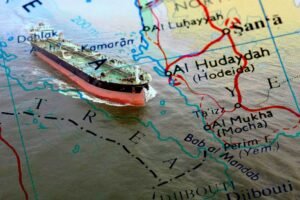
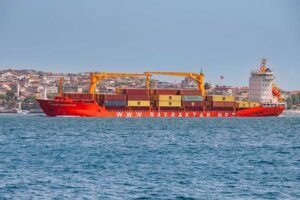
Maritime safety offers a plausible starting point. Attacks and harassment involving commercial shipping[v] threaten Gulf economies and international trade directly, creating a shared interest in reducing the risk of further disruption. A prolonged interruption would impose costs on Iran as well, although it is far from clear that this consideration would outweigh Tehran’s perceived military and strategic advantages in disrupting shipping.
Oman, Saudi Arabia, and other interested Gulf governments could explore direct communication channels, incident notification, and information exchange when vessels or naval forces face threats. More substantive arrangements would require commitments to respect freedom of navigation and halt attacks on commercial shipping, alongside reciprocal measures that Gulf states can deliver themselves.
The terms would matter. Any arrangement would need to distinguish legitimate maritime cooperation from restrictions that allow Iran to exercise unilateral control over international navigation. It would also need to recognize the limits of Gulf leverage: regional governments cannot bind Washington or Jerusalem to changes in military policy or promise sanctions relief they do not control.
Civilian infrastructure could provide a second area for discussion. Energy facilities, desalination plants, and airports[vi] are central to Gulf security and economic development. Agreements protecting them would require clear prohibitions and credible procedures for assessing violations, a difficult task when drones, mines, and disputed attribution complicate enforcement.
The role of regional armed groups presents a further complication. Iranian support for the Houthis[vii] matters for Saudi security and shipping near Bab el-Mandeb, but the extent of Tehran’s influence over their decisions cannot simply be assumed. Any commitments would need to focus on actions Iran could credibly influence and on observable changes in behaviour.
These possibilities vary in ambition. Substantive agreements call for sustained restraint, participation by the relevant security institutions, and credible ways to assess compliance. Economic engagement might eventually provide additional incentives, but sanctions exposure and the limited concessions Gulf governments can offer constrain that prospect. It would be unrealistic to expect them to compensate Iran for the costs of its confrontation with the United States or provide economic benefits that could be interpreted as circumventing existing restrictions.
Such a limited agenda would leave the nuclear dispute, the U.S. military presence, and the wider U.S.-Iran rivalry unresolved. Its potential value lies in reducing particular threats to Gulf security without requiring a comprehensive political settlement.
Tehran’s incentives and the limits of Gulf leverage
Military setbacks alone provide little reason to assume that its calculations will change.
Whether limited agreements are possible depends on how Iran weighs the costs of continued confrontation against the benefits of restraint. Further attacks risk drawing more Gulf states into the conflict and deepening Iran’s regional isolation. Tehran also has reasons to preserve relationships with neighbours that will remain important to its security and economic recovery.
Yet Iranian leaders may regard disruption as one of their few remaining sources of leverage against militarily superior adversaries. If attacks on shipping unsettle markets and increase pressure on Washington, Tehran may see the benefits of disruption as outweighing those of regional accommodation. Military setbacks alone provide little reason to assume that its calculations will change.
Narrow agreements may nevertheless be possible if reciprocal policies protect Iranian interests and can be presented domestically as negotiated outcomes. Gulf governments, in turn, could better understand Iranian intentions and find more reliable ways to manage incidents. The distinction between limited restraint and broader strategic accommodation is crucial. An agreement on maritime safety might reduce a specific risk without changing Iran’s regional strategy. That would still matter if it produced verifiable restraint.
Oman appears well placed to facilitate initial contacts, given its longstanding ties with Tehran and diplomatic experience.[viii] Qatar could provide a complementary channel, while Pakistan might prove useful in broader U.S.-Iranian de-escalation efforts. China may be prepared to lend diplomatic support, but it neither has the capacity nor has demonstrated the willingness to serve as a security guarantor.
Saudi Arabia would remain central to any credible Gulf initiative. The 2023 Saudi-Iranian agreement[ix] demonstrated that diplomatic communication could restore relations amid deep strategic distrust, even as the underlying security rivalry persisted. The UAE, Bahrain, Kuwait, and other exposed Gulf states would also need a voice in defining the initiative’s objectives. Their threat perceptions and diplomatic preferences differ; an arrangement that reduces attacks on one state while leaving another exposed may deepen divisions rather than improve regional security.
Washington presents another constraint. U.S. officials may view negotiations as an opportunity for Tehran to regroup, preserve remaining capabilities, or weaken the coalition against it. Gulf governments could reduce some of these concerns by keeping the agenda narrow and making progress conditional on observable Iranian restraint. Even so, Washington — and potentially Israel — might oppose arrangements they believe undermine military pressure or give Tehran time to recover.
There is also the question of whether Iran can deliver. Civilian officials may have limited influence over the institutions responsible for military and maritime operations. If the Islamic Revolutionary Guard Corps regards disruption as a valuable source of leverage, political assurances may carry little weight.
The test would be whether Iranian interlocutors can influence operational behaviour. Reliable incident reporting, cooperation in investigating violations, and a sustained decline in attacks would justify further engagement. Repeated breaches without corrective action would suggest that the channel had reached its limits.
Verification and the consequences of failure
Because an initial agreement might offer Iran few economic benefits to lose, its credibility would depend on tangible, proportionate consequences rather than the threat of sanctions alone.
Any substantive agreement would need clear benchmarks for assessing compliance: a sustained reduction in specified incidents, timely responses through designated channels, and participation by the Iranian institutions responsible for implementation.
Verification would stay imperfect, particularly when drones, mines, or armed groups complicate attribution. Agreed procedures for preserving evidence, exchanging information, and obtaining independent technical assessments where possible could help distinguish disputed incidents from a pattern of noncompliance.
The parties would also need to establish the consequences of violations in advance. Ambiguous incidents could prompt investigation and consultation; verified serious infringements could trigger reciprocal measures; repeated or systematic violations could end the substantive arrangement. Because an initial agreement might offer Iran few economic benefits to lose, its credibility would depend on tangible, proportionate consequences rather than the threat of sanctions alone. At the same time, automatic or disproportionate responses to disputed incidents could defeat the purpose of an arrangement intended to prevent escalation.
A defined period of technical engagement could establish whether communication improves, incidents decline, and Iranian officials can deliver. If those conditions fail to materialise, substantive talks could be suspended while basic crisis communication remains open.
The choice facing the Gulf
Military pressure may weaken Iran without producing a more stable regional order. Diplomacy may reduce specific risks without resolving the rivalry that generates them.
Limited agreements could give Gulf states greater strategic agency by constraining Iranian behaviour and producing tangible security gains. Their value would depend on whether practical cooperation reduces coercion while continuing credible deterrence.
Iran will remain part of the regional security equation. For the Gulf states, the challenge is to manage that reality while ensuring diplomatic interaction delivers more than a resumption of dialogue.
[i] Wintour, P. (2026). “Gulf states working on multipart peace deal to avert renewal of US-Iran war”, The Guardian, 28 October 2026, retrieved from: https://www.theguardian.com/world/2026/oct/28/gulf-states-multipart-peace-deal-avert-renewal-us-iran-war.
[ii] Stewart, P. et al. (2026). “Iranian leaders Khamenei killed in air strikes as U.S., Israel launch attacks”, Reuters, 28 February 2026, retrieved from: https://www.reuters.com/business/aerospace-defense/israel-us-launch-strikes-iran-2026-02-28/.
[iii] Vatanka, A. (2026). “Iran’s Economic Realities Amid War”, Middle East Institute, 17 April 2026, retrieved from: https://mei.edu/policymemo/irans-economic-realities-amid-war/.
[iv] UN Trade & Development (2026). “Hormuz shipping disruptions raise risks for energy, fertilizers and vulnerable economies”, 10 March 2026, retrieved from: https://unctad.org/press-material/hormuz-shipping-disruptions-raise-risks-energy-fertilizers-and-vulnerable-economies.
[v] International Maritime Organization (2026). “Middle East – Highlighted (Confirmed) incidents”, retrieved from: https://www.imo.org/en/mediacentre/hottopics/pages/middle-east-highlighted-incidents.aspx.
[vi] Reuters (2026). “Indian worker killed in Iranian attack on Kuwait power, desalination plant”, 30 March 2026, retrieved from: https://www.reuters.com/world/india/indian-worker-killed-iranian-attack-kuwait-power-desalination-plant-2026-03-29/; Reuters (2026). “Tehran warns Gulf energy sites to evacuate after Iranian gas facilities hit”, 18 March 2026, retrieved from: https://www.reuters.com/world/middle-east/tehran-warns-gulf-energy-installations-after-oil-industry-facilities-hit-2026-03-18/.
[vii] Ferragamo, M. and Robinson, K. (2026). “Iran’s Support of the Houthis: What to Know”, Council on Foreign Relations, 10 April 2026, retrieved from: https://www.cfr.org/articles/irans-support-houthis-what-know.
[viii] Saudi Press Agency (2023). “Joint Trilateral Statement by the Kingdom of Saudi Arabia, the Islamic Republic of Iran, and the People’s Republic of China”, 10 March 2023, retrieved from: https://www.spa.gov.sa/en/ed7aabfefaw.
[ix] Hafezi, P., Abdallah, N. and El Yaakoubi, A. (2023). “Iran and Saudi Arabia agree to resume ties in talks brokered by China”, Investing.com, 10 March 2023, retrieved from: https://www.investing.com/news/commodities-news/iran-and-saudi-arabia-agree-to-resume-ties-reopen-embassies-iranian-state-media-3027583.