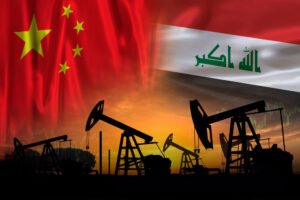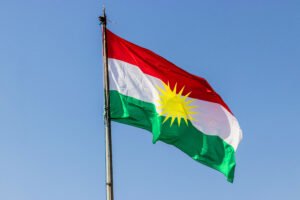
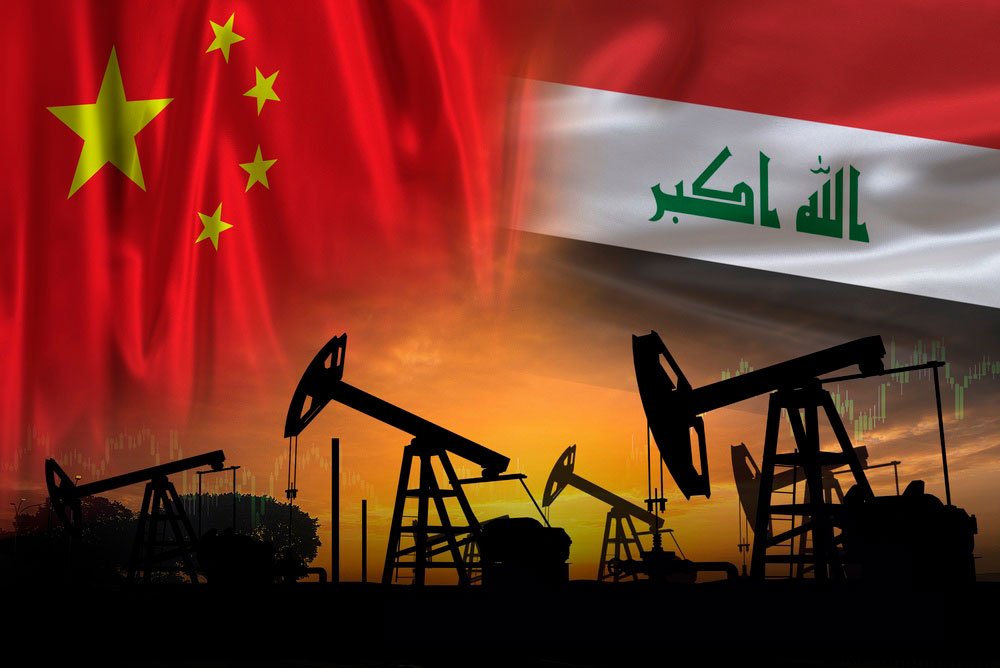
Unlike many foreign powers that have approached their relations with the Kurdistan Region primarily through the lens of geopolitical competition involving Baghdad, Tehran, and Ankara, China has pursued a more restrained form of “quiet balancing.” From Beijing’s perspective, the Kurdistan Region is not viewed as an alternative to the Iraqi central government, but as part of Iraq’s broader political and economic structure. In this view, Erbil can contribute alongside Baghdad to protecting China’s long-term interests in Iraq.[i] China has therefore expanded its relations with the federal government, particularly in energy, infrastructure, and projects linked to the Belt and Road Initiative (BRI), while maintaining economic ties with the Kurdistan Region. At the same time, Beijing has generally avoided allowing its relations with Erbil to become part of the wider Baghdad-Erbil dispute.[ii] This approach has distinguished China from several Western actors, which have at different times developed closer institutional ties with the Kurdistan Region and have occasionally faced criticism from Baghdad for bypassing or undermining the authority of the central government.[iii]
Another factor shaping China’s approach is the competition among regional powers in northern Iraq. The Kurdistan Region sits at the intersection of the interests of Iran, Turkey, the United States and, to a lesser extent, the Persian Gulf states. Beijing is aware that direct involvement in these rivalries could expose its investments to considerable political and security risks. For this reason, unlike Washington, which maintains a security and military presence in the Kurdistan Region, and Turkey, which places particular emphasis on security concerns related to the Kurdistan Workers’ Party (PKK), China has largely positioned itself as an economic partner. This approach has meant that China has neither sought to mediate disputes between Baghdad and Erbil nor become involved in rivalries between Kurdish political parties.[iv]
Maximizing economic interests, minimizing geopolitical risks
China’s policy can be regarded as an effort to “maximize economic interests while minimizing geopolitical risks.”[v] A similar approach is evident in several crisis-affected parts of the Middle East, where Beijing has sought to expand its influence through investment, trade, and economic diplomacy without becoming involved in security alliances or openly siding with one party in regional conflicts. China’s responses to the crises in Syria, Gaza, and Lebanon offer some of the clearest examples. In the Kurdistan Region of Iraq, this approach has meant that China has neither sought to mediate disputes between Baghdad and Erbil nor become involved in rivalries among Kurdish political parties. From Beijing’s perspective, maintaining political stability and ensuring the continued production and export of energy are considerably more important than attempting to reshape the balance of power among local actors.
In this respect, China has taken a different path from the United States and some European powers, which have played active roles in Middle Eastern crises through military deployments or security support for their allies. Beijing has preferred to present itself as an “economically engaged but strategically restrained power.”[vi] From the Chinese perspective, protecting its investments does not require a military presence. Instead, Beijing has relied on maintaining relations with the region’s major actors, containing tensions where possible, and staying out of direct geopolitical rivalries. This approach reflects China’s broader foreign policy emphasis on “development without confrontation,” with greater weight placed on economic cooperation, stability, and mutual benefit than on military competition or ideological conflict.[vii]
Dual-track engagement strategy
In practice, Beijing pursues a “Dual-Track Engagement Strategy” that operates on two parallel levels: political legitimacy and economic engagement.[viii] These two tracks are not contradictory; rather, they reinforce each other, allowing China to maintain the established principles of its foreign policy while protecting and expanding its economic interests.
The political legitimacy Track is based on China’s recognition of the federal government as the sole legal authority for its official relations with Iraq. This position reflects core principles of the foreign policy of the People’s Republic of China, particularly respect for state sovereignty, territorial integrity, and non-interference in domestic affairs. These principles have remained central to Chinese diplomacy since the establishment of the PRC in 1949. From this perspective, despite the Kurdistan Region’s considerable political, security, and economic autonomy, Beijing continues to view the region as part of a unified Iraqi state.[ix]
For this reason, strategic cooperation documents, government agreements, participation in the Belt and Road Initiative (BRI), banking and financial arrangements, and formal diplomatic contacts are conducted through Baghdad. Beijing has not supported the Kurdistan Region’s aspirations for independence, including during the 2017 independence referendum. This position is linked not only to China’s relations with the Iraqi government but also to concerns within Beijing about the implications for its own domestic issues. China is wary that recognizing separatist movements elsewhere, particularly in the case of Iraqi Kurdistan, could establish a precedent relevant to sensitive issues such as Xinjiang, Tibet, and Taiwan. Political legitimacy is therefore a core principle for Beijing. Even where China has substantial economic interests in the Kurdistan Region, it has generally avoided compromising this principle in pursuit of those interests.
The economic engagement track, on the other hand, is considerably more flexible. At this level, China works with local institutions, the Kurdistan Regional Government’s Ministry of Natural Resources, private companies, and other economic actors without taking a position on the legal or political status of the Kurdistan Region. The involvement of companies such as Sinopec, through its acquisition of Addax Petroleum, as well as Geo-Jade Petroleum and a range of Chinese contractors in energy, construction, telecommunications, road infrastructure, and equipment supply, suggests that Beijing sees the Kurdistan Region as both a commercially attractive market and a useful part of its wider energy security strategy.[x]
Beijing depoliticizes economic relations by keeping investment and trade largely separate from disputes over identity, ethnicity and political competition.
However, these forms of cooperation have been managed in ways that do not create friction with China’s strategic relations with the Iraqi federal government. In practice, Beijing depoliticizes economic relations by keeping investment and trade largely separate from disputes over identity, ethnicity and political competition.[xi] This has allowed China to maintain relatively stable relations with Baghdad, Erbil, Tehran and Ankara at the same time, while limiting its exposure to Iraq’s internal political rivalries and wider regional conflicts.
From this perspective, China’s Dual-Track Engagement Strategy is one of the defining features of its diplomacy in the Middle East. Under this approach, political legitimacy remains tied to the nation-state, while economic engagement can extend to subnational actors. This model is likely to remain an important framework for China’s policy not only toward the Kurdistan Region of Iraq but also in its relations with other autonomous regions and local actors across West Asia.
Conclusion
Over the past two decades, relations between the Kurdistan Region of Iraq and China have focused mainly on economic and commercial cooperation. Compared with Beijing’s strategic relationship with the Iraqi central government, political and security ties with the Kurdistan Region have remained limited. While following the principle of “state-to-state diplomacy,” China has consistently treated Baghdad as its official counterpart. At the same time, however, Chinese companies, including Sinopec, CNOOC and particularly Geo-Jade Petroleum, have expanded their economic presence in the Kurdistan Region through involvement in the development of oil and gas resources. The Kurdistan Region, in turn, has welcomed Chinese investment and trade as part of its effort to diversify its foreign economic partners, while Chinese goods have gained a substantial share of the local market.
However, because of Beijing’s sensitivity to territorial integrity and its concern that supporting separatist movements abroad could set precedents for domestic issues involving Xinjiang, Tibet, and Taiwan, China has consistently avoided offering political support for the Kurdistan Region’s independence aspirations. Following the 2017 independence referendum, Beijing reaffirmed its support for Iraq’s unity, sovereignty, and territorial integrity.[xii] China’s relations with the Kurdistan Region can therefore be described as a form of “Economic Pragmatism without Political Commitment,” in which energy and commercial interests receive greater attention than geopolitical or security considerations. The approach also reflects China’s wider strategy in the Middle East: expanding its economic presence through investment, trade, and connectivity while maintaining political neutrality and avoiding direct involvement in regional power struggles.
[i] Salman, M.I. (2024). “Chinese Policy Towards the Kurdistan Region of Iraq Since 2014”, Hammurabi Journal for Studies, 13(52), retrieved from: https://hamm-journal.org/index.php/HJS/article/view/546.
[ii] Hasan, H. (2024). “Iraq’s Development Road: Geopolitics, Rentierism, and Border Connectivity”, The Carnegie Endowment for International Peace, 11 March 2024, retrieved from: https://carnegieendowment.org/research/2024/05/iraqs-development-road-geopolitics-rentierism-and-border-connectivity.
[iii] Sajadi, D.M.D. and Ahmad, W. (2025). “China’s Economic Engagement in the Middle East, A Comprehensive Analysis”, Cihan University-Erbil Journal of Humanities and Social Sciences, 9(1), retrieved from: https://journals.cihanuniversity.edu.iq/index.php/cuejhss/en/article/view/1118.
[iv] Aziz, S. and Shareef, M. (2022). “Kurdistan in China: Are the Iraqi Kurds Interested in a Relationship?”, Fikra Forum, Washington Institute for Near East Policy, 31 May 2022, retrieved from: https://www.washingtoninstitute.org/policy-analysis/kurdistan-china-are-iraqi-kurds-interested-relationship.
[v]Colley, C.K. and Goodman, J.R. (2024). “Security in Neutrality: Chinese Engagement in the Middle East and the Red Sea Crisis”, Middle East Policy, 31(3), retrieved from: https://onlinelibrary.wiley.com/doi/abs/10.1111/mepo.12766.
[vi] Atlantic Council (2019). “China’s changing role in the Middle East”, 5 June 2019, retrieved from: https://www.atlanticcouncil.org/event/chinas-changing-role-in-the-middle-east/.
[vii] Ibid.
[viii] Ibid.
[ix] Aziz and Shareef (2022). “Kurdistan in China”.
[x] Ibid.
[xi] Atlantic Council (2019). “China’s changing role in the Middle East”.
[xii] Aziz and Shareef (2022). “Kurdistan in China”.