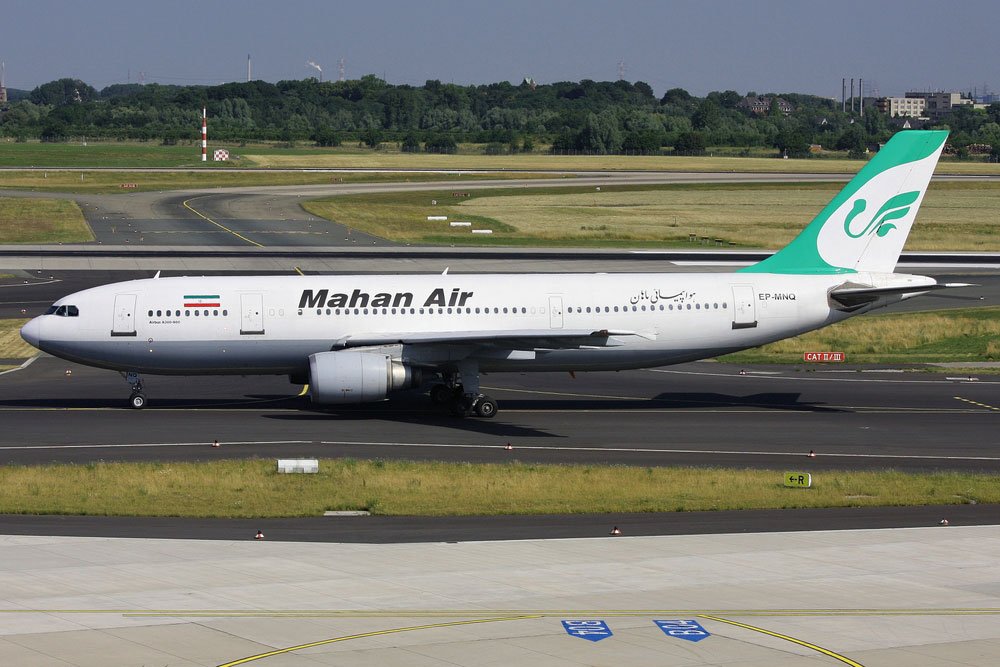
After months of military escalation, the U.S.-Iran conflict has reached a stalemate, with neither side agreeing to a ceasefire nor actively engaging in military hostilities. With military pressure failing to produce a political settlement, the conflict has shifted from direct military confrontation towards non-traditional forms of warfare. Washington has increasingly turned to economic pressure and secondary sanctions to compel Iran to make concessions. As part of these efforts, the United States launched Operation Economic Outcast on 24 August to further destabilize the Iranian economy by disrupting its connections with the outside world. By targeting Iranian airlines and foreign companies, the United States is using civil aviation as a tool of geopolitical coercion, demonstrating the changing nature of modern warfare.
U.S. Treasury Secretary Scott Bessent announced Operation Economic Outcast as a step towards attacking Iran’s economic lifelines.[i] In this operation, the U.S. targeted five economic sectors: digital assets, technology, gold, aviation, and shipping. The U.S. Treasury stipulated that countries must stop doing business with Iran, otherwise, they would be removed from the U.S. dollar system. U.S. President Donald Trump described the campaign as an “Economic D-Day,” invoking the 1944 military operation to portray it as an all-out economic offensive against Iran. Under this campaign, Washington sanctioned 37 aviation-related targets, including 27 Iranian airlines and other foreign service providers.[ii] Washington also threatened to impose consequences on third countries doing business with Iran after 23 September. Following the naval blockade, the U.S. is seeking to impose a de facto aerial blockade to further restrict Iran’s connections with the outside world.
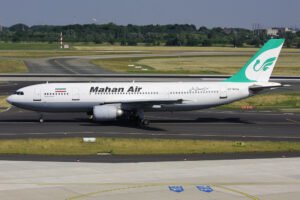
The U.S. rationale behind these sanctions is quite straightforward: Washington argued that Iranian airlines, particularly the privately owned Mahan Air, have been used to transport military personnel and weapons, support Islamic Revolutionary Guard Corps networks, and facilitate terror-related activities. Therefore, Washington targeted the aviation sector as a national security and counterproliferation measure. However, these sanctions also serve a broader strategic purpose, as civil aviation is a vital means of international connectivity. By sanctioning this industry, Washington is attempting to increase Iran’s isolation, restrict mobility, reduce external market access, and sever economic ties with other states by increasing the costs of doing business with Iran. Through these measures, Washington is aiming to cripple the Iranian economy in order to pressure Tehran for a political settlement. These actions highlight the strategic significance of civil aviation in statecraft. By targeting this vital channel of connectivity, the U.S. is turning international air links into instruments of diplomatic coercion.
In response to the U.S. economic pressure campaign, several Gulf states, including the UAE and Oman, suspended their aviation operations with Iran. Georgia, Azerbaijan and the Iraqi capital, Baghdad, also suspended flight operations.[iii] China, Russia and Turkey continued aviation links with Iran despite the restrictions. Mohsen Rezeai, Secretary of Iran’s Supreme National Security Council, warned that countries preventing Iranian aircraft from operating could face similar restrictions on their own flights.[iv] However, Iran later announced that it would use non-military measures and negotiations to resolve this issue. Iraq subsequently permitted 40 daily flights to Najaf for pilgrims, marking a limited diplomatic opening for Iran.
The sanctions have significantly affected Iran’s international air connectivity.[v] However, these sanctions adversely impacted the overall connectivity of Iran with the world. According to the data, the number of daily flights from Tehran has now been cut by approximately half, dropping from 80–90 to 41 flights per day.[vi]
These developments demonstrate a transformation in traditional statecraft and the growing use of coercive diplomacy. Traditionally, diplomacy has relied on communication, negotiations, economic exchange and people-to-people contact, with civil aviation helping to facilitate these connections between countries. However, this same infrastructure is now being used to exert pressure through isolation and economic restrictions without resorting to direct military confrontation. These measures represent a form of coercive diplomacy, in which the U.S. uses restrictions on civil aviation to exert economic and geopolitical pressure on Iran. In modern warfare, the goal is not only to fight the enemy militarily but also to restrict its networks in order to isolate it from the international system.
In the twenty-first century, international connectivity has become vital to states’ economic and political stability. U.S. sanctions on Iranian aviation highlight the consequences of disrupting these connections and demonstrate how modern warfare increasingly extends beyond the battlefield. The aviation campaign of the United States against Iran illustrates how economic sanctions and infrastructural coercion can be used to complement military operations. The use of civil aviation as a tool of coercive diplomacy highlights the sector’s dual role in international relations. This de facto air blockade risks making civilian connectivity a casualty of geopolitical confrontation, with Iranian passengers, businesses, students, pilgrims and diaspora communities bearing the burden. The U.S. campaign thus illustrates how a sector traditionally associated with international connectivity can become an instrument of geopolitical coercion.
[i] The White House (2026). “Operation Economic Outcast: Total Isolation of the Iranian Regime,” August 2026, retrieved from: https://www.whitehouse.gov/releases/2026/08/operation-economic-outcast-total-isolation-of-the-iranian-regime/.
[ii] Quartz (2026). “US Sanctions Iran Airlines: Aviation Crackdown,” 8 September 2026, retrieved from: https://qz.com/us-sanctions-iran-airlines-aviation-crackdown-090826.
[iii] Reuters (2026). “Iranian Flights Cancelled as New US ‘D-Day’ Sanctions Take Effect, Saudis Say,” 25 September 2026, retrieved from: https://www.reuters.com/world/middle-east/iranian-flights-cancelled-new-us-d-day-sanctions-take-effect-saudis-say-they-2026-09-24/.
[iv] Tasnim News Agency (2026). “Rezaei Warns Regional States against Joining US Bid to Block Iranian Flights,” 23 September 2026, retrieved from: https://www.tasnimnews.ir/en/news/2026/09/23/3704635/rezaei-warns-regional-states-against-joining-us-bid-to-block-iranian-flights.
[v] Al Jazeera (2026). “Iraq Grants Iranian Airlines 40 Daily Najaf Flights after US Exemption,” 2 October 2026, retrieved from: https://www.aljazeera.com/news/2026/10/2/iraq-grants-iranian-airlines-40-daily-najaf-flights-after-us-exemption.
[vi] Arab News (N.D.) “What We Know about US Sanctions on Iranian Aviation,” retrieved from: https://www.arabnews.com/middle-east/what-we-know-about-us-sanctions-on-iranian-aviation-3003638.