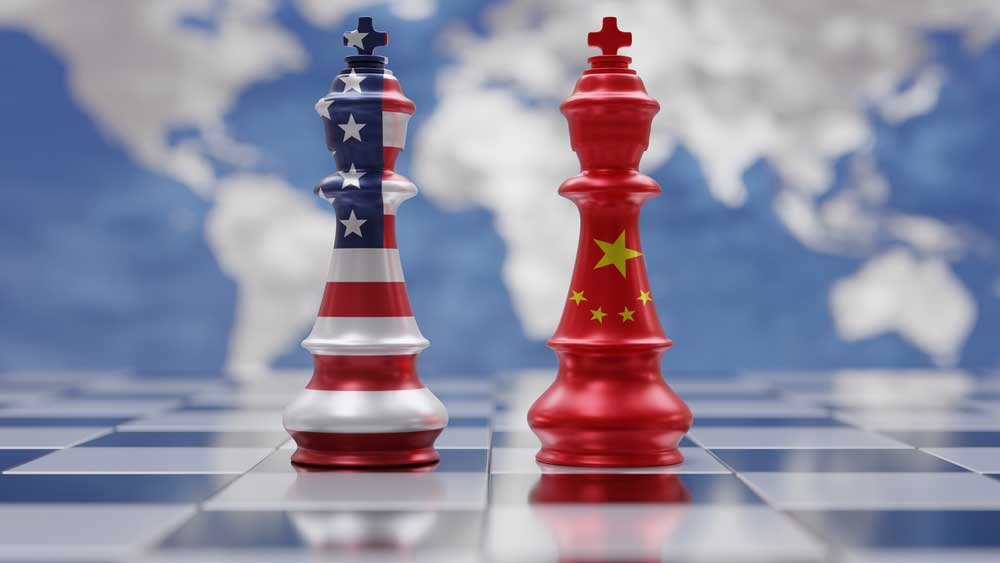
In the United States, foreign policy toward the Middle East and North Africa (MENA) has historically favoured military and security-focused doctrines over a single, long-term, binding strategic policy that integrates economic, trade, and investment support. Typically, these doctrines were formulated and implemented directly by the president and his administration.
During the twentieth century, the United States adopted five major foreign policy doctrines. From the Truman and Eisenhower doctrines through Carter, Reagan and George W. Bush, U.S. policy repeatedly placed containment, military security and strategic interests at the centre of its regional engagement.[i]
Most of these doctrines served the security and military interests of the American government and its closest allies. As a result, many proved to be complete failures with disastrous consequences – particularly the Bush Doctrine and its implementation in Iraq, which had profound effects on the Iraqi people and the stability of the broader Middle East.
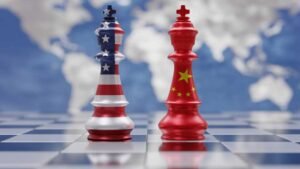
So, where do the globe’s two most powerful, technologically advanced, and economically dominant nations stand today regarding their relationships with and involvement in the Middle East and North Africa? Has China established a more stable and enduring foothold in a space long dominated by the United States?
America fought, China grew
China benefited strategically from periods when the United States was heavily distracted by prolonged military engagements.
To understand how and why China rapidly caught up with the American and European economies to become the world’s second-largest economy, one must examine what the United States and the West did wrong after 2001 and how China took advantage of that period to emerge as a global economic and political powerhouse, particularly in the Middle East and North Africa (MENA) region – the primary focus of this analysis.
While the United States was preoccupied with fighting the Global War on Terror on multiple fronts[ii] and attempting to spread democracy through military interventions, China pursued a strategy centered on economic development, trade, investment, and long-term strategic planning.[iii] As a result, China achieved an unprecedented pace and scale of economic growth, transforming itself into one of the greatest economic success stories in modern history.
A quick review of China’s economic growth over the last quarter-century, beginning in 2001, reveals that its most significant economic expansion occurred during a period when the United States was heavily engaged in military conflicts. In 2001, China’s nominal GDP stood at approximately $1.36 trillion.[iv]
Over this period, China’s nominal GDP increased from approximately $7.67 trillion in 2011 to about $17.82 trillion in 2021.[v]
In short, one could argue that China benefited strategically from periods when the United States was heavily distracted by prolonged military engagements. The correlation between these two developments is striking and forms an important part of understanding China’s rapid rise as a global economic power.
From ideology to economic pragmatism
China’s earlier involvement in the region was primarily centered on pursuing its anti-colonial agenda, especially in Africa, where it supported numerous liberation movements against European colonial rule.[vi] China provided military training, weapons, and, most importantly, international political support through organizations such as the United Nations. China was also the first non-Arab country to recognize Algeria’s independence from France in 1962.[vii]
While China’s political interest in the Middle East, North Africa, and Africa in general dates back to the 1960s, its more focused economic interest became increasingly evident by the end of the twentieth century. In his 2008 book China into Africa: Trade, Aid, and Influence, Robert I. Rotberg wrote:
“At the end of the 1970s, China shifted away from foreign relations based on ideology. Following the launch of its economic reform policy in 1978, its relations with the outside world became more pragmatic.”[viii]
This shift marked a fundamental change in China’s foreign policy. Rather than allowing ideology to dictate its international relationships, Beijing increasingly adopted a pragmatic approach centered on economic development, trade, investment, and strategic partnerships – an approach that would later become a defining feature of China’s engagement throughout the Middle East, North Africa, and Africa.
Over time, China’s strategic involvement with the Middle East and Africa (MEA) region was developed through carefully drafted and coordinated policies that date back to 29th April 1954, when China’s Five Principles of Peaceful Coexistence were officially introduced as the basis for its future foreign policy and international relations.[ix] The Five Principles emphasized sovereignty, non-aggression, non-interference, equality and mutual benefit, and peaceful coexistence.
Sixty years later, in 2014, the Chinese government reiterated its commitment to these Five Principles as the baseline for its foreign policy.[x] This policy was well received in the Middle East and Africa, especially since democratization, regime change, and free elections were not at the top of the list of priorities for the region.[xi]
A China-Arab strategic framework
In 2004, Chinese President Hu Jintao traveled to Cairo, Egypt, and, from the Arab League headquarters, announced the China-Arab States Cooperation Forum (CASCF) as an official framework for future relations.
On 13th January 2016, China issued its official China-Arab Policy Paper[xii] as a blueprint for a future strategic relationship with the MENA region. This policy focused on three core strategies. The first was energy, with a focus on oil and gas. The second was infrastructure construction, along with trade and investment. The third was high-tech fields, including nuclear energy, aerospace, and new green energy.
To further cement this relationship, the China-Arab States Summit was held on 9th December 2022, with the presence of 21 Arab heads of state in Riyadh, Saudi Arabia.[xiii] The summit established several core principles. On geopolitics, the Arab leaders committed to the “One China” policy, while China committed to supporting the Palestinian cause and giving full support to the two-state solution for Israel and Palestine.
All sides agreed on the importance of a multipolar world and non-interference in domestic affairs. Most importantly, serious discussions took place regarding the use of local currencies, including the Chinese yuan, in oil and gas trade.
Infrastructure as influence
In the past decade or so, China has invested billions of dollars in loans and grants to build its Belt and Road Initiative (BRI). To China, the BRI is a future project connecting its manufacturing industries to Asia, Africa, and Europe, with major investments in ports, industrial zones, railways, telecommunications and energy infrastructure across the Middle East and Africa.
Between 2000 and 2025, China financed more than 1,319 major projects and infrastructure developments across Africa, totaling more than $180.87 billion.[xiv] According to information from the Forum on China-Africa Cooperation (FOCAC), these projects spanned railways, roads, ports, telecommunications, energy, healthcare and education.
According to a 2025 China Daily report, Chinese Foreign Direct Investment (FDI) has also seen a significant increase. From 2000 to 2024, direct equity investments from Chinese corporations totaled approximately $50 billion.[xv]
In 1992, China’s General Administration of Customs (GACC) reported that the total trade value between China and Africa was worth approximately $1.8 billion. By 2025, this figure had grown to $348.05 billion.[xvi] During the same period, total trade between the U.S. and Africa increased from $21.8 billion in 1992 to, according to the U.S. Trade Representative (USTR), $83.4 billion in 2025.[xvii]
China’s evolving relationship with the Middle East and Africa was summarized by Yahia Zoubir in his paper Expanding Sino-Maghreb Relations: Morocco and Tunisia, where he wrote:
“China has demonstrated to the Maghreb countries that it follows a different philosophy than that of the West in the region. The perception in these countries is that it does not seek to impose its own political, economic, and cultural system on them. They appreciate not only China’s emphasis on its Five Principles of Peaceful Coexistence.”[xviii]
The U.S. security-first model
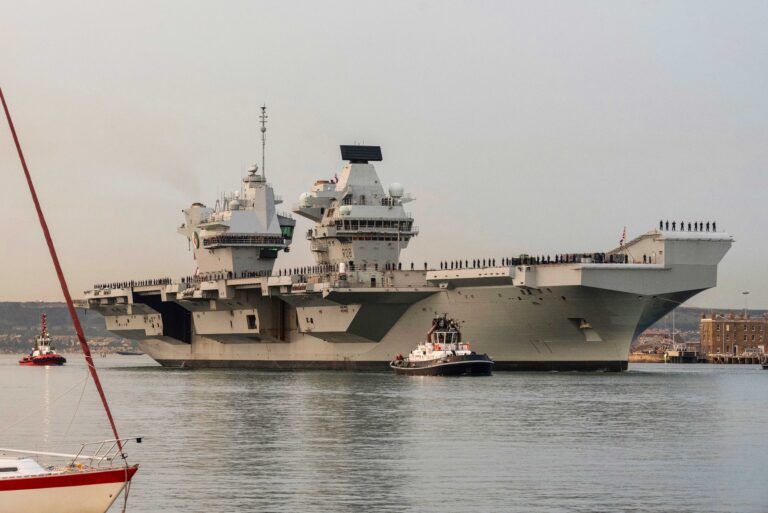
While the U.S. tends to securitize and militarize its approach, China’s strategy is primarily focused on economic development and infrastructure.
Unlike China’s 2016 Arab Policy, the U.S. government does not have a single, clear, long-term strategic policy toward the Middle East and Africa, but rather regional strategies that respond to major crises or events.
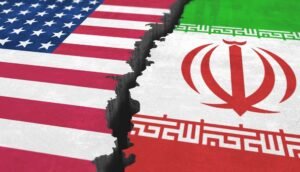
The 2022 U.S. National Security Strategy (NSS) report highlighted the need to reduce the U.S. military presence in the Middle East while maintaining counterterrorism capabilities, ensuring Israel’s security, and providing full support for the Abraham Accords by supporting political and diplomatic normalization efforts between Israel and other Arab and Muslim states.[xix] It also emphasized containing Iran’s nuclear capabilities.
There are deeply rooted differences in the approaches and strategies adopted and pursued by the U.S. and China toward this highly strategic and important region. While the U.S. tends to securitize and militarize its approach, China’s strategy is primarily focused on economic development and infrastructure. China’s long-term goal is to become an indispensable economic and strategic partner in the Middle East and Africa. It is pursuing this objective through a long-term and highly patient vision built around the principles of economic-first engagement, political flexibility, trade, technology, and balanced diplomatic relationships, especially on the Israeli-Palestinian issue, where China supports a two-state solution.
On the other hand, the U.S. has traditionally attached a number of conditions and expectations to its dealings with the region, including human rights, democratic elections, strategic alignment and loyalty – particularly regarding Israel – political pressure, sanctions, and military interventions.[xx] Unfortunately, over the last quarter-century or so, the U.S. has failed, in many respects, to achieve its intended objectives in several of these areas.
The battle for public opinion
Public perception is ultimately one of the most important measures of whether a foreign policy has succeeded in building lasting influence and goodwill.
In a 2023 Arab Barometer survey, China ranked as the most popular partner in 12 Arab states, while support for the U.S. and Europe continued to decline. In Iraq, a 2022 survey showed overall support for China at 54%, compared with 35% for the United States. In Jordan, a 2023 poll found that 67% of respondents viewed China as the regional power most supportive of Palestinian rights; by comparison, only 28% held positive views of the U.S.[xxi]
In Tunisia, approval of China’s role in the Middle East rose from 70% to 75% following the October 2023 events, while approval of the U.S. dropped from 40% to 10%. Finally, in Morocco, 79% of Moroccans held favorable views of China in 2024, an increase of 16 percentage points from 2022.[xxii]
Taken together, these figures suggest that China’s long-term strategy of economic engagement, infrastructure investment, trade, and political flexibility is increasingly translating into positive public perceptions across significant parts of the Arab world and North Africa. At the same time, the declining public perception of the United States raises an important question about whether Washington’s traditional reliance on security partnerships, political pressure, military power, and conditional engagement is producing the long-term influence it seeks in the region.
Beyond choosing sides
Can the West, and especially the United States, continue with these policies in the Middle East and Africa and still expect to maintain its economic and political dominance in this region? According to Kishore Mahbubani, a former Singaporean diplomat and president of the United Nations Security Council and author of the controversial book Has China Won? The Chinese Challenge to American Primacy (2020), “After 200 years, we are seeing the end of Western domination of world history.”[xxiii] Mahbubani predicts that the 21st century will be the “Asian Century.”
Can the Middle East and Africa maintain their sovereignty in the middle of this full-on war for dominance, when sovereignty is vital for their development and sustainability? The world’s most advanced military and technological powers are entering an increasingly heated battle for economic and geopolitical dominance over the next 25 years, at a time when most countries in these regions, including many oil-rich nations, still depend heavily on imports for basic necessities, from food to clothing. Maintaining sovereignty will therefore be one of the greatest challenges facing many nations in the Middle East and Africa.
Diversification in economic partnerships and foreign policy relations might be a strategy that many of these nations can adopt to better position themselves to protect their sovereignty, build their economies, and develop their nations within this complex geopolitical environment over the next 25 years.
[i] BBC (N.D.) “US Foreign Policy in Five Doctrines”, retrieved from: https://www.bbc.co.uk/programmes/m002qmyq/episodes/guide.
[ii] George W. Bush Presidential Library (N.D.) “Global War on Terror”, retrieved from: https://www.georgewbushlibrary.gov/research/topic-guides/global-war-terror.
[iii] Wang, Dr J. and Sampson, M. (2021). “China’s approach to global economic governance”, Chatham House, 6 December 2021, retrieved from: https://www.chathamhouse.org/2021/12/chinas-approach-global-economic-governance/development-finance-new-model/.
[iv] China Data Portal (N.D.). “China GDP by Year: 1949-2025”, retrieved from: https://chinadata.live/china-gdp-history/.
[v] Ibid.
[vi] Rapanyane, M.B. (2021). “Neocolonialism and New Imperialism: Unpacking the Real Story of China’s Africa Engagement in Angola, Kenya, and Zambia”, Journal of African Foreign Affairs, 8(3), retrieved from: https://www.jstor.org/stable/27159668.
[vii] International Cooperation Center (2023). “Chinese Elements in Algeria, the Host Country of the Arab League Summit”, retrieved from: https://en.icc.org.cn/news/media_materials/10.html.
[viii] Rotberg, R.I. (2008). China into Africa: Trade, Aid, and Influence. Washington, DC: Brookings Institution Press.
[ix] Ministry of Foreign Affairs People’s Republic of China (N.D.) “”China’s Initiation of the Five Principles of Co-Existence”, retrieved from: https://www.mfa.gov.cn/eng/zy/wjls/3604_665547/202405/t20240531_11367542.html.
[x] Embassy of the People’s Republic of China in the Republic of South Africa (2014). “Five Principles of Peaceful Coexistence not outdated…”, retrieved from: https://za.china-embassy.gov.cn/eng/zt/20140630b/201406/t20140630_7634709.htm.
[xi] Silber, C. (2023). “China’s Track Record on Middle East Diplomacy”, WINEP, 15 March 2023, retrieved from: https://www.washingtoninstitute.org/policy-analysis/chinas-track-record-middle-east-diplomacy.
[xii] The State Council The People’s Republic of China (2016). “Full text of China’s Arab Policy Paper”, 13 January 2016, retrieved from: https://english.www.gov.cn/archive/publications/2016/01/13/content_281475271412746.htm.
[xiii] International Department Central Committee of CPC (2022). “Full text of Xi Jinping’s keynote speech at China-Arab States Summit”, retrieved from: https://www.idcpc.org.cn/english2023/ttxw_5749/202212/t20221229_159132.html.
[xiv] Boston University Global Development Policy Center (N.D.) “Selective Engagement and Strategic Retooling: Chinese Loans to Africa Database, 2000-2024”, retrieved from: https://www.bu.edu/gdp/2025/11/13/selective-engagement-and-strategic-retooling-chinese-loans-to-africa-database-2000-2024/.
[xv] China Daily (2025). “Investment grows as firms make tech shift”, 28 November 2025, retrieved from: https://www.chinadaily.com.cn/a/202511/27/WS69286b06a310d6866eb2bc84.html.
[xvi] General Administration of Customs People’s Republic of China (2025). “Review of China’s Foreign Trade in the First Three Quarters of 2025”, 13 October 2025, retrieved from: http://english.customs.gov.cn/Statics/97f3a3da-9918-4305-ac63-637dbf3ad757.html.
[xvii] Office of the United States Trade Representative (N.D.) “Sub-Saharan Africa”, retrieved from: https://ustr.gov/countries-regions/africa.
[xviii] Zoubir, Y.H. (2000). “Expanding Sino-Maghreb Relations: Morocco and Tunisia”, Chatham House, retrieved from: https://www.chathamhouse.org/2020/02/expanding-sino-maghreb-relations.
[xix] White House (2022). “National Security Strategy”, retrieved from: https://bidenwhitehouse.archives.gov/wp-content/uploads/2022/10/Biden-Harris-Administrations-National-Security-Strategy-10.2022.pdf.
[xx] Carothers, T. (2026). “America Walks Away from Global Democracy”, Carnegie, 10 September 2026, retrieved from: https://carnegieendowment.org/research/2026/09/america-walks-away-from-global-democracy.
[xxi] Arab Barometer (2024). “America Is Losing the Arab World and China Is Reaping the Benefits”, Foreign Affairs, 11 June 2024, retrieved from: https://www.foreignaffairs.com/united-states/america-losing-arab-world.
[xxii] Ibid.
[xxiii] Mahbubani, K. (2010). “The Chinese Century,” American Review.
Raisina Dialogue (2025). “China’s Increasing Assertiveness & the Evolving Asian Century”, YouTube, 18 March 2025, retrieved from: https://www.youtube.com/watch?v=4R2lr-GWHxk.