During the opening days of the 2025–2026 U.S.–Israel war with Iran, Kuwait’s military briefings[i] highlighted intercepted Iranian missiles and drones while revealing little about strike locations or damage. The approach reflected a familiar wartime dilemma in which governments must reassure populations while limiting information that could aid adversaries or fuel uncertainty. Yet Kuwait’s response revealed a broader shift across the Gulf. Information was no longer simply a messaging tool; it had become part of the battlefield.
The conflict accelerated a less visible but equally consequential shift in regional security governance. Gulf states increasingly treat information flows, digital platforms, and public narratives as strategic domains requiring protection and control. Building on trends that emerged after the Arab Spring uprisings, the Iran war provided a new security rationale for regulating digital behaviour, managing information, and redefining political loyalty. Information has become strategic infrastructure, subject to the same security concerns as physical and digital assets.
War as a battle over information
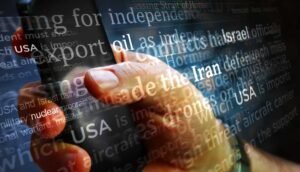
The Iran war demonstrated how modern conflicts are fought simultaneously on physical and informational battlefields. Military operations, cyber activity, and narrative competition increasingly reinforce one another.
Kuwait’s wartime communication illustrates how governments are adapting to this new information environment. Official briefings emphasized interception statistics while limiting disclosure of strike locations and damage assessments, reflecting an effort to reassure the public without exposing vulnerabilities or amplifying narratives of the adversary. The significance of this lies in how states increasingly shape the conditions through which citizens experience conflict.
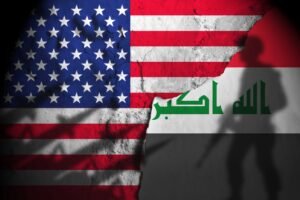
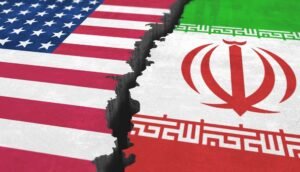
That same contest over perception extended beyond domestic audiences to the broader U.S.–Iran confrontation. The United States and Iran both waged a parallel battle over perception[ii], legitimacy, and public interpretation, using digital provocation, amplification, and narrative manipulation as tools of statecraft. Washington sought to project military effectiveness and operational dominance, while Tehran relied on asymmetric tools to portray resilience and resistance. Iranian officials invoked historic Persian and Shiite battles of sacrifice[iii] and endurance, framing the conflict as part of a longer struggle against foreign aggression.
Neither side treated information as separate from military strategy. Narrative became another instrument of competition.
The intensification of information warfare cannot be separated from the broader hybrid conflict between Washington and Tehran. The United States has incorporated cyber capabilities into conventional military operations, reflecting a broader shift toward integrating digital tools with kinetic force. Iran, meanwhile, has developed its own asymmetric response architecture, combining cyber operations, influence campaigns, coordinated messaging, and networks of aligned actors to impose costs and create uncertainty.
For states located between Washington and Tehran – both geographically and politically – the information environment itself has become a potential vulnerability.
These activities blur the boundary between the battlefield and information space. Cyber operations, disinformation campaigns, and narrative competition originating from the U.S.–Iran confrontation increasingly spill over into Gulf societies. For states located between Washington and Tehran – both geographically and politically – the information environment itself has become a potential vulnerability.
Social media has further complicated this environment. Recycled footage from earlier conflicts, clips from military simulation games, and AI-generated images circulated alongside authentic reporting. AI-generated disinformation surged[iv], with Iranian-linked networks using synthetic media, deepfakes, and recycled footage to amplify wartime success claims, while Iran waged social media campaigns against the United States[v] to shape narratives abroad. In many cases, misleading content reached audiences before journalists or officials could verify it, making uncertainty itself part of the conflict. For example, Gulf media monitors documented wartime restrictions[vi] on sharing unverified images and rumours, including Saudi guidance against circulating videos of an unknown source.
The challenge was therefore twofold: preventing adversaries from accessing sensitive information while limiting the ability of false narratives to shape public understanding before facts could catch up. This represents more than a media problem; it is a structural feature of modern conflict. Information fragmentation has become a defining characteristic of contemporary warfare[vii], where battles are experienced through competing interpretations as much as through military operations themselves.
From external threats to domestic controls
The wartime information challenge has also reinforced a broader regional trend toward expanding domestic mechanisms for regulating information.
Across the Gulf, governments have incorporated digital activity into national security frameworks. Cybercrime laws, national security statutes, and emergency regulations now include broad categories such as spreading false information, harming national unity, or damaging state reputation. These provisions provide authorities with significant discretion over what constitutes a security threat, particularly during moments of crisis.[viii]
During wartime, the boundary between security protection and information control becomes especially difficult to define.
The language itself is important. Restrictions on “false information” or conduct deemed harmful to national interests can encompass genuinely harmful disinformation, but they can also extend to political commentary, criticism, or the sharing of material authorities consider sensitive. During wartime, the boundary between security protection and information control becomes especially difficult to define.
The Iran war demonstrated how quickly these legal frameworks could be activated.
In Bahrain, Reuters reported that authorities stripped citizenship from 69 people[ix] accused of supporting Iranian attacks. Rights groups argued[x] that the measures formed part of a wider campaign against political dissent, while the government defended them as necessary to protect national security. Whatever the competing interpretations, the episode illustrates a broader shift: political belonging is being evaluated through a security lens.
Kuwait has experienced a similar evolution. Historically more politically open than many of its Gulf neighbors, Kuwait has nonetheless expanded restrictions on digital expression in response to security concerns. During the Iran war, authorities warned against publishing images of missile interceptions or security operations, and journalists and citizens have been arrested[xi] for sharing war-related footage. Information that might previously have been considered public discussion increasingly became treated as a potential security issue.
Other Gulf states adopted comparable approaches. Qatar arrested more than 300 people[xii] for circulating what authorities described as misleading information and images related to Iranian attacks. Saudi Arabia reinforced restrictions through its “Photography serves the enemy”[xiii] campaign, warning citizens that documenting sensitive locations or military activity could undermine national security. The United Arab Emirates arrested more than 100 people[xiv] for filming or sharing strike-related content, relying on cybercrime legislation and digital monitoring systems to restrict the circulation of such material.
These measures reveal a broader transformation in how Gulf governments understand information. Speech and digital activity are viewed not merely as forms of expression, but as potential vectors of instability.
Importantly, the war is not the cause; it is the accelerator and legitimizer of these processes. The foundations were established years earlier. Following the Arab uprisings of the early 2010s, Gulf governments invested heavily in cyber legislation, surveillance capabilities, and mechanisms for regulating online discourse. The current conflict has increased both the perceived urgency and the political legitimacy of expanding those powers.
This securitization of information also reshapes how states define political loyalty and belonging.
Citizenship and political loyalty
The same security logic is reshaping debates over citizenship and political membership.
Across parts of the Gulf, citizenship has increasingly become treated not only as a legal status but also as an indicator of political loyalty. During periods of heightened regional tension, governments have used citizenship policies as instruments for responding to perceived threats.
Bahrain provides one example. Authorities revoked citizenship from individuals accused of sympathizing with Iranian attacks, in a crackdown that disproportionately affected the Shiite Muslim population[xv] and pushed three Bahraini parliamentarians toward removal for pushing back. Other reporting[xvi] placed the move squarely in the context of the war and a broader anti-dissent campaign, while rights groups argued more generally that the conflict had been used to justify a wider crackdown on dissent. Supporters of the policy maintained that governments have the right to respond against individuals believed to be assisting hostile actors.
Kuwait has experienced its own debate over citizenship revocation, marked by a dramatic increase[xvii] in denationalization since 2024. Amendments to Kuwait’s citizenship law[xviii] broadened the grounds under which citizenship could be withdrawn, including actions considered harmful to public order or national interests. Authorities have reportedly revoked citizenship[xix] over social-media posts and other war-related expressions, prompting critics to describe citizenship as a weapon of political control. Officials defended the measures as necessary to protect state integrity.
The significance of these developments extends beyond individual cases. Rather than creating an entirely new dynamic, they intensify a longstanding feature of Gulf governance in which citizenship, political loyalty, and state security are closely intertwined. In societies where citizenship carries substantial economic and political privileges, decisions over who belongs, who can speak, and whose speech is considered threatening are increasingly interconnected. Citizenship thus functions as both a legal status and a mechanism through which states manage political and informational stability.
AI, cyber warfare, and the future of conflict
Technology will intensify these pressures. The Iran war highlighted how Artificial Intelligence (AI) and cyber capabilities are transforming the information environment. Synthetic videos, fabricated battlefield imagery, and AI-generated propaganda can now be produced rapidly and distributed widely, often before governments or journalists can verify their authenticity. During the conflict’s first phase, fabricated or manipulated content moved faster than official rebuttals or fact-checking systems, demonstrating how quickly synthetic media can outpace the institutions responsible for verification.
Manipulated content circulated alongside legitimate reporting, while coordinated online campaigns amplified competing narratives. The result was an environment in which speed often mattered more than accuracy, with official corrections frequently arriving too late to shape public understanding. The spread of AI-generated content creates a difficult dilemma for governments: the same technologies that enable adversaries to manipulate information also provide justification for stronger monitoring and regulation of digital spaces. As synthetic media becomes harder to distinguish from authentic reporting, states gain both a security rationale and a political incentive to expand their role as arbiters of information.
Attacks on infrastructure, data systems, and communications networks are now part of the broader conflict ecosystem, shaping both how wars unfold and how societies experience them.
Cyber operations have similarly become integrated into modern military strategy. Attacks on infrastructure, data systems, and communications networks are now part of the broader conflict ecosystem, shaping both how wars unfold and how societies experience them. For Gulf states, this creates a difficult balance. Open information environments can support economic innovation, technological development, and international connectivity, but they can also create opportunities for adversaries to spread misinformation or exploit social divisions. These technologies are becoming cheaper, faster, and more accessible, ensuring that the challenge will persist beyond the current conflict.
The Gulf and the future of information security
The Iran war did not fundamentally alter the Gulf’s approach to information control. The underlying trends were already visible. Nevertheless, the conflict accelerated them by demonstrating how quickly external threats can become intertwined with domestic governance.
Across the region, tighter cyber laws, expanded surveillance capabilities, curated wartime narratives, and restrictions on digital expression reflect a broader shift in how states define security. Information is treated as strategic infrastructure.
The Gulf may therefore represent an early example of a broader global trend. As governments confront conflicts in which cyber operations, AI, and information manipulation accompany conventional military threats, similar pressures are likely to emerge elsewhere.
The central challenge for governments will be strengthening resilience against genuine security threats without permanently narrowing the space for independent information and political debate. In an era when information has become a battlefield, controlling the narrative may provide short-term stability. Durable security will depend on something more difficult: ensuring that citizens continue to trust the information they receive.
[i] Kholaif, D. (2026). “The Gulf’s war on information”, Index on Censorship, 30 April 2026, retrieved from: https://www.indexoncensorship.org/2026/04/the-gulfs-war-on-information/.
[ii] Kahn, G. (2026). “Trolling, memes and deepfakes: How AI is thickening the fog of war”, Reuters Institute for the Study of Journalism, 4 May 2026, retrieved from: https://reutersinstitute.politics.ox.ac.uk/news/trolling-memes-and-deepfakes-how-ai-thickening-fog-war.
[iii] Motamedi, M. (2026). “Iran recounts historic battles in response to Trump’s talk of agreement”, Al Jazeera, 24 May 2024, retrieved from: https://www.aljazeera.com/news/2026/5/24/iran-recounts-historic-battles-in-response-to-trumps-talk-of-agreement.
[iv] Mediterranean Digital Media Observatory (2026). “’Narrative war’: disinformation surges as conflict roils Middle East”, 6 March 2026, retrieved from: https://meddmo.eu/narrative-war-disinformation-surges-as-conflict-roils-middle-east/.
[v] Myers, S.L., Hsu, T. and Thompson, S.A. (2026). “In an Asymmetrical War, Iran Seeks an Edge With Its Information War”, The New York Times¸ 28 March 2026, retrieved from: https://www.nytimes.com/2026/03/28/business/iran-propaganda-war-ai.html.
[vi] Dagher, J. (2026). “Censored war: the crackdown on journalists is intensifying from the Gulf to Jordan”, Reporters Without Borders, 11 March 2026, retrieved from: https://rsf.org/en/censored-war-crackdown-journalists-intensifying-gulf-jordan.
[vii] Wells, W. (2026). “Battlefield Evidence in the Age of Artificial Intelligence-Enabled Warfare”, Chicago Journal of International Law, January 2026, retrieved from: https://cjil.uchicago.edu/print-archive/battlefield-evidence-age-artificial-intelligence-enabled-warfare.
[viii] Hakmeh, J. (2018). “Cybercrime Legislation in the GCC Countries”, Chatham House, 4 July 2018, retrieved from: https://www.chathamhouse.org/2018/07/cybercrime-legislation-gcc-countries/cybercrime-legislation-comparing-global-and-gcc.
[ix] Reuters (2026). “Bahrain revokes citizenship of 69 people for ‘glorifying or sympathising with’ Iranian attacks”, 27 April 2026, retrieved from: https://www.reuters.com/world/middle-east/bahrain-revokes-citizenship-69-people-over-support-iranian-attacks-2026-04-27/.
[x] Bahrain Institute for Rights & Democracy (2026). “Bahrain revokes citizenship of 69 individuals linked to Iran-Israel-US war”, 27 April 2026, retrieved from: https://birdbh.org/2026/04/bahrain-revokes-citizenship-of-69-individuals-linked-to-iran-israel-us-war/.
[xi] DAWN (2026). “Kuwait detains journalist amid crackdown on war coverage”, 20 April 2026, retrieved from: https://www.dawn.com/news/1993374.
[xii] Ibid.
[xiii] Dagher, J. (2026). “Censored war: the crackdown on journalists is intensifying from the Gulf to Jordan”.
[xiv] Wang, P. (2026). “UAE Arrests More Than 100 As Crackdown on Filming Iran Attacks Ramps Up”, Time, 20 March 2026, retrieved from: https://time.com/article/2026/03/20/uae-arrests-more-than-100-as-crackdown-on-filming-iran-s-attacks-ramps-up/.
[xv] New Lines Magazine (2026). “Bahraini Lawmakers Face Backlash for Questioning Citizenship Revocations”, 5 ay 2026, retrieved from: https://newlinesmag.com/spotlight/three-bahraini-parliamentarians-face-removal-after-pushing-back-on-citizenship-revocations/.
[xvi] Uddin, R. (2026). “Bahrain revokes citizenship of 69 people in connection with Iran war”, Middle East Eye, 27 April 2026, retrieved from: https://www.middleeasteye.net/news/bahrain-revokes-citizenship-69-people-connection-iran-war.
[xvii] Muhammed, F. and Alamer, S. (2026). “Kuwait Is Stripping Its People of Citizenship at an Unprecedented Rate”, New Lines Magazine, 17 April 2026, retrieved from: https://newlinesmag.com/essays/kuwait-is-stripping-its-people-of-citizenship-at-an-unprecedented-rate/.
[xviii] Greyman-Kennard, D. (2026). “Major change in Kuwaiti citizenship laws sees thousands lose nationality”, The Jerusalem Post, 19 April 2026, retrieved from: https://www.jpost.com/middle-east/article-893470.
[xix] Schaer, C. (2026). “How the Iran war is bringing back ‘citizenship as a weapon’”, DW, 27 April 2026, retrieved from: https://www.dw.com/en/how-the-iran-war-is-bringing-back-citizenship-as-a-weapon/a-76935737.