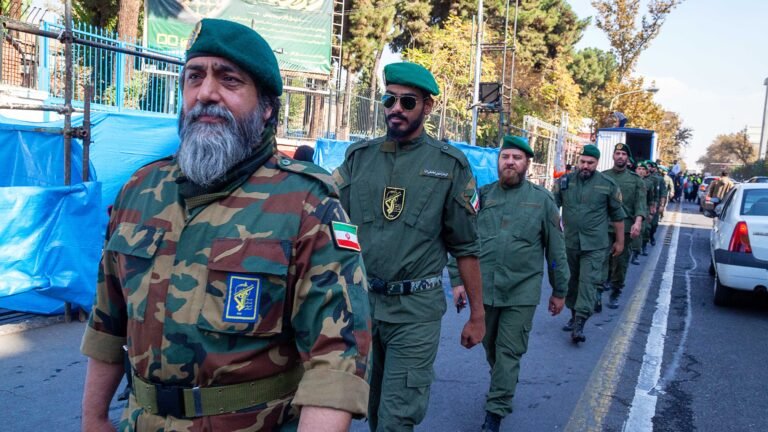

Dealing with non-state armed groups possessing military and political capabilities comparable to those of sovereign states has been one of the greatest challenges facing public international law in the twenty-first century. The principle behind the law of state responsibility clearly implies that it is the sovereign state that is solely responsible for the use of force on its soil, thereby making it the sole legally responsible entity for any act of aggression committed beyond its territory. But when it comes to attributing any such act by private militias to a sovereign state, the legal threshold is significantly higher. According to the definition laid down by Article 8 of the ILC Articles on State Responsibility[i], a state can be held responsible under international law only if the private actors were acting under ‘express direction or control’ of that state during the act of aggression committed beyond its territory.
However, the Lebanese case – in particular, the status of Hezbollah – is an example of the legal and political complexity created in situations where a non-state actor with broad influence operates, reflecting a profound transformation in the Middle East, where hybrid organizations have developed significant military, political, and economic capabilities over the years. In this context, international law has raised complex questions regarding the attribution of responsibility to the State of Lebanon, while at the same time influencing the debate regarding the scope of possible military action on its territory, in light of the principles of sovereignty defined in international law.
On 26 June 2026[ii], following five rounds of direct negotiations between Israel and Lebanon mediated by the United States, the delegates signed a framework agreement aimed at establishing the basis for a security and political settlement as part of their efforts towards solving their long-running conflict. The basic principles of the agreement establish the sovereign duty of the State of Lebanon to ensure that there will be no activities on its territory that support non-state actors.
The agreement, while not formally altering the classical criteria for attribution developed under customary international law, marks a significant breakthrough in relation to the state ‘s accountability and criterion of institutional responsibility. In essence, the agreement moves the centre of gravity of the law to the issue of the state ‘s compliance with the special and independent obligations it assumed for preventing the use of its territory for military purposes without its consent. Legal innovations introduced by the agreement indicate that the concept of the sovereign state in question is one of performance-based sovereignty, and the ramifications will be extensive on both international legitimacy and the operational freedom of Israel.
Traditional state responsibility and the attribution problem
In order to evaluate the robustness of the innovation, it will be necessary to review the ways traditional international law has addressed the conduct of non-state actors operating from the territory of another state. The question has been considered extensively in the decision rendered by the International Court of Justice in Armed Activities on the Territory of the Congo (Democratic Republic of the Congo v. Uganda).[iii] As noted in the decision, it has not been demonstrated that the actions of the ADF can be attributed to the Democratic Republic of the Congo, since there was no proof that the organization was acting on behalf of or controlled by the state. Hence, it could not be concluded that the legal and factual conditions were met to allow the exercise of the right of self-defence against Congo. The Court did not resolve the essential issue of whether the right of self-defence could be exercised against an attack originating solely from a non-state actor (Armed Activities on the Territory of the Congo (Democratic Republic of the Congo v. Uganda), Judgment, I.C.J. Reports 2005, paras. 146-147). In doing so, the judgment reflected the traditional approach of international law, according to which the lack of attribution of the organization ‘s actions to the host state makes it difficult to establish the state ‘s responsibility and to justify the use of force against it, even when the organization ‘s activities are carried out on its territory.
From attribution to performance-based sovereignty
This is precisely where the legal significance of the Framework Agreement of 2026 emerges. Article 4 of the agreement provides for the absolute and unequivocal obligation of the Lebanese state to restore full and effective control over its entire territory, and to actively work toward the full, agreed, and verified disarming of all non-state actors operating within its sovereign domain. This provision of the agreement does not create a concept of automatic vicarious liability, nor does it mean that any future attacks by Hezbollah will be automatically considered acts of the Lebanese Armed Forces. However, the significance of this provision lies in its fundamental alteration of the factual premises and making it difficult to argue that the Lebanese state lacks the capacity.
The next dimension of the agreement is grounded in the Corfu Channel case (1949)[iv], which established the legal framework of the due diligence doctrine under which each state is obliged not to allow its territory to be used for carrying out unlawful activities against the interests of other states negligently or intentionally. Before signing the agreement, Lebanon could claim that its due diligence was limited by the inability to control the territory due to the government ‘s inability to exercise effective control in the southern part. But when a sovereign state chooses voluntarily to sign an international agreement under which it commits itself to assume full responsibility for restoring sovereignty, disarming non-state actors and using third-party verification measures, the scope of the legal analysis shifts from assessing the extent of control over the armed organization to evaluating the measures undertaken by the state to assume sovereignty.
This phenomenon becomes more pronounced when one considers Article 6 of the framework agreement, which gives primacy to the principle of the state ‘s absolute responsibility for the use of force. Under this article, Lebanon asserts that the official security forces of the state are the only agencies responsible for the security of the state, and that the Lebanese government is the only body entitled to make decisions about war and peace.
Whereas Article 6 is similar to the Security Council Resolution 1701, particularly Article 3[v], from a legal strategy point of view, there is a major difference between an imposed decision from outside, via an international forum, and a direct contractual commitment from the state through a full settlement agreement. The more the state insists on international recognition of its sovereignty and immunity of its property, the more the state is scrutinized whenever its monopoly is breached through its own territory.
The other major extension of the realm of state responsibility is achieved through Article 11 of the Framework Agreement. The change in scope takes place from the narrow military and tactical sphere[vi] into the institutional and financial ones. As for previous security studies, most of them concentrated on the practical aspects of the fighting, including the positions of launchers, but the obligations imposed on the Lebanese state by Article 11 require it to make a genuine effort to stop all the financing of non-state actors, money laundering, and the formation of financial networks that support the mentioned non-state actors. Article 11 reflects broader international efforts to combat terrorist financing, such as FATF Recommendations.[vii]
The strategic importance of this article lies in the increased responsibility of the State of Lebanon, which is not limited to the launching of missiles from the territory of the country, but is rather associated with the earlier stages of the development of the necessary infrastructure, including the financial infrastructure that enables military operations by the non-state entity. In other words, this article raises the legal question of who facilitated the development of the banking system[viii] that enabled the emergence of this armed entity.
Strategic and operational implications
However, it should be clarified that international law contains important limitations. In particular, there is no rule providing that the mere signing of an agreement automatically makes a state liable for any future breach committed by a third party beyond its control. The 2026 Framework Agreement does not eliminate the strict attribution requirements set forth in the rules of state liability, and does not constitute a substitute for the evidentiary requirements for proving a breach. The legal shift reflected in the agreement serves as evidence that the State of Lebanon has acknowledged the existence of the problem and, to the same extent, deprives it of the defence of unavoidable negligence.
For policymakers and operational strategy planners in the Israel Defence Forces, this analysis has operational implications in two key dimensions. First, the verification and oversight mechanisms established in the agreement may enable the creation of an evidentiary infrastructure that will influence international legitimacy and the way in which future military action[ix] will be perceived. Second, the agreement may change the normative framework for examining Lebanon ‘s conduct in relation to the activities of non-state actors, by reducing the possibility of relying solely on capacity limitations[x] and emphasizing the question of political will and compliance with explicit commitments. This may change the way state responsibility is examined in situations in which an armed organization operates from the territory of a sovereign state.
In conclusion, the 2026 Israel-Lebanon Framework Agreement is not a panacea that can instantly prevent the military activities of non-state actors within the territory of sovereign states. However, it is a novel approach in terms of legal and strategic architecture, which will revolutionize the rules of the game in the Middle East. Instead of enforcing the illusion that everything that is done by Hezbollah should be automatically interpreted as the actions of the Lebanese government, this agreement establishes much more rigorous criteria. After a sovereign state has undertaken the obligation to exercise its authority, international law and neighbouring states have the right to assess whether it has fulfilled its obligations in the strictest and most rigorous manner possible. It represents a necessary step from the criteria of the effective control test to the concept of performance-based sovereignty. In the era of challenges to the classical statehood model posed by non-state actors, it is the most plausible direction for the future development of international law, state responsibility, and security strategy.
[i] United Nations (2005). “Responsibility of States for Internationally Wrongful Acts”, retrieved from: https://legal.un.org/ilc/texts/instruments/english/draft_articles/9_6_2001.pdf.
[ii] The Times of Israel (2026). “Full text of Israel-Lebanon ‘framework’ deal that includes minor IDF pullback”, 27 June 2026, retrieved from: https://www.timesofisrael.com/full-text-of-israel-lebanon-framework-deal-that-includes-slight-idf-pullback/.
[iii] International Court of Justice (1999). “Armed Activities on the Territory of the Congo”, retrieved from: https://www.icj-cij.org/case/116.
[iv] Santos, E.A. (N.D.) “Corfu Channel Case Analysis: Sovereignty, Evidence, and Law”, retrieved from: https://www.diplomacyandlaw.com/post/corfu-channel-case.
[v] United Nations Security Council (2006). “Resolution 1701”, 11 August 2006, retrieved from: https://unsco.unmissions.org/sites/default/files/s_res_17012006.pdf.
[vi] Dykstra, J., Inglis, C. and Walcott, T.S. (2020). “Differentiating Kinetic and Cyber Weapons to Improve Integrated Combat”, National Defense University Press, 19 November 2020, retrieved from: https://ndupress.ndu.edu/Media/News/News-Article-View/Article/2421554/differentiating-kinetic-and-cyber-weapons-to-improve-integrated-combat/.
[vii] FATF (N.D.). “FATF Recommendations”, retrieved from: https://www.fatf-gafi.org/en/topics/fatf-recommendations.html.
[viii] Alma Research and Education Center (2026). “Analysis of the Israel-Lebanon Framework Agreement: Does It Address Israel’s ‘End Game’”?”, 29 June 2026, retrieved from: https://israel-alma.org/analysis-of-the-israel-lebanon-framework-agreement-does-it-address-israels-end-game/.
[ix] Mizrahi, O. (2026). “The Framework Agreement between Lebanon and Israel…”, [in Hebrew], INSS, 2 July 2026, retrieved from: https://www.inss.org.il/he/publication/israel-lebanon-agreement-2026/.
[x] Deeks, A.S. (2011). “’Unwilling or Unable’: Toward a Normative Framework for Extra-Territorial Self-Defense”, Virginia Journal of International Law, 12 December 2011, 52(3), retrieved from: https://papers.ssrn.com/sol3/papers.cfm?abstract_id=1971326.