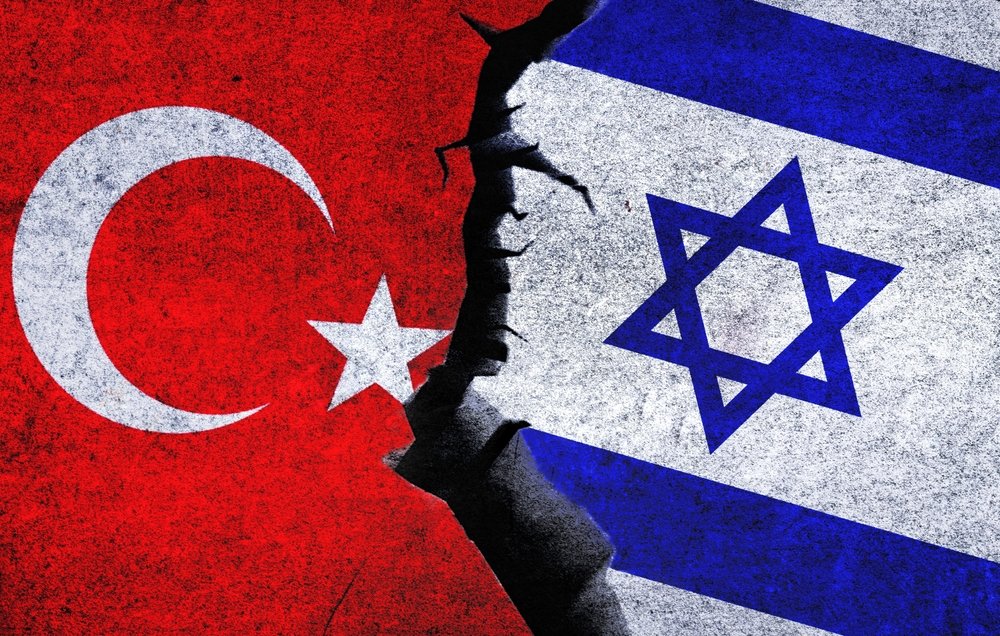
On 28 June 2026, the Israeli cabinet passed a unanimous resolution to formally recognize the 1915 massacres of Armenians by the Ottoman Empire as a genocide.[i] This official acknowledgement has been widely interpreted as a diplomatic rebuke to Ankara, following years of deteriorating bilateral relations. However, interpreting this acknowledgement solely as a response to Turkey’s strong rhetoric over the recent war in Gaza overlooks the broader structural shift taking place across the Middle East. The pragmatic relationship that once existed between the two countries has not merely deteriorated; it is increasingly giving way to a sustained strategic rivalry in the Mediterranean.
After the 2026 Iran war, the threat landscape in the Middle East has shifted. A new rhetorical consensus has taken hold within the Israeli security establishment, reflected in Naftali Bennett’s statement: “Turkey is the new Iran”.[ii] Driven by Israeli strategists’ concern over Turkey’s growing influence in the Eastern Mediterranean region and a potential Turkey-France defence agreement[iii], the Israeli leadership has become increasingly concerned about Ankara’s long-term strategic intentions.
For Israel to fully embrace this rhetoric and treat Ankara like Tehran risks Tel Aviv making a significant strategic miscalculation. A direct military confrontation currently appears unlikely as these two regional military powers are instead interlocked into an increasingly systemic, largely non-kinetic strategic rivalry in the Mediterranean.
For decades, Israel’s defence strategy was anchored in countering proxy networks and globally isolated, pariah states.[iv] Countering Turkey demands an entirely different strategic calculus. Ankara is not an isolated state facing multiple international embargoes; it is a NATO member with a substantial industrial base and the second-largest[v] standing army in the alliance. With Turkey’s defence corporations, such as Roketsan and Aselsan,[vi] signing defence agreements at the NATO Defence Industry Forum, Turkey is increasingly positioning itself as a defence supplier to Western partners.
Turkey’s defence industry is expanding rapidly[vii] with domestic engineering of hypersonic missiles, conventional systems, and multi-layered defence architectures increasingly geared towards high-end conventional warfare. A direct military confrontation could disrupt NATO cohesion and the wider Mediterranean security architecture.
Tel Aviv is not passively watching Ankara’s industrial and military rise. It is already pursuing a strategy to constrain Turkey’s regional influence. The formal signing of a comprehensive trilateral Joint Action Plan[viii] in Nicosia between Israel, Greece, and Cyprus deepens defence coordination, primarily to ensure security in the Eastern Mediterranean, as explicitly stated in the three countries’ official announcements.
The most visible manifestation of this trilateral axis is already playing out in high-tempo aerial and naval combat drills in the Aegean Sea and around Crete.[ix] Under its “2030 Agenda”, Greece has approved the purchase of PULS rocket artillery[x] from Israel and is negotiating for the multi-layered “Achilles Shield” air defence system. This demonstration of military cooperation is taking place in close proximity to Turkey’s coastline, where Israeli tankers have been actively refuelling Greek F-16s and practicing emergency landings on Cypriot bases[xi] as part of broader interoperability and contingency planning.
The most recent development that has attracted considerable attention within Israeli strategic circles is France’s growing openness towards integrating the SAMP/T air defence system[xii] into Turkey’s domestic “Steel Dome” missile shield. For years, France hesitated to sell this advanced Franco-Italian system, primarily due to Ankara’s maritime assertiveness. Paris has now signalled its willingness to advance the transfer and co-production talks with Turkish President Recep Tayyip Erdoğan’s government at the annual NATO Summit held in Ankara. Moreover, some officials have also indicated a possible U.S. willingness to play a role in developing Turkey’s defence architecture by selling F-35 fighter jets – a move likely to face strong opposition from Israel.[xiii]
This shift is a strategic reality check for Jerusalem. The fact that major European powers are willing to share strategic, multi-layered ballistic defence technology with Turkey suggests that Ankara enjoys institutional legitimacy and structural weight that Israel cannot easily negate through diplomatic pressure. Western strategic linkage with Turkey complicates Israel’s strategic designs against Turkey. With these developments potentially in the pipeline, a military confrontation between Israel and Turkey appears improbable.
The conflict is playing out in the shadows of diplomacy, procurement, and competitive maritime alliances. In the past, Turkey has sought to counter Israel by providing political patronage to Hamas leadership by granting citizenship[xiv] to its top officials and hosting its operational headquarters. Now it appears to be strengthening its deterrent posture relative to Israel by advancing its defence sector through local manufacturing and seeking Western alliances.
Israel’s unanimous recognition of the 1915 Armenian genocide is the beginning of a diplomatic campaign against Turkey. Yet, this use of historical recognition as a diplomatic instrument highlights the apparent tension within this Cold War theatre. This decision of the Israeli cabinet is in stark dissonance with its geopolitical alignment in the South Caucasus. Israel remains a major arms supplier to Baku (69%),[xv] providing weapons that were used during the conflict which resulted in the displacement of ethnic Armenians in Nagorno-Karabakh. This paradox suggests that the Armenian issue appears to be driven at least in part by strategic considerations rather than purely moral ones in a context where direct military confrontation appears increasingly costly.
As the dust from the Iran war settles, this evolving strategic environment is drawing the two states in a struggle over regional vetoes, strategic paradoxes, and technological supremacy. Ankara and Tel Aviv understand that a direct military conflict would carry severe costs for both sides; instead, they are fighting on modern, non-kinetic frontlines. It is a calculated contest where the goal is not to defeat the other militarily, but to structurally contain their ambitions and outmanoeuvre them on the regional map. This increasingly appears to be the emerging reality of the Mediterranean: a cold war born from the realization that a direct military confrontation would impose costs neither side is likely willing to bear.
[i] The Jerusalem Post (2026). “’Never too late’: Israeli gov’t unilaterally votes to recognize Armenian Genocide”, June 28, 2026, retrieved from: https://www.jpost.com/israel-news/article-900699.
[ii] Al Jazeera (2026). “Turkish ‘threat’ talked up in Israel as Netanyahu focuses on new alliances”, Feb 23, 2026, retrieved from: https://www.aljazeera.com/news/2026/2/23/turkish-threat-talked-up-israel-netanyahu-focuses-new-alliances, The Media Line (2026). “‘The New Iran’: Bennett Warns of Emerging Axis at Conference of Presidents”, Feb 18, 2026, retrieved from: https://themedialine.org/headlines/the-new-iran-bennett-warns-of-emerging-axis-at-conference-of-presidents/.
[iii] Irish, J., Amante, A. and Gumrukcu, T. (2025). “France softens stance on Turkey SAMP/T air defence sale, sources say”, Reuters, 6 July 2026, retrieved from: https://www.reuters.com/world/europe/france-softens-stance-turkey-sampt-air-defence-sale-sources-say-2026-07-06/.
[iv] Israel Policy Forum (2025). “Israel-Hamas War: Iran and Its Proxies”, retrieved from: https://israelpolicyforum.org/israel-hamas-war-iran-and-its-proxies/.
[v] NATO (2024). “Secretary General in Türkiye: Strong Turkish defence capabilities contribute to a strong NATO”, Nov 25, 2024, retrieved from: https://www.nato.int/en/news-and-events/articles/news/2024/11/25/secretary-general-in-turkiye-strong-turkish-defence-capabilities-contribute-to-a-strong-nato.
[vi] Daily Sabah (2026). “Top Turkish defense firms welcome NATO deals on strategic projects”, Jul 07, 2026, retrieved from: https://www.dailysabah.com/business/defense/top-turkish-defense-firms-welcome-nato-deals-on-strategic-projects.
[vii] Al Jazeera (2025). “Turkiye’s booming defence industry – a quick look”, Mar 17, 2025, retrieved from: https://www.aljazeera.com/news/2025/3/17/heres-a-look-at-turkiyes-booming-defence-industry.
[viii] Hellenic National Defense General Staff (2025). “Signing of the Joint Action Plan between Greece–Cyprus–Israel, and the Military Cooperation Programme between Greece–Israel for the Year 2026”, Dec 29, 2025, retrieved from: https://geetha.mil.gr/en/signing-of-the-joint-action-plan-between-greece-cyprus-israel-and-the-military-cooperation-programme-between-greece-israel-for-the-year-2026/.
[ix] Reuters (2025). “Greece, Israel and Cyprus to step up joint exercises in eastern Mediterranean”, Dec 29, 2025, retrieved from: https://www.reuters.com/business/aerospace-defense/greece-israel-cyprus-step-up-joint-exercises-eastern-mediterranean-2025-12-29/.
[x] Reuters (2025). “Greek parliament approves purchase of rocket systems from Israel”, Dec 5, 2025, retrieved from: https://www.reuters.com/business/aerospace-defense/greek-parliament-approves-purchase-rocket-systems-israel-2025-12-05/.
[xi] Daily Sabah (2026). “Israel, Greece conduct drills in the Aegean, likely to irk Türkiye”, Jul 06, 2026, retrieved from: https://www.dailysabah.com/politics/israel-greece-conduct-drills-in-the-aegean-likely-to-irk-turkiye/news.
[xii] Reuters (2026). “Technical work ongoing with Turkey, Italy over SAMP-T air defence, Macron says”, Jul 8, 2026, retrieved from: https://www.reuters.com/business/aerospace-defense/technical-work-ongoing-with-turkey-italy-over-samp-t-air-defence-macron-says-2026-07-08/.
[xiii] CNN (2026). “Netanyahu tells CNN he opposes US sale of F-35 jets to Turkey as he downplays divisions with Trump”, Jul 7, 2026, retrieved from: https://edition.cnn.com/2026/07/07/politics/netanyahu-opposes-sale-f35-jets.
[xiv] Alarabiya (2020). “Turkey provides Hamas militant operatives with citizenship: Telegraph”, Aug 15, 2020, retrieved from: https://english.alarabiya.net/News/middle-east/2020/08/15/Turkey-provides-Hamas-militant-operatives-with-citizenship-Telegraph.
[xv] Jamestown (2026). “Azerbaijan–Israel Relations Represent Middle Power Consolidation”, Mar 26, 2026, retrieved from: https://jamestown.org/azerbaijan-israel-relations-represent-middle-power-consolidation/.