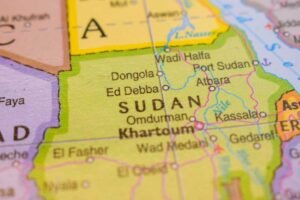
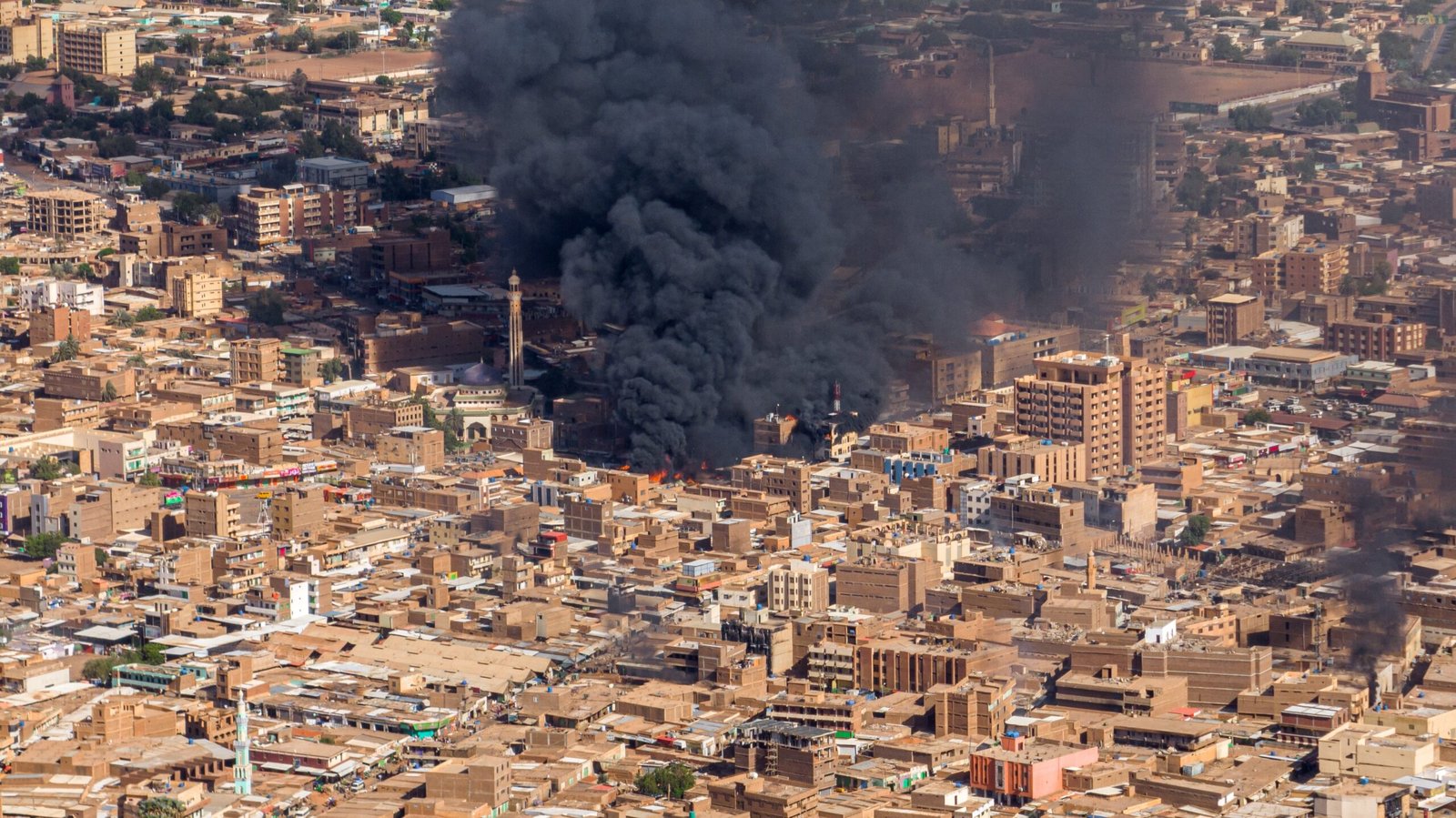
While regional and international capitals remain preoccupied with other files – most notably the ongoing U.S.-Iran war in the Middle East – the conflict between the Sudanese Armed Forces (SAF) and the Rapid Support Forces (RSF) continues without a clear path to settlement. The Sudanese army continues to pursue military gains. While conditioning its acceptance of a ceasefire proposal on extensive withdrawals by the RSF, it is seeking to consolidate its position in the region of Kordofan[i] and reverse the RSF’s dominance in Darfur, even as international initiatives propose political solutions aimed at rebuilding national unity.[ii] This divergence raises a fundamental question for policymakers in Washington: Can diplomatic pressure and sanctions push the army toward a settlement, or do regional shifts give it the confidence to persist with the military option?
While the SAF has participated in negotiations since April 2023 – although only intermittently – its leaders have sought to negotiate from a position of military strength, and SAF chief Abdel Fattah al-Burhan explicitly stated that their goal is “to defeat the rebels.”[iii] The army has preferred a resolution by force, intended to weaken or dismantle the RSF before it could take a role in a future political arrangement. This approach was evident early on in official U.S. statements. In September 2023, then-State Department spokesperson Matthew Miller expressed concern[iv] over indiscriminate air and artillery strikes by the warring parties, including the reported use of “barrel bombs.” This pattern has only continued since.
There are several factors that contributed to the SAF’s strength. First, competition for international attention since 7th October 2023 and the U.S.–Iran war may have reduced Sudan’s prominence on foreign policy agendas, thereby easing the pressure Khartoum perceives. Second, Saudi Arabia’s position has evolved from neutral mediation to clearer support for the army. Reports indicated that Pakistan was on the verge of signing a $1.5 billion deal to supply weapons and aircraft to Sudan.[v] Reuters later reported that Saudi Arabia considered financing the weapons package before stepping back in April 2026, after Western governments reportedly advised Riyadh to avoid entanglement[vi] in proxy conflicts on the African continent. Despite the retreat, these events underscored that Saudi policy had moved beyond a purely mediating role. Third, the SAF has also benefited from multiple other countries and their varying forms of support: Iranian[vii] and Turkish[viii] drones and military equipment, and Egyptian[ix] political and logistical backing, potentially reinforcing the SAF leadership’s belief that a regional balance of power is moving in its favour.
The army presents itself as the legitimate state institution confronting an RSF-led “rebellion.” Yet this narrative collides with the reality that followed the 2018-19 Sudanese revolution, in which both the army institution and the RSF participated in the Transitional Military Council (TMC) and, later, in the Sovereign Council under the Constitutional Document (August 2019).[x] This shared role in Sudan’s post-2019 transitional order certainly complicates the SAF’s portrayal of the RSF as a rebellion.
In July 2026, the U.S. State Department’s additional package of sanctions on the Sudanese government came into effect under the Chemical and Biological Weapons Control and Warfare Elimination Act. They followed Washington’s determination from April 2025[xi] that the government of Sudan had used chemical weapons during the conflict in 2024. The additional measures[xii] included restrictions on multilateral financing, exports[xiii], and aviation. This step added to Washington’s broader pressure on Sudan’s belligerents and could be understood as part of its strategy – as a member of the current Quad, comprising the U.S., Saudi Arabia, Egypt and the UAE [xiv] – to push the SAF toward reducing excessive force and opening up to a negotiated ceasfire. However, ongoing regional support limits the effectiveness of these sanctions and fuels the army’s confidence in its ability to impose a fait accompli on the ground.
Academic Sharath Srinivasan, in his book, “When Peace Kills Politics: International Intervention and Unending Wars in the Sudans” (2021)[xv], warns that the pattern of international settlements in Sudan often reproduces conflict. Srinivasan points to the reduction of peace to deals among armed elites, the exclusion of civilian forces, and the legitimization of violence through the granting of sovereign positions to armed actors. Srinivasan’s critique offers a useful lens through which to assess the limitations of the Jeddah Declaration (May 2023). The declaration was negotiated between the two conflicting parties and focused on the protection on civilians and providing access for the delivery of humanitarian supplies.[xvi] In the absence of a parallel civilian political process, this risked reinforcing the perception that armed actors remained the gatekeepers of Sudan’s future.
The current reality confirms that the SAF’s continued pursuit of military leverage – alongside the RSF’s own offensives – and both sides’ regional support networks, prolong the conflict, exacerbates the humanitarian crisis, and makes a negotiated settlement more difficult to achieve. Initiatives that remain confined to military elites or are imposed without a deep understanding of local communities also risk contributing to the repetition of the mistakes of the past.
Sustainable peace requires a different approach: an initiative that engages a broad spectrum of civilian constituencies, local communities, traditional leaders, civil society organisations, and displaced populations with clear mechanisms for political transition and graduated, effective sanctions against those who obstruct progress. It also requires stronger U.S. coordination within the Quad to address regional contradictions and aim to restrict external military supply lines[xvii] to both sides. Without this, the military option will remain the dominant language, and the suffering of the Sudanese people will continue.
[i] Abdelaziz, K. and Eltahir, N. (2026). “RSF renews assault on Sudan’s al-Obeid as drones strike capital…”, Reuters, 12 August 2026, retrieved from: https://www.reuters.com/world/africa/rsf-renews-assault-sudans-al-obeid-drones-strike-capital-witnesses-say-2026-08-12/.
[ii] Deng, F.M. and Ahmed, I.A. (2026). “From Competition to Integration: Reengineering Sudan’s Peace Efforts”, Sudan Tribune, 18 May 2026, retrieved from: https://sudantribune.com/article/314063.
[iii] Reuters (2024). “Sudan’s Burhan warns against signs of split in ex-ruling party”, 19 November 2024, retrieved from: https://www.reuters.com/world/africa/burhan-says-schism-ex-ruling-party-threatens-unity-sudan-2024-11-19/.
[iv] Miller, M. (2023). “On Civilian Casualties in Sudan”, U.S. Department of State, 13 September 2023, retrieved from: https://2021-2025.state.gov/on-civilian-casualties-in-sudan/.
[v] Sayeed, S. and Bukhari, M. (2026). “Pakistan nears $1.5 billion deal to supply weapons, jets to Sudan…”, Reuters, retrieved from: https://www.investing.com/news/world-news/exclusivepakistan-nears-15-billion-deal-to-supply-weapons-jets-to-sudan-sources-say-4439331.
[vi] Bukhari, M. (2026). “Pakistan places $1.5 billion Sudan weapons sale on hold after Saudi objection….”, Al-Monitor, 20 April 2026, retrieved from: https://www.al-monitor.com/originals/2026/04/exclusive-pakistan-places-15-billion-sudan-weapons-sale-hold-after-saudi.
[vii] Abdelaziz, K., Hafezi, P. and Lewis, A. (2024). “Sudan civil war: are Iranian drones helping the army gain ground?”, Reuters, 10 April 2024, retrieved from: https://www.reuters.com/world/middle-east/are-iranian-drones-turning-tide-sudans-civil-war-2024-04-10/.
[viii] Houreld, K. and Dwoskin, E. (2025). “A Turkish arms firm helped fuel Sudan’s brutal civil war…”, The Washington Post, 7 March 2025, retrieved from: https://www.washingtonpost.com/world/2025/03/07/sudan-war-turkey-baykar-rsf-saf/.
[ix] Dziadosz, A., Delrue, M. and Laguna, M.P. (2026). “Egypt’s drone deployment to border raises stakes in Sudan’s civil war”, Investing.com, 2 February 2026, retrieved from: https://www.investing.com/news/world-news/egypts-drone-deployment-to-border-raises-stakes-in-sudans-civil-war-4479865.
[x] United Nations Security Council (2019). “Special report of the Chairperson of the African Union Commission and the Secretary-General of the United Nations on the African Union-United Nations Hybrid Operation in Darfur”, 15 October 2019, retrieved from: https://www.securitycouncilreport.org/atf/cf/%7B65BFCF9B-6D27-4E9C-8CD3-CF6E4FF96FF9%7D/s_2019_816.pdf.%20.
[xi] Bruce, T. (2025). “Imposing Measures on Sudan for its Use of Chemical Weapons”, U.S. Department of State, 22 May 2025, retrieved from: https://www.state.gov/releases/2025/05/imposing-measures-on-sudan-for-its-use-of-chemical-weapons.
[xii] Federal Register Research Archive (2026). “Imposition of Additional Sanctions on Sudan Under the Chemical and Biological Weapons Control and Warfare Elimination Act of 1991”, 20 July 2026, retrieved from: https://thefederalregister.org/documents/2026-14568/imposition-of-additional-sanctions-on-sudan-under-the-chemical-and-biological-weapons-control-and-warfare-elimination-ac.
[xiii] Asharq Al-Awsat (2026). “What do we know about the accusations of the use of chemical weapons in Sudan?”, 20 July 2026, retrieved from: ماذا نعرف عن الاتهامات باستخدام أسلحة كيميائية في السودان؟.
[xiv] U.S. Department of State (2023). “Joint Statement by the Trilateral Mechanism and the Quad of Sudan”, 27 April 2023, retrieved from: https://2021-2025.state.gov/joint-statement-by-the-trilateral-mechanism-and-the-quad-on-sudan/.
[xv] Srinivasan, S. (2021). When Peace Kills Politics: International Intervention and Unending Wars in the Sudans, Oxford: Oxford University Press.
[xvi] Miller, M. (2023). “On Civilian Casualties in Sudan”, U.S. Department of State, 13 September 2023, retrieved from: https://2021-2025.state.gov/on-civilian-casualties-in-sudan/.
[xvii] Lederer, E.M. (2026). “US urges new UN sanctions to spur rivals in Sudan to negotiate an end to war”, AP, 24 August 2026, retrieved from: https://apnews.com/article/sudan-military-rsf-united-nations-sanctions-conflict-befa4a2065526dbbdb25d7bf4fa15e36.