What began in late January as an American naval signalling exercise has escalated into the most concentrated deployment of the United States in the region since the invasion of Iraq in 2003.[i] Subsequent attacks by the U.S. and Israel on Iran rapidly escalated into a full-blown and multi-front conflict with political, military and economic implications that extend far beyond the region.
The scale of military hardware[ii] employed in the conflict remains unprecedented. However, despite heavy hardware commitments, no category has yielded decisive results or helped achieve the stated objectives for the U.S. and its allies as the war enters its third month.
The US deployed three carrier strike groups[iii] with cutting-edge technology, two Marine Expeditionary Units[iv], and approximately 50,000 troops[v] in the region. Its key ally, Israel’s focus remained on airpower. The IDF employed nearly 200 aircraft[vi] in the opening wave against Iran, marking the largest-ever IDF sorties generated. It also used its advanced air defence systems comprising the Iron Dome, Arrow and David’s Sling, for intercepting incoming missiles and drones. The defending side, Iran, relied primarily on its mature missile and drone technology, directing retaliatory attacks against Israel and U.S. bases in the region. The Gulf States predominantly adopted a defensive approach, using advanced American Patriot and THAAD[vii] air defence systems to intercept incoming threats. As per recent news, the United Arab Emirates has also received the Iron Dome[viii] from Israel.
The precision and reach associated with airpower, particularly that of the U.S.’ advanced assets was expected to yield decisive results owing to the technological superiority. However, it has been unable to achieve persistent suppression of Iran’s elusive missiles and drones[ix] arsenal. The core obstacle remained Iran’s strategy that focuses on survivability. The approach, which was in some ways reactive, reflected a doctrinal evolution over the years towards a decentralised mosaic model[x] fully capable of escalation manipulation that enabled the leadership to retain operational capability and avert systemic collapse after being targeted.
Precision airpower alone cannot overcome dispersed and low-cost asymmetric systems.
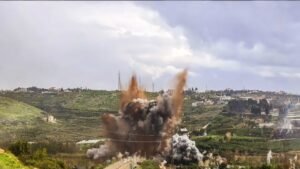
By relocating missile production[xi] and storage sites to underground facilities, Iran not only preserved its conventional capabilities but also posed serious targeting and intelligence challenges to its adversaries. These dispersed and hardened facilities defied detection and reduced the effectiveness of typical bunker-buster munitions. Compounding the challenges is the use of missile and drone capability by proxy networks, notably Hezbollah and the Houthis.[xii] The proxy involvement has further expanded the operational theatre and complicated the response strategies by creating new target demands and defence requirements. After frequent strikes in which airpower was central, Iran’s retaliatory capabilities have still not been eliminated. Hence, it is evident that precision airpower alone cannot overcome disperse and low-cost asymmetric systems. Most notably, it is ill-suited to enforce coercive political outcomes such as regime-change operations without the involvement of other tools of political, economic and diplomatic coercion.
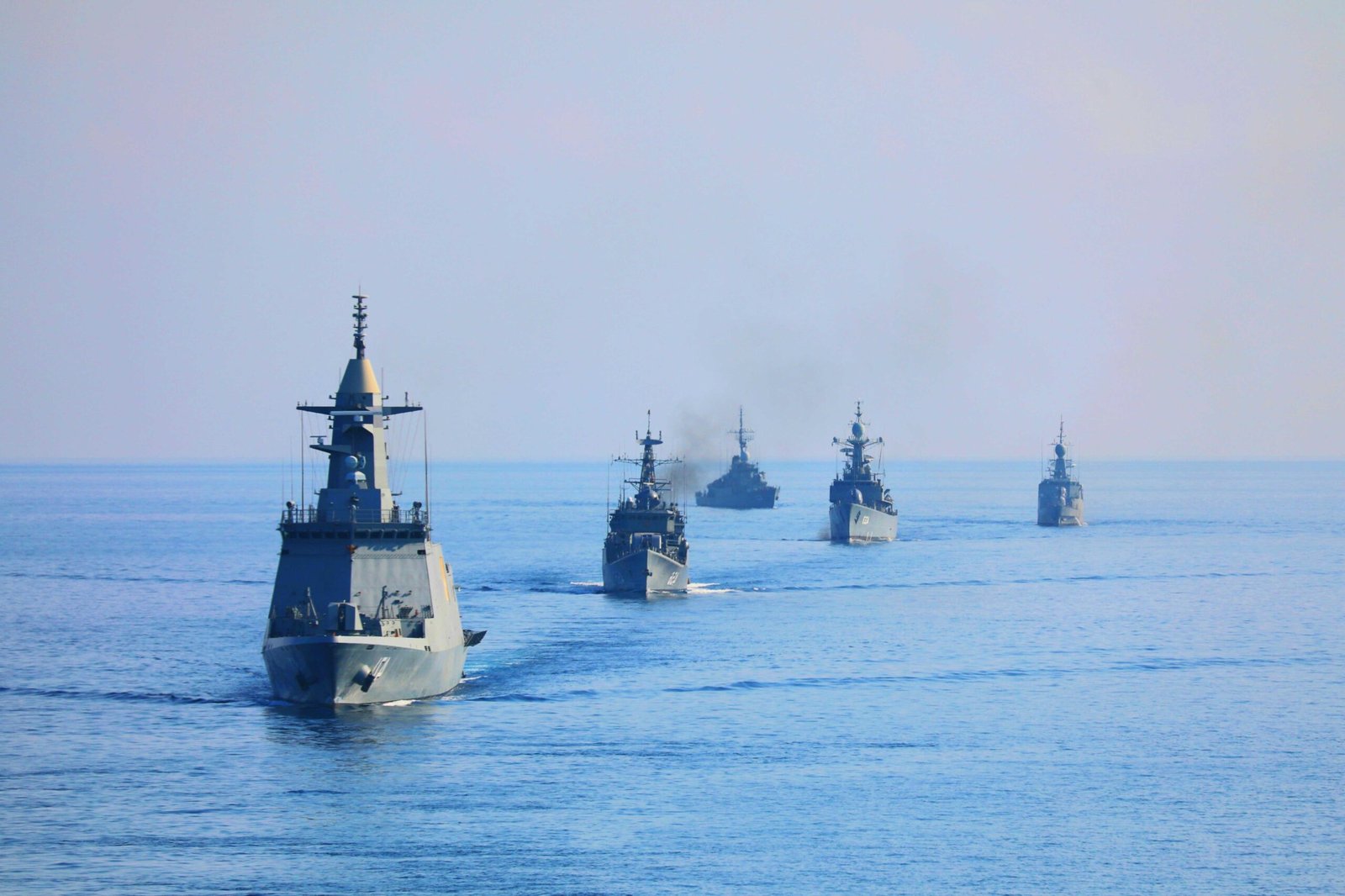
The expectations of hardware effectiveness have also been tested in the maritime domain. Naval power, once regarded as a critical asset, showed new vulnerabilities. In principle, naval supremacy should ensure freedom of navigation along with control of sea lanes. However, despite the presence of three carrier strike groups, most naval assets remained at standoff distances owing to their vulnerability to being targeted. In this context, the Gulf and the Strait of Hormuz[xiii] are narrow chokepoints, where anti-ship missiles, drone swarms and mines continue to create an anti-access area denial environment (A2/AD). In addition, while the naval presence can project power and strength, it cannot neutralise Iran’s primary leverage – its control over the Strait of Hormuz, which disrupts the entire global economy. An additional layer of U.S. blockade[xiv] was also imposed, yet it only added a new price to the war by increasing economic challenges without reopening sea lanes. As a result, naval operations too can only achieve limited success against adversaries capable of weaponizing geography.
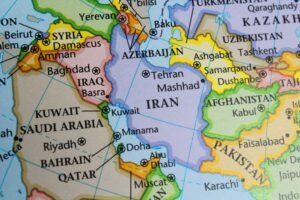
The pattern of constrained effectiveness extends further to more ambitious forms of conventional power projection. Ground invasion[xv] was also one of the options that repeatedly made headlines. However, despite the reinforcement of the additional troops, the option was not exercised given the geographical vastness of the country (over 1.6 million km2 or 617,000 square miles), mountainous terrain, vulnerable supply chains through the Gulf and the risk of converting the episode into a protracted conflict. Above all, the high risk to U.S. military personnel weighed heavily on the minds of the decision makers. Likewise, it is speculated that a special operation to confiscate the enriched uranium from Iran was also initially planned under the pretext of a rescue mission of the downed F-15 pilot. The mission failed with the serious loss of a C-130 aircraft and helicopters reportedly destroyed by the exiting U.S. forces. While the deployed units could be capable of such special operations, the optimal outcome is often tied to permissive conditions. In this case, contested airspace, air defence systems, and hostile forces on the ground presented an unacceptable level of risk. Furthermore, even a partial success could have triggered immediate retaliation and escalation from Iran, rendering the option non-viable.
These trends underscore a pressing reality about contemporary warfare. In modern conflicts, dominance in conventional hardware and capabilities may not necessarily translate into decisive victories, reflecting a gap between capability and effect.
In summary, the two-month stalemate reveals a core mismatch. No hardware category or force employed in the conflict has yet overcome the combination of resilience, dispersion, geography and asymmetric application. This does not suggest that military hardware is losing its potency. The hardware trap relies on excessive dependence on conventional military forces when confronted by an adversary with a strong political will to adapt and impose asymmetric penalties. These must be treated as coequal domains, the failure of which could risk repeating high-cost and inconclusive outcomes we observe today.
[i] Shankar, P. (2026). “Is the US ready to invade Iran? What Trump’s moves tell us so far”, Al Jazeera, 30 March 2026, retrieved from: https://www.aljazeera.com/news/2026/3/30/is-the-us-ready-to-invade-iran-what-trumps-moves-tell-us-so-far.
[ii] Schmitz, A. and Choi, A. (2026). “A look at the military hardware the US has positioned for potential war with Iran”, CNN Politics, 20 February 2026, retrieved from: https://edition.cnn.com/2026/02/20/politics/military-power-buildup-us-iran-intl-vis.
[iii] US Defense News (2026). “U.S. Deploys Three Aircraft Carriers to Middle East for First Time Since 2003”, YouTube, retrieved from: https://www.youtube.com/watch?v=wByrS-ig3nQ.
[iv] Alil, M. (2026). “Iran War: What a Marine Expeditionary Unit is – and other US military terms”, Al Jazeera, 1 April 2026, retrieved from: https://www.aljazeera.com/news/2026/4/1/iran-war-what-a-marine-expeditionary-unit-is-and-other-us-military-terms.
[v] Cooper, H. (2026). “There Are Now Over 50,000 American Troops in the Mideast”, The New York Times, 29 March 2026, retrieved from: https://www.nytimes.com/2026/03/29/us/politics/us-marines-middle-east-iran-war.html.
[vi] Bruchmann, S. et al. (2026). “The US-Israel campaign in Iran”, IISS, 2 March 2026, retrieved from: https://www.iiss.org/online-analysis/online-analysis/2026/02/the-us-israel-campaign-in-iran/.
[vii] Cancian, M.F. and Park, C.H. (2026). “Last Round? Status of Key Munitions at the Iran War Ceasefire”, CSIS, 21 April 2026, retrieved from: https://www.csis.org/analysis/last-rounds-status-key-munitions-iran-war-ceasefire.
[viii] Middle East Eye (2026). “Israel ‘sent advanced laser defence system to UAE’ during Iran war”, 1 May 2026, retrieved from: https://www.middleeasteye.net/news/israel-sent-advanced-laser-defence-system-uae-during-iran-war-report-says.
[ix] Elkabany, H. (2026). “Iran targeted 7 Arab countries with 6,413 missiles, drones over past 41 days”, AA, 10 April 2026, retrieved from: https://www.aa.com.tr/en/middle-east/iran-targeted-7-arab-countries-with-6-413-missiles-drones-over-past-41-days/3900771.
[x] Ibrahim, S. (2026). “The ‘Fourth Successor’: Iran’s plan for a long war with the US and Israel”, Al Jazeera, 109 March 2026, retrieved from: https://www.aljazeera.com/features/2026/3/10/the-fourth-successor-how-iran-planned-to-fight-a-long-war-with-the-us-and-israel.
[xi] Mansour, M. (2026). “Inside Qeshm, Iran’s underground missile fortress and geological marvel”, Al Jazeera, 17 March 2026, retrieved from: https://www.aljazeera.com/features/2026/3/17/inside-qeshm-irans-underground-missile-fortress-and-geological-marvel.
[xii] Al Jazeera (2026). “Lebanon’s Hezbollah and Yemen’s Houthis join Iran in strike on Israel”, 6 April 2026, retrieved from: https://www.aljazeera.com/news/2026/4/6/lebanons-hezbollah-and-yemens-houthis-join-iran-in-strike-on-israel.
[xiii] Butler, G. et al. (2025). “Why the Strait of Hormuz matters so much in the Iran war”, BBC News, 23 June 2025, retrieved from: https://www.bbc.co.uk/news/articles/c78n6p09pzno.
[xiv] Lapham, J. and Lamche, A. (2026). “Why and how is US blockading Iranian ports in Strait of Hormuz”, BBC News, 12 April 2026, retrieved from: https://www.bbc.co.uk/news/articles/c5yv6xr6me3o.
[xv] Tait, R. (2026). “With the US-Iran ceasefire about to expire, could Trump put boots on the ground?”, The Guardian, 21 April 2026, retrieved from: https://www.theguardian.com/world/2026/apr/21/trump-iran-us-ceasefire-ground-war.