The June 2026 Memorandum of Understanding (MOU) between the United States and Iran was widely described as the beginning of a peace process.[i] That characterization, however, overlooks the legal and strategic purpose of the document. Unlike a formal peace agreement, an MOU allows cooperation to proceed without requiring the underlying disputes be fully resolved.
Although the United States has used memoranda of understanding for decades to implement technical arrangements and facilitate cooperation with adversaries, it is unusual for an MOU itself to become the principal framework for managing an active military confrontation.[ii] Historical examples, including the 1972 memorandum implementing aspects of the Anti-Ballistic Missile Treaty and the 1973 U.S.-Cuba Hijacking Agreement, supported specific operational objectives rather than serving as the foundation for a comprehensive political settlement.
The structure of the agreement also reflects the negotiating philosophy of the Trump administration. Rather than treating diplomacy and military pressure as mutually exclusive, the administration employed the MOU as a mechanism through which both could continue. Economic incentives, military operations, and diplomatic engagement remained available while negotiations proceeded.
Throughout the conflict, the U.S. maintained military pressure on Iranian capabilities while largely avoiding the systematic destruction of the country’s petroleum industry.
Understanding the agreement in this way helps explain several American decisions that initially appeared contradictory. Throughout the conflict, the U.S. maintained military pressure on Iranian capabilities while largely avoiding the systematic destruction of the country’s petroleum industry. At the same time, President Donald Trump repeatedly emphasized that the central objective was preventing Iran from acquiring nuclear weapons, stating on numerous occasions that “Iran cannot have a nuclear weapon.”[iii] He also publicly discussed the possibility that Iran could eventually rebuild its economy if the nuclear issue were resolved. These policies formed part of a coherent strategic framework rather than a collection of unrelated decisions.
Iran signed the MOU because the agreement preserved access to the country’s principal source of national revenue while leaving open the possibility of continued negotiation. The significance of the agreement therefore lies not simply in why it was signed, but in what it left intact: the productive capacity upon which both the present government and any future government must ultimately depend.
Iran’s economic oxygen
Iran possesses approximately 12% of the world’s proven crude oil reserves yet produces only a small fraction of global petroleum output.[iv] Years of sanctions, restricted foreign investment, and dependence on discounted exports have limited the country’s ability to transform its immense geological wealth into broad economic prosperity. This distinction between resources and usable national income is central to understanding the negotiations.
Government revenues also depend on petroleum exports, while prolonged interruptions increase financial pressure and complicate future production. Viewed in that context, the MOU represented considerably more than a temporary reduction in hostilities. It preserved the possibility that Iran’s energy sector could continue generating national income while negotiations remained underway.
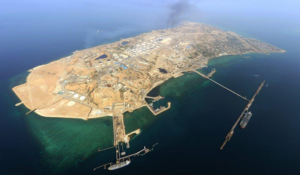
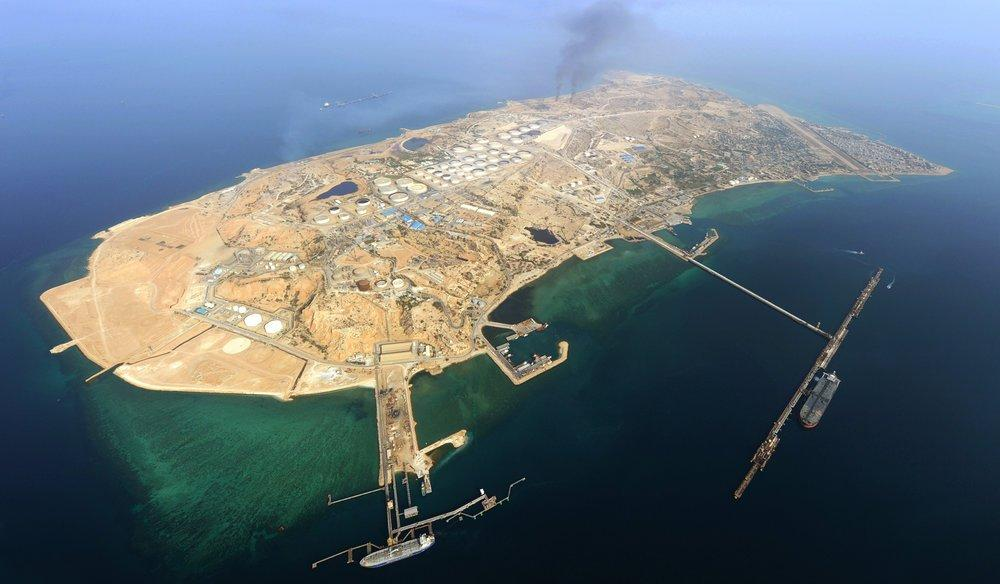
This interpretation also helps explain why the U.S. refrained from permanently damaging the country’s petroleum industry.[v] President Trump publicly stated that he had chosen not to destroy Iran’s oil infrastructure[vi], while making clear that such restraint depended upon Iranian conduct. Rather than eliminating the country’s principal economic asset, Washington retained it as leverage within a broader negotiating strategy.
Preserving productive capacity and the China question
Throughout modern warfare, economic infrastructure has often been regarded as a legitimate military target because it finances an opponent’s ability to continue fighting. In Iran’s case, however, the Trump administration appeared to draw a distinction between degrading military capabilities and permanently crippling the country’s long-term productive capacity. The statement suggested that petroleum facilities were viewed not merely as military targets but as bargaining instruments within the larger negotiation.
This interpretation becomes more persuasive when considered alongside the administration’s broader public statements. President Trump repeatedly emphasized that preventing nuclear proliferation – not destroying Iran as a nation – remained the central objective. He also spoke of rebuilding conflict-affected regions in terms of their future economic potential.
The same logic extends beyond Iran itself. China has become Iran’s largest trading partner and the principal purchaser of its exported crude oil.[vii] Through the Belt and Road Initiative (BRI), Beijing has invested considerable political and economic capital in maintaining access to Iranian energy and transportation corridors. An Iran left economically crippled by war would almost certainly require an external sponsor capable of financing reconstruction at scale.[viii] China would be the most likely candidate.
From the standpoint of U.S. strategy, this would create a paradox. A military campaign intended to weaken Iranian influence could inadvertently strengthen Beijing’s position in the Gulf by making Iran increasingly dependent upon Chinese finance, technology, and energy markets. Conversely, preserving Iran’s productive capacity while maintaining pressure on its nuclear programme leaves open the possibility that a future Iranian government could pursue a more diversified set of international relationships rather than falling almost exclusively within China’s orbit.
For that reason, preserving Iran’s energy sector should not be interpreted simply as an act of restraint. It can also be understood as preserving geopolitical options. If the long-term objective extends beyond the immediate conflict to the eventual reintegration of Iran into a more stable regional order, maintaining the country’s capacity to generate legitimate national wealth becomes an important element of that strategy.
Oil, asymmetric warfare, and the nuclear shield
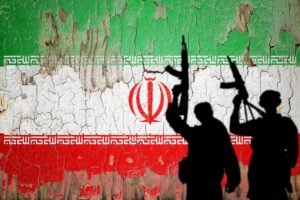
Iran’s economic strategy cannot be separated from its military strategy. Since the 1979 Islamic Revolution, the Islamic Republic has faced a persistent structural problem: it has lacked the conventional military strength necessary to compete directly with the United States or Israel. Rather than attempting to match advanced air forces, navies, or technologically superior ground forces, Tehran developed a less expensive and more sustainable model of deterrence built upon ballistic missiles, unmanned aerial systems, regional proxy organizations[ix], and the threat of strategic escalation.
Maintaining this network requires substantially fewer resources than building a modern conventional military capable of sustained operations.
This force structure reflects economic necessity as much as military doctrine. Maintaining this network requires substantially fewer resources than building a modern conventional military capable of sustained operations. Oil revenues therefore became the financial foundation of an asymmetric military strategy designed to impose costs far beyond Iran’s relative economic investment.[x]
Within this framework, Hezbollah and Hamas have functioned as more than ideological allies. They have served as the forward military arms of Iran’s broader regional strategy. Their offensive operations create an important defensive effect for Tehran by requiring Israel to commit personnel, intelligence assets, financial resources, and political attention to conflicts on its own borders rather than concentrating those capabilities directly against Iran. From Tehran’s perspective, every missile intercepted in northern Israel, every reserve unit mobilized in Lebanon, and every security operation directed toward Gaza represents military effort that cannot simultaneously be directed against Iranian territory.
This approach also offers political advantages. For many years Iran benefited from varying degrees of plausible deniability regarding the actions of organizations it supported through financing, training, weapons transfers, and strategic guidance. Although that distinction has become increasingly difficult to sustain, proxy warfare still enables Tehran to project influence beyond its borders while reducing the political risks associated with direct confrontation.
The relationship between Iran’s civilian institutions and the Islamic Revolutionary Guard Corps (IRGC) illustrates the economic logic of this model. The conventional state collects revenue, maintains public infrastructure, and keeps the national economy functioning. The IRGC transforms a portion of those national resources into regional military influence through expeditionary operations, missile development, and support for proxy organizations. In practical terms, the economy finances the state, and the state finances the instruments through which Iran projects power abroad.
This analytical framework also helps explain why the U.S. has consistently placed nuclear proliferation at the centre of its Iran policy. A nuclear deterrent would fundamentally alter the strategic environment by shielding the asymmetric system Iran has spent decades constructing.[xi]
Nuclear weapons would not replace proxy organizations, ballistic missiles, or drone forces. They would protect them.
Nevertheless, nuclear weapons would not replace proxy organizations, ballistic missiles, or drone forces. They would protect them. A credible nuclear capability would raise the political and military costs of direct action against the Iranian state, allowing Tehran to continue employing lower-level forms of coercion under the umbrella of a far more powerful deterrent. In that sense, the nuclear program should be understood as the apex of Iran’s existing military model rather than a departure from it.
From the American perspective, the nuclear issue is singular: remove the prospect of a nuclear-armed Iran and other disputes become more manageable through diplomacy, sanctions, or conventional deterrence. From Tehran’s perspective, however, abandoning the nuclear option risks exposing the entire asymmetric strategy to greater external pressure.
That difference explains why preserving Iran’s economic base and opposing nuclear proliferation are not contradictory policies. If the objective is to prevent a nuclear-armed Iran while preserving the possibility of long-term political evolution, maintaining the country’s productive capacity becomes compatible with continued pressure on its military capabilities. The economic foundations of the nation remain available to future governments, while the principal source of long-term strategic instability – a potential nuclear deterrent protecting an established asymmetric network – remains the central issue for negotiation.
The Iranian people and the future beyond the MOU
The broader significance of the June 2026 MOU extends beyond diplomacy, military operations, or even the nuclear negotiations themselves. At its core lies a more fundamental question: what should remain after the conflict ends?
More than seventy years ago, speaking before the United Nations Security Council during the oil nationalization crisis, Mohammad Mosaddegh declared: “The oil resources of Iran are the property of the Iranian people.”[xii] That observation remains as relevant today as it was in 1951. The question is no longer who owns the oil in a legal sense, but whether those resources will remain capable of supporting the Iranian people after decades of sanctions, regional conflict, and economic isolation. If preserved, they provide the financial foundation upon which future governments may rebuild public institutions, diversify the economy, attract investment, and reduce dependence upon external patrons.
Conclusion
The June 2026 MOU illustrates a broader evolution in statecraft, in which economic infrastructure, commercial access, financial systems, and productive capacity increasingly shape strategic outcomes alongside military operations.
This interpretation does not suggest that preserving Iran’s productive capacity guarantees political moderation, democratic reform, or lasting peace. Those outcomes will depend primarily upon decisions made by the Iranian people and their future leaders. Nor does it imply that negotiations alone can resolve questions surrounding nuclear proliferation[xiii], regional proxy organizations, or long-standing security concerns.
Instead, the MOU should be understood as an effort to preserve Iran’s economic inheritance while the larger political questions remained under negotiation. Whether that opportunity is ultimately realized depends on choices yet to be made in Tehran, Washington, and across the Middle East. The MOU did not determine Iran’s future, but it helped ensure that the economic means to build one would still exist.
[i] U.S. Department of State (2003). “Foreign Relations of the United States, 1969–1976”, Office of the Historian, retrieved from: https://history.state.gov/historicaldocuments/frus1969-76v01; U.S. Department of State (2003). “U.S.-Cuba Hijacking Agreement…”, Office of the Historian, retrieved from: https://history.state.gov/historicaldocuments/frus1969-76ve01/ch2; Federation of American Scientists (1972). “Memorandum of Understanding: Relating to the Treaty between the United States of America and the Soviet Socialist Republics…”, 26 May 1972, retrieved from: https://nuke.fas.org/control/abmt/text/ad-mou.htm; U.S. Department of State (1972). “Treaty between the United States of America and the Union of Soviet Socialist Republics on the Limitation of Anti-Ballistic Missile Systems”, 26 May 1972, retrieved from: https://2009-2017.state.gov/t/isn/trty/16332.htm.
[ii] U.S. Department of State (2003). “Foreign Relations of the United States, 1969–1976”.
[iii] The White House (2025). “President Trump Has Always Been Clear: Iran Cannot Have a Nuclear Weapon”, 17 ‘June 2025, retrieved from: https://www.whitehouse.gov/releases/2025/06/president-trump-has-always-been-clear-iran-cannot-have-a-nuclear-weapon/.
[iv] U.S. Energy Information Administration (2024). “Iran: Overview”, 10 October 2024, retrieved from: https://www.eia.gov/international/analysis/country/irn.
[v] Pamuk, H. and Hafezi, P. (2026). “Iran says no final decision made on deal that Trump hopes could be signed soon”, Reuters, 11 June 2026, retrieved from: https://www.reuters.com/world/middle-east/us-iran-trade-attacks-second-day-undermining-shaky-ceasefire-2026-06-11/.
[vi] BBC News (2026). “’Every military target’ on Iran’s key oil island ‘totally obliterated’, says Trump”, 12 March 2026, retrieved from: https://www.bbc.co.uk/news/live/c4gqjyk0vx3t.
[vii] Brandeis University Crown Center for Middle East Studies (2021). “The Iranian-Chinese Strategic Partnership: Why Now and What it Means”, 28 April 2021, retrieved from: https://www.brandeis.edu/crown/publications/crown-conversations/cc-8.html.
U.S.-China Economic and Security Review Commission (2026). “China-Iran Fact Sheet: A Short Primer on the Relationship”, 16 March 2026, retrieved from: https://www.uscc.gov/research/china-iran-fact-sheet-short-primer-relationship.
[viii] U.S.-China Economic and Security Review Commission (2026). “China-Iran Fact Sheet”.
[ix] Tabatabai, A.M. et al. (2021). “Iran’s Military Interventions: Patterns, Drivers, and Signposts”, RAND, 27 September 2021, retrieved from: https://www.rand.org/pubs/research_reports/RRA444-2.html; International Institute of Strategic Studies (2026). “The Military Balance 2026: launch”, 24 February 2026, retrieved from: https://www.iiss.org/publications/the-military-balance/; Cancian, M.F. and Park, C.H. (2026). “Assessing the Air Campaign After Three Weeks: Iran War By the Numbers”, Center for Strategic and International Studies, 25 March 2026, retrieved from: Assessing the Air https://www.csis.org/analysis/assessing-air-campaign-after-three-weeks-iran-war-numbersAfter Three Weeks: Iran War By the Numbers.
[x] Tabatabai, A.M. et al. (2021). “Iran’s Military Interventions: Patterns, Drivers, and Signposts.
[xi] Stockholm International Peace Research Institute (2026). SIPRI Yearbook 2026: Armaments, Disarmament and International Security, Oxford: Oxford University Press.
[xii] United Nations Digital Library (1951). “Security Council Official Records, 6th year: 560th meeting…”: 1951, [statements relating to the Iranian oil nationalization dispute], retrieved from: https://digitallibrary.un.org/record/629250?v=pdf. Because the precise wording of the oft-cited statement that “the oil resources of Iran are the property of the Iranian people” has not yet been verified against the official UN transcript, the manuscript should paraphrase Mosaddegh’s position rather than present it as a direct quotation until documentary confirmation is obtained.
[xiii] Talbot, B. (2023). “Israel’s Begin Doctrine: Preventive Strike Tradition and Iran’s Nuclear Pursuits”, A Journal of Strategic Airpower & Spacepower, 2(4), retrieved from: https://www.airuniversity.af.edu/Portals/10/AEtherJournal/Journals/Volume-2_Number-4/Talbot.pdf.