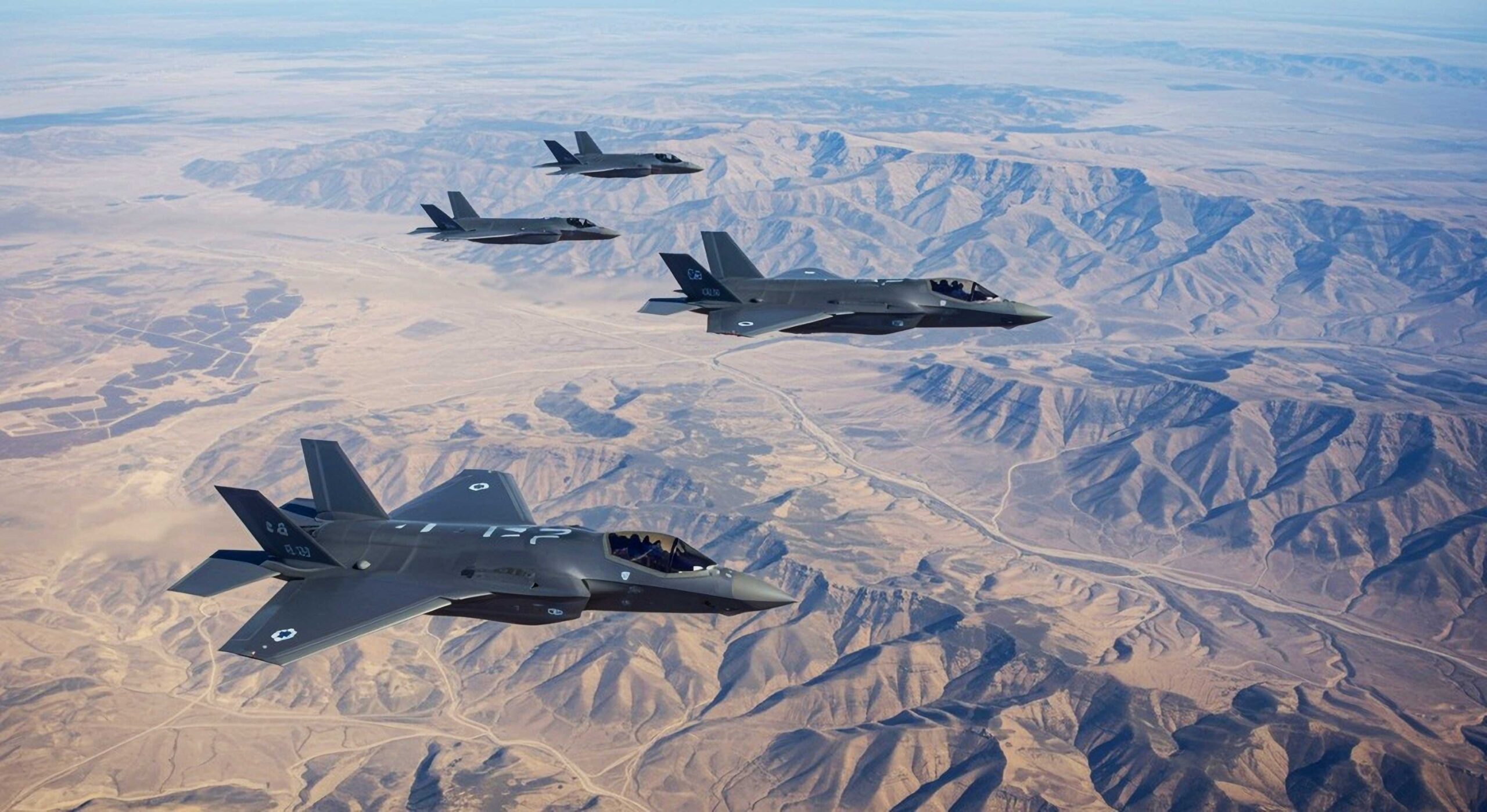
The joint U.S.-Israeli bombing campaign launched on 28th February hinged on two outcomes: that the Iranian people would take to the streets and overthrow the government, or that the regime would be so weakened by the bombing that it would be forced to negotiate to stop the devastation. Although a two-week ceasefire[i] was finally reached after 38 days of continuous operations, none of the intended outcomes were achieved. While they are still possible, the likelihood decreases by the day. Since the assassination of top Iranian leadership and the destruction of Iranian military assets and infrastructure could not bring the regime to its knees, the only logical path forward to achieve this goal, other than appeasement, is through escalation, which in this case, is total war.
Introducing “total war”
A state engages in total warfare[ii] when it prosecutes a war that is unrestricted in terms of the weapons used, the territory or combatants that are targeted, or the objectives pursued. The laws of war are often set aside, and there is little distinction between military and civilian targets, in order to accomplish operational objectives. In the most desperate instances, unconventional means, like nuclear weapons[iii], can be brought to the table if a state cannot accomplish its stated objectives through conventional methods, such as combined arms manoeuvre warfare. While in this case, the most extreme demonstrations have not been used, the targeting of civilian and dual-use (military and civilian) infrastructure revealed how, before the ceasefire, the conflict was becoming a form of total war that was not being conducted at its inception.
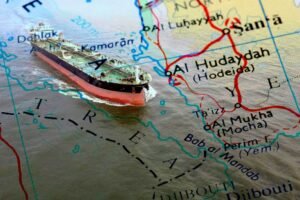
Since the U.S. and Israel could not pressure the Islamic Republic to reopen the Strait of Hormuz on their terms[iv], force the termination of their nuclear and missile programmes, and end support for regional proxies, widening the war effort to cripple the state as a whole could serve as the basis of a hasty plan B. U.S. President Donald Trump warned[v] that this new phase of the conflict would be so devastating that it would take Iran “20 years to rebuild, if they’re lucky, if they have a country.” If the latest ceasefire collapses, the U.S. and Israel could continue this strategy expeditiously. As Israeli Prime Minister Benjamin Netanyahu warned[vi], Israel’s “finger is on the trigger.”
It must be understood that both the U.S. and Israel were pursuing this strategy for different reasons. The Trump Administration wanted to raise hell[vii] in Iran to force the regime[viii] to concede to its demands. The Israelis want to increase overall pressure on Iran by also targeting civilian infrastructure and preferring a pathway that avoids a diplomatic re-opening towards the regime. This puts American and Israeli aims at odds.[ix] By killing potential negotiators, Israel prevents the U.S. from reaching a diplomatic solution. At the same time, President Trump’s willingness to negotiate takes the pressure off Tehran and allows the regime to consolidate power. Potentially engaging in total war is to Israel’s advantage because it will not only hurt the regime but, more importantly, further weaken Iran’s status as its principal geopolitical rival in the neighbourhood.
The shift to total war
The 38-day conflict revealed an uncomfortable truth about American and Israeli war aims. Both countries are incapable of eliminating Iran’s nuclear[x], ballistic missile[xi], and drone-producing[xii] programmes, even when conducting joint operations and receiving logistical support[xiii] from their regional allies in the Gulf. While the Pentagon attempts to boast[xiv] about the reduction in Iranian missile attacks over the course of the conflict, the reality on the ground tells a different story.
U.S. intelligence assessments[xv] report that even after five weeks of bombardment by the U.S. and Israel, Iran still retains close to 50 per cent of its missile launchers and drone capabilities, in addition to a large percentage of cruise missiles used for coastal defence. Although U.S.-Israeli military action[xvi] so far annihilated[xvii] Iran’s navy, air force, and reduced its missile and drone arsenal, it must be known that Iran’s military[xviii] was already in a weak state before the war began.
Israel's current strategic objective is focused on degrading Iran’s ability to function as a state and, therefore, project power.
Since the attacks on Iranian military assets and senior leadership have become a form of “mowing the lawn,”[xix] Israel’s current strategic objective is focused on degrading Iran’s ability to function as a state and, therefore, project power. While the U.S. has taken identical actions[xx] targeting Iran’s infrastructure, as stated rather aggressively[xxi] by President Trump, the difference lies in the desired outcome. The rhetoric[xxii] from the Trump Administration was a tactical ploy[xxiii] to bring the Iranians to the negotiating table to capitulate on American demands[xxiv] regarding Iran’s nuclear and missile programmes, and more recently, the reopening of the Strait of Hormuz.
Israel’s new strategic calculus is to neutralise the Islamic Republic as a whole. This dual-purpose solution aims to remove Iran as a major geopolitical rival in the region and project the Iranian people’s dissatisfaction with their living conditions onto the regime to overthrow it.
If Iran’s military response after the assassination of Supreme Leader Ali Khamenei was not indicative of its commitment to resistance[xxv], the appointment of his son, Mojtaba, as his successor most certainly was. Israeli defence officials said as early as the second week of the war that the overall objective was not regime change, but to enable a “slow collapse” scenario.[xxvi] This would see the regime weakened to the point that, over time, it would undergo a gradual erosion of its stability and, therefore, its legitimacy in the eyes of the Iranian people. The realisation that more than 13,000 bombs[xxvii] were unable to unseat the regime has pushed the Israelis to facilitate an overthrow that would derive from projecting the anger of the Iranian people onto the Islamic Republic itself.
Israel’s new targets
As the likelihood of regime change has decreased over the past month, Israel has begun to redefine the meaning of “operational success.” Barely two weeks into the war, on 12 March, Israeli Foreign Minister Gideon Sa’ar stated[xxviii] that the primary objective of Operation Roaring Lion is to “remove the existential threats that Iran poses to Israel for the long term.” Sa’ar added that the mission aims to “weaken the regime, particularly its repression forces, in a way that creates the conditions that will ultimately allow the Iranian people themselves to bring about that change.” He went on to describe regime change as something that “may be a consequence of the operation; it does not necessarily have to be part of the military campaign itself.”
Strikes on gas fields in southern Iran and the strikes on two IRGC-linked steel factories reveal how the IDF began its gradual shift to focus on economic targets and Iranian infrastructure.
In a similar shift of rhetoric, Israeli Prime Minister Benjamin Netanyahu claimed[xxix] on 20 March that Iran was no longer capable of enriching uranium or manufacturing ballistic missiles. Ten days later, Israeli media reported[xxx] that the country’s political leadership, including Defence Minister Israel Katz, ordered the IDF to shift its focus to strike economic targets within Iran. Strikes on gas fields[xxxi] in southern Iran on 18 March and the 27 March strikes on two IRGC-linked steel factories[xxxii] reveal how the IDF began its gradual shift to focus on economic targets and Iranian infrastructure.
In the first week of April, Iran’s Ministry of Health and the Iranian Red Crescent Society reported[xxxiii] that damage to over 90,000 homes and 442 health facilities across the country had disrupted access to essential healthcare. Israeli strikes hit the Pasteur Institute[xxxiv], Iran’s century-old medical research and primary vaccine production centre. Tofigh Daru[xxxv], one of Iran’s biggest state-run pharmaceutical companies and producers of anti-cancer drugs and anaesthetics, was targeted on the premise that it supplies fentanyl for chemical weapons development.
Iranian universities[xxxvi] have also been hit. Imam Hossein University and Malek Ashtar University of Technology were struck for reportedly supporting the regime with chemical weapons research and development. Two Tehran universities, Shahid Beheshti University and Sharif University of Technology, were similarly targeted due to suspected links to Iran’s nuclear programme.
In Alborz province, just 40 kilometres from Tehran, an electrical facility[xxxvii] was struck, causing power outages and temporary blackouts throughout Tehran and Alborz provinces. Israeli Defence Minister Israel Katz announced on 6 April that two different petrochemical facilities[xxxviii], responsible for a total of 85 per cent of Iran’s petrochemical exports, were successively hit, and that Israel would continue its campaign[xxxix] against Iranian infrastructure.
What does Israel gain?
Israel’s strategy could result in the government in Tehran more closely resembling the al-Sharaa administration in Damascus, regardless of whether restrainers, hardliners, or a new regime is in power. Meaning, its new security services would be militarily weakened[xl] to the point that they could not conduct offensive operations. These forces would also be too preoccupied with potential sectarian conflicts[xli] within their own borders to reorganise as a cohesive military capable of flexing its muscles and standing up proxies[xlii] across the region.
The bombing of economic infrastructure[xliii], the continuous assassinations of Iran’s top leadership, and the destruction of military assets are all part of a concentrated effort to decisively weaken Iran as a state. Israel does not want a Venezuela-like scenario in Iran, since a collaborator from within the regime only ensures its survival, and buys time to rebuild its military assets and reorganise its weakened chain of command across its political apparatus and security services.
In a world where the Iranian military post-Islamic Republic is combat-ineffective, it will be unable to present a military or security threat to Israel. With Libya, Iraq, and Syria all in disarray[xliv] following decades of conflicts, both from foreign and domestic actors, the status as regional powers they once held under Muammar Ghaddafi, Saddam Hussein, and Bashar al-Assad, respectively, is over. What remains are fractured states[xlv] with sectarian conflicts that have no end in sight.
Israel has realised that the paramount question is not who is in power, but whether or not Iran can project power.
After 38 days of uninterrupted war, Israel has realised that the paramount question is not who is in power, but whether or not Iran can project power. Total war is not being waged just to facilitate an overthrow of the regime, but to cripple its ability to project power as a major actor in the region. With hostilities currently paused, the U.S. continues to search for a victory for its most urgent goal: eliminating Iran’s nuclear programme.[xlvi]
Even if Iran cedes these demands, it will likely not be enough to satisfy the security concerns of America’s primary Middle Eastern political and military partner: Israel. The reason for this is simple. To Israel, victory is more than mere concessions or even the overthrow of the Shiite clerics in Tehran. Victory means removing any existential security threats. Iran must be crippled so severely that it is unable to pursue any of its hegemonic ambitions in the region, regardless of who replaces its supreme leader. Until then, Israel seems determined to work towards this goal by any means[xlvii] necessary.
[i] Haltiwanger, J. (2026). “U.S. and Iran Agree to 2-Week Ceasefire”, Foreign Policy, 7 April 2026, retrieved from: https://foreignpolicy.com/2026/04/07/iran-accepts-ceasefire-trump-hormuz-10-point-plan/.
[ii] Oxford Reference (N.D.). “Total War”, The Oxford Essential Dictionary of the U.S. Military, retrieved from: https://www.oxfordreference.com/display/10.1093/oi/authority.20110803105038425.
[iii] DeNardi, C. (N.D.). “Fact Sheet: The Basics of Nuclear Weapons”, Center for Arms Control and Non-Proliferation, retrieved from: https://armscontrolcenter.org/fact-sheet-the-basics-of-nuclear-weapons/#%3A~%3Atext%3DHow%20do%20Nuclear%2Cfallout%20they%20disperse.
[iv] Maisin, J., Said, S. and Feng, R. (2026). “Iran Tightens Its Grip on Hormuz Despite Cease-Fire”, The Wall Street Journal, 8 April 2026, retrieved from: https://www.wsj.com/world/middle-east/iran-tightens-its-grip-on-hormuz-despite-cease-fire-5027521f?mod=WSJ_home_mediumtopper_pos_1.
[v] Lieber, D. and Smith, Z. (2026). “The Next Target for the U.S. and Israel Is Iran’s Economy”, The Wall Street Journal, 6 April 2026, retrieved from: https://www.wsj.com/world/middle-east/the-next-target-for-the-u-s-and-israel-is-irans-economy-0f5f0d80?mod=WSJ_home_mediumtopper_pos_4&%3A~%3Atext=Israel%20is%20awaiting%2Chave%20a%20country.%E2%80%9D.
[vi] Associated Press (2026). “Israel still has ‘more objectives’ to complete in Iran, Netanyahu says”, YouTube, retrieved from: https://www.youtube.com/watch?v=zVdEXN3QiKc&t=23s.
[vii] Reuters (2026). “Iran rejects ceasefire as Trump ramps up threats ahead of deadline”, 6 April 2026, retrieved from: https://www.reuters.com/business/aerospace-defense/trump-vows-hell-iran-if-strait-stays-shut-says-deal-is-possible-2026-04-06/.
[viii] U.S. Department of War (2026). “Secretary of War Pete Hegseth and Chairman of the Joint Chiefs Air Force Gen. Dan Caine Hold a Press Briefing”, 8 April 2026, retrieved from: https://www.war.gov/News/Transcripts/Transcript/Article/4454648/secretary-of-war-pete-hegseth-and-chairman-of-the-joint-chiefs-air-force-gen-da/#%3A~%3Atext%3DYou%20see%2C%20had%2Cdefend%20against%20it.
[ix] Banai, H. (2026). “America and Israel Have Different Endgames in Iran”, Foreign Affairs, 8 April 2026, retrieved from: https://www.foreignaffairs.com/iran/america-and-israel-have-different-endgames-iran.
[x] NPR (2026). “War can’t entirely eliminate Iran’s nuclear program, the U.N. atomic energy chief says”, 18 March 2026, retrieved from: https://www.npr.org/2026/03/18/nx-s1-5751694/iran-retaliates-israel-kills-two-top-iranian-officials.
[xi] Gordon, M.R. et al. (2026). “Iran Has Thousands of Missiles and Could Retrieve Launchers, U.S. Intelligence Finds”, The Wall Street Journal, 10 April 2026, retrieved from: https://www.wsj.com/world/middle-east/iran-has-thousands-of-missiles-and-could-retrieve-launchers-u-s-intelligence-finds-eaa230ec?mod=WSJ_home_mediumtopper_pos_4.
[xii] Vincent, B. (2026). “Pentagon brass tout destruction of Iran’s drone arsenal, but questions linger about what’s left”, Defense Scoop, 8 April 2026, retrieved from: https://defensescoop.com/2026/04/08/hegseth-gen-caine-iran-drone-arsenal-damage-operation-epic-fury/.
[xiii] Al Jazeera (2025). “Mapping US troops and military bases in the Middle East”, 12 June 2025, retrieved from: https://www.aljazeera.com/news/2025/6/12/mapping-us-troops-and-military-bases-in-the-middle-east.
[xiv] U.S. Department of War (2026). “Secretary of War Pete Hegseth and Chairman of the Joint Chiefs Air Force Gen. Dan Caine Hold a Press Briefing”.
[xv] Britzky, H. et al. (2026). “US intelligence assesses Iran maintains significant missile launching capability”, CNN politics, 3 April 2026, retrieved from: https://edition.cnn.com/2026/04/02/politics/iran-missiles-us-military-strikes-trump.
[xvi] Troianovski, A. (2026). “Trump Says He ‘Exceeded’ His Objectives in Iran. But What Did He Accomplish?”, The New York Times, 8 April 2026, retrieved from: https://www.nytimes.com/2026/04/08/us/politics/trump-iran-goals.html?nl=from-the-times&segment_id=217924.
[xvii] Tovar, M. and Heilman, G. (2026). “Here’s a look at Iran’s military strength after a month of war: How many soldiers, aircraft, tanks, and ships does it have left?”, AS, 7 April 2026, retrieved from: https://en.as.com/latest_news/heres-a-look-at-irans-military-strength-after-a-month-of-war-how-many-soldiers-aircraft-tanks-and-ships-does-it-have-left-f202604-n/.
[xviii] Bob, Y.J. (2026). “The Iran war balance sheet: wins, losses, and undecideds – analysis”, The Jerusalem Post, 9 April 2026, retrieved from: https://www.jpost.com/israel-news/article-892506.
[xix] Leifer, J. (2026). “Don’t Fall for the Regime Change Talk. Israel Is ‘Mowing the Lawn’ in Iran”, Haaretz, 13 March 2026, retrieved from: https://www.haaretz.com/israel-news/2026-03-13/ty-article/.premium/dont-fall-for-the-regime-change-talk-israel-is-mowing-the-lawn-in-iran/0000019c-e254-d989-a7dc-e35c611c0000.
[xx] Ward, E. (2026). “Trump Hails Strike on Iranian Bridge Warning ‘More to Follow’, The New York Times, 2 April 2026, retrieved from: https://www.nytimes.com/2026/04/02/world/middleeast/trump-iran-bridge-strike.html.
[xxi] Gambrell, J., Boak, J. and Corder, M. (2026). “Trump again threatens widespread destruction in Iran if a deal is not reached ‘shortllly’”, AP, 31 March 2026, retrieved from: https://apnews.com/article/iran-us-israel-trump-lebanon-march-30-2026-8abb0ee50be4cd8dd9ddde3a9d846ef8.
[xxii] Wong, E. (2026). “Trump Revels in Threats to Commit War Crimes in Iran”, The New York Times, 5 April 2026, retrieved from: https://www.nytimes.com/2026/04/05/us/politics/trump-iran-war-crimes-truth-social.html?nl=from-the-times&segment_id=217788&%3A~%3Atext=The%20world%20is%2CS.%20military%20code.
[xxiii] Gordon, M.R. and Ward, A. (2026). “Top Aides Advise trump Blasting Iran’s Infrastructure is Fair Game”, The Wall Street Journal, 4 April 2026, retrieved from: https://www.wsj.com/world/middle-east/top-aides-advise-trump-blasting-irans-infrastructure-is-fair-game-8b6aec90?mod=Searchresults&pos=1&page=1.
[xxiv] McGraw, M. (2026). “Trump Warns Iran He Could Strike ‘Every Power Plant’, in WSJ Interview”, The Wall Street Journal, 5 April 2026, retrieved from: https://www.wsj.com/world/trump-warns-in-journal-interview-that-he-could-strike-every-power-plant-in-iran-47556f0d?mod=WSJ_home_mediumtopper_pos_2.
[xxv] Oprea, S. (2026). “Resistance as Ideology: Why Iran’s Regime Will Remain in Power Despite the Ayatollah’s Death”, Manara Magazine, 6 March 2026, retrieved from: https://manaramagazine.org/2026/03/why-irans-regime-will-remain-in-power/.
[xxvi] Levaton, S. (2026). “Israeli officials float ‘slow collapse’ scenario for Iran, say ‘cracks’ forming in regime”, The Times of Israel, 8 March 2026, retrieved from: https://www.timesofisrael.com/liveblog_entry/israeli-officials-float-slow-collapse-scenario-for-iran-say-cracks-forming-in-regime-report/.
[xxvii] U.S. Department of War (2026). “Secretary of War Pete Hegseth and Chairman of the Joint Chiefs Air Force Gen. Dan Caine Hold a Press Briefing”.
[xxviii] Stein, A. (2026). “Cracks emerging between Iran’s political, military leaders, FM Sa’ar tells ‘Post’”, The Jerusalem Post, 12 March 2026, retrieved from: https://www.jpost.com/israel-news/article-889816.
[xxix] Berman, L. and Levaton, S. (2026). “On 20th day of war, Netanyahu says Iran ca no longer enrich uranium, build missiles”, The Times of Israel, 20 March 2026, retrieved from: https://www.timesofisrael.com/on-19th-day-of-war-netanyahu-says-iran-can-no-longer-enrich-uranium-build-missiles/.
[xxx] Fabian, E. (2026). “Israel shifts to hitting Iran’s economy, as it enters ‘completion phase’ of war”, The Times of Israel, 30 March 2026, retrieved from: https://www.timesofisrael.com/israel-shifts-to-hitting-irans-economy-as-it-enters-completion-phase-of-war/.
[xxxi] Fabian, E. et al. (2026). “Israel strikes major Iranian gas field; Tehran vows to hit Gulf energy sites in kind”, The Times of Israel, 18 March 2026, retrieved from: https://www.timesofisrael.com/israel-strikes-major-iranian-gas-field-tehran-vows-to-hit-gulf-energy-sites-in-kind/.
[xxxii] Fabian, E. (2026). “Israel bombs 2 IRGC- linked steel plants, 2 nuclear facilities as Iran vows revenge”, The Times of Israel, 27 March 2026, retrieved from: https://www.timesofisrael.com/israel-bombs-2-irgc-linked-steel-plants-2-nuclear-facilities-as-iran-vows-revenge/.
[xxxiii] UNICEF (2026). “UNICEF Statement on hostilities in the Middle East”, 7 April 2026, retrieved from: https://www.unicef.org/press-releases/unicef-statement-hostilities-middle-east.
[xxxiv] Bisserbe, N. and De Avilla, J. (2026). “Iran Says Airstrikes Hit Pasteur Institute in Tehran”, The Wall Street Journal, 2 April 2026, retrieved from: https://www.wsj.com/livecoverage/iran-war-news-trump/card/iran-says-airstrikes-hit-pasteur-institute-in-tehran-FpzNAp3x3EDn726IVF34.
[xxxv] Stricker, A. (2026). “Israeli Strikes Target Iran’s Chemical Weapons Program”, Foundation for the Defense of Democracies, 7 April 2026, retrieved from: https://www.fdd.org/analysis/2026/04/07/israeli-strikes-target-irans-chemical-weapons-program/.
[xxxvi] Stone, r. (2026). “As war escalates, Iran’s universities face increasing fire”, Science, 6 April 2026, retrieved from: https://www.science.org/content/article/war-escalates-iran-s-universities-face-increasing-fire.
[xxxvii] Holcman, T. (2026). “Power outages in Tehran, Kabaj after shrapnel hits high-voltage tower in Alborz province”, The Jerusalem Post, 29 March 2026, retrieved from: https://www.jpost.com/middle-east/iran-news/article-891574.
[xxxviii] Lieber, D. (2026). “Israel Strikes Iran’s Largest Petrochemical Facility, Defense Minister Says”, The Wall Street Journal, 6 April 2026, retrieved from: https://www.wsj.com/livecoverage/iran-war-latest-news-updates-2026/card/israel-strikes-iran-s-largest-petrochemical-facility-defense-minister-says-UHJdTLSi2nP5f1BL5orl.
[xxxix] Smith, Z. (2026). “Israel Vows More Strikes on Iran Infrastructure After Killing of Spy Chief”, The Wall Street Journal, 6 April 2025, retrieved from: https://www.wsj.com/livecoverage/iran-war-latest-news-updates-2026/card/israel-vows-more-strikes-on-iran-infrastructure-after-killing-of-spy-chief-XFGXFti8aDweu0ElHdKP.
[xl] Campa, K. and Carter, B. (2025). “The New Syrian Army: Order of Battle”, ISW, 14 November 2025, retrieved from: https://understandingwar.org/research/middle-east/the-new-syrian-army-order-of-battle/.
[xli] Council on Foreign Relations (2026). “Conflict in Syria”, 18 February 2026, retrieved from: https://www.cfr.org/global-conflict-tracker/conflict/conflict-syria#%3A~%3Atext%3DAn%20explosion%20rocks%2Cremain%20dire.
[xlii] The Soufan Center (2026). “Iran Taps Its Axis of Resistance for Reinforcement”, 3 April 2026, retrieved from: https://thesoufancenter.org/intelbrief-2026-april-3/.
[xliii] Fabian, E. (2026). “Israel bombs 2 IRGC-linked steel plants, 2 nuclear facilities as Iran vows revenge”, The Times of Israel, 27 March 2026, retrieved from: https://www.timesofisrael.com/israel-bombs-2-irgc-linked-steel-plants-2-nuclear-facilities-as-iran-vows-revenge/.
[xliv] Council on Foreign Relations (2024). “Civil Conflict in Libya”, 15 July 2024, retrieved from: https://www.cfr.org/global-conflict-tracker/conflict/civil-war-libya.
[xlv] Council on Foreign Relations (2026). “Instability in Iraq”, 18 February 2026, retrieved from: https://www.cfr.org/global-conflict-tracker/conflict/political-instability-iraq.
[xlvi] Sanger, D.E. et al. (2026). “U.S. Is Negotiating an Iran Deal That Would But Time, Again”, The New York Times, 13 April 2026, retrieved from: https://www.nytimes.com/2026/04/13/us/politics/us-iran-deal.html.
[xlvii] Associated Press (2026). “Israel still has ‘more objectives’ to complete in Iran, Netanyahu says.”