Less than ninety minutes before President Donald Trump was expected to make good on his promise to destroy Iran[i] as a civilization, a tentative two-week ceasefire[ii] was reached, not to end the conflict, but to allow temporary passage through the Strait of Hormuz.[iii] Despite the Trump Administration’s claims[iv] of regime change, Iran is still the Islamic Republic of Iran. The Iranian delegation that met for negotiations[v] in Islamabad on 11 April does not represent an opposition movement or the exiled crown prince, Mohammad Reza Pahlavi, but the same regime the U.S. and Israel have been trying to eradicate since 28 February, which continues to abide by the theocratic principles of the 1979 revolution.
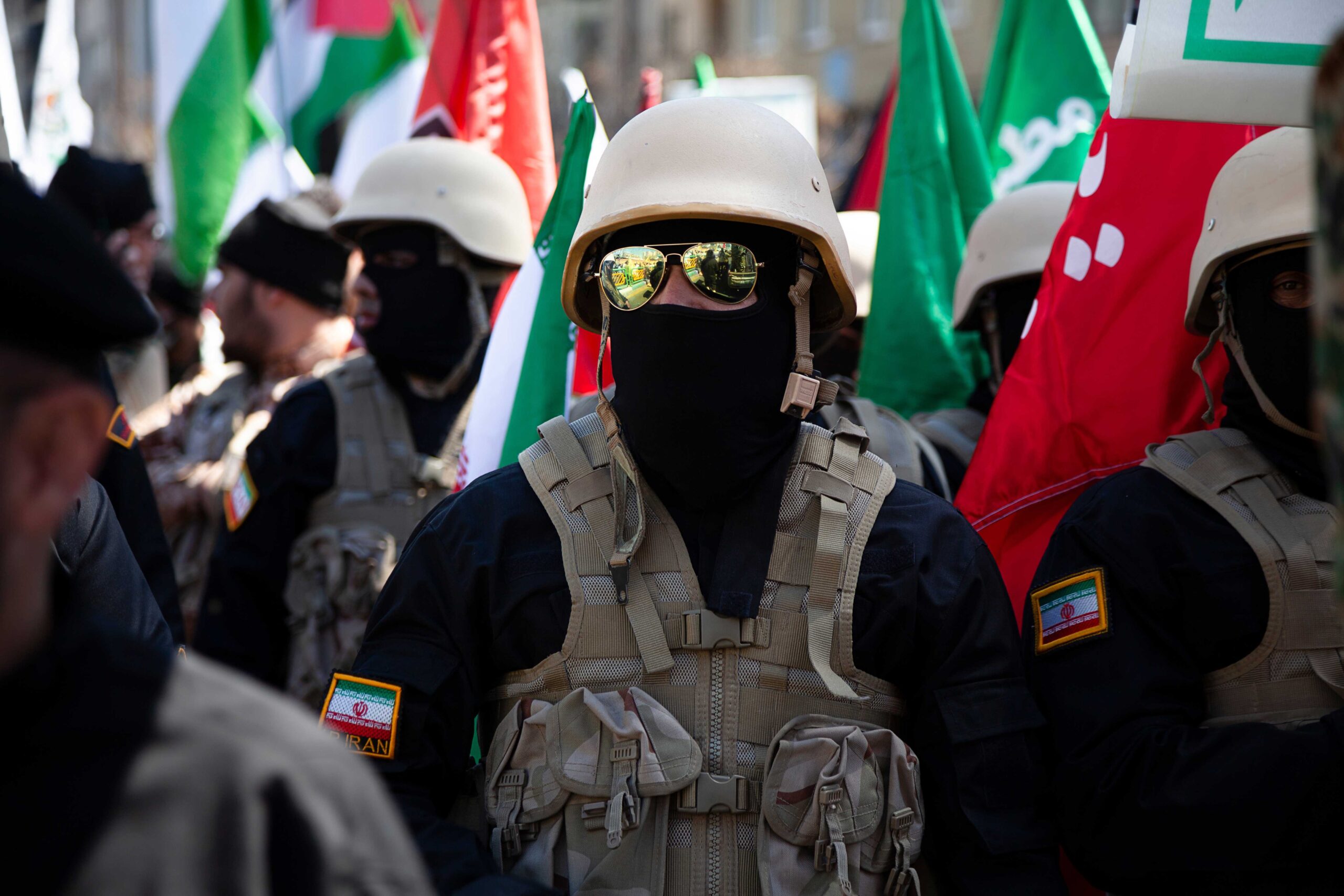
The error in U.S. and Israeli strategy[vi] lay in the assumption that the joint bombing campaigns, and in particular the assassination of senior leadership, would degrade the Islamic Republic enough for Iranian officials to submit to American and Israeli demands, or for the Iranian people to overthrow the regime. 38 days later, the results are effectively the opposite. The elimination of veteran leadership not averse to showing restraint or compromising, such as Ayatollah Ali Khamenei and Ali Larijani[vii], has paved the way for less experienced, harder-line[viii] figures with closer ties to the Islamic Revolutionary Guard Corps (IRGC) to take power, including Ayatollah Mojtaba Khamenei himself.[ix] Observing succession within the Iranian regime reveals that the apple has only fallen further from the tree. Mojtaba Khamenei, who is wounded, resentful, and committed to resistance[x], is a mirror image of the Islamic Republic that he leads.
The elimination of the “moderates”
A fundamental reason why hard-liners have been elevated in the Iranian government is due to Israel targeting potential negotiators within the regime. This is something President Trump himself seems to be cognizant of. When asked by American media who the point of contact in Iran was, President Trump said[xi], “Maybe I shouldn’t say who we are talking to because they might get killed.” If the U.S. president is not the person ordering all of these attacks during joint U.S.-Israeli operations, only one other actor could be responsible.
The assassination of Kamal Kharrazi, Iran’s former foreign minister, who was overseeing negotiations[xii] between Iranian officials and U.S. Vice President JD Vance through Pakistan, gives credible reasons to believe that Israel actively targeting diplomats until their conditions are met. In a press statement[xiii] the day after the two-week ceasefire was reached, Israeli Prime Minister Benjamin Netanyahu emphasized that Israel still has objectives to complete, and would achieve them “either through agreement or by resuming the fighting.”
Since the U.S. and Israel have different reasons[xiv] for prosecuting a war in Iran, it follows that they do not have the same conditions for peace. To conceptualize this further, it must be understood that this war is dictated by three main parties: the United States, Israel, and Iran. Regarding the U.S.-Israeli axis, while President Trump has finally[xv] found a temporary off-ramp to pause hostilities, the Israelis will not accept a long-term peace deal that does not satisfy their objectives. If the war ceases under current conditions, the Islamic Republic would remain intact with its complex political-theological system of governance in place and the weapons still in the hands of the IRGC. The Islamic Republic will live to fight another day, and Israel will be left planning the next operation against it. This would, ideally, not just “mow the lawn” once more, but finally decapitate “the octopus.”[xvi]
The reality of “regime change”
In some sense, President Trump is actually correct in his claim[xvii] that regime change has been achieved. The Islamic Republic has effectively gone from rule by Shiite clerics backed by a multi-faceted political system with checks and balances to rule by a Shiite military junta, where decisions concerning all aspects of Iranian politics and security will be dictated with the IRGC’s approval[xviii], for the foreseeable future. This new leadership will remain committed[xix] to supporting its regional proxies[xx] and will likely seek to deepen its security cooperation with Russia and China, as it did before[xxi] the war.
This could embolden the regime to take unforeseen measures to ensure the U.S. and Israel remain deterred from launching another attack, such as allowing the construction of Russian or Chinese naval bases in the Persian Gulf. A major lesson Iran will take away from this war is the realization and effectiveness of using its geography[xxii] to wage economic warfare on the entire world. If the regime survives this war past the two-week ceasefire, it will be weaker, but also more resentful, averse to diplomacy, and more eager to acquire a nuclear weapon[xxiii] and retrieve the thousands of ballistic missiles[xxiv] that remain in its underground arsenal.
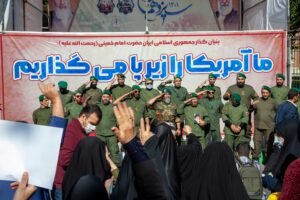
The survival of the Islamic Republic will undoubtedly be seen as a victory by the regime, thereby bolstering its legitimacy in a society that was[xxv] increasingly opposed[xxvi] to it. Regime hardliners will capitalize on the fact that Iran survived a month-long onslaught from the world’s top superpower and the region’s premier military power. The temporary ceasefire was enough to embolden the Iranian regime, as evidenced by its proposed ten-point peace plan[xxvii], described by some critics as nothing more than an IRGC wish list.[xxviii]
Any future attempts to mobilize against the regime will certainly be met with immediate violence on a greater scale than the protests of January 2026. Not already taking into account the fact that the bravest Iranians willing to stand against the regime were likely among the thousands slaughtered by security services three months ago. Since the war began, Iran’s supreme court has wasted no time executing[xxix] members of opposition groups. Regardless of the outcome of this conflict, the most dooming consequence for the Iranian people[xxx] is the unfortunate reality that their long-deserved struggle for democracy has only been set back further.
[i] Ravid, B. (2026). “Trump threatens ‘whole civilization will die tonight’ amid 11th hour Iran negotiations”, Axios, 7 April 2026, retrieved from: https://www.axios.com/2026/04/07/trump-threaten-iran-civilization-die.
[ii] Haltiwanger, J. (2026). “U.S. and Iran Agree to 2-Week Ceasefire”, Foreign Policy, 7 April 2026, retrieved from: https://foreignpolicy.com/2026/04/07/iran-accepts-ceasefire-trump-hormuz-10-point-plan/.
[iii] Paris, C., Feng, R. and Eaglesham, J. (2026). “What’s Happening in the Strait of Hormuz Since the Cease-Fire?”, The Wall Street Journal, 9 April 2026, retrieved from: https://www.wsj.com/world/middle-east/whats-happening-in-the-strait-of-hormuz-since-the-cease-fire-902f1ab0.
[iv] APT (2026). “Hegseth Says Iran’s New Regime Changed Calculus After US Military Pressure”, YouTube, 8 April 2026, retrieved from: https://www.youtube.com/watch?v=KyRvnN2vyZc&t=324s.
[v] Crowley, M. (2026). “New Deadline Looms for U.S. and Iran as Truce Wavers”, The New York Times, 8 April 2026, retrieved from: https://www.nytimes.com/2026/04/08/us/politics/iran-ceasefire-talks-jd-vance.html.
[vi] Swan, J. and Haberman, M. (2026). “How Trump Took the U.S. to War with Iran”, The New York Times, 7 April 2026, retrieved from: https://www.nytimes.com/2026/04/07/us/politics/trump-iran-war.html.
[vii] Slavin, B. (2021). “Larijani has credentials but not charisma as Iran’s presidential candidate”, Atlantic Council, 16 March 2021, retrieved from: https://www.atlanticcouncil.org/blogs/iransource/larijani-has-the-credentials-but-not-the-charisma-to-be-irans-president/.
[viii] Mamedov, E. (2026). “Israel’s assassination game: Take all pragmatists off the board”, Responsible Statecraft, 18 March 2026, retrieved from: https://responsiblestatecraft.org/larijani-killed-israel/.
[ix] Clawson, P. and Nadimi, F. (2026). “What Kind of Supreme Leader Would Mojtaba Khamenei Be?”, WINEP, 5 March 2026, retrieved from: https://www.washingtoninstitute.org/policy-analysis/what-kind-supreme-leader-would-mojtaba-khamenei-be.
[x] Oprea, S. (2026). “Resistance as Ideology: Why Iran’s Regime Will Remain In Power Despite the Ayatollah’s Death”, Manara Magazine, 6 March 2026, retrieved from: https://manaramagazine.org/2026/03/why-irans-regime-will-remain-in-power/.
[xi] The White House (2026). “President Trump Gaggles with Press Upon Departure in Palm Beach, FL”, YouTube, 23 March 2026, retrieved from: https://www.youtube.com/watch?v=P5j67zOA2hw&t=169s.
[xii] I24 News (2026). “Israel targeted senior official to disrupt diplomatic opening, Iranian sources claim”, 2 April 2026, retrieved from: https://www.i24news.tv/en/news/middle-east/artc-iranian-sources-claim-israel-targeted-senior-official-to-scuttle-diplomatic-opening.
[xiii] AP (2026). “Israel still has ‘more objectives’ to complete in Iran, Netanyahu says”, YouTube, 8 April 2026, retrieved from: https://www.youtube.com/watch?v=zVdEXN3QiKc.
[xiv] Banai, H. (2026). “America and Israel Have Different Endgames in Iran”, Foreign Affairs, 8 April 2026, retrieved from: https://www.foreignaffairs.com/iran/america-and-israel-have-different-endgames-iran.
[xv] Linskey, A., War, A. and Leary, A. (2026). “Trump Tells Aides He Wants Speedy End to Iran War”, The Wall Street Journal, 26 March 2026, retrieved from: https://www.wsj.com/politics/elections/trump-tells-aides-he-wants-speedy-end-to-iran-war-eb9f2b4b.
[xvi] Gross, A.P. (2026). “Don’t You Recognize the Head of an Octopus?”, The Times of Israel, 15 March 2026, retrieved from: https://blogs.timesofisrael.com/dont-you-recognize-the-head-of-an-octopus/.
[xvii] Nierenberg, A. (2026). “Trump Claims ‘Regime Change’ in Iran Is Already Complete”, the New York Times, 30 March 2026, retrieved from: https://www.nytimes.com/2026/03/30/world/middleeast/trump-regime-change-iran.html.
[xviii] Stein, A. (2026). “Mojtaba Khamenei alive, but IRGC currently running Iran, sources tell ‘Post’”, The Jerusalem Post, 21 March 2026, retrieved from: https://www.jpost.com/israel-news/article-890716.
[xix] Fassihi, F. (2026). “Disagreement over Lebanon’s inclusion in the ceasefire to unravel it”, The New York Times, 8 April 2026, retrieved from: https://www.nytimes.com/live/2026/04/08/world/iran-war-trump-news#us-iran-israel-lebanon-cease-fire.
[xx] Badawi, T. (2026). “Iraq’s Pro-Iran Groups Aren’t Going Anywhere”, Foreign Policy, 8 April 2026, retrieved from: https://foreignpolicy.com/2026/04/08/iraq-iran-militias-war-pmf-shiite-groups-us-israel/.
[xxi] Oprea (2026). “Resistance as Ideology: Why Iran’s Regime Will Remain In Power Despite the Ayatollah’s Death”.
[xxii] Handjani, A. (2026). “The War Will End With a Hormuz Toll Booth”, Foreign Policy, 7 April 2026, retrieved from: https://foreignpolicy.com/2026/04/07/iran-war-hormuz-toll-booth-peace/.
[xxiii] Brewer, E. (2026). “Preventing an Iranian Bomb Is Only Getting Harder”, Foreign Policy, 7 April 2026, retrieved from: https://foreignpolicy.com/2026/04/07/iran-bomb-nuclear-trump-war-ayatollah-khamenei/.
[xxiv] Gordon, M.R. et al. (2026). “Iran Has Thousands of Missiles and Could Retrieve Launchers, U.S. Intelligence Finds”, The Wall Street Journal, 10 April 2026, retrieved from: https://www.wsj.com/world/middle-east/iran-has-thousands-of-missiles-and-could-retrieve-launchers-u-s-intelligence-finds-eaa230ec.
[xxv] Motevalli, G. (2026). “Iranians reel from U.S.-Israeli attacks on civilian infrastructure”, The Japan Times¸3 April 2026, retrieved from: https://www.japantimes.co.jp/news/2026/04/03/world/iran-civilian-infrastructure-stirkes/.
[xxvi] Gamaan (2025). “Analytical Report on ‘Iranians’ Political Preferences in 2024”, 20 August 2025, retrieved from: https://gamaan.org/2025/08/20/analytical-report-on-iranians-political-preferences-in-2024/.
[xxvii] Solomon, E. (2026). “Iran Releases 10 Points It Says Are Basis for Cease-Fire Talks”, The New York Times, 8 April 2026, retrieved from: https://www.nytimes.com/2026/04/08/world/middleeast/iran-10-point-proposal-trump-us-ceasefire.html.
[xxviii] Stewart, P. (2026). “Iran Just Took Control of the Strait of Hormuz”, YouTube, 8 April 2026, retrieved from: https://www.youtube.com/watch?v=Cu4RLWCJByc.
[xxix] Al Jazeera (2026). “Iran executes two convicted members of banned opposition group”, 4 April 2026, retrieved from: https://www.aljazeera.com/news/2026/4/4/iran-executes-suspected-members-of-dissident-group-amid-us-israel-war.
[xxx] Mahoozi, S. et al. (2026). “After Cease-Fire, Iranians Are Left to Pick Up the Pieces”, 8 April 2026, retrieved from: https://www.nytimes.com/2026/04/08/world/middleeast/iran-ceasefire-voices.html.