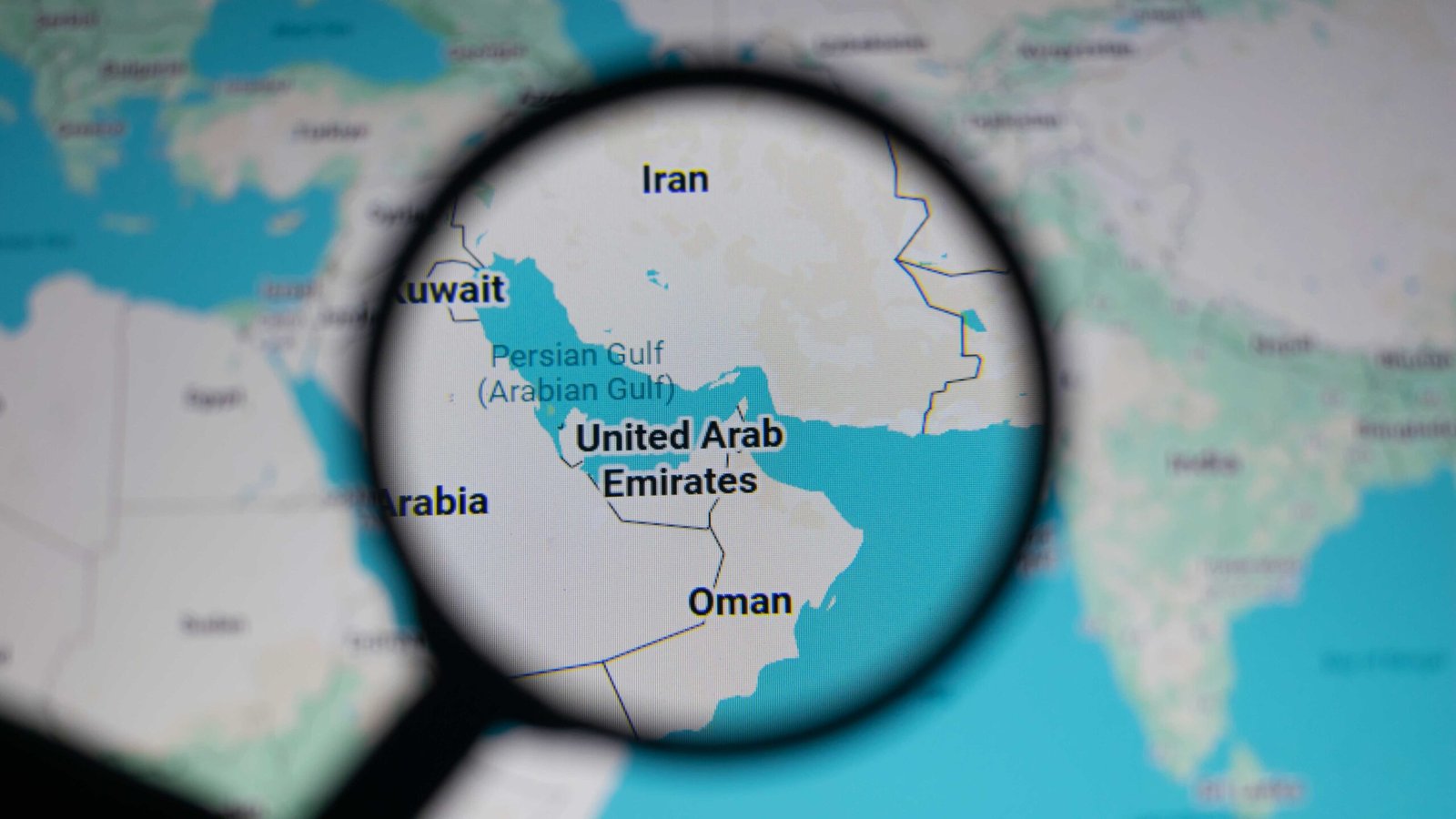
For decades, relations between Iran and the United Arab Emirates were defined by a combination of political tension and economic interdependence. Despite disputes about territory and regional influence, the two countries maintained extensive commercial ties. Growing up in Shiraz, this author often passed the Nari Garden, a site believed by many locals to belong to Mohammed bin Rashid Al Maktoum, the prime minister of the UAE and the ruler of Dubai.
Today, however, relations between the UAE and Iran have become significantly strained. This is not only the result of the ongoing war in the Middle East. This raises an important question: what factors pushed the UAE toward a more cautious and increasingly confrontational posture toward Iran?
Recent developments and the history of UAE-Iran relations
During the recent escalation involving Iran and multiple Gulf states hosting American military facilities, the UAE appeared to face particularly direct pressure.[i] This may suggest that Tehran views the UAE as a strategically significant rival, rather than simply a neighbouring economic partner. The UAE has been the most targeted Gulf country in the war with around 2,000 Iranian drones and nearly 500 ballistic missiles[ii] directed at it, making up around 55% of the total projectiles launched by Iran across the Gulf.
At the same time, the UAE tightened restrictions on Iranian financial activity by freezing assets and limiting foreign currency exchange, reducing the Islamic Republic’s ability to bypass international sanctions and maintain access to global markets. The broader regional instability created several economic concerns for the UAE, whose economy is expected to be in recession until the new year.
Since the early years of its founding, the UAE has been engaged in a sovereignty dispute with Iran over three Gulf islands; nevertheless, this did not prevent the development of economic relations between the two countries.[iii] During the 1980s and 1990s, Iranian merchants, investors, and business networks played an important role in Dubai’s economic expansion. This was partly the result of restrictions on commercial opportunities in Iran after the Islamic Revolution. Dubai’s geographic proximity and open markets made it a natural destination for Iranian capital.[iv]
This economic relationship continued into the 2000s. In 2008, Mohammed bin Rashid Al Maktoum visited Iran[v] and expressed support for reducing tensions and easing sanctions.[vi] Even after the attack on the Saudi Arabian embassy in Tehran in 2016, when Saudi Arabia, Qatar and Bahrain downgraded relations with Iran, the UAE initially maintained a relatively balanced approach. However, this became increasingly difficult to sustain. From Iran’s perspective, the growing Israeli presence in the Gulf following the Abraham Accords represented a significant geopolitical challenge. This was especially pressing in the UAE, so deeply connected to Iranian trade, tourism, and migration networks.
Emirati policymakers therefore faced a complex dilemma: balancing security cooperation with Israel and the U.S. while also preserving economically valuable ties with Iran.
Early days of strategic divergence
The war in Yemen marked an important turning point in relations between Iran and several Gulf states, including the UAE. Saudi Arabia led a military coalition supporting the internationally recognized Yemeni government, while Iran backed the Houthi movement, or Ansar Allah.[vii]
Although the conflict initially appeared distant from the UAE’s domestic security environment, it exposed the growing regional competition between Iran and the Gulf monarchies.[viii] At the same time, the Abraham Accords intensified Iran’s concerns regarding the regional balance of power. The normalization of relations between Israel and Arab states, and increasing Israeli strategic access to the Gulf region represented a major shift in the regional security environment.
The turning point
On 17 January 2022, the Houthis in Yemen carried out a drone and missile attack on the UAE, targeting oil facilities and infrastructure in Abu Dhabi.[ix] The attack represented a major shift in Emirati threat perceptions, transforming long-standing mistrust but a practical relationship into a more confrontational one. This was one of the first times the UAE experienced such a direct attack on its territory. The attack also reinforced Emirati concerns about Iran-aligned actors operating across the region.
The UAE’s recent decision to leave OPEC, together with efforts to strengthen its military infrastructure and defence capabilities, reveal deeper concerns about its security and independence in the long term.
An incomplete picture
However, analysing the UAE’s changing attitude towards Iran solely through the lens of Iranian attacks produces an incomplete picture. Wider regional dynamics are also shaping Emirati policy.
Saudi Arabia remains the largest and most influential power on the Arabian Peninsula. Although the UAE and Saudi Arabia remain close partners, tensions have emerged over regional strategy, energy policy, and Yemen. Saudi Arabia has supported the Yemeni government while the UAE has backed the Southern Transitional Council (STC). This strategic divergence led to situations in which Saudi-led airstrikes took place in areas where UAE-backed forces were present.[x]
The UAE’s efforts to pursue a more independent foreign policy have brought it into competition not only with Iran, but also Saudi Arabia. In this sense, the UAE faces pressure from two larger regional powers simultaneously.
As a result, the UAE appears to be pursuing a balancing strategy: strengthening its security partnerships while avoiding a complete breakdown in relations with its existing partners.
Conclusion
The UAE’s changing relationship with Iran cannot be explained only by ideology or by recent military tensions. For decades, the two countries maintained a pragmatic relationship built on economic interdependence. However, regional conflicts – particularly the Houthi attack on Abu Dhabi in 2022 – gradually transformed threat perceptions. These events demonstrated that regional instability could directly threaten the UAE’s economic infrastructure and long-term strategic ambitions.
At the same time, tensions with Saudi Arabia over regional leadership and strategic priorities encouraged the UAE to seek greater strategic independence. Consequently, the UAE’s approach toward Iran reflects not only opposition to Tehran, but also a broader effort to balance between competing regional pressures while preserving its economic model and strategic autonomy.
[i] Dr Alexander, K.P. (N.D.) “Iran’s Campaign of Coercion and Signaling: Why the UAE Is the Primary Target”, Gulf International Forum, retrieved from: https://gulfif.org/irans-campaign-of-coercion-and-signaling-why-the-uae-is-the-primary-target/.
[ii] Ynet Global (2026). “Report: Iran has launched over 2,000 drones and 500 missiles at its neighbor”, 10 March 2026, retrieved from: https://www.ynetnews.com/article/6khf67mpa.
[iii] Al Nahyan, K.S.Z. (2013). “The Three Islands: Mapping the UAE-Iran Dispute”, RUSI, 3 December 2013, retrieved from: https://www.rusi.org/explore-our-research/publications/rusi-books/the-three-islands-mapping-the-uae-iran-dispute.
[iv] Sinaiee, M. (2026). “Iran-UAE breakdown leaves Iranian expats in limbo”, Iran International, 9 May 2026, retrieved from: https://www.iranintl.com/en/202605084069.
[v]Emirates 24-7 (2008). “Sheikh Mohammed to visit Iran and Syria”, 16 February 2008, retrieved from: https://www.emirates247.com/eb247/news/sheikh-mohammed-to-visit-iran-and-syria-2008-02-17-1.215813.
[vi] BBC News (2014). “End Iran sanctions, Dubai ruler Sheikh Mohammed tells BBC”, 13 January 2014, retrieved from: https://www.bbc.co.uk/news/av/world-middle-east-25708538.
[vii] Center for Preventive Action (2026). “Conflict in Yemen and the Red Sea”, Council on Foreign Relations, 14 April 2026, retrieved from: https://www.cfr.org/global-conflict-tracker/conflict/war-yemen.
[viii] Vakil, Dr. S. and Quilliam, Dr. N. (2023). “The Abraham Accords and Israel-UAE normalization”, Chatham House, 28 March 2023, retrieved from: https://www.chathamhouse.org/2023/03/abraham-accords-and-israel-uae-normalization.
[ix] U.S. Department of State (N.D.) “Country Reports on Terrorism 2022: United Arab Emirates”, retrieved from: https://www.state.gov/reports/country-reports-on-terrorism-2022/uae.
[x] Gritten, D. (2025). “UAE says it will withdraw from Yemen after Saudi strike on separatist-held port”, BBC News, 30 December 2025, retrieved from: https://www.bbc.co.uk/news/articles/c8xdxz48l7yo.