Against the backdrop of the United States and Iran entering into a Memorandum of Understanding (MOU)[i] – interpreted as Tehran’s capitulation in Washington – the ongoing Israel-Hezbollah war in Lebanon has taken centre stage.
Tehran is insisting that all fronts[ii] of the war be halted in order for negotiations to proceed on the Strait of Hormuz, sanctions relief, and their nuclear programme. This includes Lebanon. Hezbollah, the Islamic Republic’s top ally, has seen major losses during combat against Israel since 2024, putting the group near collapse.
During the Pakistani-mediated negotiations[iii] between Iran and the U.S., Tehran has tied Lebanon’s status to any permanent peace deal. This has caused a major divergence in strategy between the U.S. and Israel. Lebanon has become central to Iran’s wartime deterrence strategy[iv] against Israel, and by tying a conflict in which the United States is not involved to the MOU, Tehran looks to exploit friction between the two allies and, at the same time, retain influence in the Levant.
Memorandum of Understanding and the Lebanon equation
After months of failing to extract the buried enriched uranium[v], overthrow the regime, and completely incapacitate Iran’s ballistic missile program, the United States entered diplomatic talks mediated by Pakistan. A Memorandum of Understanding is currently in place for negotiations to end the war, along with sanctions waivers[vi] on Iranian oil and financial reconstruction.
Central to these negotiations is Iran’s insistence that the status[vii] of Lebanon be resolved before it makes concessions on demilitarizing the Strait of Hormuz or releasing the highly enriched uranium stockpile. Hezbollah in Lebanon is one of the last remaining proxy groups in Iran’s weakened ‘Axis of Resistance’, which Tehran has invested billions in – including weapons, direct funding, as well as training and political support.
Against the backdrop of the 2024 Israel-Lebanon ceasefire[viii], the Israeli Defence Forces (IDF) kept a contingent of troops in Lebanon to negate Hezbollah’s freedom of movement south of the Litani River. Although low-level violations interrupted the ceasefire[ix], they did not result in a return to large-scale fighting. The 2026 Iran war ultimately changed this status quo.
2026 Israel-Hezbollah war
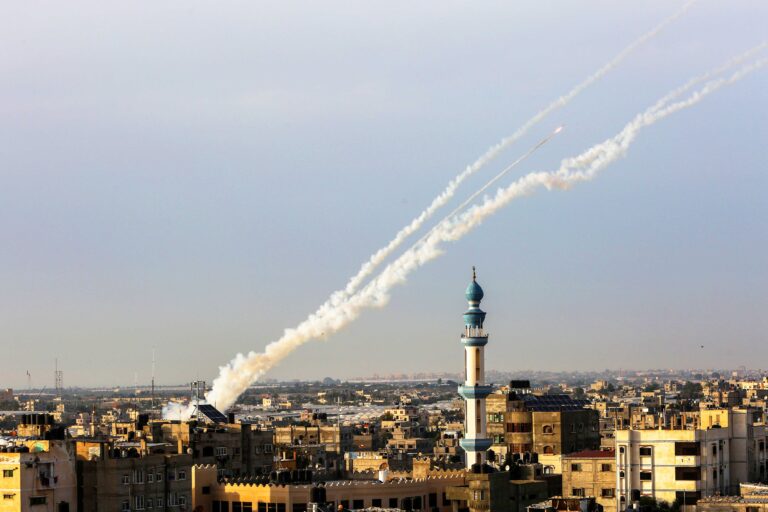
On 2nd March, Hezbollah fired several projectiles[x] at northern Israel, which escalated the security situation. The launches took place only several days after the Iran war began. Despite claiming their actions were separate from the Iran war, Hezbollah has served as a major shield for the Iranian regime[xi] and is capable of diverting substantial Israeli resources away from the Gulf theatre.
After several months of fighting, the IDF inflicted heavy casualties upon Hezbollah, which has struggled to retain its pre-2023 capabilities. Still, Hezbollah thrives in the guerrilla and asymmetrical warfare environment and dealt a blow to the IDF through their expanding fibre-optic, first-person view (FPV) drone capabilities.[xii]
The IDF has also been suffering from personnel shortages[xiii], echoing historical examples of prolonged deployments[xiv] in Lebanon. For example, during the occupation of Southern Lebanon, the IDF relied on its proxy force, the South Lebanon Army to cover manpower restraints. However, the SLA was unprofessional and tortured dissidents[xv] in Southern Lebanon, which led to greater resentment of Israel. Nearly two decades in southern Lebanon led to the rise of Hezbollah[xvi], the hasty withdrawal[xvii] of the IDF and its proxy fighting force, the South Lebanon Army (SLA)[xviii], and Iranian influence proliferating in Lebanese affairs.
The war has once again dangerously divided Lebanon[xix] along sectarian lines. Most Lebanese outside of Hezbollah’s Shiite base want the group to be disarmed[xx], but the Lebanese army is nowhere near capable or up to the task of reining in the group independently. Furthermore, due to the displacement of Shiites from southern Lebanon, the government’s finances are under constraints until a permanent settlement can be reached.
Why Lebanon is crucial for Iran’s strategy
Lebanon is not only crucial for Iranian force projection in the Middle East, but also its containment and deterrence strategy against Israel. Hezbollah’s actions give the Iranian government breathing room while simultaneously driving a wedge between the Israeli and American governments.
Iran’s strategy operates on several levels. First, tying Hezbollah to the MOU plays into Tehran’s central strategy[xxi] of forcing more concessions out of the U.S. government. Because roughly one-third of the world’s energy and fertilizer shipments pass the Strait of Hormuz[xxii], the Iranian Revolutionary Guard Corps (IRGC) now holds the lever to spark a potential global recession.
2026 is a midterm year in U.S. politics, and energy prices have historically[xxiii] played a key role in shaping American governance from the 1973 Arab oil embargo, the Gulf War, to the Russian invasion of Ukraine. Donald Trump, already one of the most unpopular presidents in American history[xxiv], seeks to keep prices under control to avoid harming the Republican Party.
The United States has already drained copious quantities of its Strategic Petroleum Reserve (SPR)[xxv] in order to keep energy prices from skyrocketing. Any American return to war would lead to another closure of the Strait of Hormuz, causing energy prices to increase.
With Israeli elections approaching later in the autumn, Netanyahu is under pressure[xxvi] to enact a decisive change in the north. Simultaneously, he is under pressure by the Trump administration to support ending the war.
Divergence of American and Israeli war aims
During the implementation of the MOU, Lebanon was explicitly mentioned[xxvii] as part of ending the 2026 Iran war. A lasting ceasefire in Lebanon is a red line that Tehran has said it will not abandon. With the U.S. in a precarious position, the Trump administration is leaning[xxviii] towards acquiescing to linking the Israeli-Hezbollah war to the MOU.
The Israeli government reacted with disdain[xxix] over the Iran war ending without achieving either Israel or America’s previously stated war aims in full. While supporting Israel’s right to respond to Hezbollah’s rocket attacks, the Trump administration has been ambiguous regarding the position of IDF troops in Lebanon, which could ultimately jeopardize the MOU with Iran.
Israel could find itself as the biggest loser of all the parties involved. Despite having a more favourable, American-mediated framework[xxx] signed on 26th June, any future IDF offensive in Lebanon or Iran would need to pass by U.S. approval.[xxxi] At the same time, questions remain[xxxii] about the ability of the Lebanese Security Forces (LSF) to disarm Hezbollah and their willingness to do so.
Even after years of attrition[xxxiii], Hezbollah remains one of the most powerful non-state actors in the region, possessing capabilities that surpass those of the Lebanese army[xxxiv] and capable of frustrating any post-war settlement. Hezbollah’s defiance towards Beirut could raise the possibility of internal armed clashes erupting, similar to what Lebanon experienced in 2008[xxxv] and 2021.[xxxvi]
Alongside the American-backed framework[xxxvii], facilitated by Secretary of State Marco Rubio, the U.S. will allocate funds[xxxviii] to vet and prepare LSF units, who could take over the security zone that was once held by Hezbollah. However, Hezbollah’s doctrine is based on armed resistance[xxxix], particularly against Israel, which could set the stage for direct clashes with the LSF.
Strategic implications
The Iranian regime’s linkage of the issue of Lebanon to the Strait of Hormuz is meant to deteriorate relations between the U.S. and Israeli governments, as general support for a wider regional conflict has diverged in the two countries.
The Iran war is the most unpopular[xl] in U.S. history, with only one-third of Americans supporting military action, whereas the war was seen as mostly favourable in Israel[xli]. The situation in southern Lebanon and northern Israel has politically drained the Israeli government. Due to frequent Hezbollah rocket fire, over 100,000 Israeli civilians have been displaced[xlii], and northern municipalities have criticized Netanyahu’s coalition[xliii] for the security situation.
Furthermore, Israel’s security is being directly tied[xliv] to Trump’s foreign policy, thereby placing the Israeli government in a state of vassalage[xlv], which diminishes the credibility that Netanyahu’s fragile coalition has over the country. Divergence in strategies[xlvi] came to the fore when Trump openly criticized[xlvii] Netanyahu’s war methods in Lebanon, implying indiscriminate bombings and collective punishment against the Lebanese population.
As noted above, the IDF has suffered significant casualties[xlviii] in Lebanon due to FPV drone warfare[xlix] and with restrictions imposed by the Trump administration. Iran could exploit friction by directing Hezbollah attacks against Israeli troops, as Washington’s main concern is the unrestricted flow[l] of maritime shipping in the Strait of Hormuz. The Lebanon-Israel framework, facilitated by Rubio[li], looks to negate Iranian influence in Lebanon, but it remains to be seen if the peace deal can hold.
Lebanon, once a flashpoint of the Cold War[lii] with regional implications, is once again a centrepiece that could determine either an end to or a renewal of the 2026 Iran war. With the Lebanese and Israeli governments looking to mend relations, Iran – through Hezbollah – seeks to exert and retain greater influence in the Levant while simultaneously attempting to drive a wedge in American-Israeli relations. Until that question is resolved, Lebanon is likely to remain both the principal bargaining chip in Iran’s diplomacy and the region’s most volatile flashpoint.
[i] Gibson Dunn (2026). “The U.S.-Iran Memorandum of Understanding: Prospective Sanctions Relief, Commercial Opportunities, and Legal Risks”, 26 June 2026, retrieved from: https://www.gibsondunn.com/us-iran-memorandum-of-understanding-prospective-sanctions-relief-commercial-opportunities-and-legal-risks/.
[ii] Breuninger, K. (2026). “Iran stops negotiations with U.S., vows to ‘completely’ block Strait of Hormuz”, CNBC, 1 June 2026, retrieved from: https://www.cnbc.com/2026/06/01/iran-us-negotiations-strait-of-hormuz.html.
[iii] Ahmed, M. et al. (2026). “Mediators worked through threats and strikes to broker the US-Iran deal, and challenges remain”, AP, 26 June 2026, retrieved from: https://apnews.com/article/us-iran-war-mediation-peace-deal-pakistan-qatar-33e3fd72a890ff28e1b8401b51a25aa3.
[iv] Carnegie Endowment (2026). “Iran Rewrites Its War Strategy”, retrieved from: https://carnegieendowment.org/middle-east/diwan/2026/03/iran-rewrites-its-war-strategy/.
[v] Diaz-Maurin, F. (2026). “Analysis: Iran likely transferred highly enriched uranium to Isfahan before the June strikes”, 29 March 2026, retrieved from: https://thebulletin.org/2026/03/analysis-iran-likely-transferred-highly-enriched-uranium-to-isfahan-before-the-june-strikes/.
[vi] Bao, A. (2026). “U.S. issues sweeping Iran oil sanctions waivers, unlocking billions in revenue for Tehran”, CNBC, 23 June 2026, retrieved from: https://www.cnbc.com/2026/06/23/us-iran-oil-sanction-relief-strait-of-hormuz-peace-deal-.html.
[vii] Gambrell, J., Metz, S. and Magdy, S. (2026). “Iran says the initial deal to end the war with the US requires Israel to withdraw from Lebanon”, AP, 17 June 2026, retrieved from: https://apnews.com/article/iran-us-war-israel-lebanon-oil-june-16-2026-d79458506c46e3f4a78aef0f9d8b9250.
[viii] International Crisis Group (2025). “Reinforcing the Shaky Israel-Lebanon Ceasefire”, 15 July 2025, retrieved from: https://www.crisisgroup.org/cmt/middle-east-north-africa/east-mediterranean-mena/lebanon-israelpalestine-united-states/reinforcing-shaky-israel-lebanon-ceasefire.
[ix] Ibid.
[x] MTV (2026). “Hezbollah Claims Responsibility for Missile Strike on Israel”, 2 March 2026, retrieved from: https://www.mtv.com.lb/en/news/%D9%85%D8%AD%D9%84%D9%8A%D8%A7%D8%AA/1658083/hezbollah-claims-responsibility-for-missile-strike-on-israel.
[xi] Middle East Council on Global Affairs (2025). “Hezbollah’s Defeat and Iran’s Strategic Depth Doctrine”, 13 April 2025, retrieved from: https://mecouncil.org/publication/hezbollahs-defeat-and-irans-strategic-depth-doctrine/.
[xii] Pryhodko, R. (2026). “Understimated Threat: How Hezbollah Drones Are Inflicting Casualties on Israeli Army”, Militarnyi, 22 June 2026, retrieved from: https://militarnyi.com/en/articles/underestimated-threat-hezbollah-drones/.
[xiii] Fabian, E. (2026). “IDF warns of severe personnel shortages, last window to solve crisis with legislation”, The Times of Israel, 17 May 2026, retrieved from: https://www.timesofisrael.com/idf-warns-of-major-personnel-shortages-last-window-to-solve-crisis-with-legislation/.
[xiv] Mednick, S. (2025). “Israel’s longest war is leaving a trail of traumatized soldiers, with suicides also on the rise”, AP, 12 November 2025, retrieved from: https://apnews.com/article/israel-soldiers-mental-health-suicide-gaza-war-d4f3b7a26c9ce0bce861c090afb101ea.
[xv] Luft, G. (2000). “Israel’s Security Zone in Lebanon – A Tragedy?”, Middle East Forum, 7(4), retrieved from: https://www.meforum.org/middle-east-quarterly/israels-security-zone-in-lebanon-a-tragedy.
[xvi] Mahmoudian, A. (2024). “How Hezbollah Grew Over Fourd Decades, Profiting From Chaos”, Stimson, 15 July 2024, retrieved from: https://www.stimson.org/2024/how-hezbollah-grew-over-four-decades-profiting-from-chaos/.
[xvii] Goldenberg, S. (2000). “Chaos and humiliation as Israel pulls out of Lebanon”, The Guardian, 24 May 2000, retrieved from: https://www.theguardian.com/world/2000/may/24/israelandthepalestinians.lebanon.
[xviii] Hoyle, C. (2020). “South Lebanon Army: Return of war-time ‘collaborator’ shines spotlight on brutal legacy of Israel’s militia”, The New Arab, 12 February 2020, retrieved from: https://www.newarab.com/analysis/rise-and-fall-south-lebanon-army.
[xix] RFI (2026). “Lebanon war reopens old divisions as fears grow for country’s unity”, 4 June 2026, retrieved from: https://www.rfi.fr/en/international/20260604-lebanon-war-reopens-old-divisions-as-fears-grow-for-country-s-unity.
[xx] Loschky, J. (2025). “Most Lebanese Say Only Army Should Have Weapons”, Gallup, 4 December 2025, retrieved from: https://news.gallup.com/poll/699071/lebanese-say-army-weapons.aspx.
[xxi] Slim, R. (2026). “The US-Iran MOU: Regional Realignments and Lebanon’s Precarious Position”, Stimson, 16 June 2026, retrieved from: https://www.stimson.org/2026/the-us-iran-mou-regional-realignments-and-lebanons-precarious-position/.
[xxii] Atlas Institute (2026). “The War Against Time in the Middle East”, retrieved from: https://atlasinstitute.org/the-war-against-time-in-the-middle-east/.
[xxiii] EENews (N.D.) “How Rising Energy Prices Fueled Democratic Victories”, retrieved from: https://www.eenews.net/articles/how-rising-energy-prices-fueled-democratic-victories/.
[xxiv] Koplowitz, H. (2026). “Trump just became the most unpopular president in poll’s history as term hits 500 days”, AL.com, 4 June 2026, retrieved from: https://www.al.com/politics/2026/06/trump-just-became-the-most-unpopular-president-in-polls-history-as-term-hits-500-days.html.
[xxv] EnergyNow (2026). “Oil Stocks in US Strategic Petroleum Reserve Fall by 5.5. Million to Lowest Level Since 1983”, 30 June 2026, retrieved from: https://energynow.com/2026/06/oil-stocks-in-us-strategic-petroleum-reserve-fall-by-5-5-million-to-lowest-level-since-1983/.
[xxvi] The Straits Times (2026). “Facing uproar, Netanyahu announces ‘mega-plan’ for Israel’s battered north”, 3 June 2026, retrieved from: https://www.straitstimes.com/world/middle-east/facing-uproar-netanyahu-announces-mega-plan-for-israels-battered-north.
[xxvii] The Straits Times (2026). “Iran foreign minister says ending war including in Lebanon ‘most important issue’ in US deal”, 16 June 2026, retrieved from: https://www.straitstimes.com/world/middle-east/iran-foreign-minister-says-ending-war-including-in-lebanon-most-important-issue-in-us-deal.
[xxviii] Gedeon, J. (2026). “US-Iran deal takeaways: reopening the strait of Hormuz, waived oil sanctions and Lebanon”, The Guardian, 17 June 2026, retrieved from: https://www.theguardian.com/world/2026/jun/17/us-iran-deal-trump.
[xxix] Frankel, J. (2026). “Israelis angry over U.S.-Iran peace deal lash out at Netanyahu”, PBS News, 15 June 2026, retrieved from: https://www.pbs.org/newshour/world/israelis-argry-over-u-s-iran-peace-deal-lash-out-at-netanyahu.
[xxx] The Times of Israel (2026). “Full text of Israel-Lebanon ‘ framework’ deal that includes minor IDF pullback”, The Times of Israel”, 27 June 2026, retrieved from: https://www.timesofisrael.com/full-text-of-israel-lebanon-framework-deal-that-includes-slight-idf-pullback/.
[xxxi] MacArthur Bosack, M. (2026). “The U.S.-Israel-Lebanon Framework Agreement, explained”, Parley Policy Institute, 29 June 2026, retrieved from: https://www.parleypolicy.com/post/the-us-israel-lebanon-framework-agreement-explained.
[xxxii] Ward, E. (2026). “Inside Lebanon’s Fraught Push to Disarm Hezbollah”, The New Yorker, 29 May 2026, retrieved from: https://www.newyorker.com/news/the-lede/inside-lebanons-fraught-push-to-disarm-hezbollah.
[xxxiii] King, A. (2026). “Hollowing Out Lebanon: How Pressure on Hezbollah Could Save It”, RUSI, 2 June 2026, retrieved from: https://www.rusi.org/explore-our-research/publications/commentary/hollowing-out-lebanon-how-pressure-hezbollah-could-save-it.
[xxxiv] Borens, A. (2026). “Weakening Hezbollah Requires Faster International Support to Lebanon”, ISW, 18 February 2026, retrieved from: https://understandingwar.org/research/middle-east/weakening-hezbollah-requires-faster-international-support-to-lebanon/.
[xxxv] Harris, A. (2008). “The Cedar Dissolution: Lebanon’s Civil Strife”, RUSI, 15 May 2008, retrieved from: https://www.rusi.org/explore-our-research/publications/commentary/cedar-dissolution-lebanons-civil-strife.
[xxxvi] Abi-Nassif, C. (2021). “Making sense of the Beirut clashes”, Middle East Institute, 15 October 2021, retrieved from: https://mei.edu/publication/making-sense-beirut-clashes/.
[xxxvii] Satloff, R. (2026). “14 Points on the 14 Points: Assessing the Israel-Lebanon Framework Agreement”, WINEP, 29 June 2026, retrieved from: https://www.washingtoninstitute.org/policy-analysis/14-points-14-points-assessing-israel-lebanon-framework-agreement.
[xxxviii] L’Orient Today (2026). “US Department of Defense ‘ready to provide more than $30 million’ to Lebanese Armed Forces”, 27 June 2026, retrieved from: https://today.lorientlejour.com/article/1539511/us-department-of-defense-ready-to-provide-more-than-30-million-to-lebanese-armed-forces.html.
[xxxix] Stone, M. (2018). “Hezbollah’s Just War Doctrine: Israel, Syria, and Legitimacy”, Beyond the Horizon, 4 February 2018, retrieved from: https://behorizon.org/what-changed-for-lebanese-hezbollah/.
[xl] Williams, D.C. (2026). “Iran war most unpopular conflict in U.S. history? How other wars rank”, North Jersey, 8 April 2026, retrieved from: https://eu.northjersey.com/story/news/2026/04/08/iran-war-least-supported-u-s-conflict-how-it-ranks-in-polls-today/89516124007/.
[xli] Hermann, T., Yohanani, L and Kaplan, Y. (2026). “A Majority of Jewish Israelis Believe that the Iran War Goals are Attainable; Majority of Arab Israelis Believe they are not”, The Israel Democracy Institute, 12 March 2026, retrieved from: https://en.idi.org.il/articles/63704.
[xlii] Vine, D. (3035). “Mass Displacement since October 7, 2023”, retrieved from: https://costsofwar.watson.brown.edu/sites/default/files/2025-10/Displacement-Middle-East-since-October-7-2023_Vine_Costs%20of%20War_Oct%207%2C%202025.pdf.
[xliii] The Times of Israel (2026). “Northern mayor slams Netanyahu’s ‘out of touch statements’ amid continued rocket fire”, 16 June 2026, retrieved from: https://www.timesofisrael.com/liveblog_entry/northern-mayor-slams-netanyahus-out-of-touch-statements-amid-continued-rocket-fire/.
[xliv] Frommer, F.J. (2026). “The U.S.-Israel Friendship Is Not New—Nor Are Spats Between Their Leaders”, The Dispatch, 30 June 2026, retrieved from: https://thedispatch.com/article/us-israel-relations-trump-kissinger-rabin/.
[xlv] Rasgon, A. (2026). “Netanyahu’s Critics Accuse Him of Heading a U.S. ‘Vassal State’, The New York Times, 2 June 2026, retrieved from: https://www.nytimes.com/2026/06/02/world/middleeast/netanyahu-criticism-beirut-attack-trump.html.
[xlvi] Panda, J. (2026). “One Alliance, Two Wars: Why Israel and America Diverge on Iran”, The Cairo Review of Global Affairs, 23 May 2026, retrieved from: https://www.thecairoreview.com/essays/why-israel-and-america-diverge-on-iran/.
[xlvii] Svirnovskiy, G. (2026). “Trump again slams Netanyahu’s campaign in Lebanon”, Politico, 17 June 2026, retrieved from: https://www.thecairoreview.com/essays/why-israel-and-america-diverge-on-iran/.
[xlviii] Military Watch Magazine (2026). “Israel Frontline Unit Suffers High Casualties From Hezbollah Drone Strike on Exposed Howitzer”, 1 May 2026, retrieved from: https://militarywatchmagazine.com/article/israeli-frontline-unit-casualties-hezbollah.
[xlix] Stracquadanio, A. (2026). “Frustrating Israel, fiber-optic killer drone technology has arrived in southern Lebanon”, DefenseNews, 23 June 2026, retrieved from: https://www.defensenews.com/global/mideast-africa/2026/06/23/frustrating-israel-fiber-optic-killer-drone-technology-has-arrived-in-southern-lebanon/.
[l] qCaptain (2026). “Iran Reasserts Its Right to Control Shipping in Strait of Hormuz After Ship Hit Near Oman”, 26 June 2026, retrieved from: https://gcaptain.com/iran-reasserts-its-right-to-control-shipping-in-strait-of-hormuz-after-ship-hit-near-oman/.
[li] Gohar, I. (2026). “Washington Policy Weekly: Israel and Lebanon Sign US-Brokered Framework Agreement”, Arab Center Washington DC, 30 June 2026, retrieved from: https://arabcenterdc.org/resource/washington-policy-weekly-israel-and-lebanon-sign-us-brokered-framework-agreement/.
[lii] McBride, J. (2023). “How Lebanon Almost Became the Flashpoint of a Nuclear War”, SOFREP, 3 November 2023, retrieved from: https://sofrep.com/news/how-lebanon-almost-became-the-flashpoint-of-a-nuclear-war/.