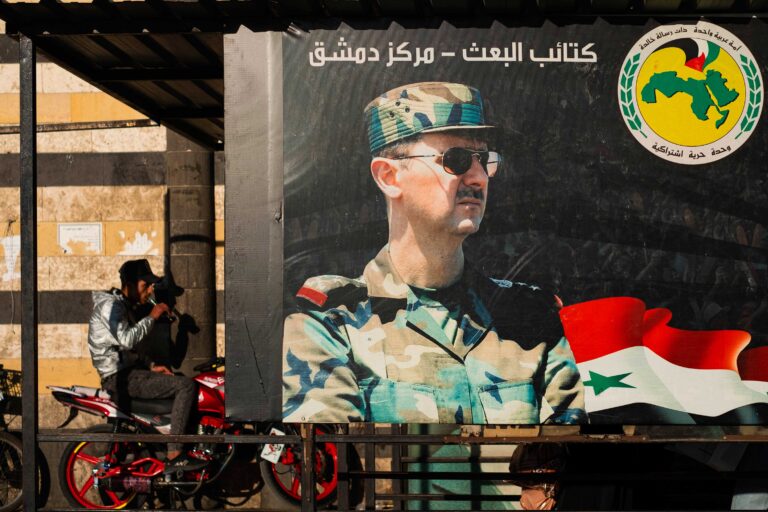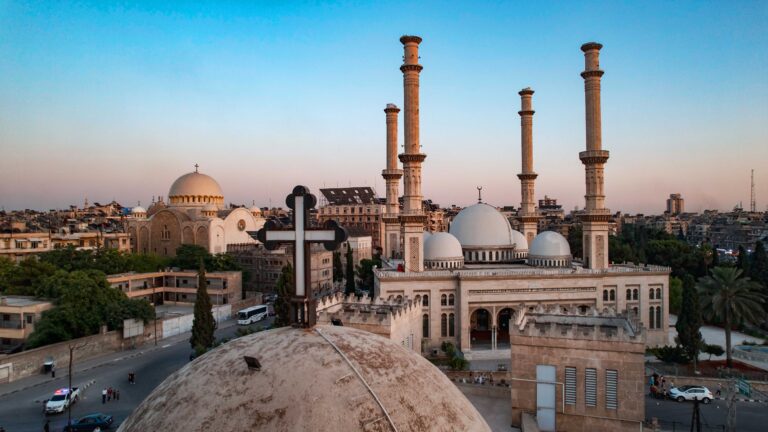
The collapse of the Assad regime in December 2024 did not end Syria’s political crisis. It changed its terms. The authority that replaced Bashar al-Assad now faces the same question that has haunted Syrian political life for multiple generations: on what basis does any government claim the right to rule, and how does it sustain that claim once the euphoria of liberation fades?
This is not a new question for those following post-conflict environments. What makes it worth asking again, with some urgency, is the specific combination of factors Syria presents – a degree of institutional destruction that exceeds most comparable cases, a governing movement whose ideological history generates genuine and reasonable anxiety among large parts of the population it now administers, and a regional environment actively hostile to the kind of slow, deliberate state-building that durable legitimacy requires.[i] None of these factors alone is unprecedented. Together, they constitute a particularly difficult version of a familiar problem.
The central risk facing Syria’s transition is the freezing of revolutionary legitimacy – a condition in which the authority derived from overthrowing the previous regime becomes a permanent, self-referential justification for rule, displacing rather than initiating the longer and harder work of building state legitimacy on constitutional, representative, and institutional foundations. This is not an abstract theoretical concern. It is, as the comparative record examined below suggests, precisely the dynamic that has derailed a number of post-revolutionary transitions that began with considerable popular energy and genuine political possibility.[ii]
On legitimacy
Weber’s tripartite typology – traditional, charismatic, and rational-legal authority – is a starting point, not a destination.[iii] It tells us that legitimacy takes different forms and rests on different foundations in different kinds of political orders. It does not, on its own, tell us very much about how one form of legitimacy converts into another, or what happens when a political movement that has acquired authority through one set of means attempts to govern through a different set entirely.
Long-term stability requires both effectiveness and legitimacy operating in some productive relationship with one another.
Political systems, Lipset observes, can be effective without being regarded as legitimate, and can command legitimacy without being particularly effective.[iv] The difficult truth is that long-term stability requires both operating in some productive relationship with one another and that most post-conflict systems inherit low levels of both simultaneously. There is no clean sequencing solution to this problem, which is one reason why transitional governance is so consistently harder in practice than it appears in theory.
David Beetham’s reformulation of legitimacy is one of the most analytically rigorous frameworks available for thinking about Syria’s specific situation. Beetham argues – against the Weberian tendency to reduce legitimacy to subjective belief – that power is genuinely legitimate only when it satisfies three distinct conditions simultaneously[v]: it must conform to established rules; those rules must be justifiable by reference to values actually shared within the political community; and there must be meaningful evidence of consent from those over whom power is exercised. What is striking about this framework when applied to Syria is that the new governing authority can plausibly claim to satisfy the first condition in a limited sense – there is now a Constitutional Declaration establishing at least a formal legal basis for its authority. Nevertheless, it faces serious questions on the second and third conditions. A governing movement with HTS’s ideological history and prior governance record in Idlib cannot straightforwardly claim that its rules rest on values shared across Syria’s highly diverse communities, and meaningful expressed consent – through elections or other inclusive processes – remains absent.
Fukuyama’s insistence that ‘stateness’ – prior institutional capacity – is a necessary precondition for any meaningful political development, including legitimate governance, sits uncomfortably with the sequentialist optimism that sometimes appears in transitional governance literature. You cannot build legitimacy on institutions that do not exist.[vi] And in Syria, the institutions that would normally mediate between governing authority and governed population – the judiciary, an independent civil service, and a professional security sector – have been either destroyed or corrupted beyond immediate repair. This is not a temporary administrative problem. It is a structural condition that shapes what kinds of legitimacy are even available to the new government in the short to medium term.
Linz and Stepan add a dimension that is sometimes underappreciated in the post-conflict literature: the importance of what they call ‘stateness’ as a prior condition for democratic consolidation. Their argument that effective transitions require the simultaneous construction of five interconnected arenas – civil society, political society, rule of law, state bureaucracy, and economic society[vii] — is analytically compelling, though their framework was developed primarily from the study of transitions from authoritarianism in contexts where state institutions, however distorted, remained largely intact. Syria’s institutional devastation takes the challenge significantly beyond this.
The comparative record
The scholarship on post-revolutionary transitions tends to oscillate between two equally unsatisfying tendencies: triumphalism about cases that appear to have succeeded, and a kind of resigned determinism about cases that have failed. Neither tendency is particularly useful for thinking about Syria. What the comparative record actually offers is a set of analytically varied illustrations of the conditions under which the conversion of revolutionary to state legitimacy succeeds or fails, and why.
Iran after 1979 is the case that most directly parallels Syria’s situation in terms of the governing movement’s ideological character, though such similarities should not be pushed too far. The revolutionary government successfully institutionalised its authority through constitutional engineering and the construction of parallel state structures[viii] that consolidated the revolution’s gains. It achieved a form of durability, but it achieved that durability at the sustained cost of political exclusion and the systematic suppression of internal diversity – a trade-off that, nearly five decades later, continues to generate cycles of popular resistance. This is, in one sense, a success story for stability. It is a rather more ambiguous story for legitimacy.
Political exclusion, however it is achieved and however justified it appears in the immediate post-conflict period, is the single most reliable predictor of renewed armed conflict.
Algeria is perhaps the most instructive case for thinking about the risks of frozen revolutionary legitimacy, or FLN. The FLN’s founding anti-colonial narrative was so politically dominant that it effectively foreclosed meaningful political competition for decades. The result was not stability, but violent crisis in the 1990s, when the suppressed costs of that foreclosure became catastrophically apparent. This pattern is precisely what Call’s systematic analysis of civil war recurrence identifies as the decisive mechanism: political exclusion, however it is achieved and however justified it appears in the immediate post-conflict period, is the single most reliable predictor of renewed armed conflict.[ix]
South Africa is the case that transitional governance optimists tend to reach for, and it does offer genuinely instructive lessons about the role of deliberate constitutional design and inclusive negotiation in converting liberation legitimacy into something more broadly sustainable. What those optimists sometimes under-emphasise, however, is how unusual South Africa’s transition was in structural terms – a functioning, if profoundly unjust, state apparatus was inherited intact; a highly organised opposition with genuine negotiating capacity was present; and the international community was, at that particular historical moment, unusually invested in the outcome. Syria in 2025 has none of these structural advantages.
Libya offers the case that nobody wants to discuss at length, because it offers no consolation and no lessons that are particularly easy to apply. A revolutionary moment produced no institutional consolidation.[x] The result was prolonged fragmentation and the effective disappearance of coherent state authority – precisely the outcome that Paris warns against when liberalisation precedes institutionalisation by any meaningful margin. The relevance to Syria is uncomfortable but cannot be avoided.
Rwanda is the most analytically complex case. Here, the RPF’s legitimacy rests on the morally extraordinary foundation of having ended the genocide – a claim so powerful in its weight that it has thus far absorbed considerable authoritarian consolidation without, apparently, generating the conditions for renewed large-scale violence. Whether this represents a sustainable form of legitimacy or a temporary suppression of pressures that will eventually find other outlets is a question that has not been satisfactorily answered.
What the comparative record does consistently suggest is that the conversion of revolutionary to state legitimacy is neither automatic nor structurally guaranteed. It requires deliberate choices, institutional investment, and a governing authority willing to accept constraints on its own power before external pressure makes such acceptance unavoidable. As Call puts it plainly, ‘inclusion of former opponents in postwar governance plays a decisive role in sustained peace.’ That finding, replicated across fifteen cases of civil war recurrence, is as close to a robust empirical generalisation as the post-conflict literature offers.
Syria's specific challenges
Syria shares structural features with the comparative cases reviewed above, but it also presents complications that are, in combination, sufficiently distinctive to warrant careful attention rather than simple pattern-matching.
The depth of institutional destruction is the most immediately visible factor. The Carnegie Endowment for International Peace characteristically understates the new authorities as having ‘inherited a broken and corrupt state bereft of human and material resources.’[xi] The judiciary, the civil service, the security sector, the educational infrastructure, and the public health system have been either physically destroyed or distorted by fifteen years of wartime dynamics to a degree that renders them incapable of serving as foundations for transitional governance without reconstruction that will take years, not months. This creates the recursive problem that Fukuyama identifies as the central challenge of post-conflict state-building: you cannot build legitimacy through institutions that do not yet exist, but building those institutions requires a degree of legitimacy that has not yet been secured. There is no clean exit from this recursion.
Political exclusion, however it is achieved and however justified it appears in the immediate post-conflict period, is the single most reliable predictor of renewed armed conflict.
The political and ideological history of HTS is the second complication, and it is one that requires more direct engagement than it sometimes receives in discussions oriented primarily around questions of institutional design. HTS had been listed as a designated terrorist organisation by the United States since 2018.[xii] Its predecessor organisation, Jabhat al-Nusra, carried out violent transgressions[xiii] that are well-documented. Its governance record in Idlib before December 2024 included the repression of political opponents.[xiv] HTS has clearly demonstrated considerable strategic pragmatism in pivoting toward a more technocratic model of governance, and this pragmatism should be acknowledged. But a governing movement cannot simply declare its history inapplicable to its present authority. The communities it now governs – Kurdish, Christian, Druze, Alawite, secular urban populations – have substantive reasons to be cautious, and that caution cannot be resolved by rhetorical reassurance alone.
The 2025 Constitutional Declaration represents an attempt to establish at least a formal legal framework for the transitional period.[xv] Fadel’s analysis in Rowaq Arabi is judicious on this point: the declaration is ‘a necessary first step’ toward establishing legal foundations for transitional governance, but its content ‘reveals mixed tendencies’ that raise legitimate questions about whether it provides a sufficient basis for the broadly legitimate governance that Syria’s political complexity requires. A constitutional declaration that concentrates authority without establishing robust mechanisms of institutional accountability satisfies Beetham’s first condition – some form of rules – while leaving his second and third conditions of shared normative justifiability and expressed consent unmet.[xvi]
The geopolitical dimension is the third complication, and it is one that purely internally focused analyses of Syria’s transition tend to allocate less weight to. Baylouny et al. document how Turkey, Israel, and Russia all moved rapidly to protect their interests[xvii] within Syrian territory following Assad’s fall, ‘often in ways that jeopardized chances at a peaceful transition.’ Israel’s sustained military operations in southern Syria and the consolidation of expanded buffer zones constitute a direct and ongoing challenge to Syrian sovereignty – one that the new governing authority is institutionally ill-equipped to address and that generates a specific form of legitimacy pressure that institutional reform cannot, on its own, resolve. A state that cannot protect its territorial integrity faces questions about its fundamental political authority that go beyond the usual terms of the transitional governance debate.
Tensions between stability and legitimacy
The case for prioritising stability in Syria’s immediate circumstances is not a cynical one. Paris’s (2004) institutionalisation-before-liberalisation framework makes a serious argument[xviii]: pushing political pluralism too quickly, before institutions capable of managing competitive politics peacefully have been established, can increase rather than decrease the prospects for renewed violence. A Syria that fragments into competing armed factions – each with external patrons and local grievances – would be a humanitarian catastrophe of the first order. The new governing authority’s impulse to consolidate centralised control before opening political space is, from this perspective, not simply self-interest dressed up as statesmanship. It reflects a genuinely difficult judgement about sequencing under conditions of acute fragility.
And yet the counter-argument is also serious. Pursuing stability through authoritarian consolidation – however pragmatically justified in the short term – reproduces in modified form the essential structure of the political problem from which Syria has just, at enormous cost, escaped. A stable but exclusionary political order under new management is not a resolution of Syria’s crisis. It is, as the Algerian case most plainly demonstrates, a deferral of it. And deferrals of this kind tend to compound over time, generating crises that are more severe precisely because the underlying political pressures have been denied legitimate outlets for so long.
The resolution proposed here – if ‘resolution’ is not too confident a word for what is really a framework for managing ongoing tensions – is the hybrid model of transitional legitimacy outlined in the following section.
A hybrid model of transitional legitimacy
The model draws on Beetham’s multi-dimensional framework, Paris’s institutionalisation sequence, Call’s findings on political inclusion, and Lipset’s insistence on the relationship between efficacy and legitimacy. It does not resolve the stability-legitimacy tension so much as provides an analytical structure for thinking about how different forms of legitimacy must be developed simultaneously rather than sequentially.
Revolutionary legitimacy – the authority derived from overthrowing Assad – provides Syria’s new governing authority with its initial political resource. It is real, and it should not be dismissed. But it depreciates in ways that political will cannot arrest, and governing as though it were permanent is precisely the dynamic described as freezing.
Security legitimacy – the demonstrated capacity to restore physical safety, contain armed actors, and bring visible order to daily life – is the most immediately available substitute. This is where the new authority is currently investing most heavily, and it is a rational priority. But security provisions alone, as Weber understood, produce compliance rather than legitimacy in the full sense.
A government that cannot demonstrably improve ordinary life will exhaust its revolutionary capital faster than it imagines.
Performance legitimacy – derived from the effective delivery of basic services and measurable improvements in material conditions – becomes progressively more important as the transition extends beyond its initial phase. Lipset’s insistence on efficacy, particularly in the economic arena, applies here directly. A government that cannot demonstrably improve ordinary life will exhaust its revolutionary capital faster than it imagines.
Representative legitimacy – rooted in the meaningful inclusion of Syria’s diverse communities in political processes and governance decisions[xix] — is the form most resistant to shortcuts and most essential for long-term sustainability. The LAU analysis of Syria’s governance challenge is right to insist that inclusive governance must go beyond formal power-sharing to address the concrete concerns of displaced, minority, and previously marginalised communities. Call’s finding on the decisive role of political inclusion in preventing civil war recurrence gives this imperative the weight of systematic empirical evidence.
Constitutional legitimacy – grounded in codified rules, institutional accountability, judicial independence, and the consistent application of law – is ultimately the form that determines whether Syria’s political order can survive the decline in the founding generation’s personal authority. Weber’s analysis of the routinisation of charismatic authority is directly relevant here: without this form of legitimacy, even a highly effective governing authority remains vulnerable to the successor problem.[xx]
The critical point is that these five forms of legitimacy must be developed simultaneously, not in sequence. The temptation to treat each as the prerequisite for the next is understandable, but comparative evidence does not support this. What it does support, however, is the view that the relative emphasis among these forms should shift as the transition progresses, but that none can be safely postponed until the others are fully achieved.
Conclusion
The stakes of Syria’s current transitional moment are not abstract. They are measured in the daily lives of a population that has paid an extraordinary price for the removal of one political order and now faces the genuinely open question of what will replace it.
The comparative history examined here does not offer comfort on the question of how likely Syria’s transition is to succeed. What it does offer is some clarity about what success would require and what the costs of the alternative are. Call’s systematic evidence on the relationship between political exclusion and the recurrence of civil war is not a counsel of despair. It is a precise identification of the mechanism that most reliably destroys the political possibilities that transitions open. Avoiding that mechanism requires choices that governing authorities in Syria’s position consistently find difficult to make.
Beetham observes that legitimacy lost through the failure to meet its own normative conditions ‘provides the subordinate with moral grounds for non-compliance’— a warning that carries particular weight in a society as politically mobilised and as deeply marked by its experience of authoritarian rule as post-war Syria.
Whether Syria’s new governing authority will make the choices that durable legitimacy requires is difficult to answer. Evidence from the first months of transition – the Constitutional Declaration, the conduct of the National Dialogue Conference, the treatment of minority communities in Suwayda and elsewhere[xxi] — suggests both that some awareness of the problem exists, and that the structural and political pressures working against an adequate response are formidable. What scholarship can do in the face of that uncertainty is insist on clarity about what is at stake and resist the temptation to offer reassurances that the evidence does not support.
[i] Baylouny, A.M., et al. (2025). ‘The rush for Syria: Sovereignty, patronage, and new-old threats to equitable political participation in post-Assad Syria’, Democratization, retrieved from: https://doi.org/10.1080/13629395.2025.2579441.
[ii] Call, C.T. (2012). Why Peace Fails: The Causes and Prevention of Civil War Recurrence, Washington, DC: Georgetown University Press.
[iii] Weber, M. (1922/1978). Economy and Society: An Outline of Interpretive Sociology, edited by G. Roth and C. Wittich, Berkeley, CA: University of California Press.
[iv] Lipset, S.M. (1960). Political Man: The Social Bases of Politics, London: Heinemann.
[v] Beetham, D. (1991). The Legitimation of Power, London: Palgrave Macmillan.
[vi] Fukuyama, F. (2004). State-Building: Governance and World Order in the 21st Century, London: Profile Books.
[vii] Linz, J.J. and Stepan, A. (1996). Problems of Democratic Transition and Consolidation: Southern Europe, South America, and Post-Communist Europe, Baltimore, MD: Johns Hopkins University Press.
[viii] Paris, R. (2004). At War’s End: Building Peace After Civil Conflict, Cambridge: Cambridge University Press.
[ix] Call, C.T. (2012). Why Peace Fails: The Causes and Prevention of Civil War Recurrence.
[x] Paris, R. (2004). At War’s End: Building Peace After Civil Conflict.
[xi] Carnegie Endowment for International Peace (2025). “Local Governance in Post-Assad Syria: A Hybrid State Model for the Future?”, retrieved from: https://carnegieendowment.org/research/2025/10/local-governance-in-post-assad-syria-a-hybrid-state-model-for-the-future.
[xii] Centre for Strategic and International Studies (CSIS) (2023). “Examining Extremism: Hayat Tahrir al-Sham (HTS)”, retrieved from: https://www.csis.org/blogs/examining-extremism/examining-extremism-hayat-tahrir-al-sham-hts.
[xiii] Khalifa, D. (2023). ‘Idlib and the Hayat Tahrir al-Sham Conundrum in Syria’, in Cook, J. and Maher, S. (eds.) The Rule is for None but Allah: Islamist Approaches to Governance, Oxford: Oxford University Press.
[xiv] Danish Institute for International Studies (DIIS) (2024). ‘HTS seeks public legitimacy’, retrieved from: https://www.diis.dk/en/research/hts-seeks-public-legitimacy.
[xv] Fadel, A. (2025). ‘The Syrian Constitutional Declaration between requirements for stability and principles of good governance’, Rowaq Arabi, 30(3), pp. 5–13, retrieved from: https://doi.org/10.53833/UTTR2290; Syria Accountability Project (2025). “Syria’s Transition: An Analysis of Selected Decisions and Decrees Issued in 2025”, retrieved from: https://syriaaccountability.org/syrias-transition-an-analysis-of-selected-decisions-and-decrees-issued-in-2025/.
[xvi] Beetham, D. (1991). The Legitimation of Power.
[xvii] Baylouny, A.M., et al. (2025). ‘The rush for Syria: Sovereignty, patronage, and new-old threats to equitable political participation in post-Assad Syria’.
[xviii] Paris, R. (2004). At War’s End: Building Peace After Civil Conflict.
[xix] LAU School of Arts and Sciences (2025). “Resilience, Return, and Inclusive Governance in Post-Assad Syria”, retrieved from: https://soas.lau.edu.lb/news/2025/04/resilience-return-and-inclusive-governance-in-post-assad-syria.php; International Affairs (2026). ‘Building peace in Syria: pathways to inclusive democratic governance’, International Affairs, 102(1), pp. 227–248, retrieved from: https://doi.org/10.1093/ia/article/102/1/227.
[xx] Weber, M. (1922/1978). Economy and Society: An Outline of Interpretive Sociology.
[xxi] Syria Accountability Project (2025). “Syria’s Transition: An Analysis of Selected Decisions and Decrees Issued in 2025”, retrieved from: https://syriaaccountability.org/syrias-transition-an-analysis-of-selected-decisions-and-decrees-issued-in-2025/.