
The external policy of the United Arab Emirates (UAE) is increasingly shaped by systemic fragmentation, regional insecurity, and shifting patterns of great-power engagement. In response, Abu Dhabi has moved away from reliance on fixed alignments toward a strategy of strategic diversification across security, economic, and technological domains.
This posture reflects a governing logic that prioritizes flexibility, overlapping partnerships, and rapid repositioning to manage uncertainty and preserve autonomy. Rather than relying on a single anchor or framework, the UAE embeds itself across multiple centres of power while retaining freedom of action. Its recently announced exit from OPEC and OPEC+ is not an isolated break, but part of a broader pattern of institutional recalibration and strategic repositioning.
For years, the UAE had pursued what analysts called ‘omni-alignment’[i]—deep security ties with Washington, economic ties with Beijing, and a studied détente with Tehran to protect its status as a safe haven for global capital. That equilibrium, however, is now giving way to a more assertive and explicitly diversified external posture.
Drivers of UAE external policy
Despite its material wealth, the UAE’s external policy is shaped by persistent vulnerability. As a small state in a volatile regional environment, it remains exposed to external shocks stemming from Iranian pressure, regional instability, and fluctuations in U.S. strategic attention. Over time, Emirati policymakers have increasingly concluded that strategic passivity is more costly than proactive engagement. This recalibration has produced a foreign policy that privileges agility and diversification as core instruments of security.
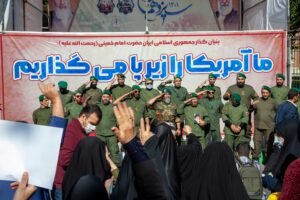
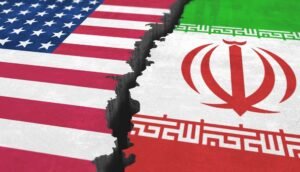
That logic sharpened after the 28 February 2026 Iran attacks, when Tehran launched[ii] a major missile-and-drone retaliation against Gulf targets following U.S. and Israeli strikes on Iranian nuclear and military infrastructure. The UAE absorbed a disproportionate share of that punishment. Strikes rattled Jebel Ali’s port, hit Fujairah’s industrial zone, and sent smoke over Dubai’s skyline. Iran subsequently sought to justify its actions in multilateral forums[iii] by arguing that states hosting U.S. military assets could be treated as legitimate targets, further expanding the perceived scope of vulnerability.
Ebtesam Al Ketbi has framed strategic autonomy as the UAE’s ‘North Star’ in an era of fragmentation,[iv] a characterisation that captures both the aspiration and the anxiety underlying Abu Dhabi’s strategic choices. The 28 February attacks crystallised two already-emerging judgements in Abu Dhabi. The first is that Iran represents a durable structural threat that cannot be neutralised through engagement alone. The second is that regional collective security mechanisms, particularly the Gulf Cooperation Council (GCC), no longer provide credible or unified responses to shared threats.
A second driver lies in evolving perceptions of U.S. reliability. While the United States remains the UAE’s principal security partner, Emirati policymakers increasingly perceive American commitments as conditional and shaped by shifting domestic and global priorities. This has encouraged a hedging strategy that preserves the U.S. relationship while simultaneously expanding alternative partnerships. The objective is not substitution but redundancy, ensuring that no single external actor defines the UAE’s security horizon.
A third driver is ambition anchored in structural transformation. The UAE has evolved from an oil-dependent economy into a global logistics and financial hub, with a sovereign wealth base of approximately $1.1 trillion invested across energy transition, artificial intelligence, biotechnology, and advanced industries. This ‘hub economy’[v] generates a distinct form of influence, as multiple states now rely on Emirati ports, aviation infrastructure, and financial markets for the functioning of their own trade networks. The UAE’s Centennial 2071 agenda[vi] and its accession to an expanded BRICS in 2024[vii] reflect an outward-oriented strategic identity, unconstrained by the expectations of Arab or Islamic leadership that circumscribe Saudi Arabia’s freedom of manoeuvre.
Strategic diversification as doctrine
Strategic diversification has evolved from an economic principle into a governing logic of statecraft, spanning security policy, diplomacy, and geopolitical positioning as a mechanism to reduce dependency on any single partner or institutional framework.
The most consequential expression of this logic is the UAE’s exit from OPEC and OPEC+ on 1 May 2026.[viii] Abu Dhabi’s departure was not a reaction to a single grievance but the product of three converging forces[ix]—the Iran war, a deepening rivalry with Saudi Arabia, and a strategic realignment with Washington that had been building for years. Despite a major investment programme[x] that expanded ADNOC’s capacity to nearly 4.85 million barrels per day, OPEC+ output restrictions limited production to 3.4 million barrels per day, constraining Abu Dhabi’s ability to monetise its strategic assets.
Yet diversification is not synonymous with disengagement from major powers or institutions. The UAE’s twenty-seven Comprehensive Economic Partnership Agreements[xi] reflect an outward-looking economic strategy that diversifies partnerships while preserving the U.S. as its security anchor. The deepening India partnership is particularly telling: bilateral trade surpassed $100 billion in FY2024–25,[xii] with a $200 billion target by 2032[xiii] and expanding co-operation in civil nuclear energy, AI infrastructure, and supercomputing. Similarly, Stargate UAE[xiv] embeds Abu Dhabi in the infrastructure backbone of global artificial intelligence, exemplifying a layered alignment strategy that reduces dependence on any single partner whilst increasing embeddedness across multiple technological ecosystems.
Instruments of an agile statecraft
The UAE’s external posture is most visible in its willingness to absorb short-term disruption in pursuit of long-term positioning advantages. This approach now spans institutional realignment, proxy engagement, alliance expansion, and economic statecraft.
1. Institutional realignment and strategic signalling
The OPEC exit is simultaneously an act of energy policy and of geopolitical positioning. By stepping back from the Saudi-led organisation, Abu Dhabi is asserting institutional independence from Riyadh and signalling to Washington[xv] that it is prepared to produce at full capacity, helping restrain oil prices—something President Trump has explicitly demanded from Gulf producers. Crown Prince Khaled bin Mohamed Al Nahyan’s recent visit to Beijing,[xvi] which produced a range of economic agreements including signals about yuan-denominated oil transactions, is best read not as a pivot to China but as calibrated leverage: a reminder to Washington that Abu Dhabi’s partnership should not be taken for granted.
2. Security activism and proxy engagement
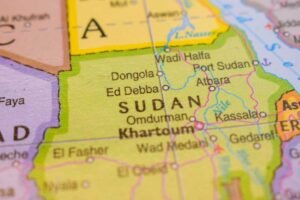
The most controversial dimension of UAE statecraft has also proved the most costly. Abu Dhabi’s support for the Southern Transitional Council[xvii] in Yemen, the Rapid Support Forces[xviii] in Sudan, and various actors in the Horn of Africa reflects a strategy of influence projection through local partners rather than direct military intervention. This approach is designed to secure access to ports, logistics corridors, and maritime chokepoints whilst limiting conventional military exposure.
The limits of this model have become increasingly visible. By December 2025, Saudi-led coalition strikes on Emirati-linked vessels at Mukalla[xix] marked a sharp escalation in intra-Gulf tensions, following alleged weapons transfers to the Southern Transitional Council. By early 2026, Somalia had cancelled defence agreements and ended Emirati access to key ports,[xx] and supply routes to Sudan’s Rapid Support Forces via Libya were disrupted by competing regional actors.[xxi] These reversals illustrate the fragility of externally leveraged influence when confronted by coordinated regional resistance.
3. New alignment patterns
The Abraham Accords have evolved beyond symbolic normalisation into operational co-operation. Bilateral trade reached approximately $3.2 billion by 2024,[xxii] and the UAE–Israel Comprehensive Economic Partnership Agreement eliminated tariffs on over 96 per cent of goods.[xxiii] In a historic move during the 2026 Iran war, Israel deployed an Iron Dome battery and Israel Defence Forces operators to the UAE—the first overseas operational deployment of the system to protect an Arab nation.[xxiv] The UAE–Israel partnership has thus matured from transactional alignment to security interdependence, with Abu Dhabi serving as a unique bridge to Washington and a fulcrum of regional leverage.
4. Economic statecraft and global positioning
The UAE’s investments in artificial intelligence, renewable energy, and emerging technologies function as instruments of structural influence. The Stargate UAE facility, the G42–C-DAC supercomputing partnership with India, and Mubadala’s MGX vehicle[xxv]—established with a $100 billion target focused on AI infrastructure and semiconductors—reflect a deliberate strategy of embedding the UAE in the technological infrastructure of allied states, generating forms of interdependence that function as soft security guarantees.
Speed as strategy, risk as cost
A defining feature of the UAE’s approach is its reliance on speed as a strategic asset. Centralised governance structures enable rapid decision-making and implementation, allowing the UAE to move faster than many larger states in adjusting to geopolitical shifts. This agility has provided a competitive advantage in diplomacy, investment, and security alignment.
However, the same speed has generated exposure. The fragmentation following the Iran war did not strengthen regional cohesion but instead accelerated divergence, as reflected in the UAE’s OPEC exit and broader institutional recalibration. The rapid expansion and subsequent contraction of proxy networks in Yemen and Somalia further demonstrate that operational velocity can exceed the system’s capacity to manage downstream consequences.
Regional and global implications
Regionally, these dynamics are accelerating the fragmentation of the GCC. The 2026 crisis exposed deep structural limitations within the organisation, particularly the absence of mechanisms to manage strategic divergence among member states. The emerging divergence between Abu Dhabi and Riyadh reflects not temporary disagreement but competing models of regional order: one centred on flexible external projection and non-state partnerships, the other on territorial consolidation and state-centric hierarchy.
Globally, the UAE exemplifies the rise of agile middle powers that leverage economic strength and diplomatic flexibility to navigate a fragmented international system. Its withdrawal from OPEC has contributed to a more decentralised energy order, whilst its expanding technological and financial networks reinforce a shift towards more conditional and issue-specific forms of co-operation. The broader question of whether multilateral institutions will adapt or fragment further is increasingly shaped by actors like the UAE that actively test the limits of existing frameworks.
Conclusion
The UAE’s external policy reflects a sustained effort to convert vulnerability into leverage through strategic diversification and rapid adaptation. Rather than relying on fixed alliances or institutional continuity, Abu Dhabi has embraced a model of flexible engagement across security, economic, and technological domains.
Its exit from OPEC, deepening ties with Israel and India, expansion of economic partnerships, and investments in advanced infrastructure all reflect a coherent logic of embedded autonomy. At the same time, setbacks in proxy engagements underscore the limits of this approach, particularly when regional actors co-ordinate to resist Emirati influence.
The UAE is no longer operating within the traditional parameters of Gulf statecraft. It is actively reshaping its external environment whilst simultaneously exposing itself to new forms of systemic risk. The central question is whether diversification will yield durable influence or lock the UAE into a cycle of overreach and correction.
[i] Middle East Policy Council (2024). ‘East or West: The UAE’s Balancing Act with China and the US.’ Middle East Policy Council, 2024. Retrieved from: https://mepc.org/commentaries/east-or-west-the-uaes-balancing-act-with-china-and-the-us/.
[ii] New York Times (2026). ‘Iran Attacks: Gulf States’ Air Defences.’ The New York Times, 6 March 2026. Retrieved from: https://www.nytimes.com/2026/03/06/world/middleeast/persian-gulf-states-air-defense-iran.html.
[iii] Arab News (2026). ‘Iran Seeks to Justify Strikes in Multilateral Forums.’ Arab News, March 2026. Retrieved from: https://www.arabnews.com/node/2634798/middle-east.
[iv] Al Ketbi, E. (2024). ‘Strategic Autonomy Is the UAE’s North Star.’ Arab Gulf States Institute in Washington, 2024. Retrieved from: https://www.agsiw.org/uae-strategic-autonomy-north-star/.
[v] Institute for Economics and Peace (2026). The Great Fragmentation. Sydney: IEP, January 2026. Retrieved from: https://www.visionofhumanity.org/wp-content/uploads/2026/01/The-Great-Fragmentation-web.pdf.
[vi] UAE Cabinet (2021). ‘Mohammed bin Rashid Launches Five-Decade Government Plan: UAE Centennial 2071.’ UAE Cabinet, 2021. Retrieved from: https://uaecabinet.ae/en/news/mohammed-bin-rashid-launches-five-decade-government-plan-uae-centennial-2071.
[vii] Belfer Center (2024). ‘UAE: Transforming Middle Power Through Effective Strategies to Enhance Influence.’ Belfer Center for Science and International Affairs, 2024. Retrieved from: https://www.belfercenter.org/research-analysis/uae-transforming-middle-power-through-effective-strategies-enhance-influence.
[viii] Al Jazeera (2026). ‘UAE Leaves OPEC and OPEC+.’ Al Jazeera, 28 April 2026. Retrieved from: https://www.aljazeera.com/news/2026/4/28/uae-leaves-opec-and-opec.
[ix] Foreign Policy (2026). ‘What the UAE’s OPEC Exit Really Means for Oil and the Middle East.’ Foreign Policy, 1 May 2026. Retrieved from: https://foreignpolicy.com/2026/05/01/uae-opec-exit-meaning-oil-middle-east/.
[x] The National (2026). ‘UAE’s OPEC Exit: ADNOC Capacity Expansion and Quota Constraints.’ The National, 29 April 2026. Retrieved from: https://www.thenationalnews.com/business/energy/2026/04/29/uae-opec-exit/.
[xi] UAE Ministry of Economy (2024). Comprehensive Economic Partnership Agreements (CEPAs). Abu Dhabi: Ministry of Economy. Retrieved from: https://www.moet.gov.ae/en/cepa.
[xii] Outlook Business (2025). ‘India-UAE Trade Pact Helps Boost Bilateral Trade to Cross $100bn.’ Outlook Business, 2025. Retrieved from: https://www.outlookbusiness.com/economy-and-policy/india-uae-trade-pact-helps-boost-bilateral-trade-to-cross-100-bn-goyal.
[xiii] India Brand Equity Foundation (2025). ‘India-UAE Set US $200 Billion Trade Target, Deepen Nuclear and Infrastructure Ties.’ IBEF, 2025. Retrieved from: https://www.ibef.org/news/india-uae-set-us-200-billion-trade-target-deepen-nuclear-and-infra-ties.
[xiv] CNBC (2025). ‘Stargate UAE: OpenAI, Nvidia, Oracle Partner to Build AI Infrastructure.’ CNBC, 22 May 2025. Retrieved from: https://www.cnbc.com/2025/05/22/stargate-uae-openai-nvidia-oracle.html.
[xv] Al Jazeera (2026). ‘UAE Exit from OPEC Signals Closer Alignment with US Interests, Experts Say.’ Al Jazeera, 1 May 2026. Retrieved from: https://www.aljazeera.com/economy/2026/5/1/uae-exit-from-opec-signals-closer-alignment-with-us-interests-experts-say.
[xvi] Foreign Policy (2026). Op. cit. Retrieved from: https://foreignpolicy.com/2026/05/01/uae-opec-exit-meaning-oil-middle-east/.
[xvii] Arab Center Washington DC (2024). ‘The Saudi-Emirati Drama in Yemen.’ Arab Center DC, 2024. Retrieved from: https://arabcenterdc.org/resource/the-saudi-emirati-drama-in-yemen/.
[xviii] Wall Street Journal (2024). ‘How UAE Arms Bolstered a Sudanese Militia Accused of Genocide.’ The Wall Street Journal, 2024. Retrieved from: https://www.wsj.com/world/how-u-a-e-arms-bolstered-a-sudanese-militia-accused-of-genocide-781b9803.
[xix] The Media Line (2025). ‘Saudi-Led Coalition Strikes Emirati Ships in Yemen Port.’ The Media Line, December 2025. Retrieved from: https://themedialine.org/headlines/saudi-led-coalition-strikes-emirati-ships-in-yemen-port/.
[xx] People’s Dispatch (2026). ‘UAE Loses Bases in Somalia over Dealings with Pro-Israel Separatist Group.’ People’s Dispatch, 19 January 2026. Retrieved from: https://peoplesdispatch.org/2026/01/19/uae-loses-bases-in-somalia-over-dealings-with-pro-israel-separatist-group/.
[xxi] Libya Security Monitor (2026). ‘UAE Reportedly Struggling to Maintain Air Bridge to RSF in Sudan via Libya.’ Libya Security Monitor, 2026. Retrieved from: https://libyasecuritymonitor.com/uae-reportedly-struggling-to-maintain-air-bridge-to-rsf-in-sudan-via-libya/.
[xxii] Outlook Business (2025). ‘India-UAE Trade Pact Helps Boost Bilateral Trade to Cross $100bn.’ Outlook Business, 2025. Retrieved from: https://www.outlookbusiness.com/economy-and-policy/india-uae-trade-pact-helps-boost-bilateral-trade-to-cross-100-bn-goyal.
[xxiii] India Brand Equity Foundation (2025). ‘India-UAE Set US $200 Billion Trade Target, Deepen Nuclear and Infrastructure Ties.’ IBEF, 2025. Retrieved from: https://www.ibef.org/news/india-uae-set-us-200-billion-trade-target-deepen-nuclear-and-infra-ties.
[xxiv] Times of Israel (2026). ‘Israel Sent Iron Dome and Troops to Help Defend UAE during Iran War.’ Times of Israel, 2026. Retrieved from: https://www.timesofisrael.com/israel-sent-iron-dome-and-troops-to-help-defend-uae-during-iran-war-report/.
[xxv] OMFIF (2026). ‘Why the UAE’s OPEC Exit Signals a Deeper Recalibration of State Autonomy.’ Official Monetary and Financial Institutions Forum, May 2026. Retrieved from: https://www.omfif.org/2026/05/why-the-uaes-opec-exit-signals-a-deeper-recalibration-of-state-autonomy/.