U.S.–Iran tensions can be understood through the lens of coercive diplomacy, in which escalation functions as a tool to shape negotiations. Throughout the conflict, U.S. President Donald Trump has applied intense military pressure on Tehran to raise the cost of defiance, followed by diplomatic engagement once leverage had been established.
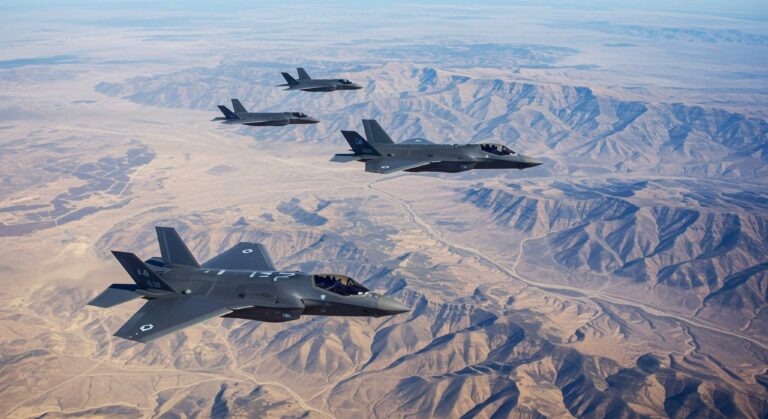
Recent developments[i] suggest this approach has yielded some results. By pairing military readiness with threats[ii] to destroy Iranian infrastructure, Trump pursued a policy of managed force intensification to compress Iran’s bargaining position.
The fragile ceasefire has already shown that the situation is becoming harder to control. A campaign initially framed as limited to degrading Tehran’s nuclear programme risked pulling the wider region into the conflict. Iranian retaliation spread across the Gulf, threatening U.S. military bases, striking regional energy infrastructure, and disrupting oil and food supplies – exposing the vulnerabilities of the U.S.’ regional partners.
Three dynamics have sustained this cycle: widening conflict, mounting economic costs, and a growing strain on U.S. alliances.
Iran’s horizontal escalation
The scale of Iran’s retaliation has been the primary driver behind Trump’s push for de-escalation.
In response to joint U.S. and Israeli strikes, Tehran adopted a strategy of horizontal expansion, broadening[iii] the battlefield by targeting U.S. military installations and civilian infrastructure across Qatar, Bahrain, the United Arab Emirates (UAE), Saudi Arabia, Iraq, and Kuwait.
These strikes exploited a key feature of the U.S.’ regional posture. The U.S. maintains a network of forward bases in allied countries to conduct operations in the Middle East. By threatening these facilities, Iran effectively turned the geography of U.S. alliances into a combat zone, placing American partners in harm’s way.
Throughout the crisis, both Washington and Tehran employed coercive signaling[iv] – calibrated shows of force and public warnings – to influence each other’s decisions. Trump’s threats and deadlines sought to compel compliance; Tehran’s attacks sent clear counter-signals of retaliation and cost.
Iran is unlikely to prevail in a conventional military confrontation with the United States. Its strategy instead has focused on sustaining pressure and increasing the political, economic, and military costs of escalation for Washington and its partners. This has, in turn, increased risks of spillover, including civilian harm, infrastructure damage, and broader regional entanglement.
Mounting economic pressure
A second driver behind Trump’s pursuit of de-escalation has been the growing economic shock from the conflict, which rippled through energy markets, supply chains, and global food systems.
One of the most sensitive chokepoints is the Strait of Hormuz – the narrow maritime corridor through which roughly one-fifth of global oil supply and a substantial share of seaborne fertilizers pass. The near-shutdown of this strategic waterway disrupted shipping flows and pushed up oil prices, fuel costs, and war-risk insurance premiums.[v]
Iran’s asymmetric retaliation also crossed a line with its Gulf neighbours. After an Israeli strike hit Iran’s South Pars gas field – one of the world’s largest[vi] energy hubs – Tehran launched missile and drone attacks on key regional energy infrastructure.
These strikes inflicted widespread damage on Gulf energy assets, including knocking out[vii] 17% of Qatar’s LNG export capacity for three to five years. The attacks demonstrated that Tehran’s response extended beyond direct confrontation with U.S. forces to disproportionately impact regional economies and civilian infrastructure.
Had Gulf leaders not exercised restraint, Iran’s actions could have pushed the Middle East toward a broader regional war. At the same time, these strikes strengthened Tehran’s position by forcing Trump to limit U.S. involvement and attempt to bring the conflict to a close.
Beyond energy, the disruption has threatened to squeeze the global food system. With about one-third of global seaborne fertilizers[viii] traded through the Hormuz, the crisis could trigger food and humanitarian emergencies in several regions.
Domestically, rising inflation[ix], eroding consumer purchasing power, and the prospect[x] of slower growth intensified political and economic pressure on Trump. The economic fallout also extended to the Gulf, where Arab states have so far incurred[xi] up to $194 billion in losses, according to the United Nations Development Program.
Combined, these shocks reveal that escalation generates leverage but also imposes economic constraints.
U.S. allies bear the costs
The conflict strained America’s alliance network as well.
Countries hosting U.S. forces – including Qatar, Bahrain, and the UAE – faced direct security threats as missiles and drones traversed the region. For these governments, the danger of “entrapment risk[xii]” – the fear of being drawn into the conflict – increased pressure to limit further escalation and reassess the costs of forward deployment.
Tensions also surfaced within the transatlantic coalition. Several European nations hesitated[xiii] to deploy warships to the Strait, with some denying[xiv] the U.S. access to airspace or military facilities for operations, reflecting concerns about energy market instability and regional escalation.
At the same time, the White House indicated[xv] that the Trump administration could ask Arab countries to pay for the war, potentially shifting part of the burden onto regional partners. Yet as many Gulf states did not support the intervention and had urged[xvi] diplomacy beforehand, the prospect of being asked to absorb the consequences of a conflict they neither initiated nor endorsed would deepen unease among allies.
These dynamics nudged Trump toward capping the conflict.
The strategic gamble
Taken together, U.S.–Iran tensions could be best understood as a recurring system of coercive diplomacy in which escalation and negotiation function as interconnected instruments of statecraft. The relationship has repeatedly oscillated between pressure and limited engagement, without reaching a lasting settlement.
Iran’s conventional military limitations constrain its ability to compete directly with the United States, yet it retains the capacity to threaten energy infrastructure, maritime security, and broader regional stability. These tools do not enable decisive victory, but they are sufficient to raise the costs of sustained pressure.
The outcome is managed instability: a system where pressure and engagement repeatedly rise and recede, producing stability through adjustment rather than resolution.
[i] BBC News (2026). “Iran says Strait of Hormuz closed until US blockade lifts, as ships report attacks”, 17 April 2026, retrieved from: https://www.bbc.com/news/live/cqxdg17yr2wt.
[ii] Harb, A. (2026). “’No end in sight’ if Trump acts on threat to destroy Iran infrastructure”, Al Jazeera, 7 April 2026, retrieved from: https://www.aljazeera.com/news/2026/4/7/no-end-in-sight-if-trump-acts-on-threat-to-destroy-iran-infrastructure.
[iii] Council on Foreign Relations (2026). “Iran’s War With Israel and the United States”, 22 April 2026, retrieved from: https://www.cfr.org/global-conflict-tracker/conflict/confrontation-between-united-states-and-iran.
[iv] Charap, S. et al. (2022). “Understanding Russian Coercive Signaling”, RAND, 29 September 2022, retrieved from: https://www.rand.org/pubs/research_reports/RRA198-9.html.
[v] Elashi, M. (2026). “Ships seek Iranian clearance to cross Hormuz as risks rise and insurance costs surge”, Euronews, 26 March 2026, retrieved from: https://www.euronews.com/business/2026/03/26/ships-seek-irans-clearance-to-cross-hormuz-as-risks-rise-and-insurance-costs-surge.
[vi] Al-Hashemi, M. (2026). “Israel’s Strike on North Field-South Pars: Energy War and Global Risk”, Middle East Council on Global Affairs, 19 March 2026, retrieved from: https://mecouncil.org/blog_posts/israels-strike-on-north-field-south-pars-energy-war-and-global-risk/.
[vii] El Dahan, M., Mills, A. and Saba, Y. (2026). “Iran attacks wipe out 17% of Qatar’s LNG capacity for up to five years, QatarEnergy CEOsays”, Reuters, 19 March 2026, retrieved from: https://www.reuters.com/business/energy/iran-attack-damage-wipes-out-17-qatars-lng-capacity-three-five-years-qatarenergy-2026-03-19/.
[viii] UN trade & development (226). “Hormuz Shipping Disruptions Raise Risks for Energy, Fertilizers and Vulnerable Economies”, retrieved from: https://unctad.org/system/files/press-material/ma26003_strait-of-hormuz-disruptions_en.pdf?utm_source=chatgpt.com.
[ix] Conley, J. (2026). “Consumer spending has powered US economic growth. The Iran war is ‘testing its resilience’, Yahoo Finance,1 April 2026, retrieved from: https://finance.yahoo.com/news/consumer-spending-has-powered-us-economic-growth-the-iran-war-is-testing-its-resilience-090043647.html.
[x] Cerullo, M. (2026). “Iran war fallout raises odds of a U.S. recession, economists say”, CBS News, 27 March 2026, retrieved from: https://www.cbsnews.com/news/iran-war-recession-risk-oil-prices-inflation/.[xi] Al Jazeera (2026). “One month of war on Iran cost Arab countries up to $194bn: UNDP”, 31 March 2026, retrieved from: https://www.aljazeera.com/news/2026/3/31/one-month-of-war-in-middle-east-cost-arab-states-up-to-194bn-undp.[xii] Lin, J. (2026). “Why America fights alongside Israel as China holds back Iran”, ThinkChina, 18 March 2026, retrieved from: https://www.thinkchina.sg/politics/why-america-fights-alongside-israel-china-holds-back-iran.
[xiii] Erickson, B., Cornwell, A. and Hafezi, P. (2026). “Trump upset as US partners reject call for Hormuz warship escorts”, Reuters, 16 March 2026, retrieved from: https://www.reuters.com/business/energy/trump-demands-others-help-secure-strait-hormuz-japan-australia-say-no-plans-send-2026-03-16/.
[xiv] Lachter, E. (2026). “More key US allies block military flights as Iran war rifts widens with Trump”, Fox News, 31 March 2026, retrieved from: https://www.foxnews.com/world/more-key-us-allies-block-military-flights-iran-war-rift-widens-trump.
[xv] Al Jazeera (2026). “US says Trump ‘interested’ in asking Arab countries to pay for war on Iran”, 30 March 2026, retrieved from: https://www.aljazeera.com/news/2026/3/30/us-says-trump-interested-in-asking-arab-countries-to-pay-for-war-on-iran.
[xvi] El Dahan, M. and Mills, A. (2026). “Four Arab states urged against US-Iran escalation, official says”, Reuters, 15 January 2026, retrieved from: https://www.reuters.com/business/media-telecom/four-arab-states-urged-against-us-iran-escalation-official-says-2026-01-15/.