The central concern of the West in its relationship with Russia is clear. Western nations are united in their support for Ukraine. If Moscow is permitted to act unfettered and in defiance of a rules-based international order founded on universal human rights and the rule of law, the consequences extend well beyond Ukraine. Russia’s role in the Middle East, from Syria[i] to Iran[ii] and to its wider relationships across the region, demonstrates that the consequences of confrontation between Moscow and the West are not confined to Europe. The strict sanctions regimes imposed by the European Union[iii], the United States and their partners are therefore intended not simply to punish Russian aggression, but to defend a wider principle.
Moscow views the international order differently. It regards the post-Cold War settlement as having developed to the detriment of Russian interests and has long argued that it has not been accorded the status it believes a major power deserves[iv], notwithstanding the broader question of a P5 overhaul.
These arguments may help explain Russian policy, but they do not justify the use of force against sovereign states or the violation of international law.[v] Understanding Russia’s calculations is not the same as accepting them. A challenge to those principles cannot be ignored. But defending them need not lead us to conclude that the present relationship with Russia is either desirable, sustainable or conducive to longer-term stability.
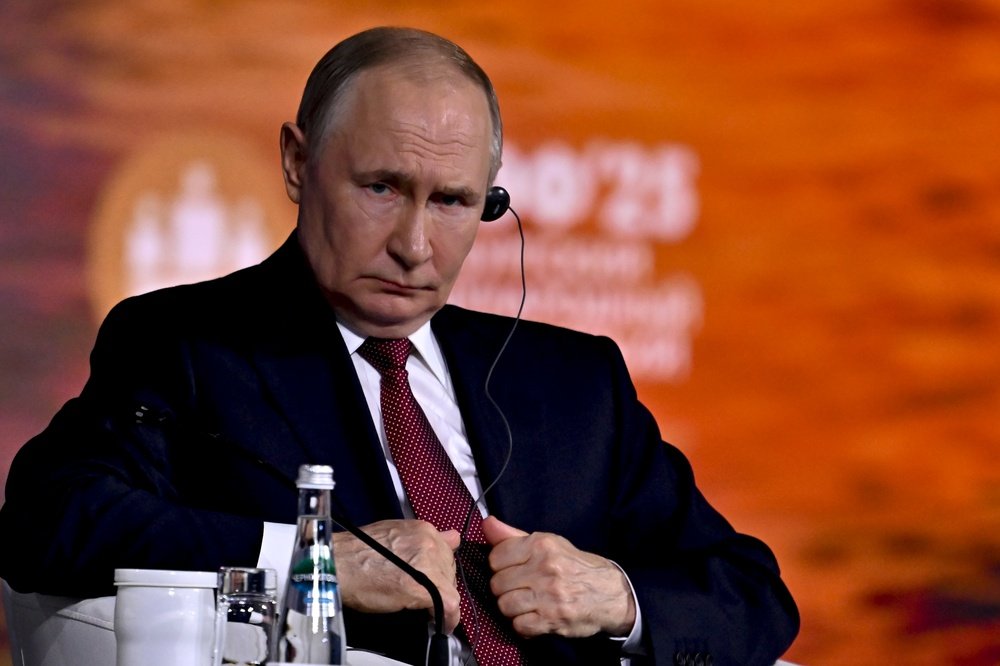
There are now signs that the diplomatic deadlock may once again be capable of being tested. Vladimir Putin has said that he believes there remains a possibility of reaching a peace agreement over Ukraine, while Ukrainian President Volodymyr Zelenskiy has confirmed that U.S. negotiators are expected to engage with both Kyiv and Moscow.[vi] The prospect of renewed American diplomacy does not mean that an agreement is close, nor does it resolve the fundamental disagreements over territory, security guarantees and Ukraine’s future relationship with NATO. But it does demonstrate that, despite the continuing military confrontation, diplomacy has not disappeared from the equation.
Indeed, the recent dispute over Russian airspace[vii] illustrates precisely why diplomatic communication remains necessary. Ukraine has warned airlines and international aviation authorities about the risks associated with Russian airspace as Ukrainian drone activity inside Russia has increased. Moscow has rejected the warnings and accused Kyiv of making negotiations more difficult. Whatever one’s assessment of the competing claims, the episode demonstrates how quickly military developments can spill into civilian, commercial and diplomatic spheres.
The result is a relationship dangerously deadlocked: co-operation and dialogue held hostage, official contact restricted and intelligence co-operation severely curtailed.[viii] The consequences of such estrangement are before us. Russia, for its part, believes it would be better served by a system of spheres of influence, with major powers pre-eminent in their respective regions[ix] and the United Nations Security Council providing the principal forum for managing world affairs. That vision is difficult to reconcile with the principle that sovereign states should be free to determine their own futures. It should nevertheless be understood if it is to be challenged effectively.
In these times of rhetoric, some ill-informed, much of it distorted by misinformation and polarisation, breaking the diplomatic deadlock is increasingly important. Dialogue is not a reward; it is an essential instrument by which states manage disagreement, minimise misunderstanding and prevent miscalculation.[x] Nor is dialogue an endorsement of Russian policy. Whatever the view of Russia, the absence of communication between major powers carries consequences.
Economic sanctions are designed both to punish Russia for aggressive actions and deter future coercion. Moscow considers, however, that resolution of the Ukraine crisis would not necessarily result in their removal. Sanctions alone cannot provide a political settlement. If Moscow believes that they will remain indefinitely, the incentive to negotiate may diminish. Sanctions must therefore be accompanied by a diplomatic strategy capable of offering a route towards resolution, with phased conditional relief tied to verifiable Russian actions.[xi]
The economic debate inside Russia makes this question more pressing. At the Eastern Economic Forum this week, Putin adviser Mr Kobyakov openly raised concerns about capital leaving Russia and questioned why an economy operating under sanctions and maintaining positive real interest rates was still experiencing capital outflows.[xii] He argued that Russia needs to restart its investment cycle and provide more attractive opportunities for domestic investors, while Putin himself has stressed the importance of stable economic conditions in attracting private capital.
This matters beyond Russia’s domestic economy. A more predictable relationship between Russia and the West would have consequences for investment confidence, energy markets, supply chains and the wider European economy. Recent market movements have already demonstrated how quickly diplomatic developments can affect commodity expectations: oil prices have been influenced simultaneously by tensions in the Middle East and renewed hopes of progress towards a Russia-Ukraine settlement.
My experience of contributing to debate in Crimea in the late 1990s on the merits of a potential Ukrainian application for membership of the European Union reinforced for me the complexity of the competing histories, identities and interests involved. Recognising that complexity does not require abandoning principle; nor does it require creating a false equivalence between the parties. It requires understanding the realities with which any lasting settlement must contend.
The diplomatic challenge is to demonstrate to the Kremlin that diplomacy need not equate to the abandonment of Western principles or the marginalisation of Russian interests. Engagement should not be about accommodating Russian demands, but about demonstrating that diplomacy can produce outcomes that are more secure and predictable than continued confrontation.
Engagement might usefully advance on four tracks: government-to-government relations; security co-operation and military dialogue aimed particularly at reducing the risk of miscalculation; economic, scientific and wider practical co-operation, including climate change; and sustained engagement between institutions and peoples.
Without Soviet sacrifice, the history of Europe might have been very different.[xiii] Remembering that sacrifice does not require overlooking Russia’s subsequent actions, nor should historical memory become an argument for political accommodation. But history can provide points of contact between societies even when governments are profoundly at odds. Therein may lie a clue to future engagement: preserve the historical and human connections that remain while rebuilding the minimum level of trust necessary to underpin a more productive relationship.
Engagement is preferable to permanent estrangement. But effective engagement must be perceptive. We should be bold and innovative in making clear our wish for a constructive but clearly defined relationship. That requires no abandonment of principle, nor does engagement mean an immediate return to business as usual. It means identifying where interests genuinely coincide and building sufficient trust to confront the much harder questions where they do not.
We might also reflect on the strategic wisdom associated with Henry Kissinger: hostility should never become an end in itself when it does not serve the long-term interests of the West.[xiv] The objective is not to excuse Russian conduct, minimise Ukraine’s sovereignty or dilute the principles underpinning the international order. It is to recognise that lasting security ultimately requires both deterrence and diplomacy.[xv]
The opportunity presented by the current diplomatic moment should therefore not be exaggerated, but neither should it be dismissed. Putin’s acknowledgement that a settlement remains possible, Zelenskiy’s confirmation of forthcoming engagement with U.S. negotiators, and Washington’s renewed willingness to engage both sides suggest that another diplomatic opening may be emerging. Mr Kushner’s current visit to Moscow reaffirms that.[xvi]
Maintaining pressure could provide a credible route towards a negotiated settlement if conditions are met. A durable settlement would engender future economic predictability, investment confidence, energy and supply-chain security, and address the commercial consequences of prolonged geopolitical fragmentation.
My experience at a recent summit in Astana, Kazakhstan, on the post-2030 United Nations Sustainable Development Goals[xvii] reinforced how common development priorities can create space for cooperation even amid profound geopolitical disagreement. Eventual reconstruction and stabilisation will require international actors with very different political interests to find practical areas of common purpose.[xviii]
This does not mean seeking an artificial reconciliation or accepting a sphere of influence over neighbouring states. An era of mutual respect would serve all sides well. The opportunity may now exist to move beyond a relationship defined exclusively by confrontation and towards one in which interests can be negotiated rather than imposed.
The more difficult the relationship, the greater the need for disciplined, patient and persistent diplomacy. The test for the West is not whether it can choose between principle and engagement. It is whether it can defend its principles while recognising that, ultimately, a stable international order requires both.
[i] Mills, C. (2017). “ISIS/Daesh: the military response in Iraq and Syria”, House of Commons Library, 8 March 2017, retrieved from: https://commonslibrary.parliament.uk/research-briefings/sn06995/.
[ii] Azizi, H. (2025). “Strategic Transactionalism: The Iran-Russia Partnership”, Middle East Council on Global Affairs, retrieved from: https://mecouncil.org/publication/strategic-transactionalism-the-iran-russia-partnership/.
[iii] European Council (2026). “Russia’s war against Ukraine: EU sanctions”, retrieved from: https://www.consilium.europa.eu/en/policies/sanctions-against-russia/.
[iv] Vorobyov, N. (2025). “Putin wants US ‘recognition’ of Russian gains in Ukraine…”, Al Jazeera, 24 March 2025, retrieved from: https://www.aljazeera.com/news/2025/3/24/putin-wants-us-recognition-of-russian-gains-in-ukraine-as-legitimate.
[v] United Nations (2014). “Territorial integrity of Ukraine”, 1 April 2014.
[vi] Soldatkin, V. (2026). “Putin cites chance of peace deal, Zelenskiy says US negotiators to visit both countries”, Reuters, 3 September 2026, retrieved from: https://www.reuters.com/world/europe/putin-cites-chance-peace-deal-says-ukrainian-aviation-warning-makes-it-harder-2026-09-03/.
[vii] Sekulich, H. (2026). “Zelensky says airlines should avoid Russian airspace as Ukraine escalates drone operations”, BBC News, 2 September 2026, retrieved from: https://www.bbc.co.uk/news/articles/c9v9yydy2wvo.
[viii] NATO (2024). “Relations with Russia”, 5 August 2024, retrieved from: https://www.nato.int/en/what-we-do/partnerships-and-cooperation/relations-with-russia.
[ix] National Research University (2023). “Russia’s Policy Towards World Majority”, retrieved from: https://www.mid.ru/upload/medialibrary/c98/cjmfdf73760bme0y99zqllj51zzllrvs/Russia%E2%80%99s%20Policy.pdf.
[x] NATO (2016). “Warsaw Summit Communique”, 9 July 2016, retrieved from: https://www.nato.int/en/about-us/official-texts-and-resources/official-texts/2016/07/09/warsaw-summit-communique.
[xi] European Council (2026). “EU sanctions against Russia: questions and answers”, retrieved from: https://www.consilium.europa.eu/en/policies/sanctions-against-russia-explained/.
[xii] Stezhensky, A. (2026). “Putin adviser acknowledges capital flight as wealthy Russians move money abroad”, The New Voice of Ukraine, 4 September 2026, retrieved from: https://english.nv.ua/business/putin-adviser-acknowledges-large-scale-capital-flight-from-russia-amid-sanctions-50638644.html.
[xiii] United Nations (2014). “Territorial integrity of Ukraine”.
[xiv] Kissinger, H. (2014). World Order: Reflections on the Character of Nations and the Course of History, London: Penguin.
[xv] DW (2022). “Stoltenberg: NATO takes ‘dual track’ approach to Russia”, 13 January 2022, retrieved from: https://www.dw.com/en/jens-stoltenberg-nato-will-never-compromise-on-core-principles-for-european-security/a-60417560.
[xvi] Marx, W. (2026). “Witkoff and Kushner call Kyiv talks ‘substantive’ after Moscow Putin meeting”, NPR, 6 September 2026, retrieved from: https://www.npr.org/2026/09/06/nx-s1-5959657/us-envoys-witkoff-kushner-talks-in-kyiv-putin-moscow.
[xvii] United Nations Transcripts (2026). “The Post-2030 Agenda and the Future of Global Development”, 15 July 2026, retrieved from: https://transcripts.un.org/en/asset/k16/k16dzhfmqn.
[xviii] World Bank (2026). “WBG Support to Ukraine”, retrieved from: https://thedocs.worldbank.org/en/doc/ccf8044b6df7e0dd03f3899580b97d35-0080012026/original/WBG-Support-Ukraine-March-2026.pdf.