The most important question about the Makkah Pact is not whether it will become an “Islamic NATO.” It is why Saudi Arabia, Türkiye, and Pakistan felt the need to create another security arrangement when all three already maintain extensive strategic and military partnerships with major powers outside the region. The answer points to a broader transformation in the regional security environment. Middle Eastern powers increasingly appear unwilling to rely on a single external security provider or a single strategic partnership. Instead, they are seeking to diversify their security options, strengthen regional capabilities, and create additional mechanisms for collective deterrence.
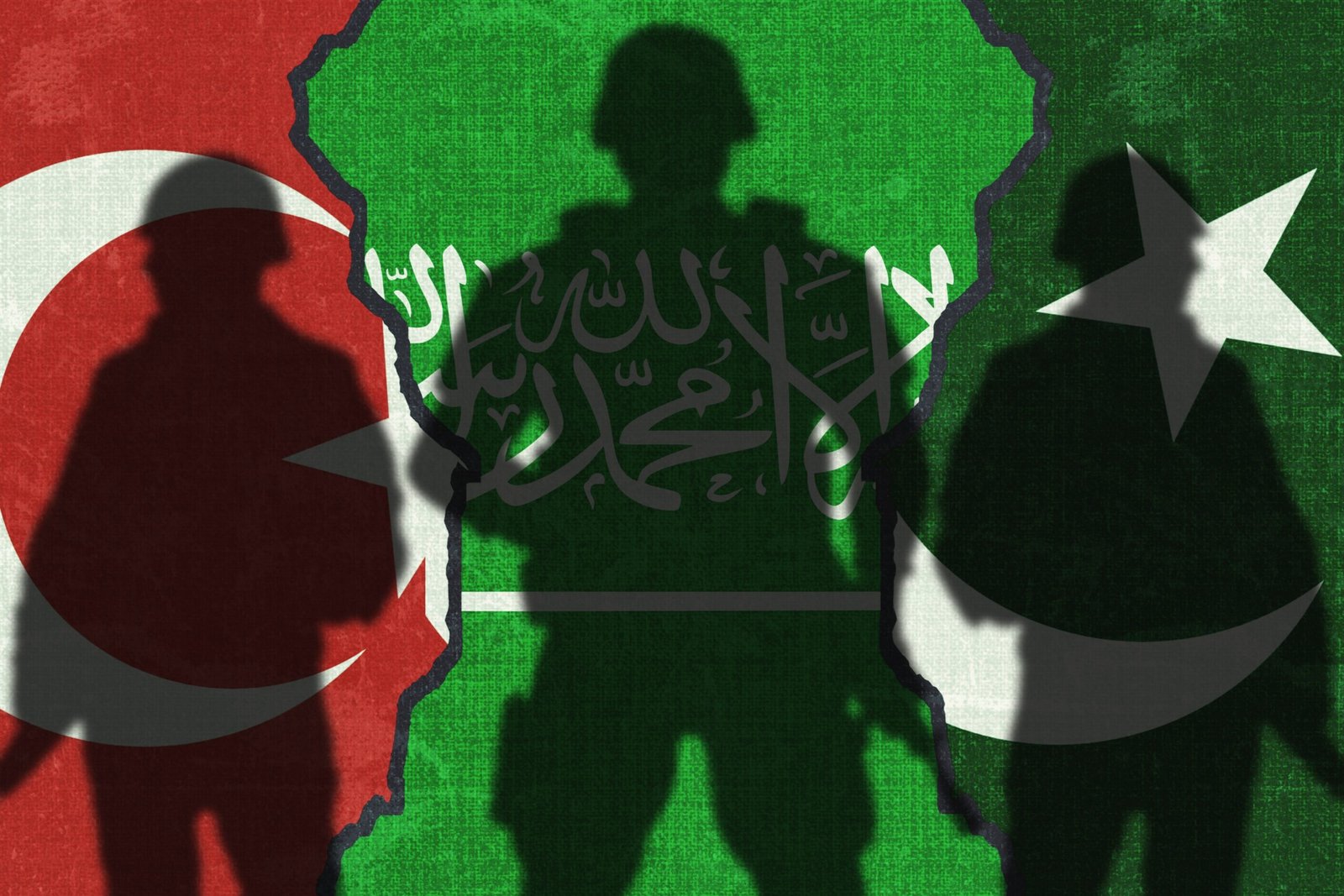
The Makkah Joint Defence Agreement, signed in Mecca on 7th August 7 2026, declares that an armed attack against any one of the three members will be regarded as an attack against all.[i] The agreement is defensive in its stated purpose, does not require its members to abandon existing partnerships, and remains open to other countries. These provisions make the pact different from a traditional alliance built around a clearly defined external enemy.
Developments since the signing have made the agreement more significant. Türkiye has announced plans for high-level political and military coordination, joint exercises across land, sea, air, unmanned systems and air defence, and deeper defence-industrial cooperation.[ii] Enlargement has also moved from a theoretical question toward a practical one. Egypt has been mentioned as a possible future participant, while Bangladesh has publicly indicated that joining the pact is being viewed positively in Dhaka.
Regional powers are not necessarily replacing external security providers. They are creating alternatives to dependence on any single provider.
The Makkah Pact should therefore not be dismissed as symbolic or exaggerated. It is better understood as an experiment in strategic hedging: an attempt by regional powers to accumulate additional sources of deterrence and security while preserving their existing relationships with external powers. Its real test is only beginning.
Why now?
The timing of the agreement is important. Approximately one year earlier, Saudi Arabia and Pakistan had established their own strategic defence framework.[iii] The addition of Türkiye has now transformed that bilateral relationship into a trilateral arrangement with a broader geographic and strategic reach. The three members do not face identical security threats. Saudi Arabia’s concerns are concentrated around the Gulf, the Red Sea, Iran-linked armed groups, missile and drone threats, and broader regional instability. Türkiye faces challenges involving Syria, Iraq, Israel, the Caucasus, Russia, and the eastern Mediterranean. Pakistan continues to confront its rivalry with India, instability along its western border, and militant threats.
What brings these countries together, therefore, is not a single enemy. It is overlapping insecurity. This distinction is essential. Traditional alliances are often built around a clearly identified adversary. The Makkah Pact is more flexible. Its members do not need to share identical threat perceptions to conclude that greater cooperation can improve their strategic positions.
Türkiye, as a NATO member, occupies a particularly advantageous geopolitical position and has a large and diversified economy, with a GDP exceeding $1.5 trillion in 2025.[iv] It also maintains one of the region’s largest conventional military forces, supported by a growing economy, an increasingly capable defence industry, extensive operational experience, and diplomatic influence extending from the Caucasus and the Middle East to North Africa.[v] Saudi Arabia, meanwhile, contributes substantial energy resources and considerable economic weight. With more than 182 billion barrels of proven oil reserves and a GDP of approximately $1.3 trillion, Riyadh constitutes the third and most resource-rich economic pillar of the grouping.[vi]
Together, the three countries represent a population of roughly 380 million people and a combined territory of approximately 3.8 million square kilometres. Their combined demographic, geographic, military, and economic weight could give them considerable influence over strategic decisions in their respective regions.
Türkiye and Pakistan offer different but potentially complementary capabilities. Pakistan brings a large and experienced military establishment, strategic geography, and nuclear deterrence. Saudi Arabia provides substantial financial resources, energy influence, geographic importance, and political weight in the Arab and Muslim worlds.
Strategic hedging, not strategic divorce
The emergence of the Makkah Pact does not necessarily signal the decline of the United States in the Middle East, nor does it mean that its members are abandoning existing international partnerships. The more plausible interpretation is diversification. Saudi Arabia can strengthen relations with Türkiye and Pakistan while maintaining its longstanding defence relationship with Washington. Türkiye can remain a NATO member while expanding its strategic role in the Gulf. Pakistan can maintain its relationships with China and Saudi Arabia while adding Türkiye to its regional security network. This is the essence of strategic hedging. Regional powers are not necessarily replacing external security providers. They are creating alternatives to dependence on any single provider.
For Saudi Arabia, the pact provides access to two major regional security partners. Pakistan offers military experience and strategic depth, while Türkiye offers conventional military capabilities, defence-industrial capacity, and diplomatic influence. For Türkiye, the pact provides a more formal mechanism for extending its security and defence relationships into the Gulf and creates opportunities to connect Turkish defence-industrial capabilities with Saudi financial resources and Pakistani military expertise. For Pakistan, the agreement extends its strategic role westward and provides a new channel through which Islamabad can translate military capabilities into broader diplomatic and economic influence.
From political agreement to security mechanism
The founding parties do not intend to leave the agreement at the level of political symbolism. On 13th August, Türkiye announced that the three countries would establish political and military coordination mechanisms involving senior foreign and defence officials and military commanders. Ankara also outlined plans for joint exercises and deeper defence-industrial cooperation, including work involving unmanned systems, electronic warfare, and artificial intelligence.
This development is important because the real question is whether the three countries can translate their political commitment into operational capability. Joint exercises can improve interoperability. Intelligence sharing can increase early warning. Defence-industrial cooperation can create long-term institutional links. Regular consultations can make crisis coordination faster and more predictable. These mechanisms may ultimately prove more important than the formal language of collective defence. If this cooperation develops successfully, the Makkah Pact could gradually become a platform for defence production, technology transfer, training, intelligence cooperation, and joint planning.
The power – and risk – of ambiguity
At the same time, the Makkah Pact contains significant ambiguities. The agreement states that an armed attack against one member will be considered an attack against all, but several questions remain unresolved. What constitutes an “armed attack”? Who determines whether the threshold has been crossed? Does every attack automatically require a military response? What happens when the attacker is a non-state armed group; and what when the identity of the state sponsor behind it is uncertain?
These are not minor technical questions. They go to the heart of the pact’s credibility. Consider a drone attack against Saudi infrastructure conducted by a non-state armed group. Would Türkiye and Pakistan regard the incident as an armed attack against the pact? Would they respond militarily, diplomatically, or through intelligence-sharing and logistical support?
The more automatic the pact becomes, the more credible its deterrence may be.
The ambiguity could weaken deterrence if potential adversaries believe that the members will disagree over whether collective action is necessary. But ambiguity may also be part of the pact’s political value. The strategic priorities of the three members are too different for a fully automatic military commitment to be easy to sustain. Türkiye may not want an automatic obligation to participate in every confrontation involving Pakistan and India. Pakistan may not want to become involved in every Turkish security crisis. Saudi Arabia may not want to be drawn automatically into conflicts involving Türkiye or Pakistan. This creates a fundamental trade-off: the more automatic the pact becomes, the more credible its deterrence may be – but the more politically costly membership becomes. The more flexible it remains, the easier it is to sustain – but the less certain its military response. The future credibility of the pact will depend on how its members manage this balance.
Israel, Iran and the United States
The emergence of the pact will affect the calculations of Israel and Iran, even though its members have emphasized that the agreement is not directed against any particular country.
For Iran, a security framework connecting Saudi Arabia, Türkiye, and Pakistan creates an additional strategic variable. A more coordinated network of regional powers could complicate Tehran’s calculations.
For Israel, the consequences are also potentially significant. Türkiye’s relations with Israel remain deeply strained[vii], while Saudi Arabia has continued to condition normalization on broader political considerations, including the status of Palestinians. The emergence of the Makkah Pact could strengthen Riyadh’s bargaining position vis-à-vis Israel, also in the context of a potential Saudi-Israeli normalization process.
For Washington, the pact presents a different kind of challenge. The United States should not necessarily interpret it as a rejection of American power. The three members have preserved their existing international partnerships. The more important development is that regional governments appear increasingly determined to supplement those partnerships with mechanisms they can influence and, at least in principle, control themselves.
American influence will increasingly coexist with regional security networks that Washington does not fully control.
The regional security order may therefore be moving from dependence toward diversification. That does not mean the end of American influence. It means that American influence will increasingly coexist with regional security networks that Washington does not fully control.[viii]
The first test may be enlargement, not war
Perhaps the most important development since the signing is that enlargement is becoming a practical question. Turkish officials have mentioned Egypt as a possible future participant in the pact.[ix] On 25th August, a senior Bangladeshi official said that the possibility of joining the Makkah framework was being viewed positively in Dhaka. Bangladesh would be a consequential addition. Its participation would extend the geographic scope of the pact well beyond the Gulf and West Asia and would inevitably affect its relationship with India. It would also demonstrate that the framework could attract countries whose primary security concerns are not identical to those of its founding members. This creates the pact’s central institutional dilemma. The more successful it becomes at attracting new members, the greater the risk that it will lose the flexibility that made it attractive in the first place.
Three countries can coordinate relatively easily. A larger group must reconcile more national interests, more potential rivalries, and more divergent threat perceptions. Expansion would increase the pact’s political weight but could weaken its strategic cohesion.
What will determine success?
The ultimate success of the Makkah Pact will not be determined by whether it acquires the institutional characteristics of NATO, but if it can perform several practical functions.
First, can the three countries establish effective mechanisms for rapid political and military consultation? Second, can their armed forces conduct meaningful joint exercises and improve interoperability? Third, can they share intelligence and coordinate responses to emerging threats? Fourth, can their defence industries develop sustained cooperation rather than simply generate additional arms sales? Fifth, can the members manage enlargement without losing strategic coherence?
At the same time, the reported discussion over possible Iranian participation illustrates how fluid the regional environment remains. Some reports claimed that Iran had received an invitation, but Iran’s Foreign Ministry subsequently denied this.[x] This should not be interpreted as evidence that Iran is joining the pact. It does, however, demonstrate how quickly the meaning and potential membership of the framework have become subjects of regional strategic speculation.
Conclusion
The Makkah Pact should not be dismissed as a symbolic arrangement. At the same time, its significance should not be exaggerated, especially when it is referenced as a “Middle Eastern NATO.” Its importance lies somewhere between these interpretations. The agreement reflects a broader transformation in the regional security environment: major Middle Eastern and Muslim powers are increasingly seeking to diversify their security partnerships and develop regional mechanisms for addressing common threats.
The pact does not necessarily signal the end of American influence in the Middle East, nor does it mean that Saudi Arabia, Türkiye, or Pakistan are abandoning their existing relationships with Washington or other major powers. Rather, it suggests that regional powers are increasingly unwilling to rely on a single external security provider.
Yet the pact is already moving beyond its original purpose. The announcement of political and military coordination mechanisms, planned joint exercises, and defence-industrial cooperation indicates that its founders are attempting to turn a political commitment into a functioning security mechanism. The discussion over possible new members, particularly Bangladesh, introduces an additional challenge: whether the pact can expand without losing the flexibility and cohesion that made it attractive.
The Makkah Pact therefore faces three fundamental tests: Can it deter without creating automatic military commitments that its members are unwilling to honour?
The Makkah Pact is an early experiment in an emerging order in which external powers remain important, but regional states increasingly construct security arrangements of their own. Its ultimate significance may therefore lie not in whether it becomes a new NATO, but in whether it demonstrates that regional powers can build additional layers of deterrence and security while maintaining their existing global partnerships.
[i] Azhari, T. et al. (2026). “Saudi Arabia, Turkey, Paksitan pledge mutual defence as Middle East turmoil escalates”, Reuters, 7 August 2026, retrieved from: https://www.reuters.com/world/asia-pacific/saudi-arabia-turkey-pakistan-sign-joint-defence-deal-amid-regional-turmoil-2026-08-07/.
[ii] Reuters (2026). “Turkey lays out plans for defence pact with Pakistan and Saudi Arabia”, 13 August 2026, retrieved from: https://www.reuters.com/world/asia-pacific/turkey-pakistan-saudi-arabia-will-form-political-military-mechanisms-coordinate-2026-08-13/.
[iii] Hanada, R. (2026). “Minilateralism: A New Page for Indo-Pacific IR Lexicon,” The Pacific Review, 39(3), 606–31, retrieved from: https://doi.org/10.1080/09512748.2025.255692.
[iv] International Monetary Fund (2026). World Economic Outlook Database, July 2026.
[v] Suunetci, I. (2026). “General Assessment of the Turkish Defence and Aerospace Industry in 2025 and Targets for 2026,” Defence Turkey, February 2026, retrieved from: https://defenceturkey.com/news/general-assessment-of-the-turkish-defense-and-aerospace-industry-in-2025-and-targets-for-2026.
[vi] United Nations Conference on Trade and Development, Trade and Development Report (2024). “Rethinking Development in the Age of Discontent”, United Nations.
[vii] Soylu, R. (20226). “Israel warned Turkey against moving south in Syria. It did so anyway”, Middle East Eye, 1 September 2026, retrieved from: https://www.middleeasteye.net/news/israel-warned-turkey-against-moving-south-syria-it-did-anyway.
[viii] Brimmer, E. (2025). “The State of Global Governance: Middle Powers and the Search for Stability”, Council on Foreign Relations, 17 December 2025.
[ix] Arab News (2026). “Erdogan says Egypt could join Turkiye-Saudi-Pakistan defense pact”, 16 August 2026, retrieved from: https://www.arabnews.com/middle-east/erdogan-says-egypt-could-join-turkiye-saudi-pakistan-defense-pact-2654841.
[x] Xinhua (2026). “Iran denies receiving invitation to join Mecca defence agreement.” 24 August 2026, retrieved from: https://english.news.cn/20260824/b0341369a3414b3bb1fa234b1b7fb9a6/c.html.