The war in the Middle East has disrupted energy supplies and destabilized markets. Now entering its second month, the conflict is moving into a decisive phase. As it does, the gap between political messaging and operational reality is widening, and regional states are attempting to contain escalation through a mix of diplomacy, defence, and economic resilience.
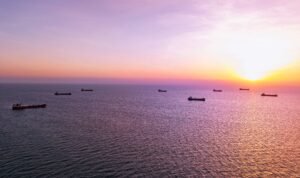
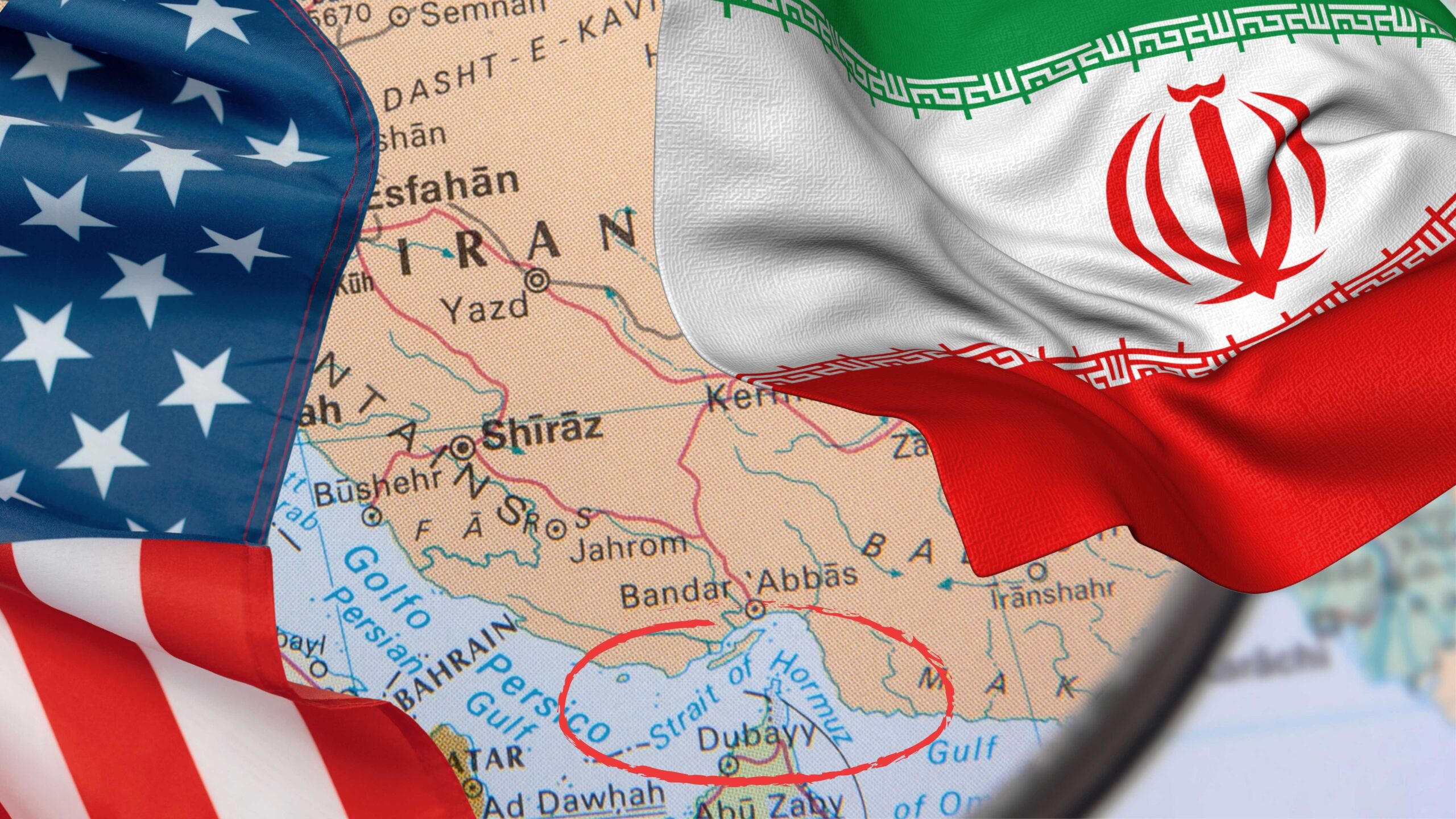
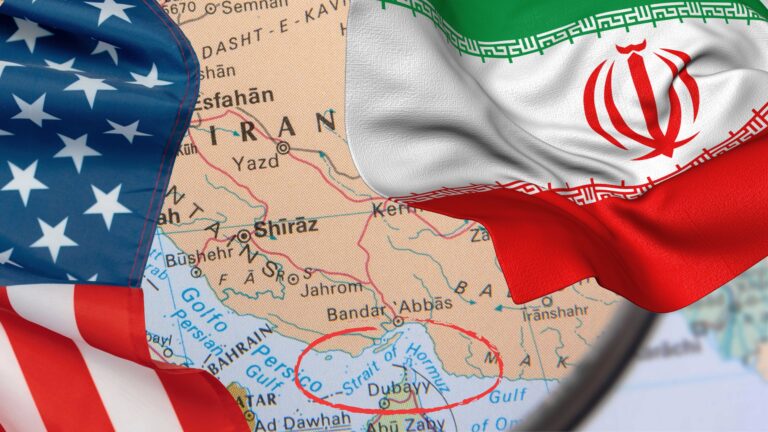
The U.S.-Israeli campaign against Iran has sharply reduced the supply of oil, gas and refined products.[i] According to UN Trade and Development, vessel traffic through the Strait of Hormuz has fallen by 95%, bringing the critical energy corridor close to a standstill.[ii]
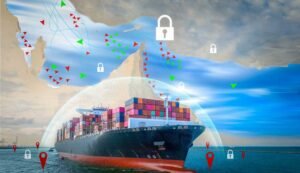
The strategic centre of gravity lies in two maritime chokepoints in the region: the Strait of Hormuz and the Bab el-Mandeb. Both are now directly or indirectly influenced by Iran’s Islamic Revolutionary Guard Corps (IRGC). While the IRGC has effectively blockaded Hormuz, the Iranian regime’s proxy, Ansar Allah (the Houthi movement in Yemen), is positioned to threaten traffic through Bab el-Mandeb.
To prevent a global recession, the U.S. is labouring to open the Strait of Hormuz, preparing to deploy both naval assets and ground troops to ensure the uninterrupted passage of tankers. In addition to its 82nd Airborne Division and the 31st Marine Expeditionary Unit, the U.S. Air Force, Navy and other assets will participate in the operation. The UK, France, Australia and other nations have meanwhile strengthened the defences of their regional positions.[iii]
The global effects of Iran’s leverage
The Islamic Republic of Iran’s war strategy is developed by the IRGC, who exert pressure on two fronts. First, by striking both military and civilian targets in the Gulf. The leverage they seek is to instil fear and coerce neighbouring states into removing U.S. forces from their territories. Second, by blocking the Strait of Hormuz, the IRGC seeks to exert leverage by steadily strangling the global economy. The shipping crisis in the Strait of Hormuz is now the largest supply disruption in the history of the global oil market.[iv] Several sectors have been impacted as a result, including energy, shipping, aviation and tourism.
Higher oil and gas prices are also influencing other parts of the global economy. In countries without strategic reserves the impact is severe, affecting transportation, commodity production and industrial activity. As of 1 April, 33% of global fertilizer, 25% of global gas, 20% of global oil, and 70% of petrochemicals are not reaching their destination in the global market.[v]
An unprecedented energy disruption could arise in the coming months, resulting in a decrease in oil output, a rerouting of maritime freight, the grounding of flights, and the further increase of war-risk insurance premiums. Major disruptions impacting the economies from Asia to Europe are in five main sectors. Oil output in the region declined from 21 million barrels daily to 14 million. There is a risk for further decline to a mere 6 million barrels per day.xxiii Maritime carriers are diverting their ships, causing longer transit times and higher freight costs. Major airlines have suspended or reduced the number of flights they operate, with thousands of weekly cancellations due to airspace closures in the Middle East. War-risk premiums have surged, increasing operational costs for shipping, aviation and other sectors. Major hotel chains have seen stocks drop due to a drastic decrease in travel in the region. The conflict has also disrupted fish and vegetable imports, and threatens regional food security in general.[vi]
Although East Asia remains a fast-growing region, economic slow-down is likely in light of the heightening procurement risk for construction projects. The reliance on Middle Eastern logistics and the impending fuel crisis will cause significant shortages for farmers, further exacerbated by disruptions in fertilizer production, leading to reduced agricultural output. Rising food and consumer prices due to energy-related inflationary pressure are indeed a global phenomenon.
The strategic and political environment
The administration of U.S. President Donald Trump appears committed to pursuing regime change in Iran, continuing to work in coordination with the Israel Defense Forces (IDF). A more immediate objective in the next phase of the war is the opening of the Strait of Hormuz for international trade. Most of the beneficiaries of the energy supply normally passing through the strait are based in Asia and Europe. As the U.S. is not directly reliant on these supplies, President Trump appealed to China, France, Japan, South Korea and the UK to join the Washington-led coalition to open the chokepoint.[vii] Despite European countries’ signals to abstain from direct involvement in such an operation, they look to strengthen the military capabilities of their partners in the Gulf.[viii]
On 1 April, UK Defence Secretary John Healey announced a significant deployment of additional UK military personnel and advanced air defence systems to Gulf nations[ix] to bolster them against Iranian missile and drone attacks and to secure the Strait of Hormuz. This includes the deployment of the Sky Sabre ground-based air defence system to Saudi Arabia. In addition to the Royal Air Force’s ORCUS drone-detection system, the UK will also deploy “Rapid Sentry”, an anti-drone system, in Kuwait. A light multi-role launcher is being integrated into Bahrain’s defence systems. The UK will also deploy its Typhoon fighter jets, operating in a joint squadron in Qatar. A thousand troops will support the Gulf and Cyprus combinedly. Similarly, Australia is planning to deploy its special troops to the Middle East. Initially, about 90 Special Air Service personnel will be based at the Al Minhad Air Base near Dubai in the UAE.[x]
Gulf countries are also taking a more proactive stance. Bahrain has put forward a draft United Nations Security Council resolution that would authorise countries to use “all necessary means” to protect commercial shipping in and around the Strait of Hormuz.[xi] “(S)ome of the regional allies are making the case to the White House that the moment offers a historic opportunity to cripple Tehran’s clerical rule once and for all.”[xii] Officials from Saudi Arabia, the UAE, Kuwait and Bahrain have conveyed in private conversations that they do not want the military operation to end until there are significant changes in the Iranian leadership or there’s a dramatic shift in Iranian behaviour.”[xiii] Meanwhile, Iran continues to attack targets in the Gulf, damaging airports, sea ports, oil facilities – including oil tankers – and disrupting traffic in the strait.[xiv]
The threat landscape
In mid-March, some ships, particularly those with links to China, Russia, India, Iraq, Pakistan, India, Malaysia, Thailand, and the Philippines were permitted rare passage through the Strait of Hormuz.[xv] As Europe has now coalesced around a more unified stance condemning escalation while prioritizing maritime security, Tehran has sought to engage selectively with European countries, particularly those that previously denied U.S. military access to their bases for strikes against Iran. In parallel, Iran has proposed a “fair-based access” arrangement for transit through the Strait, making passage available to all states except the United States and Israel.[xvi]
Importantly, preparations by the Iranian regime for raising militias and blocking the Strait of Hormuz – and potentially Bab el-Mandeb – took place over two decades. In parallel with this, Iran also developed its ballistic missile and nuclear programmes, while the IRGC systematically built an arsenal of rockets, drones and missiles, as well as improved its naval capabilities to cultivate a comprehensive posture for power projection. Iranian officials have also been clear that any military confrontation would result in retaliation towards the Gulf too.
Of all its capabilities, what concerned Israeli, U.S., European and Arab security and intelligence communities most was Iran’s nuclear programme.[xvii] Despite its assurances to the international community and the fragile – and eventually collapsed – framework of the JCPOA, Tehran continued to build its nuclear programme clandestinely.[xviii]
The U.S. joined Israel in the Twelve-Day War in June 2025 to dismantle this programme, having attacked three nuclear facilities in Iran under ‘Operation Midnight Hammer’. Notwithstanding, the ultimate goal of removing the nuclear threat had not been achieved. The International Atomic Energy Agency said that before the outbreak of the current war in February “Iran used advanced centrifuges to enrich uranium up to 60% – a short, technical step from weapons-grade levels of 90%” required to make a nuclear bomb. The whereabouts of a portion of this 60% enriched uranium stockpile, reportedly removed prior to the Twelve-Day War, also remains unresolved, raising further concerns about proliferation.[xix]
Despite Omani Foreign Minister Badr bin Hamad Al Busaidi’s assessment that Iran and the U.S. had made “substantial progress”[xx] toward negotiating a new nuclear deal during talks in February and agreed to meet again in March, President Trump opted for removing the perceived threat posed by the regime via means of a military intervention.
Continue Reading:
Middle East War’s Next Phase: Who Will Open the Strait of Hormuz? – Part II
Hormuz blockade deepens as US-Israel coalition weighs military action, and global energy markets face mounting disruption and risk.
[i] UN Trade and Development (2026). “One chokepoint, global impact”, Twitter/X, 2 April 2026, retrieved from: https://x.com/UNCTAD/status/2039659420758499395.
[ii] UN Trade and Development (2026). “Disruptions in the Strait of Hormuz…”, Twitter/X, 2 April 2026, retrieved from: https://x.com/UNCTAD/status/2039720813939585171.
[iii] Watson, E. and LaPorta, J. (2026). “U.S. expected to deploy troops from 82nd Airborne to Middle East for Iran war”, CBS News, 24 March 2026, retrieved from: https://www.cbsnews.com/news/u-s-deploy-82nd-airborne-iran-middle-east/.
[iv] World Economic Forum (2026). “Beyond oil: LNG and other commodities impacted by closure of the Strait of Hormuz”, 1 April 2026, retrieved from: https://www.weforum.org/stories/2026/04/beyond-oil-lng-commodities-impacted-closure-hormuz-strait/.
[v] Deloitte (2026). “The oil shock is not just about fuel prices”, 13 March 2026, retrieved from: https://www.deloitte.com/cz-sk/en/mnaport/articles/clanky-tydne/2026/ropny-sok-neni-jen-o-cennach-pohonnych-hmot.html.
[vi] Lockton (2026). “Marine, Aviation War Risk Premiums Rise as Insurers Reassess Exposure Amid Iran War”, 23 March 2026, retrieved from: https://global.lockton.com/in/en/news-insights/marine-aviation-war-risk-premiums-rise-as-insurers-reassess-exposure-amid.
[vii] Davies, M. (2026). “Trump urges UK and other nations to send warships to Strait of Hormuz”, BBC News, 14 March 2026, retrieved from: https://www.bbc.com/news/articles/cd039n9vj3vo.
[viii] Israel Hayom (2026). “Assessment: The minimum period of time the war will last – and the final picture”, 2 April 2026, retrieved from: https://www.israelhayom.co.il/news/geopolitics/article/20251982.
[ix] Price, R. (2026). “Extra UK troops to be deployed to Middle East to help allies against Iranian attacks: ‘Britain’s best’ will help protect Gulf partners, says Defence Secretary”, 31 March 2026, retrieved from: https://www.manchestereveningnews.co.uk/news/uk-news/extra-british-troops-middle-east-33692152.
[x] Sky News (2026). “Australia deploys SAS troops to the Middle East”, 3 April 2026, retrieved from: https://www.skynews.com.au/australia-news/defence-and-foreign-affairs/australia-deploys-sas-troops-to-the-middle-east/video/c2d67de06d202aa2bbf80da72272680e?amp.
[xi] Reuters (2026). “Bahrain proposes UN Security Council approve use of force to protect Hormuz shipping”, 23 March 2026, retrieved from: https://www.reuters.com/world/china/bahrain-proposes-un-security-council-approve-use-force-protect-hormuz-shipping-2026-03-23/.
[xii] PBS News (2026). “Gulf allies privately make case to keep fighting until Iran is decisively defeated”, 31 March 2026,retrieved from: https://www.pbs.org/newshour/world/gulf-allies-privately-make-case-to-keep-fighting-until-iran-is-decisively-defeated.
[xiii] Madhani, A. et al. (2026). “Gulf allies privately make the case to Trump to keep fighting until Iran is decisively defeated”, AP, 31 March 2026, retrieved from: https://apnews.com/hub/united-arab-emirates.
[xiv] Israel Hayom (2026). “Assessment: The minimum period of time the war will last – and the final picture”, 2 April 2026, retrieved from: https://www.israelhayom.co.il/news/geopolitics/article/20251982.
[xv] Al Jazeera (2026). “There is no reason to allow our enemy to pass through the Strait of Hormuz”, 26 March 2026, retrieved from: https://www.aljazeera.com/amp/news/2026/3/26/iranian-naval-commander-alireza-tangsiri-killed-in-attack-says-israel.
[xvi] Reuters (2026). “Iran says Hormuz open to all but ‘enemy-linked’ ships”, 22 March 2026, retrieved from: https://www.reuters.com/world/middle-east/iran-says-hormuz-open-all-enemy-linked-ships-amid-us-threat-2026-03-22/.
[xvii] CBS Evening News (2018), “Saudi Crown Prince Mohammed bin Salman says his country could develop nuclear weapons”, YouTube, 15 March 2018, retrieved from: https://m.youtube.com/watch?v=CujfC5ixGKQ.
[xviii] BBC News (2018). “Israel says Iran hid nuclear arms programme”, 1 May 2018, retrieved from: https://www.bbc.com/news/world-middle-east-43952196.
[xix] Liechtenstein, S. (2026). “Iran’s nuclear ambassador alleges that US-Israeli airstrikes targeted the Natanz enrichment facility”, AP, 2 March 2026, retrieved from: https://apnews.com/article/iran-nuclear-facilities-attack-us-israel-3e08a78093e62dc76beb86ba1fca69ae.
[xx] Davenport, K. (2026). “U.S. Negotiators Were Ill-Prepared for Serios Nuclear Talks With Iran”, Arms Control Association, April 2026, retrieved from: https://www.armscontrol.org/act/2026-04/features/analysis-us-negotiators-were-ill-prepared-serious-nuclear-talks-iran.