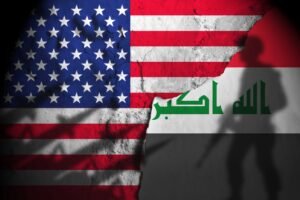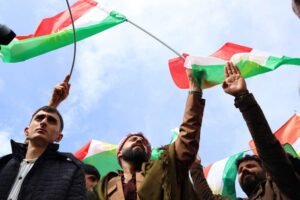
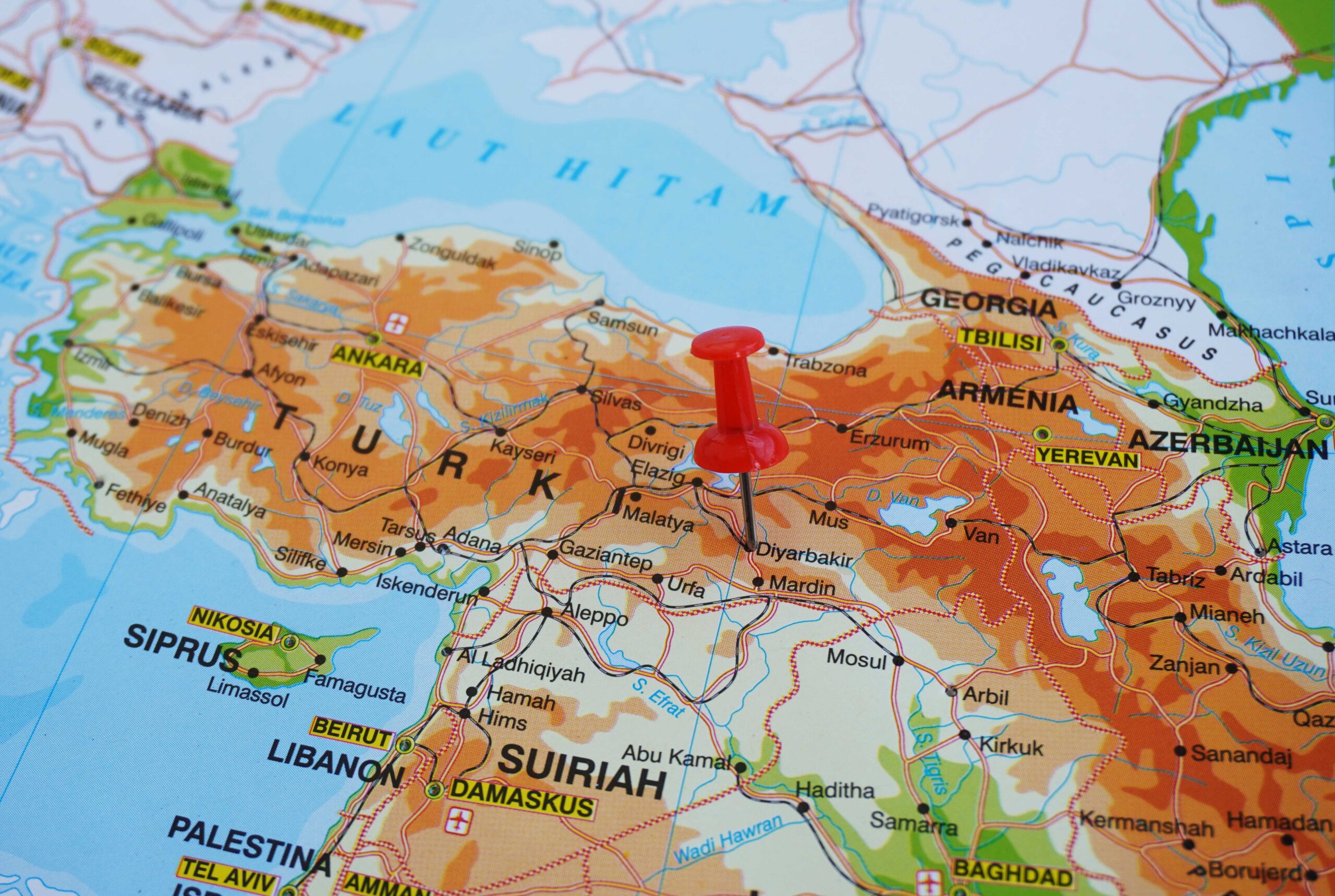
Prospective outcomes regarding the US/Israeli-Iranian war would be seen by Turkey as a crucial geopolitical moment in which the balance of power in the region is rapidly shifting beyond borders, rather than merely instability in a nearby country. According to early reports, there was U.S.-Israeli interest in using anti-Iranian Kurdish fighters in a conflict with Iran; U.S. President Donald Trump even stated this before subsequently retracting it. According to some news reports, this turnaround was largely due to Turkey’s adamant resistance.[i] “You saw what happened in Syria,” Turkish President Recep Tayyip Erdoğan said[ii] during his talk with Trump, according[iii] to the Turkish press, which characterised his position as forthright. “We will do the same thing here as we did there. No alternative line of action will discourage us. The reaction will be prompt as soon as the area is ignited.”
The Kurdish-Turkish peace process before the outbreak of the war
In October 2024, Devlet Bahçeli, leader of the Nationalist Movement Party (MHP), a partner in the current ruling coalition, led Ankara to redefine[iv] its “Turkey Free of Terrorism” policy in response to these events. In the face of increased tensions brought on by Israeli activities in Gaza, Bahçeli stressed the importance of “strengthening the home front.” Abdullah Öcalan, the leader of the Kurdistan Workers’ Party (PKK) incarcerated on the Turkish island of İmralı, officially demanded the party’s dissolution on 27 February 2025. A multi-party parliamentary committee then issued[v] its findings on the procedure on 18 February 2026. Before the U.S.-Israeli conflict with Iran began on 28 February 2026, the process was marked by little functional cooperation between Kurdish parties, the government, and the security apparatus.
Rather than following the formula of “political reform following disarmament,” the emphasis shifted to delaying reforms and giving top priority to security concerns. Even Mehmet Uçum, one of Erdogan’s advisors and a key figure in shaping the discourse of the process, admitted[vi] that the war in Iran puts the objective of a “terror-free zone” at risk, while also pointing out that the ethnic framing Kurdish demands is viewed as unacceptable. The rise of new actors, such as those in Iraq and Syria, the possible expansion of the Kurdistan Workers’ Party (PKK) into the power vacuum within Iran, and fresh waves of migration are Turkey’s main concerns. As a result, Ankara is now focusing on risk control rather than pursuing a peace process with the Kurds.
It was anticipated that the process would centre on what is now known as the “Framework Law”[vii] (also referred to as the “Opportunity Law”), legislation that restricts the definition of terrorism to exclude non-violent activities and redefines the legal status of members of the organisation. The Kurdish side, on the other hand, calls for measures to be taken concurrently with disarmament. Three key demands were outlined[viii] by Tuncer Bakırhan, co-chair of the Kurdish Peoples’ Equality and Democracy Party (DEM Party) on 21 March 2026: partnership in local and national governance; genuine negotiations with the state, rather than merely formal dialogue; and legal and constitutional recognition of Kurdish identity and cultural rights.
The PKK’s strategic position in Iranian Kurdistan
Turkish security assessments state that since the start of the war with Iran, the Kurdistan Workers’ Party (PKK) has been slow to surrender its weaponry. The evacuation of entire regions, including Khwakurk, Gabar, and Qandil (in the Turkish-Iraqi-Iranian border triangle), was expected to happen earlier but has stalled. According to Turkish security experts, the PKK views Iran as a strategic outlet and a space in which it may pursue Kurdish aspirations in the future. These ambitions are founded on three pillars: first, geographical depth, involving turning Iranian Kurdistan into a new theatre of operations; second, international support, which could include incorporating Kurdish actors into U.S.-Israeli strategies against Iran; and third, the pursuit of legitimacy by strengthening the PKK’s position as a regional actor.
The PKK therefore likely favours “strategic ambiguity,” over a “comprehensive solution.” However, a year after calling on his PKK to dissolve and end its decades-long struggle, Öcalan stressed[ix] in a statement issued on 27 February, that peace-related legislation is necessary for a transition to democratic integration in Turkey. In a statement released on the same day through the lawmakers of the Peoples’ Equality and Democracy Party (DEM Party), he called for accelerating the process in light of the conflict with Iran, stating: “There are deep-seated hegemonic plans being hatched for the Middle East. The war in Iran has once again shown the importance and legitimacy of the path we are taking in Turkey.”
Turkey’s cautious approach
For its part, the Turkish government’s policy of slowing down the “Turkey Free of Terrorism” process is a result of several interrelated factors, chief among them regional unpredictability, the need to verify disarmament on the ground, and the approaching summer presidential and parliamentary elections, which are compelling the government to proceed more cautiously. On 24 March, Devlet Bahçeli, the main architect of the process and leader of the Nationalist Movement Party (MHP), urged patience[x], stating: “There’s no point in stifling the process, rushing it, or stirring up controversy about it, We’ve begun, and with God’s help, we’ll succeed. Peace has two wings, and it only takes off if they flap at the same time. So, the entire nation should have the same stance.” He further emphasised the unity required to complete the project when he stated on 7 April that “One of those wings is (the PKK’s) decision to dissolve itself, and the second wing is the Turkish nation.” Bahçeli also commended Parliament for fulfilling its mandate to advance the project. A parliamentary committee recently completed a report that will serve as a blueprint for future legislation aimed at achieving a Turkey free of terrorism. On the other hand, the Kurdish side fears this prudence may turn into delay and bad faith.
In conclusion, the war with Iran exposed a fundamental inconsistency in the strategy: the Kurds perceive it as a pathway to securing genuine ethnic rights, while the state sees it as a reorganisation of Turkey’s domestic order. At this stage, each side is waiting for the other to initiate engagement.
[i] Gunes, S. (2026). “Erdogan foiled Israel’s Kurdish proxy plan in Iran, Turkish media claims” The Amargi, 30 March 2026, retrieved from: https://www.theamargi.com/posts/turkish-media-claims-erdogan-foiled-israels-kurdish-proxy-plan-in-iran.
[ii] Abdulrazek, S. (2026). “Turkiye Signals Possible Intervention in Northern Iraq over Kurdish Role in Iran War”, Al Sharq al Awsat, 30 March 2026, retrieved from: https://english.aawsat.com/arab-world/5256768-t%C3%BCrkiye-signals-possible-intervention-northern-iraq-over-kurdish-role-iran-war.
[iii] TASS (2026). “Turkey will strike at Kurdish formations if they participate in attacks on Iran”, [in Russian], 29 March 2026, retrieved from: https://tass.ru/mezhdunarodnaya-panorama/26926987.
[iv] Safak, Y. (2024). “Bahceli gave six messages with the call for Ocalan”, [in Turkish], Memurlar, 24 October 2024, retrieved from: https://www.memurlar.net/haber/1115853/bahceli-ocalan-cagrisi-ile-alti-mesaj-verdi.html.
[v] Turkish Grand National Assembly (2026). “National Solidarity, Brotherhood and Democracy Commission Report”, [in Turkish], 18 February 2026, retrieved from: https://www.tbmm.gov.tr/Files/Komisyonlar/MilliDayanismaKardeslikDemokrasiKomisyonu/Komisyon_Raporu.pdf.
[vi] Turkiye (2026). “Chief Advisor to the President emphasizes unity: Turkey will never give up on the Kurds of the region”, 30 March 2026, retrieved from: https://www.turkiyegazetesi.com.tr/gundem/cumhurbaskani-basdanismanindan-birlik-vurgusu-turkiye-bolge-kurtlerinden-asla-vazgecm-1780444?s=1.
[vii] Turkish Minute (2025). “Turkey plans individualized legal steps for PKK militants under proposed ‘opportunity law’”, 15 December 2025, retrieved from: https://turkishminute.com/2025/12/15/turkey-plans-individualized-legal-steps-for-pkk-militants-under-proposed-opportunity-law/.
[viii] Dem Parti (2026). “Bakirhan: 2026 Nowruz is the Nowruz of the transition from rebellion to construction”, 22 March 2026, retrieved from: https://www.demparti.org.tr/tr/bakirhan-2026-newrozu-isyandan-insaya-gecisin-newrozudur/22624/.
[ix] Al Sharq al Awsat (2026). “Ocalan Says Laws Needed in Turkiye Peace Process”, 27 February 2026, retrieved from: https://english.aawsat.com/world/5245408-ocalan-says-laws-needed-t%C3%BCrkiye-peace-process.
[x] T24 (2026). “Bahceli’s message on ‘Turkey without terrorism’…”, 24 March 2026, retrieved from: https://t24.com.tr/gundem/bahceliden-terorsuz-turkiye-mesaji-sureci-bogmanin-alemi-yok-hedef-koyduk-ulasacagiz,1309411.