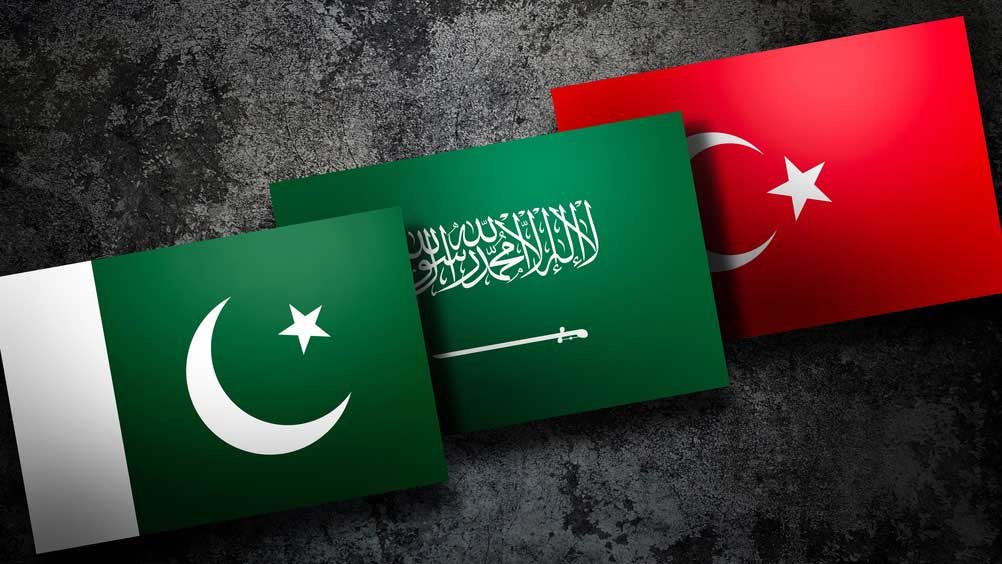
The Mecca Joint Defence Agreement, signed on 7th August 2026 by Pakistan, Saudi Arabia, and Türkiye, marks a significant development in the Middle East’s security architecture.[i] The central principle appears somewhat similar to NATO’s Article 5: an armed attack against one member would be considered an attack on all members.[ii] Turkish Foreign Minister Hakan Fidan compared the alliance to NATO’s collective defence principle, while Pakistani officials described it as “purely defensive”.[iii] Yet beneath the agreement lies a strategic paradox that demands careful consideration by Ankara: how can Türkiye offer security guarantees while upholding its obligations as a NATO member since 1952?
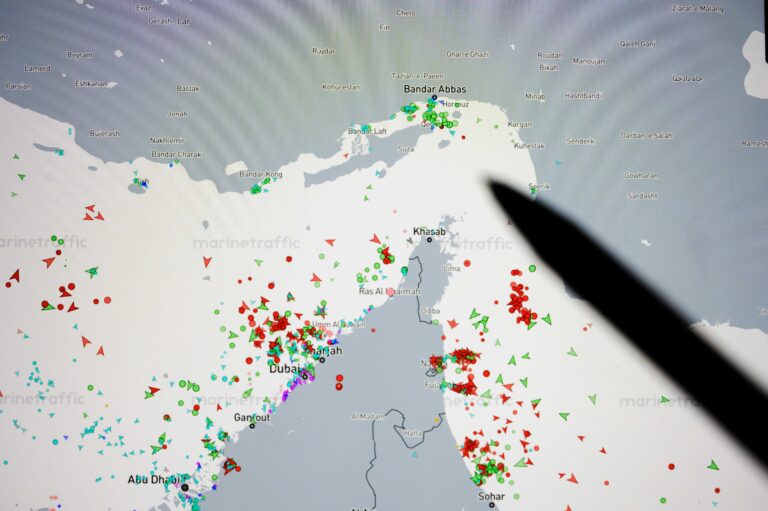
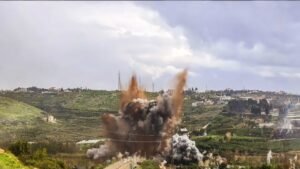
The U.S.-Israel War on Iran has drastically transformed Middle Eastern security. Saudi Crown Prince Mohammed bin Salman reportedly advocated privately for U.S. military action against Iran. However, the Kingdom did not provide air bases or grant permission for aircraft deployments during the war. Iran’s subsequent retaliation exposed the vulnerability of the Middle East’s security architecture. The GCC countries have faced relentless Iranian retaliation owing to their support for the United States. Saudi Arabia managed to protect its security to a greater degree during the Middle East War, primarily due to Pakistan’s mediation efforts.[iv] The Kingdom intercepted 439 drones and 36 ballistic missiles since Iran began its retaliatory strikes. A substantial number of drones were directed towards Al-Kharj, where Prince Sultan Air Base is located.[v] In comparison, the UAE Ministry of Defence reported engagements involving 1,627 UAVs/drones, 15 cruise missiles and 304 ballistic missiles from Iran.[vi]
Saudi Arabia’s recent altercations with the Iranian-backed Houthis have jeopardized the Kingdom’s security and economic interests. Following an attack on Sanaa International Airport – which the Houthis attributed to Saudi Arabia but which Yemen’s internationally recognised government claimed responsibility for – the Houthis launched missile attacks towards Saudi Arabia and declared a naval blockade.[vii] Two days after the Mecca Agreement was signed, the Houthis attacked an Aramco facility in Jazan[viii], further demonstrating the vulnerability of Saudi energy infrastructure to asymmetric attack. At the same time, the growing tensions between Türkiye and Israel encouraged Ankara to enhance its strategic position by strengthening its defensive capabilities.[ix] However, unlike Pakistan and Saudi Arabia, Türkiye’s inclusion in the pact creates dual obligations for the country as its commitments under the Mecca Agreement may contradict its NATO obligations. This creates a challenge for Türkiye’s leadership, which aims to extend its influence in the Middle East while retaining its NATO status.
Uncertainty of NATO’s commitments
Türkiye’s participation in the Mecca Agreement raises a potential tension with Article 8 of the North Atlantic Treaty, which provides that members shall not “enter into any international engagement in conflict with this Treaty.” The existence of an additional collective-defence commitment does not in itself establish a conflict with Article 8. The more difficult question arises if Türkiye acts under the Mecca Agreement and subsequently faces retaliation. NATO allies could then disagree over the applicability of Article 5 and over the nature and extent of assistance considered necessary.
The 2003 Iraq crisis[x] provides a more nuanced precedent. Türkiye invoked NATO’s Article 4 because of potential security threats arising from the conflict in neighbouring Iraq. NATO allies initially disagreed over the timing of defensive preparations, but subsequently agreed to provide Türkiye with AWACS surveillance aircraft, Patriot missile-defence systems and chemical and biological defence capabilities.[xi] The episode therefore demonstrates not an absence of NATO solidarity, but the possibility of political disagreement among allies over the timing and scope of collective defensive measures.
Turkiye, a NATO member since 1952 and situated at the intersection of Europe, the Mediterranean, and the Black Sea, holds profound significance in the geostrategic environment.[xii] Ankara’s security partnerships with Qatar, Libya and Syria provide strategic depth for NATO’s southern flank. However, the Mecca Agreement complicates the security equation, introducing another security commitment for Türkiye.
As tensions escalate between Saudi Arabia and the Iranian-backed Houthis in the Red Sea, the possibility of wider regional involvement increases.[xiii] If the Mecca Agreement’s collective-defence provision were invoked following an attack on Saudi Arabia, Türkiye would face an expectation to provide assistance. However, the publicly available provisions do not specify whether such assistance must involve direct military force. If Türkiye nevertheless provided direct military assistance and subsequently faced retaliation, this could create political complications within NATO. The relevant questions would include whether the retaliatory attack fell within Article 5’s treaty framework and, if so, what forms of assistance individual NATO allies considered necessary.
Rising Israel-Türkiye tensions and prospective NATO response
Tensions are broiling between Israel and Türkiye in the aftermath of the U.S.-Israel War on Iran. The Mecca Agreement has also generated concern in Israeli strategic commentary.[xiv] An armed attack on Turkish territory would raise a direct Article 5 question. However, an attack on Turkish forces or installations operating in Syria would present a different legal and political question because such forces do not straightforwardly fall within Article 5’s territorial framework. Here, Article 8 could give rise to political fragmentation among the member states. Some allies could consider it the result of Ankara’s expanding regional commitments contributing to the confrontation. Thus, if Israeli forces attack Turkish territory, some allies might connect it with Türkiye’s engagement in the Mecca pact and thereby increase the security threats for Ankara.
Ankara could nevertheless regard an attack on Turkish forces in Syria as a serious threat to its national security, potentially prompting consultations with NATO allies even where the applicability of Article 5 remained uncertain.
Turkish Vice President Cevdet Yilmaz has clearly highlighted that the agreement is purely defensive,[xv] and it is not directed against any other security commitment. Yet the agreement does not resolve how these commitments would interact with Türkiye’s NATO obligations. The strategic risk therefore lies not in an automatic loss of NATO protection, but in the possibility that allies could disagree over the applicability, timing and form of collective assistance if Türkiye became involved in a confrontation arising from its Mecca Agreement commitments.
Article 8 does not prohibit NATO members from entering other international engagements. It prohibits engagements that conflict with the North Atlantic Treaty. The central ambiguity is therefore whether, and under what circumstances, Türkiye’s commitments under the Mecca Agreement could create such a conflict.
The emerging strategic calculus gives rise to three distinct scenarios for Türkiye. Firstly, NATO members might consider the Mecca agreement compatible with NATO’s collective defence principle, and create a politically comfortable environment for Ankara extending NATO’s strategic reach into the Middle East and South Asia. Secondly, some NATO allies might interpret Article 8 restrictively and regard Türkiye’s decision to act under the Mecca Agreement as an independent foreign-policy commitment, potentially limiting their willingness to become involved in the resulting confrontation. Thirdly, NATO members might adopt differing views, with some defending Türkiye and some declining to support. The resulting political fragmentation would destabilize NATO’s cohesion under the collective defence principle. Of these three possibilities, the third scenario – divergent political responses among NATO allies – appears the most plausible.
The 2003 Iraq crisis illustrates the potential for such intra-alliance disagreement. Although NATO ultimately provided defensive assistance to Türkiye, several allies initially opposed the timing of defensive preparations because of concerns about their implications for ongoing diplomatic efforts. This precedent suggests that NATO allies could similarly disagree over the timing and form of assistance in a future crisis arising from Türkiye’s regional commitments, even while maintaining their underlying commitment to Türkiye’s security.
Türkiye’s participation in the Mecca Agreement raises the question of whether its new regional commitments could come into tension with Article 8 of the North Atlantic Treaty. Article 8 does not provide for the withdrawal of Article 5 protection. The uncertainty instead concerns whether the commitments undertaken through the Mecca Agreement are compatible with Türkiye’s NATO obligations and how individual allies might respond politically to a crisis arising from those commitments.
Ankara’s perspective
From Ankara’s perspective, the Mecca agreement presents a strategic opportunity that justifies the risks. The agreement expands avenues for Turkish defence and industrial partnerships, drones and air-defence systems, strengthening its role in the emerging security architecture.[xvi]
These benefits carry a strategic trade-off. If NATO allies considered aspects of Türkiye’s commitments under the Mecca Agreement incompatible with its NATO obligations, this could generate political disagreement over the appropriate allied response to a subsequent crisis.
The agreement itself also contains significant operational ambiguities. Although it provides for mutual defence, the activation threshold remains unclear. The publicly available provisions do not specify what constitutes collective action, how decisions would be taken, or whether an attack would automatically require military assistance rather than consultations or other forms of support. These ambiguities are particularly significant because the three signatories face different security priorities. Türkiye is principally concerned with its regional rivalry with Israel and Kurdish armed groups along its southern frontier; Saudi Arabia faces threats to its territory, energy infrastructure and Red Sea interests; and Pakistan confronts a different security environment on its eastern and western borders. These divergent threat perceptions could complicate agreement over when the pact should be activated and what form collective assistance should take.
Türkiye’s signature on the Mecca Agreement marks a strategic milestone, strengthening Ankara’s emerging role in the Middle East’s security architecture. However, this achievement creates strategic tensions with NATO membership. Article 8’s prohibition on international engagements that conflict with the North Atlantic Treaty raises an unresolved question about how Türkiye’s overlapping defence commitments would be interpreted within NATO. It has become increasingly important for Türkiye to engage NATO capitals to clarify Article 8 interpretation and develop crisis-communication channels to address regional tensions.
[i] Timour, A. (2026). “Saudi Arabia, Turkey, Pakistan pledge mutual defence as Middle East turmoil escalates”, Reuters, 7 August, 2026, retrieved from: https://www.reuters.com/world/asia-pacific/saudi-arabia-turkey-pakistan-sign-joint-defence-deal-amid-regional-turmoil-2026-08-07/.
[ii] Bea, C. (2026). “What Is NATO’s Article 5? A Quick Guide”, The Defence Post, 31 May 2026, retrieved from: https://thedefensepost.com/2026/05/31/nato-article-5-guide/.[iii] Andrew, M. (2026). “Turkey’s Hakan Fidan Says Mecca Joint Defence Agreement Not Aimed at Iran as New Muslim Alliance Takes Shape”, Political, 08 August 2026, retrieved from: https://political.org/2026/08/08/turkeys-hakan-fidan-says-mecca-joint-defense-agreement-not-aimed-at-iran-as-new-muslim-alliance-takes-shape/.
[iv] Khurram, S. (2026). “Pakistan reminded Iran of Saudi defense pact while seeking to limit Gulf escalation — Dar”, Arab News, 04 March 2026, retrieved from: https://www.arabnews.com/node/2635098/amp.
[v] Arab News, (2026). “439 drones, 36 missiles: The staggering toll of Iran’s 3-week strike on Saudi Arabia”, 18 March 2026, retrieved from: https://www.arabnews.com/saudi-arabia/439-drones-36-missiles-the-staggering-toll-of-irans-3-week-strike-on-saudi-arabia-2636765.
[vi] Jangoulun, S. (2026). “UAE reports 304 ballistic missiles engagement amid ongoing Iran strikes”, 17 March 2026, retrieved from: https://www.airforce-technology.com/news/uae-mod-iran-missile-engagement/.
[vii] Defence Security Asia (2026). “Houthis Declare Naval Blockade on Saudi Arabia: Bab al-Mandeb Shutdown Threatens 5 Million Barrels of Oil a Day”, 20 July 2026, retrieved from: https://defencesecurityasia.com/en/houthi-naval-blockade-saudi-arabia-bab-al-mandeb-oil-crisis/.
[viii] Reuters (2026). “Yemen’s Houthis say they attacked Saudi Aramco refinery in Jazan with two drones”, 13 August 2026, retrieved from: https://www.reuters.com/world/middle-east/yemens-houthis-say-they-attacked-saudi-aramco-refinery-jazan-with-two-drones-2026-08-13/.
[ix] Al Jazeera, (2026). “Turkey and Israel: Temporary Tensions or a Clash of Major Interests?”, 19 July 2026, retrieved from: https://studies.aljazeera.net/en/policy-briefs/turkey-and-israel-temporary-tensions-or-clash-major-interests.
[x] Richard, B. (2003). “NATO Settles Rift Over Aid to Turks in Case of War”, The New York Times, 16 February 2003, retrieved from: https://www.nytimes.com/2003/02/16/international/nato-settles-rift-over-aid-to-turks-in-case-of-war.html.
[xi] NATO (2012). “NATO Foreign Ministers’ statement on Patriot deployment to Turkey”, 4 December 2012, retrieved from: https://www.nato.int/en/about-us/official-texts-and-resources/official-texts/2012/12/04/nato-foreign-ministers-statement-on-patriot-deployment-to-turkey.
[xii] Newsroom (2025). “Türkiye marks 73 years of NATO support with strong military presence”, Turkey Today, 17 February 2025, retrieved from: https://www.turkiyetoday.com/turkiye/turkiye-marks-73-years-of-nato-support-with-strong-military-presence-120478/.
[xiii] Mutahar, A. (2026). “Houthi Escalation Against Saudi Arabia: Between Containment and Confrontation”, Politics Society, 9 August 2026, retrieved from: https://politicsociety.org/2026/08/09/houthi-escalation-against-saudi-arabia-between-containment-and-confrontation/?lang=en.
[xiv] Kamal, A. (2026). “Is the Mecca Agreement Israel’s worst nightmare come true?”, Middle East Eye, 11 August 2026, retrieved from: https://www.middleeasteye.net/opinion/is-mecca-agreement-israel-worst-nightmare-come-true.
[xvi] Shashi, A. (2026). “Mecca Pact: How Saudi Arabia, Türkiye and Pakistan Are Reshaping West Asia’s Security”, Modern Diplomacy, 8 August 2026, retrieved from: https://moderndiplomacy.eu/2026/08/08/mecca-pact-how-saudi-arabia-turkiye-and-pakistan-are-reshaping-west-asias-security/.