During the years of the JCPOA, a distinctive atmosphere emerged in Iran. Hope began to return. Even hardliners mostly avoided direct confrontation with the agreement and limited themselves to criticising its margins. Major aircraft deals and the arrival of new Airbus planes after years of sanctions created the sense that a long nightmare was finally ending. Iran also signed a large Boeing order, although those aircraft were never delivered after sanctions returned.[i]
Trump’s election and the U.S.’ withdrawal from the JCPOA brought those nightmares back. In Iranian public discussion, one common explanation was that Iran had lost the opportunity to build real economic relations with the United States, while the European signatories proved unable to preserve the agreement’s economic benefits after Washington left.
Iran began reducing its compliance in 2019. After the killing of Qassem Soleimani in January 2020, Tehran announced that it would no longer observe key operational limits. The JCPOA still existed on paper, but politically it had become increasingly hollow.[ii]
The new framework is not simply a return to the JCPOA. It is the JCPOA’s underlying logic reconstructed after war: broader, more expensive, more transactional, and designed for Trump to claim politically. Its most important part may not be enrichment itself, but the reconstruction and economic-development framework, which can shift the agreement from arms control into political economy.
A deal after war
The recent war demonstrated a fundamental reality: neither the United States nor Iran could remove the other from the region’s political landscape. Washington could inflict enormous military damage, while Iran could impose economic and regional costs, but neither could produce a decisive political outcome.
The two sides have now signed a 14-point interim memorandum, witnessed and mediated by Pakistan. It begins a 60-day negotiation period and includes a mutual cessation of military operations, the removal of the U.S. naval blockade, commercial passage through the Strait of Hormuz, temporary sanctions measures, and later negotiations over Iran’s nuclear programme.[iii]
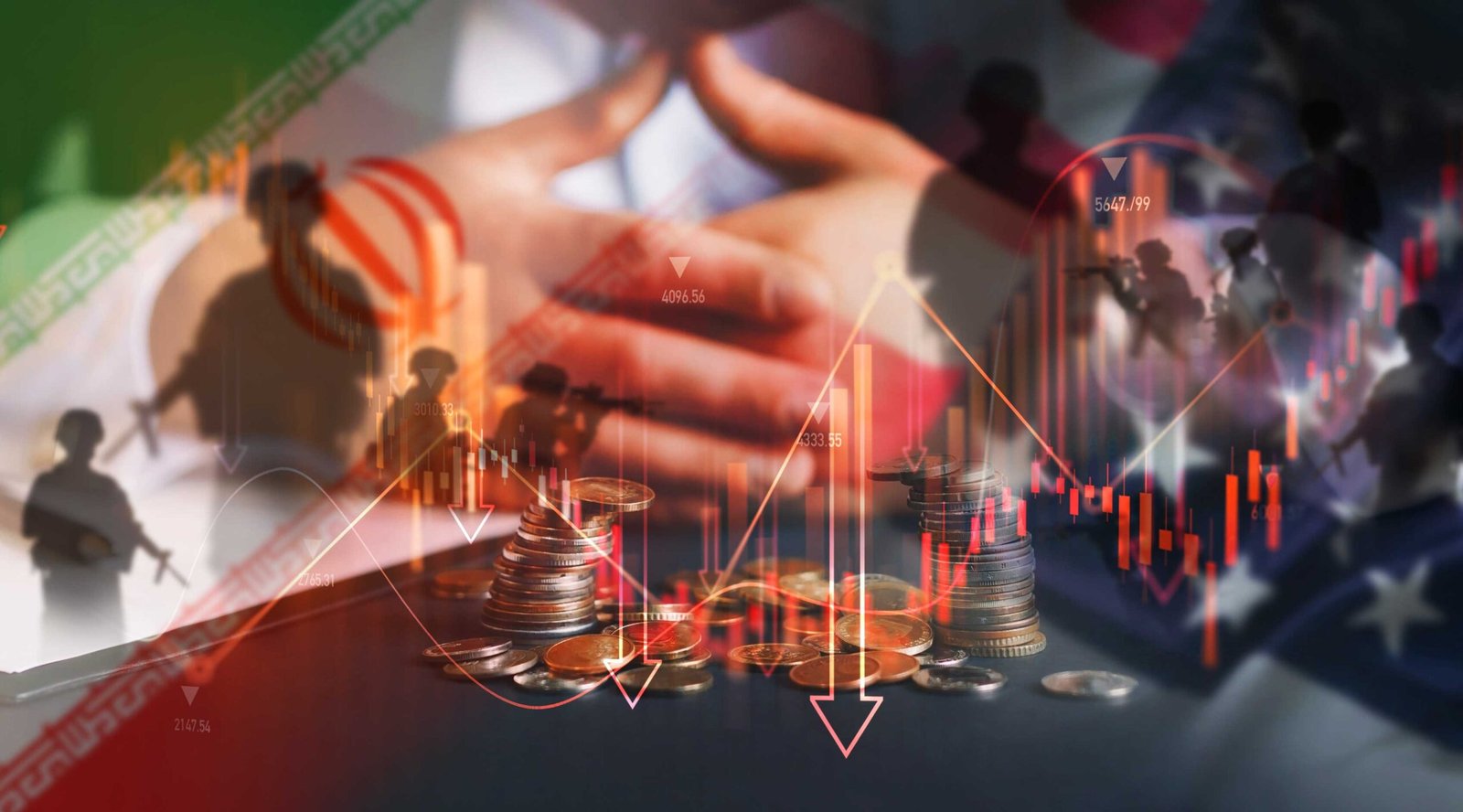
Many will assume that its most important clauses concern enrichment, the end of military operations or Hormuz. Yet the most consequential element may be the proposed $300 billion investment mechanism, if it is implemented.
Reuters has reported that this is intended as a private investment vehicle rather than U.S. government aid, reparations or grants. Companies from the United States, Gulf states, Asia and elsewhere would invest in energy, manufacturing, logistics and transport, and more than half of the proposed amount had reportedly already been committed.[iv]
Its exact form may still change, but its presence reveals something important: the conflict is no longer only about centrifuges and uranium. It is also about whether economic reintegration can achieve what sanctions, blockade and military force could not.
Beyond the JCPOA
The JCPOA was primarily an arms-control agreement. Iran accepted limits on enrichment, centrifuges, its uranium stockpile and nuclear facilities in exchange for sanctions relief and renewed economic access. Trump withdrew in 2018 and restored sanctions while Iran began breaching the deal’s limits the following year.[v]
The new framework is considerably broader. It links the end of military operations with Hormuz, oil exports, sanctions, frozen funds, investment and future nuclear negotiations. It is an attempt to create a security arrangement through economic incentives and phased compliance.
The JCPOA was built around a straightforward question: could nuclear restrictions justify sanctions relief? The new agreement asks whether economic development can alter Iran’s incentives and create interests strong enough to protect a future peace. That is more ambitious, and more fragile.
A deal Trump can own
Trump did not withdraw because the JCPOA had no strategic value. It imposed real restrictions on Iran’s nuclear programme. But it belonged politically to President Barack Obama, and Trump argued that it gave Iran too much while failing to address missiles, regional proxies and what his administration called Iran’s ‘malign behaviour’.[vi]
Simply returning to the JCPOA would risk appearing as an admission that withdrawal had failed. Trump therefore needed a broader, more visibly transactional agreement presented as the result of military and economic pressure rather than diplomatic continuity.
Political ownership matters almost as much as the agreement itself. Obama’s deal was based on multilateral arms control. Trump’s must look like a bargain made after force, blockade and leverage compelled Iran to negotiate.
The character of the American negotiating team reinforces this impression. Steve Witkoff and Jared Kushner – figures associated more with business transactions and personal negotiation than traditional diplomacy – became prominent participants in talks mediated through Pakistan.[vii] Their involvement reflects the administration’s transactional approach.
If Washington wants results that war could not produce, it must now pursue them while soldiers are standing still and diplomats are moving again.
Iran’s calculation
Under Iran’s constitutional structure, the Supreme Leader determines general state policy, commands the armed forces and holds ultimate authority over war and peace. Major foreign-policy and nuclear decisions therefore cannot be separated from the top leadership.[viii]
Previous Iranian leaders often viewed deep economic engagement with the United States as both an opportunity and a risk. Any breakdown in relations could be presented as evidence that trust in Washington had weakened Iran.
Any agreement must survive not only mistrust between Washington and Tehran, but also competing interests within Iran’s own political system.
Yet Iran does not enter any agreement as a single actor with a single interest. The Supreme Leader’s office defines the strategic limits of policy, while the Islamic Revolutionary Guard Corps (IRGC) is primarily concerned with military deterrence and preserving Iran’s regional network. Elected institutions have a stronger interest in sanctions relief and economic recovery, while some political and commercial actors have adapted to sanctions and benefit from protected markets and restricted access. Others, notably private businesses, technocrats and younger Iranians, have more to gain from economic opening and international integration. Any agreement must therefore survive not only mistrust between Washington and Tehran, but also competing interests within Iran’s own political system.
The current leadership confronts a different reality: direct war, damaged infrastructure, and the risk of wider escalation. It may conclude that even an imperfect agreement is preferable to permanent confrontation.
This does not mean Iran suddenly trusts Washington. The U.S. withdrawal remains central to Iranian calculations. A new agreement will need guarantees, sequencing and enforcement mechanisms strong enough to survive another change of government.
Both parties retain the ability to walk away, and U.S. officials have said the sequencing of sanctions relief, nuclear measures and other obligations will be central to the negotiations.[ix]
Economic opening as strategy
If investment begins and living standards improve, a different path could emerge. Iran has a large and educated population, a significant domestic market, substantial energy and mineral resources, and a generation of young people looking for opportunities.
Economic integration alone cannot resolve the underlying security dispute. Washington, Israel and some regional governments have justified sanctions and containment by citing Iran’s nuclear programme, missile capabilities and support for armed regional partners. Iran, however, views many of those same capabilities as forms of deterrence developed in response to war, encirclement and repeated external threats, while ordinary Iranians have borne much of the cost of sanctions.
A durable agreement therefore cannot be built around one side’s security concerns alone. It would require reciprocal commitments: verifiable nuclear arrangements and negotiated limits where agreed, but also credible sanctions relief, guarantees against renewed military escalation, and recognition that Iran, like other states, possesses legitimate security interests of its own.
Connecting these assets to regional trade and international investment could gradually reshape Iran’s incentives. A country whose economy depends on stable relations, open routes and international capital has more to lose from a state of permanent confrontation.
The investment framework is therefore more than a financial package for Iran. It is a possible instrument of political change. The hope would be that economic interests create restraint stronger than external threats alone.
Pressure without an economic exit may only reproduce the conflict.
Yet this outcome is far from guaranteed. Economic development does not automatically produce moderation in foreign policy. China became wealthier without political liberalization, while Russia remained deeply integrated into global markets before the invasion of Ukraine. But isolation has also failed to remove Iran from the regional system or force its collapse. Pressure without an economic exit may only reproduce the conflict.
Nor will incentives alone make the framework durable. The interim memorandum provides for compliance monitoring and contemplates a future UN Security Council resolution, but both sides retain the ability to walk away, and the sequencing of obligations remains unresolved. A final agreement would require clearly defined implementation stages, independent verification, dispute-resolution mechanisms and credible consequences for serious non-compliance. Otherwise, sanctions relief and economic reopening could be suspended at the first major political crisis.[x]
Obstacles ahead
The obstacles remain substantial. Inside Iran, hardliners may regard economic opening as the beginning of political opening. Greater trade and foreign investment could weaken constituencies that benefit from sanctions, protected markets and restricted access.
In Washington, critics may argue that the framework rewards Iran for disrupting Hormuz and resisting military pressure. Enrichment rights, highly enriched uranium, inspections and verification remain difficult, while sanctions sequencing and a 60-day timetable may be inadequate for bringing about such a complex agreement.[xi]
Israel may worry that a more prosperous and regionally integrated Iran would possess greater resources to sustain military capabilities, project regional influence and support allied non-state actors. Its concerns have focused less on Iran’s economic growth itself than on whether the agreement would adequately constrain Iran’s missile programme, nuclear capabilities and support for groups such as Hezbollah in Lebanon.[xii]
Washington and Tehran can also describe the same document differently. Trump can present it as a performance-based deal won through pressure, while Iran can present it as proof that resistance forced the United States to lift restrictions and reopen trade. That ambiguity may make the memorandum easier to sign, but more difficult to implement.
A higher-priced return
This is why the investment clause matters so much. It is not only an economic promise. If implemented, it could change Iran’s internal balance, regional behaviour and relationship with the outside world.
Trump’s withdrawal from the JCPOA reflected both substantive objections – including sunset clauses, missiles, Iran’s regional influence alongside enforcement concerns – and political ownership. Yet ownership still matters: any new arrangement must be presented as broader and tougher than Obama’s agreement.
The new framework is the logic of the JCPOA rebuilt after war: broader, more expensive, more political and more fragile. The United States tried to escape the nuclear-for-relief bargain, only to return to it through war, blockade, economic pressure and a much higher price.
[i] Hafezi, P. and Hepner, T. (2017). ‘Iran welcomes arrival of first Western plane ordered since sanctions lifted’, Reuters, 12 January 2017, retrieved from: https://www.reuters.com/article/world/iran-welcomes-arrival-of-first-western-plane-ordered-since-sanctions-lifted-idUSKBN14W1JP/; Hepner, T. and Aboudi, S. (2016). ‘Iran seals $17 billion Boeing deal, close to Airbus order’, Reuters, 11 December 2016, retrieved from: https://www.reuters.com/article/business/iran-seals-17-billion-boeing-deal-close-to-airbus-order-idUSKBN1400ZS/.
[ii] Council on Foreign Relations (2023). ‘What Is the Iran Nuclear Deal?’ 27 October 2023, retrieved from: https://www.cfr.org/backgrounders/what-iran-nuclear-deal.[iii] Zengerle, P. (2026). ‘White House sends text of interim US-Iran agreement to US Congress’, Reuters, 18 June 2026, https://www.reuters.com/world/middle-east/white-house-sends-text-interim-us-iran-agreement-us-congress-2026-06-18/.
[iv] Mills, A., El Dahan, M. and Hafezi, P. (2026). ‘Iran deal includes $300 billion fund, more than half of which already committed’, Reuters, 16 June 2026, retrieved from: https://www.reuters.com/business/finance/iran-deal-includes-300-billion-fund-more-than-half-which-already-committed-2026-06-16/.
[v] Council on Foreign Relations (2023). ‘What Is the Iran Nuclear Deal?’
[vi] The White House (2018). ‘President Donald J. Trump Is Ending United States Participation in an Unacceptable Iran Deal’, 8 May 2018, retrieved from: https://trumpwhitehouse.archives.gov/briefings-statements/president-donald-j-trump-ending-united-states-participation-unacceptable-iran-deal/.
[vii] Reuters (2026). ‘Trump to send Witkoff, Kushner to Pakistan for Iran talks’, 24 April 2026, retrieved from: https://www.reuters.com/world/asia-pacific/trump-send-witkoff-kushner-pakistan-iran-talks-cnn-reports-2026-04-24/.
[viii] The Office of the Supreme Leader (2010). “Constitution of the Islamic Republic of Iran, Article 110, duties and powers of the leadership”, retrieved from: https://www.leader.ir/en/content/14132/Leadership-in-the-Constitution-of-the-Islamic-Republic-of-Iran.
[ix] Jackson, K. and Slattery, G. (2026). ‘US official says parties can still walk away from Iran deal, sequencing will be key’, Reuters, 17 June 2026, retrieved from: https://www.reuters.com/world/europe/us-official-says-parties-can-still-walk-away-iran-deal-sequencing-will-be-key-2026-06-17/.
[x] Ibid.
[xi] Spetalnick, M. (2026). ‘What challenges could stand in the way of a final US-Iran deal?’, 17 June 2026, retrieved from: https://www.reuters.com/world/middle-east/what-challenges-could-stand-way-final-us-iran-deal-2026-06-17/.
[xii] Bose, N. and Chiacu, D. (2026). ‘Vance warns Israeli critics over Iran deal: Trump is your only ally”, 18 June 2026, retrieved from: https://www.reuters.com/world/middle-east/vance-criticizes-israel-freakout-over-iran-deal-new-york-times-interview-2026-06-18/.