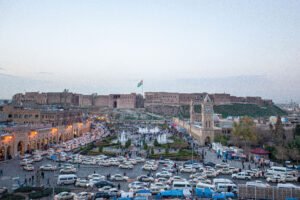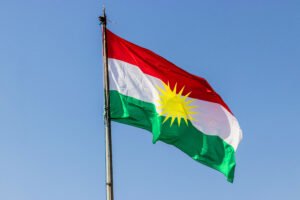
After a two-year hiatus, the parliament of the Kurdistan Region of Iraq (KRI) reconvened[i] on 4th November and elected a new parliamentary presidency board led by Vala Fareed.[ii] This move represents a partial restoration of the legislative body’s functioning, but it does not resolve the political divisions that have prevented the formation of a new KRI government and strained relations between the two ruling Kurdish parties.
Fareed, the nominee of the Kurdistan Democratic Party (KDP), was elected with 52 votes, while Rami Nouri, a representative of the Christian component, was chosen as deputy speaker of parliament, and Muna Kahwaji, a delegate of the Turkmen component, as parliamentary secretary. On the positive side, this vote demonstrates the ability of the KDP and its allies to secure a quorum and proceed with reactivating the institution.
This development is significant not only for filling parliamentary leadership positions but also for restoring the parliament’s legislative and oversight functions and ending a period of legislative paralysis that followed the October 2024 elections. The resumption of parliamentary sessions does not, however, mean that the KRI has resolved its political disputes, as the main points of contention concern not only the functioning of parliament but also the formation of the tenth KRG cabinet and the future of political cooperation.
The results of the 20th October 2024 parliamentary elections in the Kurdistan Region produced[iii] a political landscape in which no single party could form a government independently. The KDP won 39 of the 100 seats, followed by the Patriotic Union of Kurdistan (PUK) with 23 seats and the New Generation Movement with 15. The remaining seats were distributed among other political parties, movements, and minority representatives in the region.
Despite the KDP’s electoral advantage, government formation remained mired in negotiations with the PUK, a party with significant political and security influence in Sulaymaniyah and its other traditional strongholds. Discussions focused on the allocation of positions and authority, control over financial and security institutions, and the distribution of influence within the upcoming cabinet.
The Kurdistan Region remains paralysed by divisions between the two parties, particularly as each side insists on terms concerning its position within the power structure and the nature of the power-sharing framework. The KDP, traditionally supported in Erbil and Duhok, among other centres, has consistently emerged as the largest party in regional elections and aims to translate its electoral advantage into a dominant position in the KRI’s governing institutions. In the meantime, the PUK opposes any arrangement that would allow the KDP’s electoral advantage to produce a governing structure that diminishes the PUK’s power or influence within Sulaymaniyah-based institutions.
The PUK’s boycott of the parliamentary leadership election indicates that a comprehensive political agreement has not yet been reached to resolve the deadlock. The PUK argues that the reactivation of parliament should depend on an agreement among the major political forces rather than merely on securing a numerical majority. The KDP, on the other hand, can argue that legislative authority should not remain hostage to unresolved negotiations between the two parties, thereby justifying its decision to proceed with the session.
The PUK, however, rejected[iv] the results and criticised the session for lacking political consensus, characterising it as an attempt to impose the views of a single party. The party’s leadership also urged other political groups to boycott the session, arguing that parliament’s legitimacy depends on the participation of key political actors and adherence to the principle of power-sharing, rather than merely on achieving the legally required quorum.
The importance of power-sharing is underscored by the Kurdish civil war, which broke out in 1994. Peshmerga forces affiliated with the KDP and PUK fought against each other. The roots of the conflict can be traced in part to the first parliamentary election in May 1992, which produced a closely contested result.[v] A power-sharing agreement allocated 50 seats to each party, effectively eliminating the KDP’s narrow electoral advantage. Officials from one party were paired with counterparts from the other, while ministerial portfolios were divided between the two parties. This arrangement was intended to prevent either party from governing unilaterally.
The September 1998 Washington Agreement subsequently offered a framework for resolving the conflict. Under US mediation, Masoud Barzani and Jalal Talabani reached agreements on power-sharing, revenue distribution, security arrangements, and the situation of displaced persons. They committed to a process intended to lead to elections in 1999 and the restoration of unified institutions.
At the level of individual lawmakers, however, the parties’ boycott was not complete. Several members elected on the lists of the PUK, the New Generation Movement, and other groups participated in the session. Some of these deputies had previously announced their intention to leave their parties or become independents. These defections helped secure 52 votes, exceeding the 50-vote threshold.
This reveals a political reality that extends beyond the vote count: although the KDP secured the election of the parliamentary presidency board by capitalising on divisions among its opponents, it was unable to translate this numerical victory into a comprehensive political agreement with the PUK. Moreover, the narrow vote margin underscores the need for the new board to secure broader political legitimacy, which is essential if parliament is to exercise its legislative and oversight functions effectively.
These divisions were further exacerbated by Vala Fareed’s statements following her election, in which she emphasised that the newly elected presidency board is permanent rather than provisional and will not be replaced as a result of subsequent political agreements, even if the boycotting factions return to parliament. This position demonstrates the KDP’s determination to uphold the session’s results, but it may also create a new obstacle to reaching an agreement with the PUK over the allocation of positions and governance arrangements for the upcoming term.
In response to the reactivation of the Kurdistan Parliament in Erbil without the PUK’s participation, Bafel Talabani, the party’s leader, announced on 5th November that the PUK had decided to withdraw from the current Kurdistan Regional Government (KRG) cabinet.[vi] He also declared the legislature illegitimate. He added that the PUK would proceed with procedures to elect the region’s president and select a prime minister within Sulaymaniyah Governorate. This move is therefore likely to deepen administrative dualism and further entrench the region’s divided power structure.
On 11 November, Tom Barrack, the US presidential envoy for Iraq and Syria, commented[vii] on the political deadlock in the Kurdistan Region amid broader instability in the Middle East. A “zero-sum” approach between the two ruling parties – or families, as he described them – appears increasingly unsustainable as the United States becomes more deeply entangled in the region’s complex and volatile political dynamics. Barrack attributed the Kurdistan Region’s stability to a decentralised system of governance. Attempts to monopolise decision-making and marginalise longstanding political partners have fuelled recurring internal crises, as illustrated by the ongoing political conflict in the Kurdistan Region. As a result, the Kurdistan Region as a whole becomes weaker and more vulnerable in a volatile regional environment that offers little protection to politically divided actors.
Therefore, the KDP’s decision to elect a new parliamentary leadership does not mean that the conflict has ended; rather, it marks a transition from parliamentary paralysis in Erbil to a new phase in which parliament’s ability to function will be tested by growing administrative dualism between Erbil and Sulaymaniyah.
[i] The New Region (2026). “Kurdistan parliament ends two-year hiatus, elects presidency”, 4 November 2026, retrieved from: https://thenewregion.com/posts/7012.
[ii] Kurdistan Parliament – Iraq (2026). “Kurdistan Parliament Elects Presidency Board”, 4 November 2026, retrieved from: https://www.parliament.krd/english/parliament-business/latest-news/posts/2026/november/kurdistan-parliament-elects-presidency-board/.
[iii] Reuters (2024). “KDP wins Iraqi Kurdish parliamentary election, commission says”, 30 October 2024, retrieved from: https://www.reuters.com/world/middle-east/kdp-wins-iraqi-kurdish-parliamentary-election-commission-says-2024-10-30/.
[iv] Salar, S. (2026). “PUK Rejects Kurdistan Region Parliament Session, Calls It Illegal”, Channel 8, 11 March 2026, retrieved from: https://www.channel8.com/english/news/6231ea17-ca00-4304-97ac-e32a9b5e264a.
[v] Chomani, K. (2025). “Martyrdom as a Mask: Unveiling Symbolic Violence in Iraqi Kurdistan’s Civil War Aftermath”, Terrorism and Political Violence, 2 June 2025, retrieved from: https://www.tandfonline.com/doi/full/10.1080/09546553.2025.2502404#abstract.
[vi] +964 Media (2026). “PUK quits Kurdistan government, threatens to name rival Region president and cabinet”, 5 November 2026, retrieved from: https://en.964media.com/54798/.
[vii] The National News (2026). “Tom Barrack on the future of US-Iraq relations”, YouTube, 11 November 2026, retrieved from: https://www.youtube.com/live/KnlRtUpDVy8.