During the ongoing period of turmoil within the Iranian regime, the removal of Iran’s leadership by Israel and the United States[i] has had a significant impact on the nature of leadership within the political and military establishments, as well as on the structure and coherence of the decision-making process.
While Iran’s sovereign decision-making apparatus was characterised for decades by a hierarchical structure governing its decision-making mechanisms[ii], this leadership system – which had long managed political and military affairs – transformed into a flattened command structure after the recent 40-day war. This transformation was not limited to the political system, which became headless in the absence of the Supreme Leader – who had coordinated otherwise independent mechanisms – but also extended to the military establishment, considered a pillar of the deep state. The absence of top-tier leaders and the rise of dozens of mid-level commanders led to the collapse of the hierarchical system and the emergence of a broad network of leaders with comparable status and influence.
This transformation was reinforced by another equally significant change resulting from the leader’s absence and the breakdown of the traditional leadership institution. The loss of this central authority gave ruse to a decentralized style of leadership, characterised by the absence of an organic connection to a single root and by a high degree of autonomy among the various components of the decision-making process. By contrast, the dominance of the Supreme Leader’s institution over decision-making had entrenched a tree-like model of leadership, in which sub-institutions derived their legitimacy and effectiveness from a single root.
The absence of the Supreme Leader resulted in the disappearance of institutions that relied on his administrative legitimacy. The transition from hierarchical to flat leadership, as well as from tree-like to rhizomatic leadership, produced several significant outcomes that have influenced political decision-making in Iran.
Consequences of fragmentation
The rise of numerous parallel institutions, relatively equal in power and influence, and functioning in place of a single political institution, is a significant development. While the Iranian political establishment under the Supreme Leader Ayatollah Ali Khamenei was a unified and highly cohesive entity, it transformed after his death into a collection of parallel institutions with limited interconnectedness. This transformation was not confined to the political establishment; it was also reflected in the military, which, once characterised by cohesive leadership, fragmented into sectors following the removal of its top tier of commanders, resulting in a decline in cohesion. This shift was evident in developments on the ground and in statements by Iranian officials. For example, during the early days of the war, Iranian Foreign Minister Abbas Araghchi indicated[iii] that local commanders within the Revolutionary Guard had gained greater decision-making autonomy and were operating under an open-fire doctrine based on pre-established instructions.
The rise of fragmented decision-making processes and the emergence of decisions characterised by inconsistency and contradiction have become increasingly evident. This phenomenon was reflected in the lack of alignment between the Iranian Foreign Minister’s position and that of the Revolutionary Guard regarding the Strait of Hormuz. Consequently, the political establishment formed a negotiating team comprising dozens of individuals, each representing one of the various institutions within the regime. Parliament Speaker and head of the negotiating delegation, Mohammad Bagher Ghalibaf, alluded to this when he emphasised[iv] that the large size of the delegation was intended to encompass the diverse viewpoints within the Iranian political landscape and to “conduct the necessary consultations”. While this has complicated communication with the Iranian side, particularly given the absence of the Supreme Leader and the resulting difficulties in establishing rapid contact, and prompted U.S. President Donald Trump to assert[v] that he does not know who is leading Iran “or with whom we are dealing”, it has also prevented the adoption of a “final decision” on any major issue.
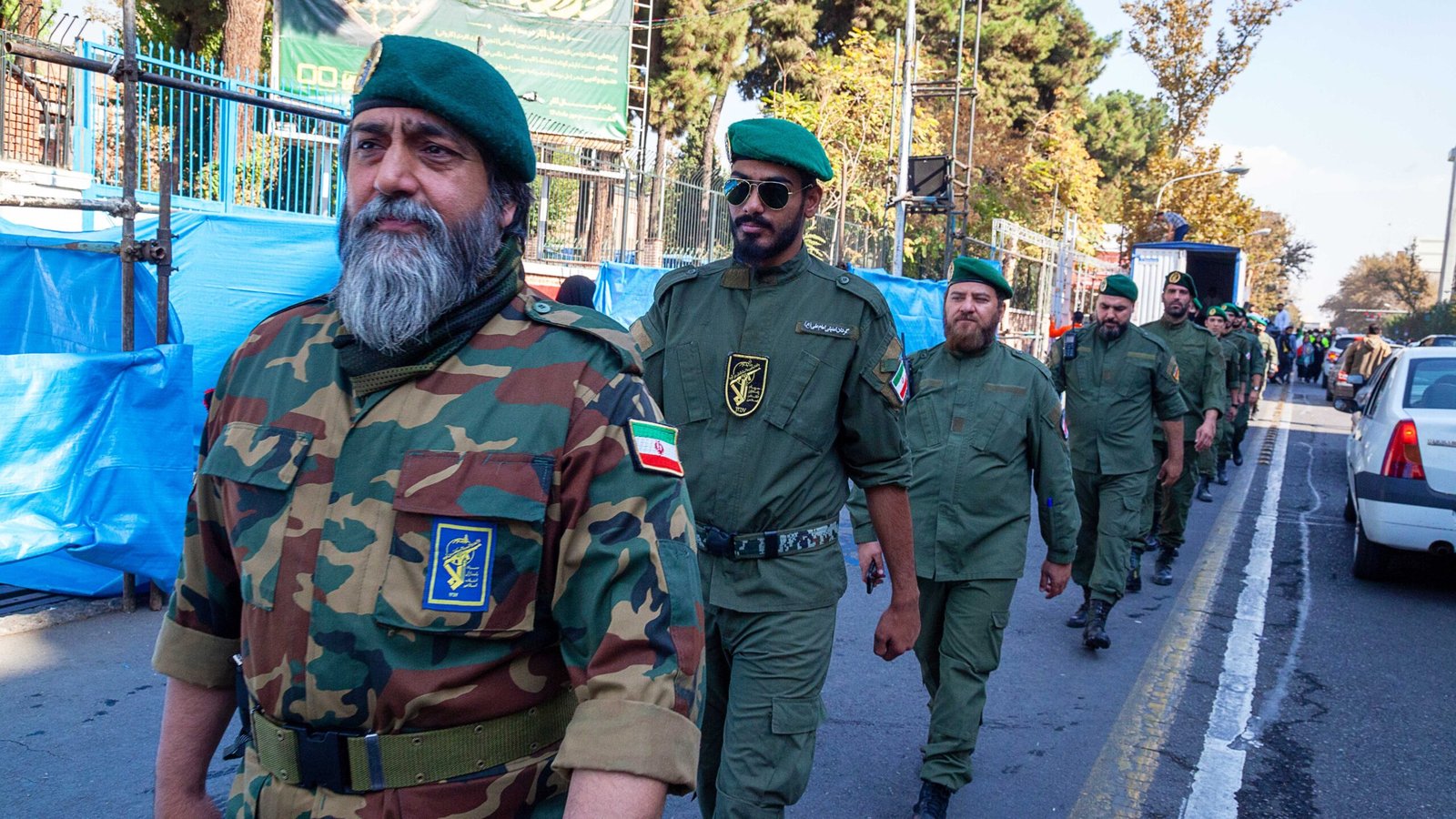
The militarisation of Iranian decision-making and the growing power of the military, as the institution that bears arms and maintains the broadest presence within Iran, are particularly significant. This does not refer to the Iranian army (Artesh), which has generally not been a focus of the strike and assassination campaign targeting Iran’s security leadership and which remains largely absent from key decision-making processes.[vi] Rather, it concerns the Revolutionary Guard and its affiliated military institutions. While the Revolutionary Guard’s influence on the political scene was previously constrained by the figure of the Supreme Leader – who, by constitutional design and historical precedent, stood above the institution – his absence has removed this constraint and eliminated the limitations that had prevented the Guard from dominating the political landscape. In its quest to consolidate its hegemony, the military establishment has sought to impose a state of emergency to prevent the convening of institutions that could define its powers or intervene in the decision-making process, including Parliament, the Expediency Discernment Council, and the Supreme National Security Council. The Revolutionary Guard’s dominance over decision-making has repeatedly thwarted efforts to reach a final agreement, and diplomatic channels have failed to produce workable solutions with the U.S. The difficulties[vii] encountered by the Speaker of Parliament – despite his affiliation with the Revolutionary Guard – in formulating a solution due to the Guard’s opposition are particularly noteworthy. Similarly, the Revolutionary Guard rejected Foreign Minister Abbas Araghchi’s statement, made[viii] in a post on X, that the Strait of Hormuz was open to navigation; instead, Guard leaders insisted that the strait would remain closed, effectively imposing their will.
Thus, the transformation of Iran’s decision-making apparatus into a flat structure has fragmented what was once a cohesive and unified institution into several parallel entities. This has produced inconsistent and sometimes contradictory decisions, while making it impossible to reach unified and final decision or even to identify the entity that actually holds the reins of power and with which an agreement could be reached. At the same time, this absence has entrenched the power of the Revolutionary Guard, transforming it into the dominant decision-making institution by virtue of its armed capacity and extensive organizational presence. No significant decision can be made without its participation or approval.
The emerging decision-making structure
Currently, the military wing likely dominates the decision-making process in Iran. The government’s role is primarily limited to managing internal affairs, particularly in logistical and economic matters, while its involvement in sovereign decision-making is restricted to procedural functions carried out mainly by the Minister of Foreign Affairs and, to a lesser extent, by the President of the Republic.
The Iranian Parliament exercises limited influence, with its role is largely confined to Speaker Mohammad Bagher Ghalibaf – who leads the negotiating team but whose powers are restricted – and a small group of his deputies. Parliamentary blocs, including hardline factions, remain largely ineffective due to the suspension of parliamentary sessions during wartime.[ix]
The headquarters of Khatam al-Anbiya, dominated by the Revolutionary Guard and led by General Abdollahi[x] (a two-star general, the highest military rank available in the Iranian military establishment), includes influential figures such as General Mostafa Izadi[xi] (a two-star general) and General Mohammad Jafar Asadi[xii] (commander of Iranian forces in Syria prior to the collapse of the Assad regime).
The Islamic Revolutionary Guard Corps (IRGC) is the dominant military institution both domestically and in the conflict with the United States and Israel. It is currently led by General Ahmad Vahidi (a two-star general) – with news of his potential assassination in strikes just breaking[xiii] – with General Hojjatollah Qureshi[xiv] as deputy. General Ali Ozmaei (a one-star general) commands its naval forces, while General Majid Mousavi oversees its air and missile forces.
Conclusion: A prolonged transitional period
While the wave of assassinations has weakened the Revolutionary Guard’s leadership structure, several generals and commanders within the organization can still be considered influential in the current decision-making process. These include senior Revolutionary Guard commanders Mohsen Rezaei, Yahya Safavi, and Mohammad Ali Jafari, along with Hossein Taeb, the former head of the Revolutionary Guard’s intelligence organisation.
Ultimately, Iran appears to be entering a difficult transitional period depending on regional and international developments, which is unlikely to be brief. As a result, ongoing negotiations with Iran are taking place amid political and institutional fragmentation, making it difficult to reach final decisions and complicating effective communication with influential actors within the Iranian political landscape.
[i] Corera, G. (2026). “Months of planning behind US-Israeli mission to target Iran’s supreme leader”, BBC News, 1 March 2026, retrieved from: https://www.bbc.co.uk/news/articles/c86y5540vnno.
[ii] Al Mustafa, H. (2026). “How Are Political Decisions Made in Iran?”, Asharq Al-Awsat, 6 May 2026, retrieved from: https://english.aawsat.com/opinion/5270204-how-are-political-decisions-made-iran.
[iii] Araghchi, S.A. (2026). “We’ve had two decades to study defeats of the U.S. military…”, X, 1 March 2026, retrieved from: https://x.com/araghchi/status/2028171586365178103?s=20.
[iv] Arab News (2026). “Negotiations between Iran and US begin in Pakistan”, 11 April 2026, retrieved from: https://www.arabnews.jp/en/middle-east/article_167957/.
[v] NBC News (2026). “We don’t know who we’re dealing with”, retrieved from: https://www.nbcnews.com/video/shorts/trump-we-don-t-know-who-we-re-dealing-with-in-iran-259411013851.
[vi] Institute for the Study of War (2025). “Order of Battle of the Iranian Artesh Ground Forces”, 13 August 2025, retrieved from: https://understandingwar.org/research/middle-east/order-of-battle-of-the-iranian-artesh-ground-forces/.
[vii] Izvestia (2026). “Israel announced the alleged removal of Ghalibaf from negotiations with the United States”, 23 April 2026, retrieved from: https://en.iz.ru/en/2084813/2026-04-23/israel-announced-alleged-removal-ghalibaf-negotiations-united-states.
[viii] Iran International (2026). “State media slam Araghchi’s Hormuz tweet, say it let Trump claim victory”, 17 April 2026, retrieved from: https://www.iranintl.com/en/202604172614.
[ix] Motamedi, M. (2026). “Missiles and negotiations: Iran 100 days into the war with US and Israel”, Al Jazeera, 7 June 2026, retrieved from: https://www.aljazeera.com/features/2026/6/7/missiles-and-negotiations-iran-100-days-into-the-war-with-us-and-israel.
[x] Iran Wire (2025). “IRGC Appoints Ali Abdollahi as New Commander of Khatam al-Anbiya Headquarters”, 5 September 2025, retrieved from: https://iranwire.com/en/news/144584-irgc-appoints-ali-abdollahi-as-new-commander-of-khatam-al-anbiya-headquarters/.
[xi][xi] Mehr News Agency (2025). “Developing Iran missile capability absolutely necessary”, 13 July 2025, retrieved from: https://en.mehrnews.com/news/234268/Developing-missile-capability-inevitable-Iranian-general.
[xii] The Jerusalem Post (2026). “Iran military sites ‘completely hidden’, can sustain production, senior IRGC general boasts”, 2 June 2026, retrieved from: https://www.jpost.com/middle-east/iran-news/article-898099.
[xiii] Hilotin, J. (2026). “IRGC hardliner Ahmad Vahidi ‘eliminated’ in Tehran strike…”, Gulf News, 9 June 2026, retrieved from: https://gulfnews.com/world/mena/irgc-hardliner-ahmad-vahidi-reportedly-eliminated-in-tehran-strike-unconfirmed-reports-fuel-debate-over-irans-military-leadership-1.500568160.
[xiv] Asharq Al-Awsat (2025). “IRGC Figure Warns: Next War Will Not End Before Israel Is ‘Completely Erased’”, 28 November 2025, retrieved from: https://english.aawsat.com/world/5213730-irgc-figure-warns-next-war-will-not-end-israel-%E2%80%98completely-erased%E2%80%99.