Connectivity and the issue of Central Asian minerals fuel the reorganization of the Turkic world.
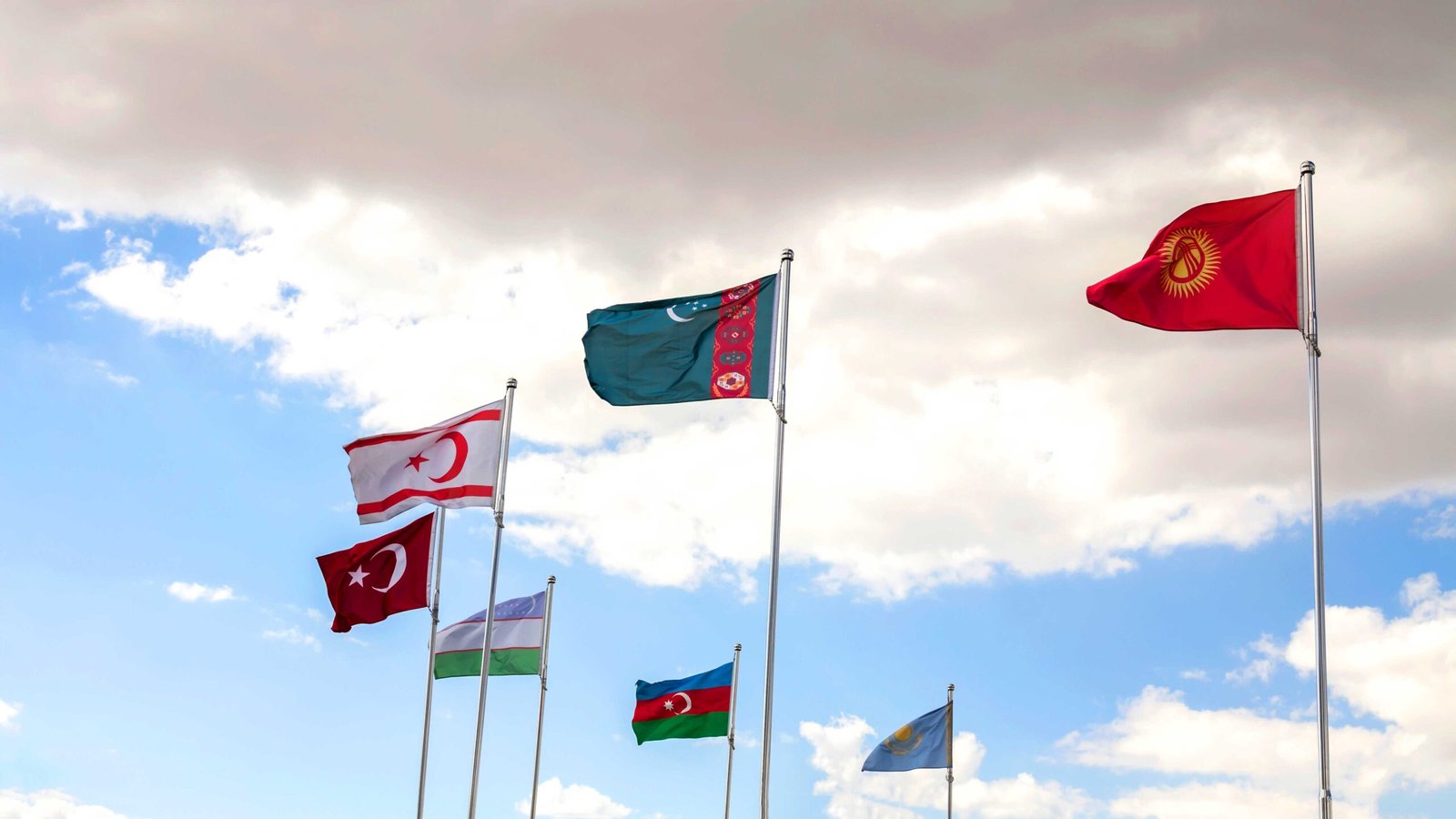
Over the last decade, and especially after its 2021 rebranding, the Organization of Turkic States (OTS) has evolved well beyond what it had initially been – a loose forum characterized by cultural and linguistic affinity among the Turkic speaking countries. What began in 2009 as the Turkic Council, founded by Turkey, Azerbaijan, Kazakhstan, and Kyrgyzstan, has gradually turned into a politically strong cross-Eurasian platform. With Uzbekistan now a full member and Hungary, Turkmenistan, and Northern Cyprus participating as observers, the OTS now reflects the changing strategic priorities of the South Caucasus and Central Asian countries, which seek alternative transport corridors, pursue middle-power diplomacy and diversified foreign policy.
The key change within the OTS lies in the fact that the organization is no longer associated with soft-power cooperation. Indeed, while culture, language, education, and identity remain important elements of the organization’s agenda, the entity has now also acquired a geopolitical dimension. The OTS has become a venue for discussing defence and security cooperation, infrastructure development, and customs simplification. This multiplicity of topics signals that the entity has become flexible enough for the Turkic states to deepen practical cooperation without accepting the binding obligations that would limit their foreign-policy autonomy.
The shift has been particularly evident during the summits held since 2021. The Istanbul Summit in 2021, the Samarkand Summit in 2022, and the Astana Summit in 2023 all contributed to a more institutionalized agenda around connectivity, trade facilitation, customs procedures, and transport coordination. During the 2025 summit[i] in Azerbaijan the OTS placed greater emphasis on expanding cooperation in military affairs, security, and infrastructure protection. Following the summit, Azerbaijani President Ilham Aliyev even suggested[ii] that the organization should develop a military component as an exclusively defensive instrument.
Turkey’s strategic vision
Defence cooperation is the area where Turkey sees major strategic potential as it seeks to create greater interoperability among Turkic states and gradually promote its military standards, technology, and equipment. This would open wider markets for Turkey’s sprawling defence industry while reducing Central Asian reliance on Russian and Chinese systems. Among Turkey’s defence exports[iii], unmanned aerial vehicles such as Bayraktar TB2, Akıncı, Aksungur, and ANKA are particularly important.
Ankara is interested not only in selling these platforms but also in transferring know-how, training, maintenance capacity, and possibly elements of production to partner states. From their side, Central Asian governments are open to such cooperation because drones offer relatively affordable military technology and reduce dependence on Soviet-era equipment. Yet the Central Asian countries remain cautious given the fact that Russia opposes the expansion of Turkish drone technology in what it considers its near neighbourhood, while China is also watching carefully because of its own security concerns in and around Central Asia. In reaching out to Central Asia Azerbaijan plays a key role for Turkey. After its military success in the 2020 Karabakh war, where Turkish defence technology proved pivotal, Azerbaijan has further accentuated[iv] its role as a bridge between Ankara and Central Asia. Turkey has encouraged closer defence ties between Azerbaijan, Kazakhstan, and Uzbekistan, contributing to the emergence of a Caspian-Caucasus security axis.
A new Eurasian order
Then comes connectivity. The geographic spread of Turkic states matches the route of the Middle Corridor, which links China and Central Asia to the Caspian Sea and the wider Black Sea region. Since the outbreak of the war in Ukraine, the strategic value of this corridor has increased. Both the European Union and China have become[v] more interested in routes that bypass Russia, while regional states have seen the corridor as a way to strengthen their own transit value. In this sense, the OTS is not simply supporting a transport project; it is helping to organize a geopolitical space around east-west connectivity.
The Middle Corridor gives the OTS a practical agenda that can bind its members together. Customs harmonization, rail and port infrastructure, Caspian Sea logistics, digital transit systems, and road construction all require coordination among states located along the route. The predominance of Turkic states across much of this corridor makes the OTS a natural forum for such coordination. Emerging projects in the South Caucasus, including the route through southern Armenia often referred to as TRIPP[vi] following U.S. involvement in Armenia-Azerbaijan normalization, further reinforce this logic. If implemented, such routes could strengthen the connection between Azerbaijan, Turkey, Central Asia, and European markets.
For Turkey, the Middle Corridor is not merely a logistics route. Ankara increasingly views it as a wider strategic corridor that can integrate transport, energy, electricity connections, hydrocarbons, and eventually green energy. There is also the issue of Central Asian minerals. The region has emerged as a key source of vital resources and a battleground[vii] between superpowers such the US, China and a slew of Asian and European countries. From Japan and South Korea to the European powers, all now seek access to the region’s resources. Turkey likewise aims at rare minerals and given that Ankara wants to position itself as the western gateway for Central Asian countries, it puts special emphasis on trans-Caspian connectivity as a means to attract precious resources. Central Asian hydrocarbons also boost Ankara’s push for the Middle Corridor’s expansion.
Wider context
The rise of the OTS should also be understood against the background of an increasingly fragmented international order. With Western primacy weakened, Russia’s influence along its southern frontier has become less pronounced, and China’s economic weight continues to grow across the same geographic area. In this geopolitical setting, countries in Central Asian and the South Caucasus are seeking to preserve room for manoeuvre. The OTS offers a convenient format because it allows Kazakhstan, Uzbekistan, Kyrgyzstan, Turkmenistan and Azerbaijan to cooperate more closely with Turkey while avoiding the appearance of joining a bloc positioned directed against Russia or China.
Another aspect furthering the OTS’ rise is a relative power vacuum in the space from the Black Sea to China’s Xinjiang region. This is not to say that big powers are completely absent from the region, but the fact that none of them are able to exert exclusive level of influence provides favourable conditions for the Turkey-led project to expand geographically and evolve into a more robust political, military and potentially military entity. Indeed, out of Russia, China, or Western countries, none have enough power to dominate the South Caucasus and Central Asia. Instead, local countries are pursuing multi-alignment, a foreign policy approach characterized by strategic hedging, the avoidance of reliance on any single great power, and the pursuit of relatively independent external policy.
More concretely, one of the main accelerators of the OTS’ transformation has been Russia’s war against Ukraine. Since 2022, Central Asian states and Azerbaijan have become more conscious of the risks attached to excessive dependence on Moscow. The war exposed Russia’s vulnerabilities and consumed its political and military resources. It also diluted its image as the dominant security player in the post-Soviet space. For Turkic states, this created both a need and an opportunity to broaden their diplomatic options. Turkey has emerged as a power which the Turkic states have actively turned towards.
Conclusion
Looking ahead, the strengthening of the OTS is both a result of wider regional geopolitical shifts as well as internal rethinking of the entity’s role in the Eurasian space. The OTS’ future will depend on how far member states are willing to move toward operational coordination. Military cooperation with Turkey will increase but Central Asian states will remain sensitive when it comes to how Russia and China could react to its burgeoning infrastructure in security, defence technology, customs integration, and energy connectivity. The OTS may not become a NATO-style alliance or an EU-style integration project given the geographic distance and varied geopolitical ambitions its member states have, but it is gradually transforming into a more solid club emerging as a capable geopolitical player.
[i] Organization of Turkic States (2025). “The 12th Summit of the Organization of Turkic States Convened in Gabala, Azerbaijan”, 7 October 2025, retrieved from: https://turkicstates.org/en/news/the-12th-summit-of-the-organization-of-turkic-states-convened-in-gabala-azerbaijan.
[ii] Aktas, A. (2025). “Azerbaijan proposes joint military drills among members of Organization of Turkic States in 2026, 7 October 2025, retrieved from: https://www.aa.com.tr/en/world/azerbaijan-proposes-joint-military-drills-among-members-of-organization-of-turkic-states-in-2026/3710308.
[iii] Ali, A. (2025). “Historic advances, world firsts define Turkiye’s defense sector in 2025”, Daily Sabah, 31 December 2025, retrieved from: https://www.dailysabah.com/business/defense/historic-advances-world-firsts-define-turkiyes-defense-sector-in-2025.
[iv] SWP (2025). “Turkey’s Turns to Central Asia: Learning by Doing”, retrieved from: https://www.swp-berlin.org/publikation/turkeys-turns-to-central-asia-learning-by-doing.
[v] Valansi, K. (2025). “Why the Middle Corridor matters amid a geopolitical resorting”, Atlantic Council, 2 June 2025, retrieved from: https://www.atlanticcouncil.org/content-series/ac-turkey-defense-journal/why-the-middle-corridor-matters-amid-a-geopolitical-resorting/.
[vi] De Waal, T., Kochinyan, A. and Shiriyev, Z. (2026). “Rewiring the South Caucasus: TRIPP and the New Geopolitics of Connectivity”, Carnegie Europe, 1 April 2026, retrieved from: https://carnegieendowment.org/russia-eurasia/research/2026/03/rewiring-the-south-caucasus-tripp-and-the-new-geopolitics-of-connectivity.
[vii] Akromov, O. (2025). “From Margins to the Core: The Rise of Central Asia in the Race for Critical Minerals”, TheHague Research Institute for Eastern Europe, the South Caucasus & Central Asia, retrieved from: https://hagueresearch.org/from-margins-to-the-core-the-rise-of-central-asia-in-the-race-for-critical-minerals/.