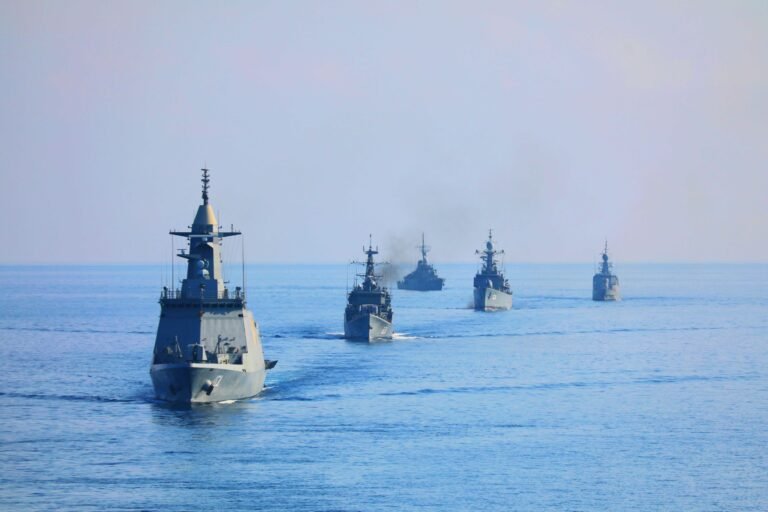
In recent days the war between Iran and the U.S. has escalated further, taking a new turn. The U.S. launched a “large and powerful” strike on an island in Strait of Hormuz.[i] Iran responded by launching ballistic-missile attacks on U.S. bases in Bahrain, the UAE, Jordan, Kuwait and Iraqi Kurdistan.[ii] The strikes followed an unsuccessful attempt to intensify economic pressure in August, described as an economic “D-Day”, as Washington sought to target Iran’s financial links worldwide.[iii] In August, U.S. Treasury Secretary Scott Bessent called on countries to close branches of Bank Melli Iran.[iv] The U.S. Treasury also proposed cutting Banque Misr’s UAE operations off from correspondent-banking access to the U.S. financial system. Energy secretary Chris Wright emphasized U.S. plans to expand sanctions with the aim of exerting “absolute maximum pressure” on the Islamic Republic. The Middle East remains deeply divided, with no trusted partner or mediator to intervene for facilitating lasting peace.[v] This creates an opportunity for the return of a historic partner to the region– the United Kingdom – and the current circumstances require London to make strategic choices about its foreign policy priorities.
The UK’s stance on the Iran war: What the conflict has revealed about British defence
The escalation continued these past few weeks despite earlier attempts to secure a ceasefire. In July, following the 2026 NATO Summit in Ankara, expectations that the ceasefire with Iran would hold had already faded.[vi] Earlier, the 60-day ceasefire brokered by Qatar and Pakistan on 17th June to end the war ultimately failed.[vii] What, then, has the Iran war revealed about UK foreign policy, its limitations and its defence priorities? To what extent has the war acted as the catalyst for a “reset” of towards a more pragmatic approach?
The House of Commons Library research briefing, “Iran in 2026: Six months after the U.S.-Israel strikes”, published on 27th August 2026,[viii] discusses the principal issues and involved in the conflict, but gives little attention to the UK’s role. This reflects the UK’s limited presence in the region, especially since the adoption of its “NATO-first” approach. The report discusses the status of Iran’s leadership, public disagreement over the June MoU, the new security leadership and its position on Hormuz, the status of Iran-backed groups – Hamas in Gaza, the popular mobilization forces in Iraq, Hezbollah in Lebanon, the Houthis in Yemen – and the role of China and UAE.
The UK’s reset: Time for the right priorities
The Iran war presents an opportunity to rebuild relations with Middle Eastern partners.
The United Kingdom’s long-standing “NATO-first” defence approach has exposed its vulnerabilities during the Iran war. The UK’s 2026 Defence Investment Plan, “Equipping Our Forces, Defending Our Future”, states that the government signed a series of major defence export deals in 2025, including an £8 billion Typhoon aircraft deal with Turkey[ix] and a £10 billion deal with Norway. The current approach prioritizes relations with one Middle Eastern partner and NATO ally – Turkey.
The UK Ministry of Defence has allocated an additional £20 billion to the Armed Forces. As the Investment Plan states, “Though we are focusing on the Euro-Atlantic and prioritizing ‘NATO first’ as a policy, we are not NATO only”. The implications of this thinking have become apparent during the Iran war. The Plan adds that “Defence must work bilaterally and through NATO to bolster the capabilities of its allies and partners in other theatres of importance to the UK, notably the Middle East and the Indo-Pacific.”[x]
In other words, the Plan openly recognizes the possibility of extending partnerships beyond NATO allies. The Iran war presents an opportunity to rebuild relations with Middle Eastern partners. It could provide the impetus for recalibrate the “NATO first policy”, prioritize the “Global Britain” agenda, and build strategic relationships with partners across the Middle East.
Resetting priorities: Approach to Israel, Iran and Palestine
London is increasingly prepared to differentiate its regional policy from that of close allies when British interests and priorities diverge.
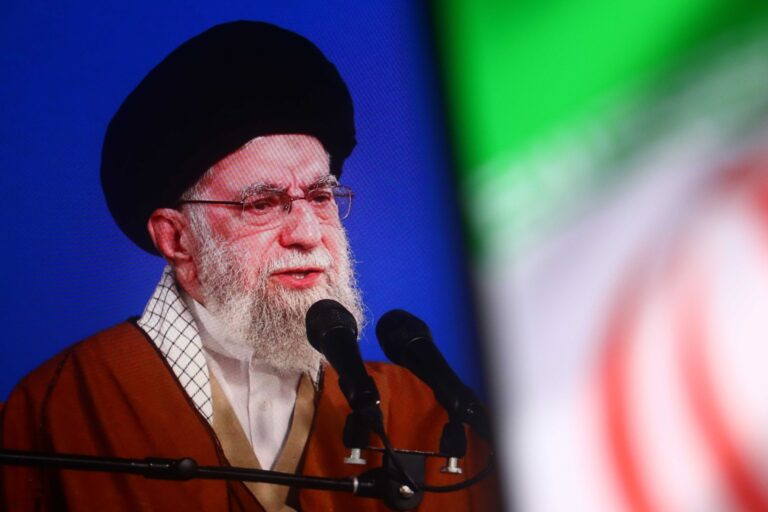
The U.S. has joined Israel in confronting Iran, and on 28th February 2026, an armada of two aircraft carrier strike groups and scores of advanced aircraft launched attacks on Tehran and other Iranian cities. The strikes contributed to the killing of Ayatollah Ali Khamenei along with other senior figures in the clerical regime.[xi] Israeli Prime Minister Benjamin Netanyahu has openly stated that Israel seeks to defeat Iran’s government and is working to overthrow it. On 2nd September, Netanyahu stated: “All of our systems, under my direction, are working to bring down this regime and defeat it.”[xii]
For the UK, however, the strategic question is different. The Iran war is not Britain’s war, nor does London necessarily share all of Washington’s or Jerusalem’s regional objectives. A “UK-first” approach would therefore require Britain to define its interests in the Middle East independently: maintaining security partnerships with the US and Israel while preserving the diplomatic flexibility needed to engage with other regional actors, including the Gulf states and Israel.
Signs of such a more independent approach can also be seen in Britain’s evolving policy towards Israel and Palestine. While the UK remains a close partner of Israel, London has increasingly demonstrated a willingness to distinguish its own interests and positions from those of the Israeli government. This is particularly visible in its response to Israeli settlement policy in the West Bank.
British Foreign Secretary Ed Miliband promised “comprehensive reset” on West Bank affairs, following pressure on the government to take stronger action in response to Israel’s E1 settlement plan. The government is also considering measures to prevent UK companies from assisting in the construction of settlements in the West Bank. “I want a comprehensive reset of our approach on these issues because it is necessary, it is high time.”[xiii] Israel has meanwhile warned that it would retaliate if the UK imposed further sanctions.
This shift is significant beyond the Israeli-Palestinian conflict. It suggests that London is increasingly prepared to differentiate its regional policy from that of close allies when British interests and priorities diverge. Applied more broadly, the same principle could shape the UK’s response to the Iran war. Rather than treating the Middle East primarily through the strategic priorities of NATO allies or individual regional partners, Britain could seek relationships across competing blocs where British interests require it.
Global Britain and strategic partnerships in the Middle East
The “NATO first” approach has arguably pushed the UK towards an “Ankara-first” policy, even though Turkey is far from Britain’s only long-standing partner in the region. A 2023 RUSI report highlights the significance of the UK’s relations with the Gulf monarchies. Drawing on concepts of “Vision 2040” and “Global Britain”, the report argues the UK and its regional partners are now “consolidating an economic partnership for the 21st century”[xiv].
The United Arab Emirates is a key strategic partner for the UK, particularly in financial services.[xv] Standard Chartered launched Bitcoin and Ether spot trading for eligible institutional clients in the UAE, becoming the first Global Systematically Important Bank (G-SIB) to provide such a service in the country. This development demonstrates the potential for closer UK-UAE cooperation to benefit both sides.
After almost four years of negotiations, the UK trade minister has stressed Britain’s solidary with UAE amid the Iran war while seeking to deepen Gulf ties under a new trade agreement. The agreement aims to increase investment and trade, and boost energy ties. UK trade minister Anas Sarwar chose the Gulf as the destination for his first trip outside Europe, travelling to Saudi Arabia and the UAE.[xvi] He described the GCC countries as long-standing strategic partners of the UK in promoting peace, security and prosperity, as well as economic cooperation.
Towards a more pragmatic “UK-First” strategy
For post-Brexit Britain, rebuilding its influence will depend in part on its ability to engage independently and pragmatically beyond Europe.
Britain’s historic relationships across the Middle East, combined with its diplomatic experience and established partnerships, provide a foundation on which the UK can rebuild trust and deepen its engagement. Maintaining constructive relations with competing regional actors could also give London greater scope to support dialogue and, where circumstances permit, play a mediating role in regional disputes.
The UK’s support for dialogue between regional actors is already evident in its diplomatic position on Syria. Speaking at the UN Security Council in August, Ambassador Kate Foster, UK Deputy Permanent Representative to the UN, stated: “Progress within Syria must be matched across the region. We therefore welcome the direct Israel-Syria talks held earlier this week in Jordan. They are a positive step towards long-term peace.”[xvii] Such an approach points towards a broader role for British diplomacy: one based not only on traditional alliances, but also on maintaining relationships that can contribute to dialogue, stability and long-term regional security.
The escalation of the Iran war has exposed some of the limitations and vulnerabilities of Britain’s current foreign policy priorities. At the same time, it has created an opportunity for London to reassess its approach. The prioritization of the “Global Britain” agenda within a more pragmatic “UK-first” strategy need not mean abandoning the UK’s commitment to NATO. For post-Brexit Britain, rebuilding its influence will depend in part on its ability to engage independently and pragmatically beyond Europe. Its Middle Eastern partners will be crucial to the UK in that effort.
[i] NBC News (2026). “Tehran targets U.S. allies in Gulf after U.S. launched ‘large and powerful’ strikes on Iran’, 1 September 2026, retrieved from: https://www.nbcnews.com/world/iran/us-launched-large-powerful-strikes-iran-trump-says-rcna595581.
[ii] Katz, G. Sela-Eitam, M. and Ashkenazi, A. (2026). “Attacks on Jordan, Kuwait, Bahrain , Iraq as Iran launches retaliatory strikes against US bases”, 1 September 2026, retrieved from: https://www.jpost.com/middle-east/article-907279.
[iii] Toosi, S. (2026). “Trump’s ‘economic D-day’ against Iran risks driving the stakes even higher’, The Guardian, 30 August 2026.
[iv] Reuters (2026). “Bessent says U.S. likely to announce Iran bank sanctions this week”, 1 September 2026, retrieved from: https://www.reuters.com/world/china/bessent-says-us-likely-announce-iran-bank-sanctions-this-week-2026-09-01/.
[v] Mohamed, E. and Lawal, S. (2026). “Iran says it targeted bases in Kuwait and UAE over US military support”, 3 September 2026, retrieved from: https://aje.news/t8ofzx.
[vi] NATO (2026). “The Ankara Summit Declaration”, 8 July 2026, retrieved from: https://www.nato.int/en/about-us/official-texts-and-resources/official-texts/2026/07/08/the-ankara-summit-declaration.
[vii] Ahmed, M., Sewel, A., Magdy, S. and Castillo, E.E. (2026). “Mediators worked through threats and strikes to broker the US-Iran deal, and challenges remain”, 3 June 2026, retrieved from: https://apnews.com/article/us-iran-war-mediation-peace-deal-pakistan–qatar-33e3fd72a890ff28e1b8401b51a25aa3.
[viii] House of Commons Library (2026). “Iran in 2026: Six months after the US/Israeli strikes”, 27 August 2026, Retrieved from: https://commonlibrary.parliamanet.uk/research-briefings/cbp-11075/.
[ix] Gov.uk (2026). “The Defence Investment Plan”, 30 June 2026, Retrieved from: https://www.gov.uk/government/publications/the-defence-investment-plan.
[x] Ibid.
[xi] Spectator (2026). “Israel’s plan for a new Iran war”, 9 July 2026, retrieved from: https:spectator.com/article/israels-plan-for-a new-iran-war/.
[xii] Hasht e Subh Daily (2026). “Netanyahu: Israel is seeking to overthrow Iran’s government”, 3 September 2026, Retrieved from: https://8am.media/eng/netanyahu-israel-is-seeking-to-overthrow–irans-government/.
[xiii] Kiran Stacey (2026). “Ed Miliband promises ‘comprehensive reset’ of UK policy toward Israel”, The Guardian, 1 September 2026.
[xiv] RUSI (2023). “Vision 2040” and “Global Britain”: Oman and the UK Chart a Shared Future, 15 November 2023.
[xv] Hobart, E. (2026). “The UK-UAE Partnership: Building a Financial Service Future Together”, 8 September 2025, British Chamber of Commerce Dubai.
[xvi] Essaid, S.A. (2026). “UK ready to sign Gulf deal within weeks, says Trade Minister”, 1 September 2026, retrieved from: https://www.thenationalnews.com/business/economy/2026/09/01uk-ready-to-sign–gulf-trade-deal-within-weeks-says-trade-minister/.
[xvii] Gov.uk (2026). “We welcome the recent announcement on the dissolution of the Syrian Democratic Forces into central government structures: UK statement at the UN Security Council”, 27 August 2026, retrieved from: https://www.gov.uk/governments/speeches/we-welcome-therecent-announcement-on-thedissolution-of-the-syrian-democratic-forces-into-central-government-structures-uk-statement-at-the-un-security.