In May 2000, when Israeli forces were about to withdraw from Lebanon after nearly two decades, this author was serving as the intelligence officer of IDF Central Command, focusing on the threats and opportunities relating to Israel’s relations with the Palestinians. At the time, he warned a reporter that the Lebanon pullout would lead to a violent Palestinian uprising.
A few months later, the Second Intifada began, leading to the death and injury of thousands of people over the next five years among both Palestinians and Israelis. The pullout was interpreted by some leaders of the Palestinian Authority, in addition to terror groups and ordinary Palestinians alike as evidence that Israel’s perceived weakness could be used to force concessions to their demands.[i]
Similar repercussions could follow today – including for the U.S. – if Israel withdraws from Lebanon, where it recently established a new security zone to counter ongoing attacks from Hezbollah. A June deal between Israel and Lebanon allows for the IDF to remain in the security zone until Hezbollah is disarmed while providing for their phased withdrawal after that disarmament.[ii]
As multiple rounds of U.S.-brokered talks between Israel and Lebanon take place intermittently in Rome, it is more important than ever to state clearly and unequivocally that the Israeli and Lebanese governments – not Hezbollah or its sponsor, Iran – must be in control of their own borders.
The Israel-Lebanon framework agreement[iii] signed in late June under the auspices of the U.S. is a step in the right direction. Israel and Lebanon agreed during the July round of talks[iv] on the need to dismantle and disarm Hezbollah.
The Israeli Lebanese-agreement also calls for testing the Lebanese Army’s capability to make sure Hezbollah cannot return two pilot zones[v], from where the IDF has retreated while Israeli forces are permitted to stay[vi] in an expanded security area in southern Lebanon. So far, the initial impression in the pilot areas is that the Lebanese army is not yet fit for the job.
These buffer zones, meant to protect Israel’s north from direct fire or an invasion similar to Hamas’ 7th October 2023 attack on the south of the country, are critical for regional security. The risk, from Israel’s perspective, is that a full withdrawal, which Iran and Hezbollah are seeking[vii], would could grant the Iranian regime a diplomatic pathway to continue threatening Israel and undermining the sovereignty of the Lebanese government, just as it has been doing militarily for decades by arming, financing and directing Hezbollah.
After a prolonged period of refraining from attacking Israel, Hezbollah, although unprovoked by Israel, fired[viii] hundreds of missiles and drones at both civilians and military forces during the U.S.-Israel war with Iran from February to April this year. This was the latest uptick in attacks since Hezbollah – again, unprovoked – joined the hostilities against Israel after Hamas’ surprise invasion of the country and the massacre of 1,200 Israelis in October 2023. Since then, Hezbollah has killed dozens of Israelis in ongoing cross-border attacks, which have also shuttered schools and businesses for months at a time. Longer-range Hezbollah missiles have reached as far as southern Israel, nearly 200 miles from the border, threatening the lives of millions of civilians. By doing so Hezbollah proved to all Lebanese that it is not the shield of Lebanon as it claims, but an organization that puts Lebanon at risk while prioritizing Iranian and Palestinian interests.
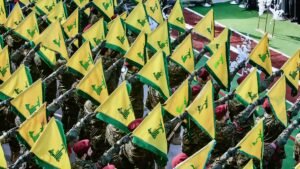
Hezbollah – which wields significant power in Lebanon and is often described as a state within a state – has used civilian areas for storing weapons and firing rockets.[ix] Recent footage compiled by the IDF shows[x] that Hezbollah stores rocket launchers in schools and homes, stockpiles weapons in a government hospital, and digs terror tunnels beneath storefronts and other civilian buildings. Hezbollah has developed plans for its Radwan forces to infiltrate northern Israel and seize communities there. This is supported by recent evidence too.[xi] As the most heavily armed nonstate actor in the Middle East[xii] [xiii], Hezbollah also disrupts the tenuous balance of power between the main sectarian factions in Lebanon, undermining the government’s sovereignty and monopoly over the use of force, and impeding the country’s ability to survive an economy that has been in freefall since 2019.[xiv]
Though many in the West persist in characterizing the fighting on Israel’s northern border as a conflict between Israel and Lebanon, the Israeli and Lebanese governments know better: Israel and Lebanon, after all, are both trying to wrest control from Hezbollah – and Iran.
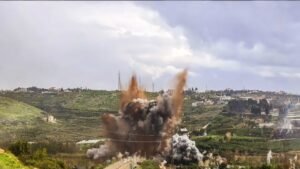
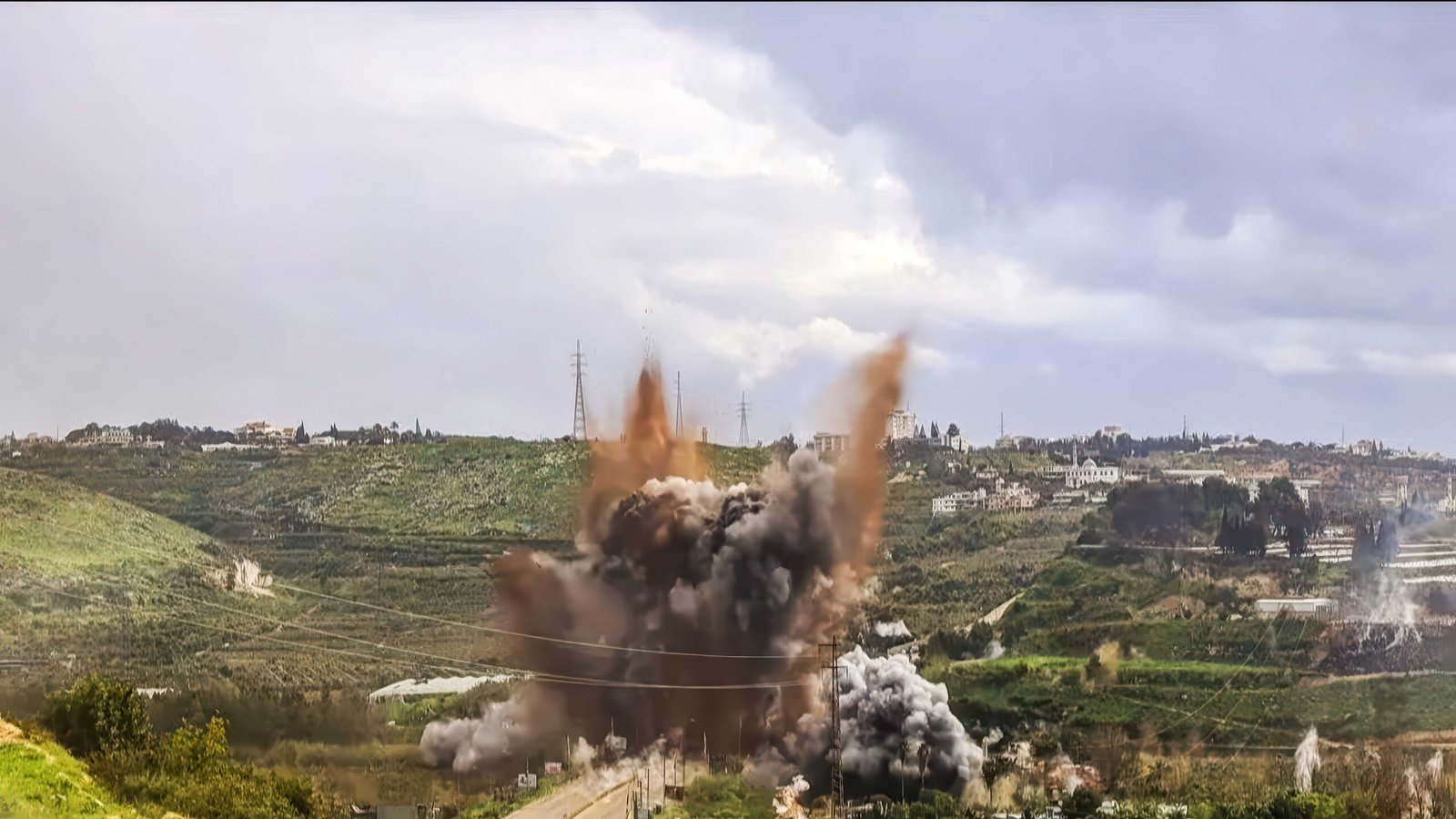
The Israeli security zone that currently stretches about 6 miles into Lebanon plays an important role in preventing Hezbollah from invading Israel and firing directly at Israeli civilians. Israel controls the area and has meticulously destroyed the massive infrastructure, much of it underground, that Hezbollah left behind. But this is not enough. Hezbollah still retains considerable weaponry and military capabilities north of the new security zone, while the Lebanese Armed Forces face significant challenges in disarming the group.
Ideally, the new reality on the ground should set the stage for the Lebanese army to become the sole entity governing the use of force in Lebanon. This could take place following the disarming of Hezbollah and the establishment of a demilitarized area in southern Lebanon with Israeli security cooperation. Until this vision becomes reality, though, Israel has a strong security interest in maintaining the buffer zones to prevent any attempt by Hezbollah to regroup and redeploy in southern Lebanon.
Israeli freedom of action to prevent Hezbollah from redeploying in the area is also closely aligned with U.S. goals for the future of Lebanon and the Middle East, as minimizing Hezbollah’s power is an essential tool for weakening Iran, which uses Hezbollah – as well as Hamas in Gaza and other proxies – to destabilize the Middle East and threaten Israeli and Western interests.
For years, the Iranian regime has threatened Israel and extended its influence, mainly by providing arms and funding to Hezbollah, Hamas and other militant groups. Shoring up Israel’s borders with demilitarized buffer zones in the north and south could reduce the risk of another destabilizing period of violence like the years that followed the Lebanon withdrawal – creating secure and defensible borders and limiting Iran’s ability to influence developments in Israel and Lebanon. Such an outcome could strengthen Israel’s own defenses as well as regional security by reducing Tehran’s leverage and creating conditions more conducive to economic reconstruction and deeper regional cooperation.
[i] Pressman, J. (2003). “The Second Intifada: Background and Causes of the Israeli-Palestinian Conflict”, Journal of Conflict Studies, XXIII(2), retrieved from: https://journals.lib.unb.ca/index.php/JCS/article/download/220/378?inline=1.
[ii] Choukeir, J., Abouhassira, E. and Magid, P. (2026). Reuters, 27 June 2026, retrieved from: https://www.reuters.com/world/middle-east/israeli-drone-strike-hits-southern-lebanon-day-after-security-deal-2026-06-27/.
[iii] Ravid, B. (2026). “Israel and Lebanon sign framework agreement”, Axios, 26 June 2026, retrieved from: https://www.axios.com/2026/06/26/israel-lebanon-framework-agreement-hezbollah.
[iv] Stein, A. (2026). “Israel-Lebanon talks conclude in Rome, pilot zones agreed, IDF may begin withdrawal in days, The Jerusalem Post, 15 July 2026, retrieved from: https://www.jpost.com/middle-east/article-902625.
[v] Habeshian, S. and Debusmann, B. (2026). “Israel and Lebanon sign framework agreement after US-brokered talks”, BBC News, 26 June 2026, retrieved from: https://www.bbc.co.uk/news/articles/cg5315n1v5go.
[vi] Murphy, N. (2026). “Israel strikes southern Lebanon as Hezbollah condemns new deal”, BBC News, 27 June 2026, retrieved from: https://www.bbc.co.uk/news/articles/cx2kpn0eeweo.
[vii] Gambrell, J., Metz, S. and Magdy, S. (2026). “Iran says the initial deal to end the war with the US requires Israel to withdraw from Lebanon”, AP, 17 June 2026, retrieved from: https://apnews.com/article/iran-us-war-israel-lebanon-oil-june-16-2026-d79458506c46e3f4a78aef0f9d8b9250.
[viii] Fabian, E. (2026). “Israel and Lebanon agree to renew truce, create ‘pilot’ zones where Hezbollah is banned”, The Times of Israel, 4 June 2026, retrieved from: https://www.timesofisrael.com/israel-lebanon-agree-to-renew-truce-create-pilot-zones-where-hezbollah-is-banned/.
[ix] Human Rights Watch (2007). “Hezbollah’s conduct during the war”, retrieved from: https://www.hrw.org/reports/2007/lebanon0907/8.htm.
[x] JNS (2026). “IDF: New footage shows Hezbollah using civilians as human shields”, 26 May 2026, retrieved from: https://www.jns.org/news/israel-news/idf-new-footage-shows-hezbollah-using-civilians-as-human-shields.
[xi] Israel Defense Forces (2026). “Hezbollah’s Plan to Invade Israel Exposed”, 20 January 2026, retrieved from: https://www.idf.il/en/mini-sites/hezbollah-s-conquer-the-galilee/conquer-the-galilee/.
[xii] Roche, M. and Robbins, M. (2024). “What the Lebanese People Really Think of Hezbollah”, Foreign Affairs, 12 July 2024, retrieved from: https://www.foreignaffairs.com/middle-east/what-lebanese-people-really-think-hezbollah.
[xii] Council on Foreign Relations (2026). “What Is Hezbollah?”, 17 April 2026, retrieved from: https://www.cfr.org/backgrounders/what-hezbollah.
[xiv] Azhari, T. (2026). “Saudi Arabia lifts Lebanese import ban in sign of support for government”, Reuters, 10 June 2026, retrieved from: https://www.reuters.com/world/middle-east/saudi-crown-prince-orders-resumption-lebanese-exports-2026-06-10/.