
The Middle East may appear to be entering a period of ceasefires, negotiations, and tactical restraint. But this is not stabilization. It is something more fragile and revealing: the normalization of unresolved conflict.
Across the region, violence is not ending; it is being managed. Ceasefires are reducing the intensity of some confrontations without transforming the conditions that produced them. Diplomatic channels are reopening, but often alongside military strikes. Armed actors are adapting to pauses rather than abandoning their strategies. States are learning to operate below the threshold of total war while preserving the option of escalation.
The result is a new regional condition: not peace, not full-scale war, but structurally embedded instability.
Lebanon shows this pattern most clearly. A U.S.-brokered ceasefire between Israel and Hezbollah may formally exist, but it has not produced strategic calm. On 9 May, Lebanon’s Health Ministry said an Israeli strike on the southern town of Saksakiyeh killed at least seven people, including a child, while the Associated Press separately reported additional Israeli drone and airstrikes near Beirut and in southern Lebanon. Israel said it was targeting Hezbollah operatives; Lebanese authorities condemned the attacks; Israel, Hezbollah, and the Lebanese state remain trapped in a pattern of strikes, warnings, accusations, deterrent messaging, and contested ceasefire enforcement.[i]
This is not a ceasefire in the classical sense. It is a conflict-management device. It lowers the ceiling of violence without removing the floor. Israel preserves freedom of action. Hezbollah preserves armed leverage. Meanwhile, the Lebanese state remains too weak to impose sovereign control. Washington can mediate, but it cannot by itself produce a functioning Lebanese monopoly over force. Diplomacy and violence now move in parallel rather than in sequence.[ii]
Gaza illustrates the same logic, albeit from a different angle. The war has not disappeared; it has been displaced from the center of international attention by the Iran crisis and the Lebanon front. Chatham House warned on 8 May that the Iran war has left Gaza neglected, with the move from an initial ceasefire to a second phase stalled by the central disputes over Hamas’s disarmament and Israel’s withdrawal.[iii]
More broadly, unresolved conflicts are layered rather than resolved. One crisis may push another into the background, but the underlying system continues to generate pressure.
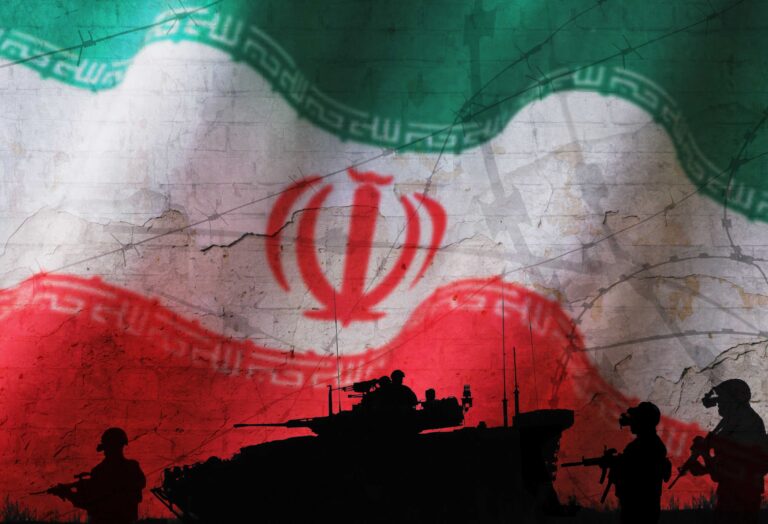
Iran and the Strait of Hormuz reveal the global dimension of the same process. Although diplomatic efforts have continued since May, a formal settlement remains elusive. The tentative ceasefire has come under repeated strain, with renewed exchanges around the Gulf, continuing disputes over sanctions, Iran’s nuclear programme, and uncertainty over freedom of navigation through the Strait of Hormuz. While the passage of LNG tankers through the Strait has been used as a confidence-building measure and a signal of possible de-escalation, shipping flows and energy markets remain vulnerable to renewed disruption.[iv] The conflict has moved through military confrontation, maritime coercion, sanctions, energy disruption, and diplomacy – not as separate phases, but as simultaneous instruments of pressure.
The problem is routinized brinkmanship. The Strait of Hormuz has become a bargaining arena in which shipping, energy prices, naval deployments, sanctions, and diplomatic messaging are fused. Iran’s own effort to redefine Hormuz as a broader “operational area” only underscores that the strait is no longer merely a narrow maritime chokepoint, but a wider coercive zone.[v] Chatham House has argued that the Hormuz crisis is forcing Saudi Arabia to reassess core vulnerabilities in its Vision 2030 strategy, while also exposing the limits of traditional assumptions about Gulf security.[vi]
The Red Sea, the Gulf, Lebanon, Gaza, Syria, and Iraq are not isolated files. They are interacting arenas in a single, adaptive conflict system
The Red Sea, the Gulf, Lebanon, Gaza, Syria, and Iraq are not isolated files. They are interacting arenas in a single, adaptive conflict system. As a result, instability is no longer regionally contained. A confrontation in the Gulf affects global energy markets. A strike in Lebanon affects U.S. diplomacy with Iran. Gaza shapes Arab public legitimacy and the politics of normalization. Syria’s borders affect Hezbollah’s logistical space.
In such a system, stability cannot be measured by the temporary absence of large-scale war. It must be measured by whether the feedback mechanisms that reproduce insecurity are being weakened or reinforced.
Even apparent diplomatic progress should be read through this lens. Lebanese Prime Minister Nawaf Salam’s 9 May visit to Damascus, accompanied by ministers responsible for economy, transport, energy, and water, points less to the emergence of regional order than to the improvisation of partial arrangements amid disorder. The talks reportedly focused on security, economy, energy, transport, and unresolved bilateral issues. It shows regional actors trying to manage borders, infrastructure, smuggling, refugee pressures, and security spillovers without resolving the broader strategic environment.[vii]
The danger is that policymakers may mistake this adaptive capacity for stability, interpreting ceasefires diplomatic engagement, or market adjustment as evidence that underlying risks have diminished.
Small incidents can still produce disproportionate consequences: a drone strike near Beirut, a response by Hezbollah, a failed negotiation in Gaza, an incident involving a tanker in Hormuz, a militia attack in Iraq, or a miscalculation involving American, Israeli, Iranian, or Gulf forces. In a dense regional system, small shocks can travel across connected arenas.
That is why the language of “stabilization” is misleading. The more accurate term is managed instability. Actors do not resolve conflict; they learn to operate within it, establishing, testing, and renegotiating informal red lines. Violence becomes intermittent rather than exceptional. Ceasefires become tactical pauses. Diplomacy becomes a mechanism for regulating conflict, not ending it.
For outside powers, the policy implications are uncomfortable but clear. First, ceasefires must be treated as openings, not achievements. A ceasefire without enforcement, monitoring, political follow-through, humanitarian access, and credible governance arrangements is a temporary mechanism that rival actors will use to reorganize.
Second, Washington and its partners must stop treating regional crises as separate files. Gaza, Lebanon, Iran, Syria, the Gulf, and the Red Sea are connected through feedback loops. Pressure on one front can relieve, redirect, or intensify pressure on another. A diplomatic gain with Iran may alter Hezbollah’s calculations. A renewed Gaza crisis may constrain Arab normalization. A maritime confrontation may reshape Gulf alignments. Policy designed in silos will repeatedly generate unintended consequences.
Third, the region needs a crisis-management architecture, not only crisis diplomacy. That means standing mechanisms for maritime deconfliction, border monitoring, ceasefire verification, humanitarian access, missile and drone restraint, and indirect communication among adversaries. Such mechanisms will not create peace. But they can reduce the likelihood that managed instability becomes systemic breakdown.
Finally, policymakers must distinguish between resilience and habituation. The fact that regional actors are functioning amid persistent insecurity does not mean the region is becoming stable. It may instead indicate that instability is becoming embedded in the region’s institutions, expectations, markets, and military doctrines.
The Middle East is not simply collapsing into chaos, nor is it moving toward lasting order. It is adapting to a condition in which conflict is regulated rather than resolved. That may look like resilience, but it is better understood as a warning. The danger is that the world may mistake the region’s successful management of instability for stability itself.
[i] Reuters (2026). “Israeli Strike Kills Seven in South Lebanon, Lebanese Health Ministry Says,” 9 May 2026, retrieved from: https://www.reuters.com/world/middle-east/israeli-strike-kills-seven-south-lebanon-lebanese-health-ministry-says-2026-05-09/; Mroue, B. (2026). “Israeli Drone Strikes near Beirut Kill 4 and Southern Airstrikes Kill at Least 13,” Associated Press, 9 May 2026, retrieved from: https://apnews.com/article/lebanon-israel-hezbollah-airstrikes-nabatiyeh-4fd1002c9713df5359acfa090598fd50.
[ii] Bassam, L.. Scheer, S. and Singh, K. (2026). “US Casts Israel-Lebanon Talks on Thursday as ‘Positive and Productive,’” Reuters, 14 May 2026, retrieved from: https://www.reuters.com/world/middle-east/lebanon-press-israel-cease-fire-washington-talks-lebanese-official-says-2026-05-14/.
[iii] Norman, J. (2026). “The Iran War Has Left Gaza Neglected,” Chatham House, 8 May 2026, retrieved from: https://www.chathamhouse.org/2026/05/iran-war-has-left-gaza-neglected.
[iv] Ali, I., Banco, E. and Maher, H. (2026). “US, Iran No Closer to Ending War as Qatari Tanker Sails toward Strait of Hormuz,” Reuters, 9 May 2026, retrieved from: https://www.ksl.com/article/51495328/us-iran-no-closer-to-ending-war-as-qatari-tanker-sails-toward-strait-of-hormuz.
[v] Reuters (2026). “Iran Now Defines Strait of Hormuz as Far Larger Zone, IRGC Officer Says,” Reuters, 12 May 2026, retrieved from: https://www.reuters.com/world/middle-east/iran-now-defines-strait-hormuz-far-larger-zone-irgc-officer-says-2026-05-12/.
[vi] Quilliam, N. (2026). “How the Iran War Is Reshaping Saudi Strategy: From Hormuz and Houthis to the UAE’s OPEC Exit,” Chatham House, 1 May 2026, retrieved from: https://www.chathamhouse.org/2026/05/how-iran-war-reshaping-saudi-strategy-hormuz-and-houthis-uaes-opec-exit.
[vii] “PM Salam Says Lebanon, Syria Made ‘Progress’ on Shared Issues on First Visit to Damascus,” Ahram Online, 9 May 2026, retrieved from: https://english.ahram.org.eg/News/567604.aspx; “Nawaf Salam Plans to Visit Syria Soon,” L’Orient Today, 7 May 2026, retrieved from: https://today.lorientlejour.com/article/1506111/nawaf-salam-plans-to-visit-syria-soon.html.