
Qatar faces an unusually explicit campaign to shrink its role in the Gaza file. The charge from some Israeli officials and commentators is that Doha’s earlier engagement empowered Hamas and thereby damaged Israeli national security. Yet Qatar remains a member of the “Board of Peace” associated with President Donald Trump’s plan for Gaza. That contradiction raises a practical question: is Qatar’s role in the Strip merely contracting, or is it approaching its end?
The current mediation landscape
The sharpest recent attack in political circles came from former prime minister Naftali Bennett, leader of the Together party, who argued that “Qatar now poses a greater danger to Israel than Iran” and pledged to place Doha on Israel’s list of enemy states.[i] [ii] While such language can be dismissed as campaign rhetoric, Israel’s operational record could suggest otherwise. On 9th September 2025 Israel struck a Hamas leadership meeting in Doha that was discussing a U.S. ceasefire proposal.[iii] The attack on the territory of a major U.S. ally[iv] highlighted Israel’s increasingly adversarial view of Qatar’s hosting of Hamas leaders. To Tel Aviv, Qatar may have emerged as a venue that allowed Hamas to remain diplomatically active after the destruction of much of its military capacity in Gaza.
That reading was reinforced at a discussion on 27th July 2026 convened by the Institute for National Security Studies (INSS) and Yedioth Ahronoth.[v] Participants warned of eroding U.S. support for Israel and of the risk that actors linked, in the Israeli view, to Hamas –Qatar and Turkey among them – might gain a foothold in post-war Gaza.[vi] One of the participants was Yair Golan, leader of the centre-left Democrats, who cautioned against the internationalisation of the Gaza file while also flagging concerns about Qatar’s role, calling not for the latter’s abolition, but for increasing oversight over it. INSS assessments carry weight inside Israel’s security establishment. Concern among figures outside of Israel’s political right suggests that reservations about Qatar extend across the political spectrum.
Doha continues to mediate between Hamas and Israel in coordination with Cairo, Ankara and Washington. The centre of gravity, however, appears to be shifting towards greater Egyptian and Turkish involvement.[vii] Three factors explain the move. First, Qatari attention has been absorbed by mediation between Tehran and Washington. Second, Qatar may also seek to insulate its relations with Washington and other Western partners from controversies surrounding Hamas. Third, Hamas’s leadership now judges Egyptian and Turkish leverage more useful against an Israeli attempt to exclude the group entirely from Palestinian politics. A Hamas source, corroborated by several media reports[viii], mentioned that the new political bureau headed by Khalil al-Hayya has reportedly begun transferring many offices and committees to Istanbul, reading Qatari interests in the Palestinian file as diminished. The shift may reflect several factors, including increased Israeli political pressure on Qatar, Doha’s competing diplomatic priorities, and Hamas’s assessment that Turkey and Egypt now offer greater political leverage. Doha also appears anxious that a broader international narrative – reinforced by criticism from Israeli commentators – will fuse its name with Hamas. The resulting adjustment is a quieter, facilitative role rather than full hosting of Hamas’s political apparatus.
Against this wider regional backdrop – including Israeli military action in Syria and Tel Aviv’s developing relationships around the Red Sea – Turkey and Egypt may offer Hamas a broader set of political relationships through which to pursue its interests. Hamas’s reported relocation of some political activity to Istanbul is consistent with this interpretation, although it does not by itself establish such a strategic calculation.
Why Qatar's role could be limited rather than abolished
Israel had previously derived benefits from Qatari mediation and the channel could not be discarded outright because it is supported by the U.S. too. A full rupture with Doha would therefore lead to further tensions with Washington.
Some Israeli criticism gives less emphasis to the earlier coordination between Qatar and the Israeli government. Doha’s cash support for Gaza was coordinated with Benjamin Netanyahu’s government from November 2018.[ix] Funds arrived at Ben Gurion Airport and were transferred through the Erez crossing to Hamas authorities. A substantial portion was distributed to low-income households after Israeli security vetting of recipients.[x] Israeli officials defended the arrangement at the time as a means of addressing humanitarian and economic pressures in Gaza and contributing to short-term stability. Critics later argued that the policy also helped sustain Hamas’s rule. That history has become part of Israel’s domestic debate over the policy, which seeks to distinguish between the original objectives and longer-term effects, especially as part of criticism of Qatar’s role amid wider debates over responsibility for the failure to prevent 7th October 2023. Israeli security policy has increasingly emphasized pre-emption: in Gaza, in the West Bank, in the war with Iran, and in the strike on Qatar itself. Under that logic, any residual Qatari mediation would operate under tight Israeli supervision.
A similarly restrictive approach can be seen in recent disputes with some European partners. Israeli Foreign Minister Gideon Sa’ar announced the immediate expulsion of Dutch representatives from the international Gaza support centre in Kiryat Gat[xi] [xii], and the government has considered similar steps against British and other European officials after they condemned settlement expansion in the West Bank.[xiii] These measures suggest that Israel is seeking greater control over the terms of external involvement, and that it is willing to restrict certain partners’ involvement. As European roles have been restricted in this way, a reduction of Qatari mediation could also follow.
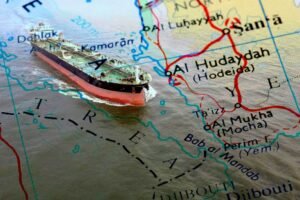
Israeli objections cluster around three claims: that Qatar’s hosting of Hamas leaders after 7th October gave the movement political shelter and an incentive to retain arms; that some Qatar-based media coverage has been supportive of Hamas and/or terrorism; and that reconstruction finance can be diverted, directly or indirectly, to Hamas. The reason these objections point to restriction rather than abolition is the structure of U.S. policy in the region. The Trump administration has favoured distributing roles among allies in order to share financial, political and military costs: joint campaigning with Israel against Iran; a reduced U.S. posture in Syria coordinated with Ankara; and an attempt to push Saudi Arabia towards a more prominent role in the Red Sea. Qatar fits into this pattern. Washington also relies on Doha in the Iran file as well as in a wider set of security, diplomatic and economic ties. These interests argue against discarding Qatari mediation in Gaza.
The implication is clear enough. A Qatari ground force in Gaza is not a serious prospect; Doha has limited experience large-scale troop deployments abroad, and Israel would not accept it either. Qatari influence through reconstruction – infrastructure, education, relief and cultural projects – on the other hand is more plausible, but only under close Israeli and American monitoring. Gaza’s reconstruction needs are too large for that money to be refused outright.
Conclusion
Qatar is unlikely to be altogether removed from Gaza, but its role may be more limited in the future of the Strip. What could remain is a quieter role: messages, not leadership, and reconstruction funding operating under external oversight rather than in an independent capacity. This would mark not the end of Qatari involvement in Gaza, but a shift from political influence towards a more constrained role as intermediary and financier.
[i] Chihi, C. (2026). “Bennett attacks Qatar and calls for it to be designated as a state ‘hostile’ to Israel”, [in Arabic], Euronews, 2 August 2026, retrieved from: https://arabic.euronews.com/2026/08/02/hostile-state-poisoning-us-from-within-bennett-attacks-qatar.
[ii] The Times of Israel (2026). “Bennett says Qatar a more dangerous enemy to Israel than Iran right now”, 2 August 2026, retrieved from: https://www.timesofisrael.com/bennett-says-qatar-a-more-dangerous-enemy-to-israel-than-iran-right-now/.
[iii] Al Jazeera (2026). “The Israeli attack on Qatar: Targeting the negotiations and the mediator”, [in Arabic], 9 September 2026, retrieved from: الهجوم الإسرائيلي على قطر.. استهداف للمفاوضات والوسيط | موسوعة | الجزيرة نت.
[iv] Rasgon, A., Nereim, V. and Bergman, R. (2025). “Israel Attempts to Kill Hamas Leadership in Airstrike on Qatar,” The New York Times, 9 September 2025, retrieved from: https://www.nytimes.com/2025/09/09/world/middleeast/israel-hamas-doha-qatar-strike.html.
[v] INSS (2026). “Israel’s National Security Conference”, 27 July 2026, retrieved from: https://www.inss.org.il/event/ynet-inss-national-security-2026/.
[vi] Qasioun Studies (2026). “A Look at the Israeli National Security Conference”, [in Arabic], 18 August 2026, retrieved from: مركز قاسيون للدراسات الاستراتيجية – نظرة على مؤتمر الأمن القومي الإسرائيلي.
[vii] State of Qatar Ministry of Foreign Affairs (2026). “Joint Statement…”, 20 August 2026, retrieved from: https://mofa.gov.qa/en/latest-articles/statements/joint-statement-issued-by-the-mediators–the–state-of-qatar–the-republic-of-t%C3%BCrkiye–and-the-arab-republic-of-egypt–on-the-recent-israeli-attacks-in-gaza.
[viii] Maan News (2026). “Hamas moves secret units and activities to Turkiye after Qatar tightens restrictions on the group”, [in Arabic], 6 August 2026, retrieved from: تقارير: حماس تنقل وحدات وأنشطة سرية إلى تركيا عقب تشديد قطر القيود عليها.
[ix] On earlier Qatari cash transfers via Israel, see contemporaneous reporting on the 2018 arrangement and subsequent Israeli political debate over responsibility for the policy after 7 October 2023.
[x] CNN Arabic (2018). “In 3 bags… Qatar sends $15 million to Gaza via Israel”, [in Arabic], November 2018, retrieved from: في 3 حقائب.. قطر ترسل 15 مليون دولار إلى غزة عبر إسرائيل | CNN Arabic | CNN.
[xi] Youm7 (2026). “Israel announces the expulsion of Dutch representatives from the International Support Center for Gaza over the settlements issue”, [in Arabic], 25 August 2026, retrieved from: إسرائيل تعلن طرد ممثلي هولندا من مركز الدعم الدولي لغزة بسبب المستوطنات – اليوم السابع.
[xii] Freiberg, N. (2026). “Sa’ar boots Dutch from US-backed Gaza coordination center over ‘anti-Israel measures’”, The Times of Israel, 26 August 2026, retrieved from: https://www.timesofisrael.com/saar-boots-dutch-from-us-backed-gaza-coordination-center-over-anti-israel-measures/.
[xiii] Shorouk News (2026). “Israel considers expelling British and European officials from the Gaza coordination center”, [in Arabic], 27 August 2026, retrieved from: إسرائيل تدرس طرد مسئولين بريطانيين وأوروبيين من مركز تنسيق غزة – بوابة الشروق.