Meeting in New Delhi on 9th September 2023, the G20 unveiled a new economic corridor project, following China’s Belt and Road Initiative and the European Union’s more recent Global Gateway. The India–Middle East–Europe Economic Corridor (IMEC) was formally launched to “secure regional supply chains.”[i] The route is intended to link India to Europe via the Gulf and the Arabian Peninsula through maritime, rail, energy and digital infrastructure.
A few weeks later, attacks on shipping in the Red Sea triggered a major diversion of traffic away from Bab el-Mandeb and the Suez Canal. In June 2024, UNCTAD estimated that tonnage transiting Suez had fallen by around 70% compared with mid-December 2023, while arrivals at the Cape of Good Hope had risen by 89%.[ii] Yet the crisis revealed an important distinction: Suez proved vulnerable, but trade between Asia and Europe did not stop. It shifted to a longer and more costly route that was immediately available.
The successive Red Sea and Hormuz crises offer a way to examine not only which dependencies new corridors remove, but which ones they create in turn.
Above all, the episode highlights a distinction often obscured by the proliferation of corridor projects: a route’s exposure to disruption does not, by itself, determine whether trade flows can be rerouted. The successive Red Sea and Hormuz crises therefore offer a way to examine not only which dependencies new corridors remove, but which ones they create in turn.
The search for alternatives to maritime routes
The vulnerability highlighted in the Red Sea stems primarily from the concentration of trade on a few passages. Under normal circumstances, around 15% of global maritime trade passes through the Suez Canal, access to which from the Indian Ocean requires passage through Bab el-Mandeb. The closure or deterioration of navigation conditions in any of these passages therefore affects the entire Asia–Europe route. The detour via the Cape of Good Hope is a tried-and-tested solution, but it comes at the cost of around 3,000 nautical miles and, depending on the route, an additional ten days or so.[iii]
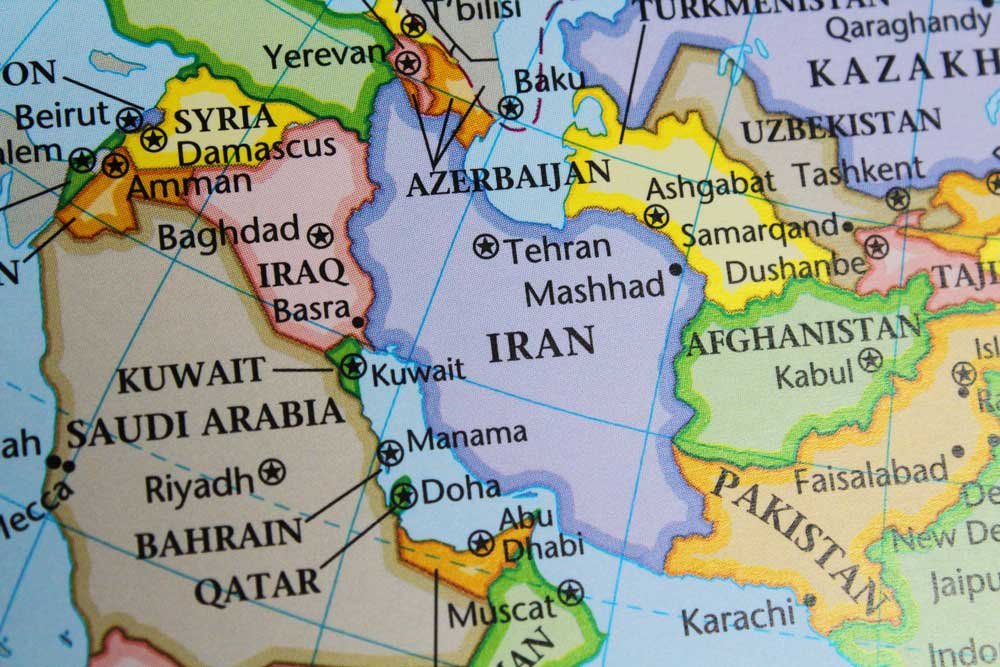
IMEC’s architecture would reduce the maritime component of trade between India and Europe. It comprises two segments: a maritime link between India and the Gulf, followed by a rail connection across the Arabian Peninsula to the Mediterranean and a final sea leg to Europe. Although the final route remains unsettled, it would draw on UAE port capacity and Saudi rail infrastructure, consistent with Riyadh’s ambition to make the Kingdom a logistics hub connecting three continents. The 2023 memorandum, however, specifies neither the corridor’s total cost nor the infrastructure still required, and sets no timetable for commissioning.
Further north, the Iraq Development Road (IDR), agreed in April 2024 by Iraq, Turkey, Qatar and the United Arab Emirates, is intended to connect the Grand Port of Al-Faw with the Turkish border through nearly 1,200 kilometres of road and rail infrastructure. Estimated at around $17 billion, the project concentrates most of its overland route within Iraq before connecting to Turkish networks. Iraq’s national development plan attributes to it a capacity for “strategic flexibility in transport movements”, based on the combination of road and rail and several possible connections.[iv] [v]
The IMEC involves a greater number of segments and transhipments, and crosses more territories, whereas the IDR prioritises, beyond Al-Faw, the continuity of a single land route. The former distributes the route across more infrastructure and jurisdictions; the latter concentrates a larger proportion of it within a single territory.[vi] It remains to be seen whether these structures offer genuine alternatives in the event of disruption.
From the Red Sea to Hormuz, alternatives remain constrained
Bypassing Suez, however, is by no means a painless solution. In the first two months of 2024, commercial traffic through the canal fell by 50% year-on-year, while the detour via the Cape of Good Hope added an average of ten days or more to delivery times. By mid-2024, UNCTAD estimated that the longer routes had increased global demand for shipping capacity (expressed in tonne-miles) by around 3%, and that for container ships by 12%. The Shanghai Containerised Freight Index more than doubled between late 2023 and mid-2024.
The cost is therefore substantial, but the alternative route already exists. No additional ports, railways or transit agreements are required to bypass Africa. This fallback capacity distinguishes the vulnerability of a single passage from that of the trading system as a whole: the Suez Canal may become temporarily impassable without interrupting the maritime link between Asia and Europe.
The crisis surrounding the Strait of Hormuz, which began in February 2026, places a different strain on the new corridors. In 2025, around 20 million barrels of oil and petroleum products passed through the strait each day, equivalent to roughly 25% of global seaborne oil trade; close to 20% of global LNG trade also transited the passage.[vii] Six months into the conflict, the International Maritime Organization recorded 70 confirmed attacks on shipping and 19 seafarer deaths. Up to 400 vessels carrying around 6,000 seafarers had also been unable to leave the Gulf safely since the start of hostilities.[viii]
The impact on trade flows was immediate. According to the International Energy Agency, oil shipments, which had risen to 20 million barrels per day in early July, fell back to around 12 million later in the month. Over a longer period, between late February and late July, observed global oil stocks fell by 410 million barrels.[ix]
The corridor shifts the critical point from Bab el-Mandeb to the Strait of Hormuz rather than eliminating it.
This crisis highlights a limitation of the projects designed to bypass the Suez Canal, but this limitation does not apply equally to both corridors. For goods arriving from Asia, the IDR necessarily remains dependent on the Strait of Hormuz even before reaching Al-Faw, located at the head of the Gulf. The corridor thus shifts the critical point from Bab el-Mandeb to the Strait of Hormuz rather than eliminating it.[x]
The situation regarding the IMEC is less clear-cut. The 2023 memorandum does not specify any port of entry to the United Arab Emirates. A route via Jebel Ali or Khalifa would maintain dependence on the Strait of Hormuz; a connection via Fujairah, which is already linked to the UAE’s rail network and situated on the country’s eastern coast, would, by contrast, reduce it[xi][xii]. The resilience of the corridor therefore also depends on infrastructure choices that have not yet been finalised.
Infrastructure that remains fragmented
The main difficulty stems from the gap between the announced routes and the infrastructure actually available. In the United Arab Emirates, Etihad Rail now has 900 kilometres of track, linking the Saudi border to Fujairah and serving eleven terminals as well as four ports. The freight network is therefore operational as far as Ghuwaifat, on the border with Saudi Arabia. Saudi Arabia, for its part, already has extensive rail networks: the Northern network spans approximately 2,750 kilometres, while the Eastern network covers some 1,775 kilometres, including 566 kilometres for the freight line linking the port of Dammam to Riyadh.
However, this infrastructure does not yet provide a continuous link to the Mediterranean. The Saudi Northern Network reaches Qurayyat, near the Jordanian border, but the interconnection of the national networks remains one of the objectives of the Gulf Cooperation Council’s rail project. In December 2025, the six GCC members approved the general agreement designed to organise their connection[xiii]; by April 2026, work was still focused on its implementation and on making progress with the construction of the network.
The challenge for IMEC is therefore not merely to have railways in place, but to ensure their continuity. Goods arriving from India must be unloaded in the Gulf, transferred to a rail network across several borders before reaching the Mediterranean, and then reloaded onto a ship bound for Europe. Compared with a port-to-port maritime link, this structure involves a greater number of transhipments, interfaces between operators, customs procedures and transit agreements, all of which are essential to the continuity of the journey. Moreover, the 2023 memorandum sets out neither a definitive route, nor a construction timetable, nor any binding financial commitment. It merely stipulated that the participants should draw up an action plan within sixty days of its signing.
The comparison with the Suez Canal faces a significant limitation: it contrasts observed alternative capacity with capacities that are still largely projected.
The IDR is less fragmented on paper but considerably less advanced in practice. It envisages around 1,200 kilometres of railway and a similar length of motorway between Al-Faw and the Turkish border, for an estimated $17 billion. In February 2026, the Iraqi Ministry of Transport reported progress rates of 88% for rail and 78% for road, but these figures referred to detailed design studies rather than construction. International contractors still had to be selected before execution could begin.[xiv]
The timetable has, in fact, already slipped. The four-party agreement of April 2024 envisaged the completion of a first phase in 2028; the Iraqi authorities mentioned 2029 by the end of that same year, and then 2031 in February 2026. In April, the government was still working on the draft legislation intended to provide the corridor with its legal framework.[xv]
The comparison with the Suez Canal therefore faces a significant limitation: it contrasts observed alternative capacity with capacities that are still largely projected. In 2024, shipowners were able to reroute their vessels immediately via the Cape of Good Hope. As of 2026, neither IMEC nor the IDR yet has a complete logistics chain capable of withstanding the same test. The former relies on national networks that are already operational but still discontinuous at across borders; the latter still has to build the bulk of its route. The time or distance savings announced for these corridors therefore provide information about their future nominal operation, but much less on their behaviour in the event of a disruption.[xvi]
The detour via the Cape of Good Hope adds around 3,000 nautical miles and about ten days to the Shenzhen–Rotterdam route but requires neither new infrastructure nor a change of transport mode. A land corridor can shorten this distance while adding ports, transhipments and border crossings. Its value in times of conflict therefore depends not only on the time saved under normal circumstances, but also on the available capacity at each of these links and the existence of an alternative should any one of them become unavailable.
Conflict-resilient corridors
The crises in the Red Sea and then the Strait of Hormuz demonstrate, first and foremost, that diversifying routes does not automatically provide substitute capacity. For traffic arriving from Asia, the IDR avoids Bab el-Mandeb and Suez but remains dependent on the Strait of Hormuz before reaching Al-Faw. In the case of the IMEC, its exposure to the Strait of Hormuz will depend in particular on the choice of its entry point into the Emirates and on the rail connections that are actually available.
Reactions to the 2026 crisis point in this direction. The Emirates have increased their use of the ports of Fujairah and Khor Fakkan, situated east of the Strait of Hormuz, while GCC leaders have called for the completion of the joint rail network to be accelerated[xvii]. These responses suggest that the challenge no longer lies solely in the existence of an alternative route to Suez, but in the simultaneous availability of several access points should one of them be disrupted.
At this stage, neither the IMEC nor the IDR yet allow this capacity to be tested. The former remains a series of national networks whose cross-border connectivity has not been completed; the latter is still, to a large extent, at the stage of detailed studies and the definition of its legal framework. The crisis in the Strait of Hormuz has not demonstrated the failure of these corridors, but has rather highlighted what they will ultimately have to prove: their ability to become a genuine fallback route when existing infrastructure becomes unavailable.
[i] The American Presidency Project (2023). “Memorandum of Understanding on the Principles of an India–Middle East–Europe Economic Corridor”, 9 September 2023, available at: https://www.presidency.ucsb.edu/documents/memorandum-understanding-the-principles-india-middle-east-europe-economic-corridor.
[ii] United Nations Conference on Trade and Development (UNCTAD) (2024). Review of Maritime Transport 2024: Navigating Maritime Chokepoints. Geneva: United Nations, available at: https://unctad.org/system/files/official-document/rmt2024_en.pdf.
[iii] Kamali, P., Koepke, R., Sozzi, A. and Verschuur, J. (2024). “Red Sea Attacks Disrupt Global Trade”, IMF Blog, 7 March 2024, available at: https://www.imf.org/en/Blogs/Articles/2024/03/07/Red-Sea-Attacks-Disrupt-Global-Trade.
[iv] Ministry of Transport of the State of Qatar (2024). “Minister Signs MoU on Co-op between States Participants on Development Road Project, Al-Faw Port Development”, 22 April 2024, available at: https://www.mot.gov.qa/en/news/minister-signs-mou-co-op-between-states-participants-development-road-project-al-faw-port.
[v] Republic of Iraq, Ministry of Planning (2024). National Development Plan 2024–2028, pp. 99–100, available at: https://www.mop.gov.iq/documents/economic-policies/development-plans/National%20Development%20Plan%202024-2028.pdf.
[vi] Reisinezhad, A. and Reisinezhad, A. (2025). “The Corridor War in the Middle East”, Middle East Policy, 32(3), pp. 91–108, https://doi.org/10.1111/mepo.12811.
[vii] International Energy Agency (IEA) (2026). “Strait of Hormuz”, Factsheet, updated February 2026, available at: https://www.iea.org/about/oil-security-and-emergency-ission/strait-of-hormuz.
[viii] International Maritime Organization (IMO) (2026). “Six Months of Uncertainty for Seafarers in Strait of Hormuz”, 28 August 2026, available at: https://www.imo.org/en/mediacentre/pressbriefings/pages/statement-on-the-ongoing-crisis-in-the-strait-of-hormuz.aspx.
[ix] International Energy Agency (IEA) (2026). Oil Market Report – August 2026, 12 August 2026, available at: https://www.iea.org/reports/oil-market-report-august-2026.
[x] Hasan, H. (2024). “Iraq’s Development Road: Geopolitics, Rentierism, and Border Connectivity”, Carnegie Endowment for International Peace, 11 March 2024, available at: https://carnegieendowment.org/research/2024/05/iraqs-development-road-geopolitics-rentierism-and-border-connectivity.
[xi] Reuters (2026). “Gulf’s Fragile Trade Lifeline Hangs on Two Eastern UAE Ports”, 6 May 2026, available at: https://www.reuters.com/world/middle-east/gulfs-fragile-trade-lifeline-hangs-two-eastern-uae-ports-2026-05-06.
[xii] Etihad Rail (2026). “About Etihad Rail”, UAE National Rail Network, available at: https://corporate.etihadrail.ae/en.
[xiii] Gulf Cooperation Council (GCC) (2025). “Final Statement Issued by the Supreme Council at its Forty-Sixth Session”, 3 December 2025, available at: https://www.gcc-sg.org/en/MediaCenter/News/Pages/news2025-12-3-3.aspx.
[xiv] Iraqi News Agency (INA) (2026). “MOT: Submerged Tunnel in the Furnishing Stage, Awaiting Opening Soon”, 25 February 2026, available at: https://ina.iq/en/economy/45717-mot-submerged-tunnel-in-the-furnishing-stage-awaiting-opening-soon.html.
[xv] Iraqi News Agency (INA) (2026). “Transport Ministry Reviews Draft Law for Development Road Project”, 27 April 2026, available at: https://ina.iq/en/local/48156-transport-ministry-reviews-draft-law-for-development-road-project.html.
[xvi] Saidi, M., Esmaeildoost, F., Khankan, R., Masarani, H. and Toyasaki, F. (2026). “Logistical Agility at the Strait of Hormuz: A Framework for Managing Sustained Geopolitical Disruption Risks in Global Supply Chains”, Transport Policy, 183, 104168, https://doi.org/10.1016/j.tranpol.2026.104168.
[xvii] Ministry of Transportation and Telecommunications, Kingdom of Bahrain (2026). “Land Transport Undersecretary Chairs 9th GCC Railway Authority Board Meeting”, 16 April 2026, available at: https://www.mtt.gov.bh/news/land-transport-undersecretary-chairs-9th-gcc-railway-authority-board-meeting.