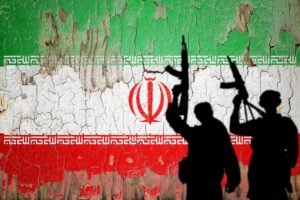
When the United States and Israel launched Operation Epic Fury on 28 February 2026, the opening salvo was not fired from a traditional war room. With a claim of striking over 1,000 targets on the first day alone[i], the strike volume became nearly double of the entire opening campaign of the 2003 Iraq War. As reports later confirmed, this was driven in large part by AI-assisted targeting systems, which compressed days of decision-making into minutes. Thus, the Iran war became the first major conflict in which generative AI was deployed at industrial scale in active warfighting operations. But the consequences of this war extend far beyond the moral debates about algorithmic targeting. The Iran war exposed catastrophic vulnerabilities in the architecture of the global AI industry itself. These AI vulnerabilities relate to the physical infrastructure, energy dependencies, supply chains, and the security guarantees given to allies upon which the entire semiconductor ecosystem rests. Thus, the Iran war is not merely a story of AI being used in war, it is also a tale of how this war is impacting the AI industry itself.
Three days after Operation Epic Fury began, the Islamic Revolutionary Guard Corps (IRGC) launched drone strikes against Amazon Web Services[ii] (AWS) data centres in the United Arab Emirates and Bahrain. This was the first time that commercial data centres were deliberately targeted during wartime. These data centres suffered substantial structural damage resulting in service outages across the region and disrupted banking, consumer services, and enterprise software. Iran explicitly outlined the logic behind these attacks, arguing that since commercial cloud infrastructure was enabling U.S. military and intelligence operations, the data centres became legitimate targets. A list of 30 ‘Enemy Technology Infrastructure’[iii] targets across the Gulf region was also published by Iranian media that included facilities operated by AWS, Microsoft, Google, IBM, Palantir, Nvidia, and Oracle. Thus, AI simultaneously became the weapon, the enabler and ultimately the target in this conflict.
Attacks on the data centres were not the only vulnerability of the AI industry exposed by the war. High energy demand was already a major challenge faced by the AI industry long before the conflict started. AI models require vast computational power, and the data centres that run these models consume huge amounts of energy for processing and cooling. According to an estimate by United Nations University, global data centres consumed around 448 terawatt-hours (TWh) of electricity[iv] by the end of 2025, which equals the collective annual electricity use of 650 million people. In comparison, just 1 TWh of electricity is enough to power 90,000 households[v] for an entire year. The report also estimated that this consumption may rise up to 945 TWh by 2030.
With the onset of the Iran war, the Strait of Hormuz was effectively closed causing unprecedented disruptions to the global energy markets. Given that more than 20 percent of the global energy supply[vi] transits through the strait, its closure directly impacted the operating expenses of the data centres. Thus, this war clearly demonstrated how AI infrastructures and energy infrastructures are deeply interconnected. An important facet of future AI competition will be to secure uninterrupted energy resources for continuous supply to the data centres.
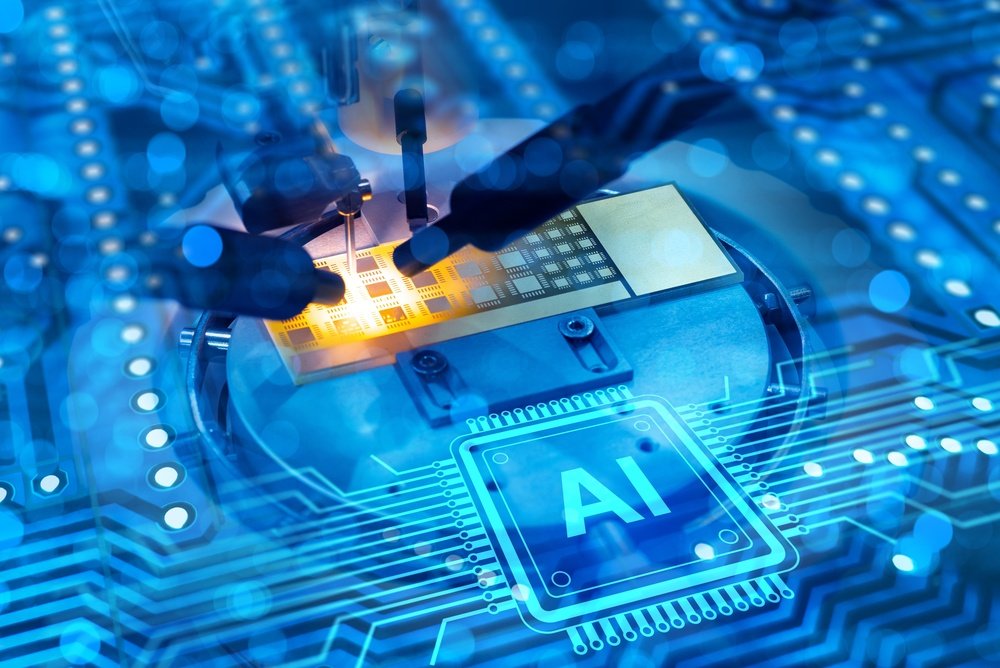
An additional and one of the most acute while simultaneously the least explored impacts of the Iran war on the AI industry has been the disruption of the semiconductor supply chain. Advanced semiconductor chips are essential to AI.[vii] Helium plays a critical role[viii] in various stages of the chip fabrication process, and there is no other alternative to it. Qatar’s Ras Laffan Industrial hub produces nearly one third[ix] of the world’s entire helium supply. Following the attacks on this facility in March 2026, the global supply of helium got disrupted while prices doubled. This disruption also extended to other materials crucial to the manufacturing of chips, such as bromine and sulfuric acid.[x]
In parallel with this, many industrial facilities producing semiconductors run on Liquified Natural Gas (LNG) provided by the Gulf region. Therefore, the Iran war and the closing of Strait of Hormuz compounded disruptions in the global supply of semiconductors.
While the energy crisis and supply chain shocks originating from the Middle East pose a serious challenge to the semiconductor industry, the security of the world’s largest manufacturing hub of semiconductors – Taiwan – may prove even more consequential.
Taiwan Semiconductor Manufacturing Company (TSMC) is the global powerhouse of semiconductor chips as it manufactures more than 90 percent[xi] of the most advanced chips. From smartphones and personal computers to AI models and cloud services, every modern digital system is dependent on advanced chips. Any disruption in the operations of TSMC would have a far bigger impact on the AI industry than every other supply chain disruption combined. Thus, Taiwan forms one of the most critical bottlenecks in the global AI ecosystem. The dispute between China and Taiwan has become one of the most significant flashpoints of U.S.-China strategic competition. Taiwan largely depends on the U.S. for security assurances and self-defence. As the Iran war exposed the limits of U.S. security guarantees, strategic calculations may also change in East Asia.
Like Taiwan, Gulf countries have for long considered the U.S. as their primary security guarantor. Notwithstanding, Washington launched the war on Iran without any prior notification to its partners across the Gulf[xiii], even though the security risks posed to them associated with Iran’s retaliation were significant. The relocation of the U.S.’s THAAD interceptor missiles from South Korea to the Middle East[xiv] during the war also left the Korean peninsula exposed to potential aggression by North Korea.
Taking these examples into consideration, Taiwan – and indeed, China – may perceive U.S. security guarantees not as a binding commitment but a function of Washington’s current political priorities. In April 2026, at the height of the Iran war, Taiwan’s main opposition leader, Cheng Li-wun, made a rare six-day visit to China[xv], which was presented as ‘journey of peace.’ If the reliability of U.S. security guarantees is indeed on a decline, it would have far-reaching implications for the global semiconductor and AI supply chain in the near future.
Vulnerabilities in the global AI industry have not been created by the Iran war, but it certainly amplified them, and may have even made some of them permanent. The AI race is often understood as a competition of algorithms, innovation and talent; but the Iran war highlighted its underlying fragilities. From the Strait of Hormuz to the Taiwan Strait, disruptions in the flow of energy and raw materials, and changes in the perception of U.S. security guarantees have direct consequences on the supply of semiconductors, which can easily upset the entire AI ecosystem.
[i] Staahl, D. (2026). “AI targeting systems doubles pace of US strikes in Iran”, AZ Family, 26 March 2026, retrieved from: https://www.azfamily.com/2026/03/26/ai-targeting-system-doubles-pace-us-strikes-iran/#:~:text=The%20U.S.,campaign%20in%20Iraq.
[ii] Jarnecki, J. and Sylvia, N. (2026). “Iranian Data Strikes Shake Global Digital Infrastructure”, RUSI, 19 March 2026, retrieved from: https://www.rusi.org/explore-our-research/publications/commentary/iranian-data-strikes-shake-global-digital-infrastructure.
[iii] Desmarais, A. (2026). “Iran says it will attack 17 American tech companies in Middle East by April 1”, Euronews, 12 March 2026, retrieved from: https://www.euronews.com/next/2026/04/01/enemy-technology-infrastructure-iran-threatens-amazon-google-and-microsoft-assets-in-middl.
[iv] Gartner (2025). “Gartner Says Electricity Demand for Data Centers to Grow 16% in 2025 and Double by 2030”, 17 November 2025, retrieved from: https://www.gartner.com/en/newsroom/press-releases/2025-11-17-gartner-says-electricity-demand-for-data-centers-to-grow-16-percent-in-2025-and-double-by-2030.
[v] U.S. Department of Energy (2016). “Computing America’s Offshore Wind Energy Potential”, 9 September 2016, retrieved from: https://www.energy.gov/cmei/systems/articles/computing-americas-offshore-wind-energy-potential.
[vi] Butler, G. Mann, T. and Jackson, P. (2026). “Why the Strait of Hormuz matters so much in the Iran war”, BBC, 14 July 2026, retrieved from: https://www.bbc.com/news/articles/c78n6p09pzno.
[vii] Khan, S.M. (2020). “AI Chips: What They Are and Why They Matter”, April 2020, retrieved from: https://cset.georgetown.edu/publication/ai-chips-what-they-are-and-why-they-matter/.
[viii] Innovation News Network (2025). “Why helium is essential to the future of semiconductor manufacturing”, 5 December 2025, retrieved from: https://www.innovationnewsnetwork.com/why-helium-is-essential-to-the-future-of-semiconductor-manufacturing/64493/.
[ix] Rare Earth Exchanges (2026). “When a Commodity Becomes Rare: The Helium Crisis, the Ras Laffan Shock, and the Fragility of Global Supply”, 23 March 2026, retrieved from: https://rareearthexchanges.com/news/when-a-commodity-becomes-rare-the-helium-crisis-the-ras-laffan-shock-and-the-fragility-of-global-supply/.
[x] Dezember, R. and Ballard, E. (2026). “Iran War Puts the World’s Most Used Chemical in Short Supply” The Wall Street Journal, 9 May 2026, retrieved from: https://www.wsj.com/finance/commodities-futures/iran-sulfuric-acid-supply-0f666c18.
[xi] The Conversation (2026). “How Taiwan came to dominate the global chip industry”, 1 April 2026, retrieved from: https://theconversation.com/how-taiwan-came-to-dominate-the-global-chip-industry-276939.
[xii] Campbell, C. (2026). “Taiwan: Defense and Military Issues”, Congress.gov, 18 June 2026, retrieved from: https://www.congress.gov/crs-product/IF12481.
[xiii] Magdy, S., Price, M.L. and Madhani, A. (2026). “Gulf allies disappointed U.S. didn’t notify about Iran attacks and ignored their warnings, sources say”, PBS News, 6 March 2026, retrieved from: https://www.pbs.org/newshour/world/gulf-allies-disappointed-u-s-didnt-notify-about-iran-attacks-and-ignored-their-warnings-sources-say.
[xiv] McCurry, J. (2026). “Hasty redeployment of US missiles from South Korea to Middle East leaves Seoul rattled”, The Guardian, 11 March 2026, retrieved from: https://www.theguardian.com/world/2026/mar/11/redeployment-us-missiles-thaad-south-korea-middle-east-seoul-iran.
[xv] Fouda, M. (2026). “Taiwan opposition leader makes rare visit to China in ‘journey for peace’, Euronews, 4 August 2026, retrieved from: https://www.euronews.com/2026/04/08/taiwan-opposition-leader-makes-rare-visit-to-china-in-journey-for-peace.