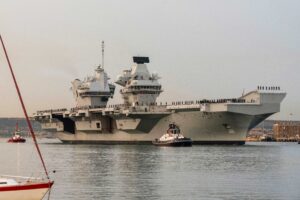
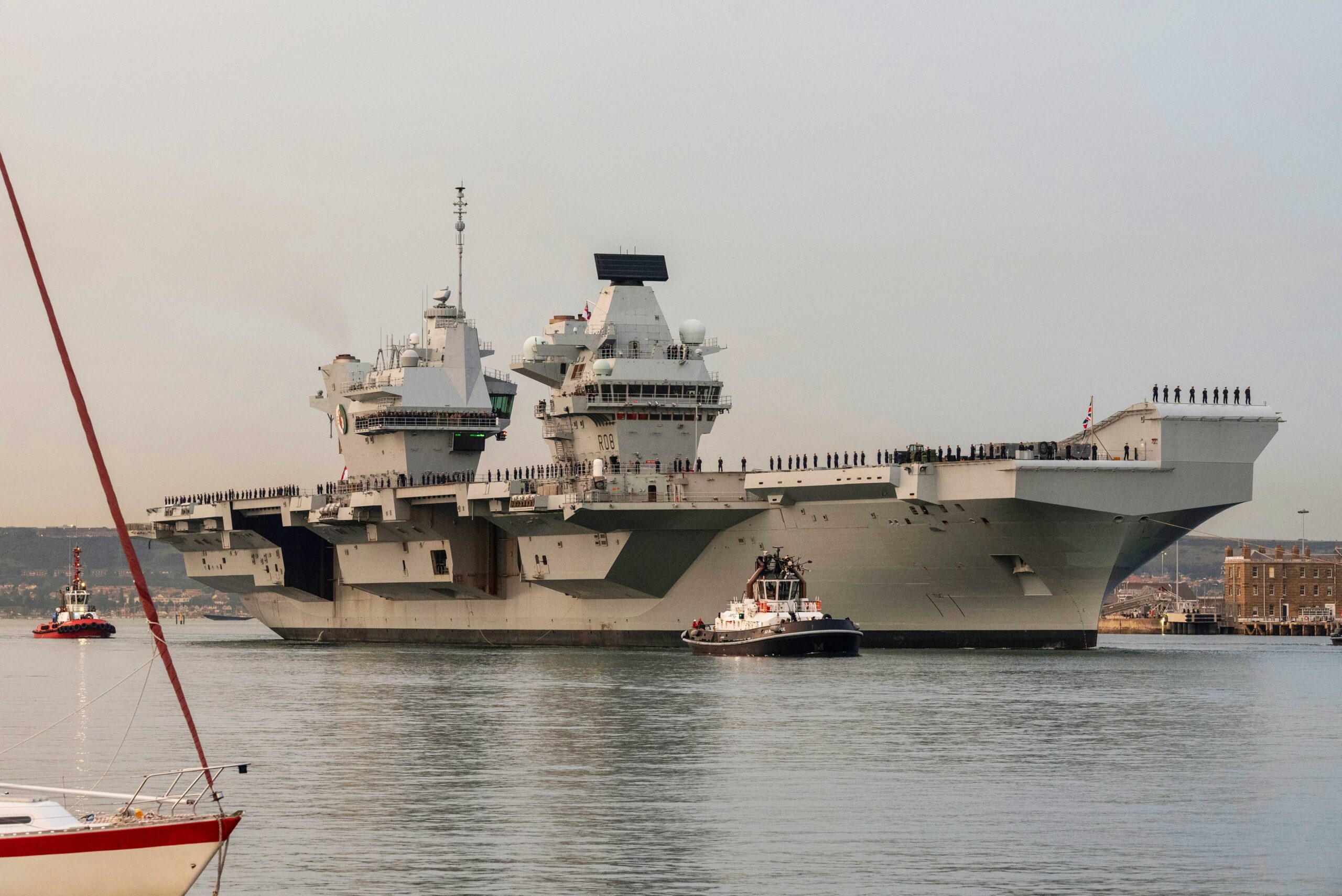
For the first time since 1980, the United Kingdom (UK) will no longer have a permanent maritime presence in the Middle East. In a quietly disclosed statement in January 2026, it was announced that Bahrain-based HMS Middleton, a Royal Navy minehunter, would return to the UK as early as March, with no replacement vessel announced.[i] The Middleton’s withdrawal, shortly after the Bahrain-based Type 23 Frigate HMS Lancaster’s decommissioning in December 2025,[ii] undid a 46-year-old policy of maintaining UK hard power in the Middle East. The UK had a frigate forward permanently deployed in the Gulf since 2019, the last vestige of a previously more significant Royal Navy presence in the Middle East going back to the Armilla Patrol from the early 1980s, which typically numbered three frigates or destroyers.[iii]
Strategic and security implications
The UK must prioritise a sovereign naval renewal program, increase its warship fleet, and reassert a persistent maritime presence in the Gulf.
The withdrawal of these two vessels from the Middle East just weeks before the current Middle East crisis raises serious concerns for UK grand strategy, foreign policy, defence diplomacy, and most immediately, its ability to project its national interests and ensure its national security in the region. What, therefore, does this significant alteration in the UK’s force posture signal to both its adversaries and allies alike, and how can the UK secure its national interests in the region in any meaningful manner, lacking the hard physical presence of any warships permanently deployed?
In the short-term it is assessed here that the UK can no longer secure its national interests in the region due to systemic cuts in the Royal Navy, and must therefore increasingly rely on European allies for not just traditional burden sharing, but active help. Many of these allies have diverging interests in addition to those they share with the UK. A case in point here is the UK’s reliance on the German Navy to provide a frigate to the UK’s standing commitment to NATO in the north Atlantic, after the Royal Navy’s singular deployment back to the Mediterranean with HMS Dragon. To mitigate these inherent risks, however, the UK must prioritise a sovereign naval renewal program, increase its warship fleet, and reassert a persistent maritime presence in the Gulf. This will require the UK government’s planned uplift in defence spending to materialise during this session of parliament, while increasing efficiency and investments across the UK’s remaining shipyards to boost domestic manufacturing capacity.
Economic and geopolitical stakes in the Gulf
The ongoing crisis in Iran has brought into fresh and renewed focus the UK’s core national interests in the region. They are, primarily, trade links and the maintenance of crucial energy supplies. Reciprocal trade with the Gulf Cooperation Council (GCC) countries, plus Iraq, Turkey, and Israel, reached over £100 billion GBP in 2025,[iv] whilst the UK is reliant on the region for approximately 20% of its oil imports. Although less reliant on the region’s liquified national gas (LNG), Qatar’s near-monopoly of 80% of the global market means a global run on LNG (caused, for example, by the closure of the Strait of Hormuz) will exacerbate UK supplies from elsewhere. It is a similar situation with crude oil supplies, as the US and Norway (the UK’s main suppliers) will have increased demand given the current Middle East crisis.[v]
Given these significant economic interests, the Labour government’s 2025 Strategic Defence Review (SDR) rightly articulated ‘the need for a UK footprint in the region to protect these interests’.[vi] The UK’s Naval Support Facility in Bahrain was therefore described as enabling the UK to maintain a ‘persistent maritime presence in the Middle East’, whilst UK defence continues to maintain the ‘capability to mount, or contribute to, limited interventions’. Released in July 2025, the UK government’s pinnacle foreign policy document was already fraying at the seams only six months later with the imminent departure of Britain’s two deployed naval vessels to Bahrain. As of 8 March, HMS Middleton is laid-up in Portsmouth harbour and HMS Lancaster is decommissioned. For the first time in nearly half-a-century, the UK has no hard maritime presence in the Middle East. Not only does this decision undermine the government’s SDR aspiration to maintain a ‘persistent presence’ in the region, it also damages the ability to ‘mount, or contribute to, limited interventions’, as demonstrated by the UK government’s delayed response to deploy military assets to the Middle East once the crisis had already begun.
Operational failures and regional perceptions
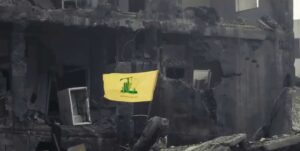
This crumbling of the UK government’s strategic position was encapsulated by the 1 March Iranian-directed Hezbollah drone strike on RAF Akrotiri on Cyprus.[vii] While it was true that additional Iranian ballistic missiles were intercepted enroute, the inability to defend a sovereign base was deeply damaging in a region sensitive to shifts of power. What followed compounded the problem. The UK’s declared capability to mount or contribute to limited interventions was demonstrably undermined. The day after the attack at RAF Akrotiri, the Chief of the Defence Staff was presented with recommendations for military options to present to the Defence Secretary. Prime Minister Sir Keir Starmer made a public statement that America would be allowed to use UK bases to suppress Iranian missile sites,[viii] but by 3 March, it became clear there would be no direct retaliation. Instead, it was announced that a Type 45 Destroyer, HMS Dragon, would be urgently rerolled from an expected deployment later this year to the Arctic, to set sail for the Middle East.[ix] HMS Dragon finally arrived in the eastern Mediterranean on 23 March – more than three weeks after RAF Akrotiri was attacked.[x]
The UK failed to protect its allies, provoking a dangerous mix of anger and contempt.
The GCC States were not in favour of the US-Israeli campaign in Iran at the outset, not least because they were not consulted about it. Iranian missile attacks on all six of them within days of the war beginning translated into further annoyance at the US and Israel in Gulf capitals.[xi] However, realpolitik and even more the logic of machtpolitik guides regional governments, which is why the real emotional fury of the Gulf States focused on the UK. The UK, with seventeen days’ warning, failed to protect its allies, provoking a dangerous mix of anger and contempt. Cyprus, Jordan, Kuwait, and the United Arab Emirates, where nearly a quarter of a million British citizens reside and which were targeted by Iranian missiles, made their displeasure known through press leaks. It turned out the UK was managing a bitter internal Labour Party schism over relations with the United States, interventionism, and its own chaotic party management.[xii]
The war in Iraq casts a long shadow, of course. This is a case where the UK did intervene and most now wish it had not. But in some ways the more intense and impactful debate within the Labour leadership is over Syria, where the UK did not intervene and most now wish it had. While the majority view the UK Parliament’s rejection of strikes in Syria in 2013 as a shameful dereliction of duty to act to uphold the international taboo on using chemical weapons of mass destruction, a minority see it as a moment of foreign policy triumph. This notably includes the architect of that vote, Ed Miliband, who sits as a prominent member in the UK Cabinet. Miliband and his allies are also deeply anti-American in general and in particular since Donald Trump has become president. As the Iran crisis loomed, Starmer chose to balance his desire for strong relations with the US and wish to appease the Milibandites as the lawyer he is. The UK set out a legalistic position of being unwilling to join the strikes on Iran, but willing to get increasingly involved as the Iranian missiles started falling on allies.[xiii] It was a posture bound to alienate everybody.
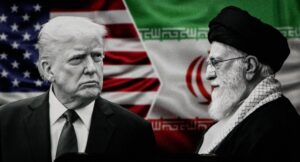
America sought permission to use UK bases more than two weeks before the strikes on Iran began and had to wait until hours after the war began for it to be granted – in a limited form, subsequently expanded on 20 March to allow actions necessary to keep the Strait of Hormuz open.[xiv] This incrementally increasing cooperation has led to public rebukes from the US government, first indirectly from Defense Secretary Hegseth, who criticised ‘traditional allies … hemming and hawing about the use of force,’ and inevitably much more directly from Trump, who declared himself ‘very disappointed’ in Starmer,[xv] and said the US had no need of allies ‘that join wars after we’ve already won,’ but the US will ‘remember’.[xvi] The UK’s Gulf States allies will, too. And in exchange for this lasting damage to UK strategic relationships, to the country’s image as a dependable ally, nothing has been gained by way of defensive ambiguity or deniability with Iran,[xvii] which is perhaps unsurprising since London’s foreign policy is being made primarily with an eye on domestic politics, rather than considerations of the effect abroad.
The HMS Dragon episode highlighted not only a UK inability to deploy at speed, but an inability to deploy at scale.
Part of what incentivises the UK government to make foreign policy this way is that there is increasingly little it can do abroad. The HMS Dragon episode highlighted not only a UK inability to deploy at speed, but an inability to deploy at scale. With only thirteen warships (six destroyers and seven frigates) with which to deploy at relatively short notice (the two aircraft carriers require much longer lead-times and extended maintenance work due to their prolonged deployments), this often means only a small handful of vessels are able to deploy at any one time. Currently, only two destroyers and one frigate are available to deploy. Meanwhile the Prince of Wales aircraft carrier had its notice to sail reduced from ten days, to five, but this would almost certainly involve incorporating a flotilla of European allies acting as the carrier’s escorts for what would be an unplanned deployment when virtually every other Royal Navy vessel is undergoing either short-term routine maintenance or much larger work. It also raises the question of for what purpose an aircraft carrier would be deployed when the UK is routinely flying F-35s and Typhoons from RAF Akrotiri and Qatar. War is so often a great clarifier and the clarity brought by the present Iran was has not been positive for the UK.
Thus, the mood on the Gulf shifted entirely by mid-March. The Gulf States, which have pursued various forms of rapprochement with Iran since 2019, were willing to give the Iranians the benefit of the doubt when Iranian president Masoud Pezeshkian offered an apparent apology on 8 March, claiming that the missiles had targeted American bases, not ‘friendly and neighbouring countries’. The Iranian drone attacks on Gulf oil installations days later were a turning point.[xviii] While some Gulf States – notably Qatar and Oman, and to a lesser extent Kuwait – still wish for a rapid end to the war, the de facto leader of the GCC, Saudi Arabia, has been encouraging the US not to repeat the mistake of June 2025 by ending the war too soon.[xix] Specifically, the Saudis have advocated that the US and Israel continue until Iran’s drone and missile capabilities are permanently debilitated, its regional proxy network has been reined-in, and the clerical establishment’s ability to threaten the shipping lanes that supply the global energy market is eliminated. The Saudis are supported in this stance by their close ally Bahrain and the Gulf’s most potent military actor, the UAE.[xx] Lacking the nimbleness and will to change course, the UK has been further isolated within the regional alliance by these changing dynamics. But the really damaging aspect is that the UK was simply absent altogether as a factor in these considerations.
The UK’s deployment capabilities – or lack thereof
Unable to deploy with either speed or scale, the UK has little to offer its allies, and this is not a generic problem of Western States cutting their defence budgets. A sharp contrast can be seen, for instance, with the French Navy, which only one day after HMS Dragon’s announced deployment already had its sole aircraft carrier, the FS Charles de Gaulle, eastbound passing through the Strait of Gibraltar, to arrive in theatre before HMS Dragon even left Portsmouth. Somewhat equally impressive is France’s ability to deploy almost all of its service fleet: 19 of the 23 main vessels in its navy are now currently deployed covering multiple French commitments. The UK by contrast currently has no major warships deployed, with many requiring extensive refits and maintenance after 2025’s Carrier Strike Group deployment to the Indo-Pacific, and Operation Highmast. Whilst these were notable and impressive deployments, it highlights the capability-gap in the Royal Navy for either a reserve element to deploy at short notice, and its lack of contingency planning for crisis scenarios in a region characterised by strategic UK interests but also geopolitical tension.
At least seven European frigates and a European aircraft carrier were all be based around Cyprus before HMS Duncan had left Portsmouth, leaving the UK reliant to some degree on its European partners for the security,
In fact, the UK’s inability to deploy to the Middle East at pace during times of crisis is now almost unique amongst West European nations – many of whom are not traditionally known for their naval powers. In addition to the French deployment including two frigates and the carrier, the Germans, Dutch, Italians, Spanish and Greeks have also deployed frigates to the eastern Mediterranean, primarily to support fellow European Union-member Cyprus, which also holds the current Presidency of the Council of the EU until 30 June 2026. Just as relevant is the Cypriot Presidency’s number one of five priorities for its leadership of the EU being listed as security, defence readiness and preparedness.[xxi] At least seven European frigates and a European aircraft carrier were all be based around Cyprus before HMS Duncan had left Portsmouth, leaving the UK reliant to some degree on its European partners for the security not just of its sovereign bases on the strategically located island, but also that of its treaty ally Cyprus itself, with whom the UK maintains a mutual defence agreement, in addition to a more recent Memorandum of Understanding (MOU), the Enhancement of Defence and Security Co-operation, designed to help address common defence and security challenges – ironically including crisis planning.[xxii]
Adding to the sense of British indecision and delay, French President Emmanuel Macron flew out and met with Cypriot and Greek leaders 9 March in a show of European solidarity with Cyprus. In addition to being the only European leader to hold a telephone call with Iran’s President Pezeshkian on 8 March, France clearly led the European charge to protect Cyprus, ensure Western interests are maintained (the maintenance of the Suez Canal and potentially the Strait of Hormuz which is under partial Iranian blockade), and the reassurance of its regional allies who have all come under Iranian attack over the last week.
All this risks leaving the UK at best side-lined and at worst increasingly irrelevant in a region which has demonstrably shown the requirement for sound strategic acumen, political appetite to commit military assets in a timely manner, and the ability to reassure allies whilst deterring adversaries. Owing to its two sovereign bases on Cyprus, significant trade relations with Middle East nations, and aspirations for a persistent maritime presence in the region, the UK can ill afford to take such a position, which through a lack of sound strategic understanding has directly led to political indecision, causing concern amongst allies and clearly undermining its own stated national interests. This situation must now urgently be reversed.
Rebuilding UK influence: Recommendations for the future
Whilst the UK maintains its strategic sovereign bases on Cyprus, often used as a launch-pad to the Middle East, the continued use of these bases by the British military is already coming under renewed scrutiny and debate within Cyprus. The Cypriot anger expressed about the UK’s bases after Iran’s vengeful attacks is in many ways ephemeral, and, indeed, unreasonable – at the time of attack the UK was not involved in hostilities alongside the US or Israel. But such populist currents are more difficult to contain when the hard fact is that the base is a target and the UK cannot defend it. Therefore, more consideration must now be given to revisit the UK government’s own SDR from 2025, to prioritise the persistent presence which it articulated clearly as a defining feature of its Middle East policy. This must now include the re-basing of a permanent destroyer or frigate to Bahrain, which can act at short notice to emerging threats and not have to wait weeks to set sail from the UK.
Bolstering this effort must be considered to reinforce the UK’s military presence at Gibraltar to include the ability to conduct short-term maintenance and refit work to vessels. This is in order to reduce the lead-time from sailing from Portsmouth. Whilst in the short-term the UK will be forced into a burden-sharing agreement with European allies, many of these nations harbour desires for closer EU defence integration (especially France and Germany), and therefore some of their interests will threaten the UK’s standing as traditionally Europe’s largest NATO military power. Already this has been evidenced by the UK having to rely on Berlin for a German frigate to replace the UK’s standing commitment to NATO’s north Atlantic front, which had been HMS Dragon.[xxiii] The UK must be able to ensure its own sovereignty is not threatened, either by adversarial powers or by friendly allies which have competing strategic interests. Relearning British Grand Strategy, rooted in naval supremacy, must be prioritised with strengthening existing force postures and bases from Gibraltar to Cyprus to Bahrain.
Complementing naval bases in the region must also be the realisation that a persistent maritime presence affords the UK government a degree of operational and thus strategic flexibility, which relying solely on military bases negates. The Iranian regime threatened and, indeed, in large part conducted, retaliatory strikes against US bases across the region. As of yet, no US Navy vessels have been attacked, which does not mean they cannot be targeted, but they are often more heavily defended by a layered air defence system. This is something UK bases in particular lack. Whilst static and often poorly defended bases are prime targets for attacks, moving ships with escorts and fleet defence offer a more flexible range of military options whilst providing better defensive capabilities. The UK saw this first-hand at RAF Akrotiri after only 36 hours of this conflict.
Finally, by complementing the reinforcement of UK bases at Gibraltar and Cyprus, improved maintenance capabilities at each, and with a return to permanent naval deployments east of Suez, a persistent maritime presence as articulated by the government’s own SDR would remove the sense of a burden of responsibility from Middle East allies where the UK has joint basing rights. In the lead-up to this current conflict, many regional partners expressed hesitation regarding US bombing runs to Iran taking place from their territory. Last year Saudi Arabia, Qatar, and Kuwait all refused to allow the US to use its air bases to strike Iran,[xxiv] a sentiment echoed this time around by Saudi Arabia,[xxv] at least for now.[xxvi] These are all further reasons why the UK must rebuild its fleet, and redeploy a meaningful presence once more to the Middle East.
[i] Navy Lookout (2026). “Royal Navy’s last Gulf minehunter HMS Middleton has returned to UK”, 6 March 2026, retrieved from: https://www.navylookout.com/royal-navys-last-gulf-minehunter-hms-middleton-has-returned-to-uk/.
[ii] Navy Lookout (2025). “HMS Lancaster to be decommissioned in Bahrain”, 5 December 2025, retrieved from: https://www.navylookout.com/hms-lancaster-to-be-decomissioned-in-bahrain/.
[iii] Ibid.
[iv] Department for Business &Trade. Trade and Investment Factsheets.
[v] Department for Energy Security and Net Zero (2026). “Iran, the Middle East and UK energy”, 6 March 2026, retrieved from: https://www.gov.uk/government/news/iran-the-middle-east-and-uk-energy-factsheet.
[vi] Ministry of Defence (2025). “The Strategic Defence Review 2025…”, 8 July 2025, retrieved from: https://www.gov.uk/government/publications/the-strategic-defence-review-2025-making-britain-safer-secure-at-home-strong-abroad/the-strategic-defence-review-2025-making-britain-safer-secure-at-home-strong-abroad.
[vii] Shumlianskyi, D. (2026). “Iran Launches Two Missiles Toward British Military Bases in Cyprus”, Militarnyi, 1 March 2026, retrieved from: https://militarnyi.com/en/news/iran-missiles-toward-british-bases-cyprus/.
[viii] Hatton, B. (2026). “UK will allow US to use bases to strike Iranian missile sites, PM says”, BBC News, 1 March 2026, retrieved from: https://www.bbc.co.uk/news/articles/cqj9g11p1ezo.
[ix] Ministry of Defence (2026). “UK sends warship and drone-busting helicopters to the Eastern Mediterranean to protect Brits and allies in the region”, 3 March 2026, retrieved from: UK sends warship and drone-busting helicopters to the Eastern Mediterranean to protect Brits and allies in the region – GOV.UK.
[x] Cotterill, T. (2026). “HMS Dragon finally arrives in Med to defend Cyprus”, The Telegraph, 24 March 2026, retrieved from: https://www.telegraph.co.uk/news/2026/03/24/hms-dragon-finally-arrives-in-med-to-defend-cyprus/.
[xi] Ellis-Petersen, H. (2026). “’Worst Nightmare’: anger and frustration as Gulf states bear brunt of war they did not start”, The Guardian, 14 March 2026, retrieved from: https://www.theguardian.com/world/2026/mar/14/gulf-strait-of-hormuz-nightmare-anger-frustration-at-us.
[xii] Shipman, T. (2026). “’Whose side are you on?’: How Keir Starmer alienated Britain’s allies over Iran”, The Spectator, retrieved from: https://spectator.com/article/whose-side-are-you-on-how-keir-starmer-alienated-britains-allies-over-iran/?edition=us.
[xiii] Ibid.
[xiv] Wheeler, R. and Whannel, K. (2026). “UK allows US to use bases to strike Strait of Hormuz targets”, BBC News, 20 March 2026, retrieved from: https://www.bbc.co.uk/news/articles/c36rny6xgppo.
[xv] Nicholson, K. (2026). “Pete Hegseth Launches Thinly-Veiled Attack On UK Over Iran ‘Hand-Eringing’”, Yahoo News, 2 March 2026, retrieved from: https://uk.news.yahoo.com/pete-hegseth-launches-thinly-veiled-162538267.html.
[xvi] Faguy, A. and Fenwick, J. (2026). “Trump accuses Starmer of seeking to ‘join wars after we’ve already won’”, BBC News, 8 March 2026, retrieved from: https://www.bbc.co.uk/news/articles/c9dn3j04lydo.
[xvii] Whannel, K. (2026). “Iran warns UK letting US use bases is ‘participation in aggression”, BBC News, 20 March 2026, retrieved from; https://www.bbc.co.uk/news/articles/cvgkd3lqe2no.
[xviii] Knox, B. (2026). “Iranian drones strike Oman oil depot despite countries’ friendly relations”, Washington Examiner, 11 March 2026, retrieved from: https://www.washingtonexaminer.com/news/world/4487941/iranian-drones-strike-oman-oil-depot-despite-countries-friendly-relations/.
[xix] Borger, J. and Roston, A. (2026). “Saudi Arabia urging US to ramp up Iran attacks, intelligence source confirms”, The Guardian, 27 March 2026, retrieved from: https://www.theguardian.com/world/2026/mar/27/saudi-arabia-us-iran-attacks-mohammed-bin-salman.
[xx] Nakhoul, A. (2026). “Gulf states tell US ending the war is not enough, Iran’s capabilities must be degreaded”, Reuters, 27 March 2026, retrieved from: https://www.reuters.com/world/middle-east/gulf-states-tell-us-ending-war-is-not-enough-irans-capabilities-must-be-degraded-2026-03-27/.
[xxi] Cyprus Presidency (2026). “Priorities”, retrieved from: https://cyprus-presidency.consilium.europa.eu/en/programme/priorities/.
[xxii] Ministry of Defence (2019). “UK and Cyprus agree to closer defence and security ties”, 4 April 2019, retrieved from: https://www.gov.uk/government/news/uk-and-cyprus-agree-to-closer-defence-and-security-ties#:~:text=The%20Memorandum%20of%20Understanding%20(MOU),capability%20development%20and%20crisis%20planning.
[xxiii] Allison, G. (2026). “German frigate to replace HMS Dragon as NATO flagship”, UK Defence Journal, 26 March 2026, retrieved from: https://ukdefencejournal.org.uk/german-frigate-to-replace-hms-dragon-as-nato-flagship/.
[xxiv] Mathews, S. (2025). “Gulf sattes refuse to be launching pad for any US attacks against Iran”, Middle East Eye, 1 April 2025, retrieved from: https://www.middleeasteye.net/news/gulf-states-refuse-launching-pad-for-us-attacks-iran.
[xxv] Reuters (2026). “Saudi won’t allow airspace to be used for military action against Iran, crown prince says”, 27 January 2026, retrieved from: https://www.reuters.com/world/middle-east/iran-welcomes-any-process-prevent-war-president-tells-saudi-crown-prince-phone-2026-01-27/.
[xxvi] Said, S. and Malsin, J. (2026). “Gulf States Edge Toward Joining Fight Against Iran”, The Wall Street Journal”, 23 March 2026, retrieved from: https://www.wsj.com/world/middle-east/iran-gulf-states-offense-decision-b8d98ff9.