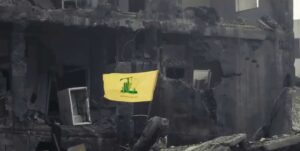
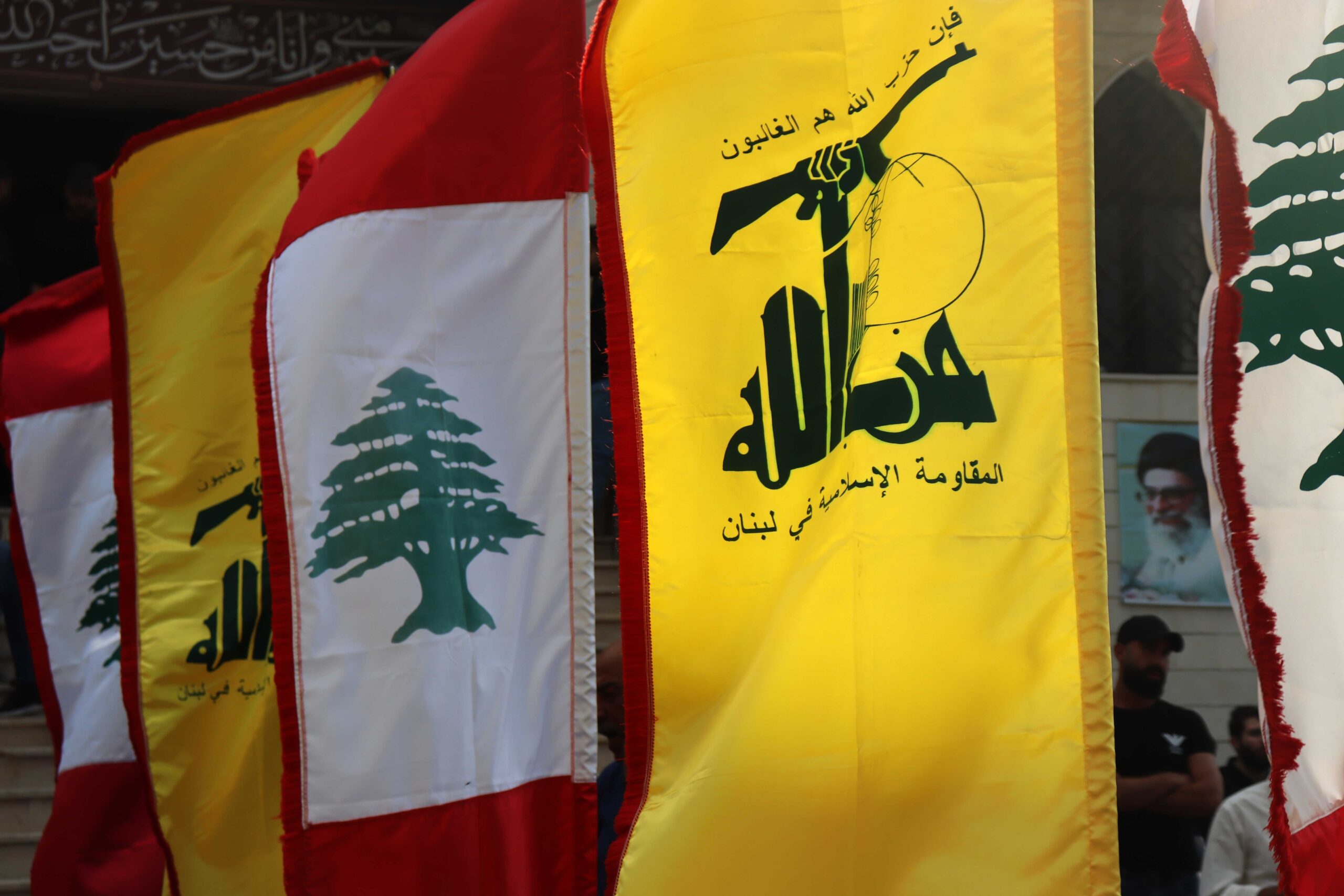
As 2026 begins, a quiet but revolutionary transformation is unfolding in the Levant. For decades, the disarmament of Hezbollah was dismissed as a geopolitical fantasy – a task too dangerous for the fragile Lebanese state and too complex for traditional military power. But today, a systemic attrition strategy is achieving what decades of conventional warfare could not. By moving away from the failed paradigm of a single, decisive military blow and toward a “thousand cuts” across the organization’s structural power, the international community has finally put the world’s most heavily armed non-state actor on the defensive.[i]
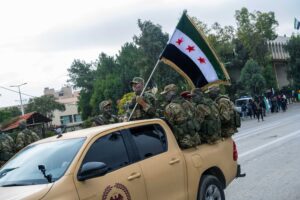
The strategic landscape of late 2025 was unrecognizable from the stalemates of years past. The primary catalyst was the collapse of Bashar al-Assad’s regime in Syria in December 2024.[ii] For thirty years, Syria served as the indispensable land bridge for Iranian weaponry and cash.[iii] Today, under the transitional presidency of Ahmed al-Sharaa, Damascus has shifted from a patron to a hostile interdictor of Hezbollah. Just last month, Syrian authorities seized a significant shipment of rocket-propelled grenades destined for Lebanon – an act that would have been unthinkable during the heyday of the “Axis of Resistance.”[iv]
This severance of Hezbollah’s logistical supply line has coincided with newfound domestic resolve originating from Beirut. Under the leadership of President Joseph Aoun and Prime Minister Nawaf Salam, the Lebanese state has moved from rhetorical opposition to operational enforcement. The “Homeland Shield Plan,” adopted in September 2025, provides a phased roadmap for the Lebanese Armed Forces (LAF) to re-establish a state monopoly on arms.[v] As of a week ago, Phase 1 of the plan – the disarmament of the region south of the Litani River – was reported to be “only days away from completion.”[vi] The south-of-Litani mandate is consistent with UNSC Resolution 1701 (2006) and the broader disarmament framework of UNSC Resolution 1559 (2004).[vii]
However, disarming a group as entrenched as Hezbollah requires more than just military prowess; it requires a systemic manipulation of what this author defines as the four axes of power: ideas, enablers, opportunities, and feedback loops.
First, the “axis of ideas” is eroding Hezbollah’s “myth of resistance.” For years, the group justified its arsenal as the only shield against Israeli aggression – and publicly refused to disarm.[viii] But as the Lebanese state engages in civilian-led talks and diplomacy touching border disputes (including at Shebaa Farms), that pretext is evaporating.[ix] The factual background of contested territory further undercuts the narrative.[x] When the state becomes the provider of security and the arbiter of diplomacy, the militia becomes a jobless liability.
Second, the “axis of enablers” is almost out of steam. Despite recent IRGC-linked attempts to injects approximately $1 billion into Hezbollah’s recovery,[xi] a tightening web of international sanctions and financial targeting have made rearmament an exercise providing diminishing returns.[xii] In a region where a single interceptor can cost fifty times more than the drone it destroys, the cost-benefit asymmetry is growing – a dynamic reflected in assessments of Hezbollah’s expanding arsenal and the counter-strategy known as the Campaign Between Wars (CBW, or MABAM).[xiii] By targeting the funding at its source, the “resistance economy” – and justifications for it – are becoming unsustainable for a Lebanese population mired in poverty.[xiv]
Third, the “axis of opportunities” has leveraged Lebanon’s economic crisis. The international community, led by the U.S. and France, has placed a $1.1 billion reconstruction fund on the table.[xv] Crucially, this aid is not a blank check; it is tied to the successful completion of the “Homeland Shield” phases. This creates a powerful social incentive: the promise of a functioning state versus the perpetual ruin offered by an armed sub-state structure.[xvi]
Finally, the “feedback axis” must be managed. The greatest risk to this strategy is a “patriotic rally” effect, where overly aggressive Israeli strikes could potentially unify the Lebanese public behind Hezbollah. To prevent this, a new verification mechanism was established in Paris on 18 December 2025.[xvii] By “seriously documenting with evidence” the LAF’s progress in dismantling bunkers and seizing rockets, the state can provide the transparency necessary to dissuade Israel from pursuing its own military operations that could lead to escalation.
Skeptics will point out the 2025 year-end deadline as a point of failure, noting that the LAF’s full roadmap may take 15 months to complete, rather than three. But the goal points beyond calendar dates; it is about the momentum already underway for building statehood. In 2026, the U.S. and its partners should evaluate success based on the Lebanese state’s progress in claiming sovereignty, and the realistic prospects of strengthening its position.
Washington’s initiative, spearheaded by Special Envoy Tom Barrack and Deputy Envoy Morgan Ortagus, has correctly focused on transactional diplomacy. By providing $200 million in military aid tied specifically to internal control[xviii], the U.S. is equipping the LAF not to fight external wars, but to win the internal struggle for authority.
The disarmament of Hezbollah will not end with a single explosion or a formal surrender. Through strategic patience and systemic attrition, the strategy of a “thousand cuts” are a step in healing the wounds of a century of conflict in Lebanon, and Hezbollah will be disarmed not by defeat in battle, but by the steady removal of every condition that once made its arsenal appear necessary, viable, or legitimate.
[i] Jervis, R. (1997). System Effects: Complexity in Political and Social Life, Princeton University Press; Israeli, O. (2021). Complex Effects of International Relations, SUNY Press.
[ii] Schaer, C. (2025). “One Year After Assad’s Fall: What Has Syria Achieved?”, DW, 7 December 2025, retrieved from: https://www.dw.com/en/one-year-after-assads-fall-what-has-syria-achieved/a-74895004.
[iii] Yuhas, A. and Iwaza, D. (2024). “Hezbollah Loses Supply Route Through Syria, in Blow to It and Iran”, The New York Times, 14 December 2024, retrieved from: https://www.nytimes.com/2024/12/14/world/middleeast/hezbollah-supply-route-syria.html.
[iv] Fabian, E. (2024). “IDF Details Yearslong Efforts Against Hezbollah Arms Smuggling Outfit in Syria”, The Times of Israel, 26 November 2024, retrieved from: https://www.timesofisrael.com/idf-details-yearslong-efforts-against-hezbollah-arms-smuggling-outfit-in-syria/; Defense Intelligence Agency (DIA) (2024). “Seized at Sea: Iranian Weapons Smuggled to the Houthis”, 30 April 2024, retrieved from: https://www.dia.mil/Portals/110/Documents/News/Military_Power_Publications/Seized_at_Sea.pdf.
[v] Foltyn, S. (2025). “How Lebanon Is Planning to Disarm Hezbollah by the End of the Year”, PBS NewsHour, 2 September 2025, retrieved from: https://www.pbs.org/newshour/show/how-lebanon-is-planning-to-disarm-hezbollah-by-the-end-of-the-year.
[vi] Al Jazeera (2025). “Lebanon Claims First Phase of Hezbollah’s Disarmament Close to Complete”, 20 December 2025, retrieved from: https://www.aljazeera.com/news/2025/12/20/first-phase-of-hezbollahs-disarmament-close-to-complete-lebanons-salam.
[vii] United Nations Security Council (2004). “Resolution 1559 (2004)”, retrieved from: https://docs.un.org/en/S/RES/1559(2004); United Nations Security Council (2006). “Resolution 1701 (2006)”, retrieved fromhttps://digitallibrary.un.org/record/581053?ln=en.
[viii] Politico (2025). “Hezbollah Leader Refuses to Disarm Until Israel Withdraws from Southern Lebanon”, 6 July 2025, retrieved from: https://www.politico.com/news/2025/07/06/hezbollah-leader-refuses-to-disarm-until-israel-withdraws-from-southern-lebanon-00440036; Al Jazeera (2025). “Hezbollah Says It Will Not Give Up Weapons Despite US Proposal”, 18 July 2025, retrieved from: https://www.aljazeera.com/news/2025/7/18/hezbollah-chief-rejects-us-proposals-on-group-giving-up-weapons.
[ix] Masters, J. (2025). “Lebanon: How Israel, Hezbollah, and Regional Powers Are Shaping Its Future”, Council on Foreign Relations, 27 January 2025, retrieved from: https://www.cfr.org/backgrounder/lebanon-how-israel-hezbollah-and-regional-powers-are-shaping-its-future; Arab News (2025). “Netanyahu Says Israel Could Withdraw from Lebanon If Hezbollah Is Disarmed”, 25 August 2025, retrieved from: https://www.arabnews.com/node/2612942/middle-east.
[x] Kaufman, A. (2002). “Who Owns the Shebaa Farms? Chronicle of a Territorial Dispute.” Middle East Journal 56(4), 2002.
[xi] Jerusalem Post (2025). “Iran’s IRGC Smuggled Over $1 Billion to Hezbollah through Dubai Since January, US says.” 28 November 2025, retrieved from: https://www.jpost.com/middle-east/article-876514.
[xii] U.S. Department of the Treasury (2024). “Treasury Targets Qods Force, Houthi, and Hizballah Finance and Trade Facilitators”, 26 March 2024, retrieved from: https://home.treasury.gov/news/press-releases/jy2209.
[xiii] Eisenkot, G and Siboni, G. (2019). “The Campaign Between Wars: How Israel Rethought its Strategy to Counter Iran’s Malign Regional Influence”, The Washington Institute for Near East Policy, 4 September 2019, retrieved from: https://www.washingtoninstitute.org/policy-analysis/campaign-between-wars-how-israel-rethought-its-strategy-counter-irans-malign.
[xiv] UNDP (2024). “Economic and Social Consequences of the Escalating Hostilities in Lebanon – Rapid Appraisal,” 23 October 2024, retrieved from: https://www.undp.org/lebanon/publications/economic-and-social-consequences-escalating-hostilities-lebanon-october-2024-rapid-appraisal.
[xv] Al Arabiya/Reuters (2025). “New Conference Due in February to Support Lebanese Army, France Says”, 18 December 2025, retrieved from: https://english.alarabiya.net/News/middle-east/2025/12/18/new-conference-due-in-february-to-support-lebanese-armed-forces-says-france.
[xvi] UNDP. “Economic and Social Consequences of the Escalating Hostilities in Lebanon.”
[xvii] Al Arabiya/Reuters. “New Conference Due in February to Support Lebanese Army, France Says.”
[xviii] Al Arabiya English (2025). “US approves over $200 mln for Lebanon’s security forces amid Hezbollah disarmament push”, 3 October 2025, retrieved from: https://english.alarabiya.net/News/middle-east/2025/10/03/us-approves-over-200-mln-for-lebanon-s-security-forces-amid-hezbollah-disarmament-push.