
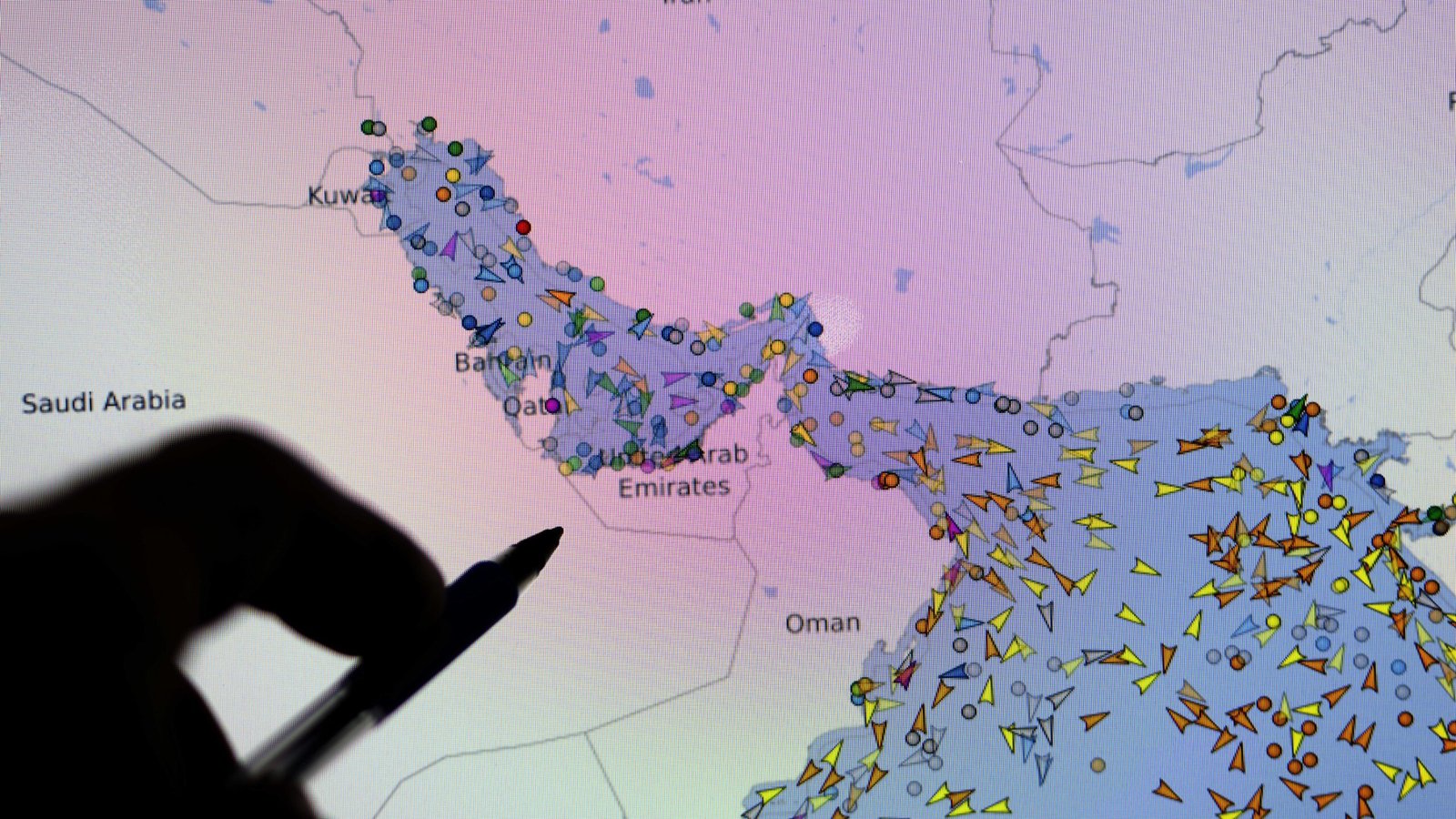
The resumption of Houthi attacks on Saudi Arabia could hasten the end of an old regional order built on American protection and the containment of Iranian influence. Eleven years after launching a war in Yemen to contain Tehran, Riyadh may well become one of the architects of the Islamic Republic’s return to the diplomatic stage.[i] Not out of ideological reconciliation, but to fulfil its economic ambitions. The Gulf monarchies need stability to prepare for the post-oil era and to attract capital, talent and visitors.
The paradox is twofold. If eight months of war have severely tested the Islamic Republic, they have also revealed its resilience. Despite a bled-dry economy and weakened military capabilities, Tehran has imposed on the entire world, the foremost military power included, a strategic cost that no one had foreseen. “The policy of every power lies in its geography,” wrote Napoleon.[ii] In the Gulf, Iran is likely to become acceptable again, not by choice but out of necessity. At the same time, struck by a war they never wanted, the Arab monarchies are discovering that the American bases meant to protect them have turned them into targets. On 20th October, at a forum devoted to “The Future of Alliances” in Doha, Tom Barrack, Donald Trump’s special envoy, acknowledged the limits of an order in which Washington guaranteed their security almost single-handedly.[iii] The United States will not leave the Gulf, but its allies will have to learn to rely less exclusively on its umbrella.
As a result, those who hoped to remove Iran from the security equation are now taking the road to its capital. On 26th October 2026, the day after unprecedented Houthi attacks on the Kingdom, Khalid bin Salman, Saudi Arabia’s Defence Minister and brother of Crown Prince Mohammed bin Salman (MBS), travelled to Tehran accompanied by the head of Pakistan’s army and the chief of Turkish intelligence[iv] – three representatives of the Mecca defence pact signed in August, who had come to negotiate a de-escalation without American mediation.[v] The same day, in Cambridge, Oman’s Foreign Minister, Badr Albusaidi, revived a half-century-old ambition: bringing the six monarchies of the Gulf Cooperation Council (GCC), Iran and Iraq together around a non-aggression pact.[vi] Two initiatives, one conclusion: Gulf security can neither be durably built against Iran nor rest on the American guarantee alone.
Riyadh will seek never again to depend on a single protector. By 2030, this diversification could extend to the whole region and give rise to a polycentric security architecture, founded on regional non-aggression agreements and complementary external partnerships. The Gulf would not turn its back on the West, but would find the pillars of its security in its Muslim neighbourhood.
The Houthis: An unlikely catalyst for Saudi-Iranian rapprochement
The irony is cruel for MBS. In 2015, as a young defence minister, he launched Operation Decisive Storm to contain Iranian influence in Yemen.[vii] Eleven years later, the Houthis still hold Sanaa, with some 350,000 fighters, compared with 30,000 in 2015.[viii] On 10th October 2026, their strikes hit Riyadh’s King Khalid International Airport, the showcase of a capital that already saw itself as a global financial hub.[ix] For Saudis, despite $83 billion in military spending in 2025, the world’s eighth-largest defence budget, the symbolic impact is that of a 9/11: the end of a sense of territorial invulnerability.
The war that was meant to crown MBS’s rise now threatens his grand design: Vision 2030. Launched ten years ago, the entire national strategy rests on this wager, designed to free the Kingdom from its dependence on oil rents through megaprojects and foreign investment.[x] Yet the wager depends on one condition that the Houthis have just shaken: security. And to restore it, Riyadh will have no choice but to negotiate it with their patron, Tehran.
The rebels do not need to defeat the Saudi army. They need only breach its defences from time to time to threaten the infrastructure of a kingdom of more than 2 million km2 (772,000 square miles). These strikes come as The Line, the futuristic city planned to stretch 170 km across the desert, has stalled[xi] and as Western consulting firms are laying off their consultants.[xii] To compound the setback, the “Davos in the Desert”, which claims $250 billion in investments and commitments since 2017, has had to be postponed.[xiii] MBS believed that Vision 2030 would draw the world’s capital and talent and offer young Saudis low-carbon jobs. He is now discovering that a ruined neighbour can be enough to shake that.
Despite Riyadh’s urgent appeals, the United States refused to intervene militarily against the Houthis, confining itself to intelligence and targeted support.[xiv] Eighty-one years on, far removed from the spirit of the Quincy Pact, the Republicans’ rout in the midterm elections has finally convinced Saudi Arabia that its historic ally puts its own interests before its security guarantees.[xv] [xvi] Unable to eliminate the threat by force of arms, Riyadh increasingly sees direct diplomacy with Iran as its most viable security alternative.
The way out of the Yemeni quagmire is likely to run through the chequebook rather than the battlefield. As early as 26th October, Riyadh reportedly offered the Houthis $1 billion via Tehran in exchange for a ceasefire.[xvii] Iran could thus turn its influence over the Houthis into diplomatic currency,[xviii] although its ability to dictate their decisions remains limited. The Houthis, however, far from being mere Iranian proxies, will demand more. In exchange for guarantees for the security of Saudi Arabia’s borders and infrastructure, MBS may well abandon, as early as 2027, his coalition’s goal of restoring Yemen’s recognised government by force[xix] and accept a lasting Houthi authority in Sanaa and the north. Paradoxically, this concession could allow the Houthis to break free from the tutelage of their patron and pursue their own political ambitions.
The defence pact concluded in Mecca on 7th August with Turkey and Pakistan[xx] reflects Saudi Arabia’s “Islamic pivot”, and this regional security re-anchoring draws the Kingdom more naturally towards Tehran than towards its Western partners. That representatives of these three states then travelled to Tehran is all the more telling. The Kingdom is rediscovering its Eastern moorings through its Muslim allies, among them the Islamic world’s only nuclear power. The guardian of Islam’s holiest sites is seeking to reclaim its role as leader of the Sunni world. On 4th November, MBS signed a first defence agreement with al-Sharaa’s Syria, backed by $400 million in loans.[xxi] Syria, yesterday the keystone of the Iranian axis, now stands ready to deploy its soldiers against Tehran’s allies.[xxii]
Moving closer to Tehran means taking the road to the Middle Kingdom. A new Saudi-Iranian security agreement under Chinese mediation could be sealed as early as next year. In March 2023, Beijing had already secured the restoration of diplomatic relations after a seven-year rupture, as well as the reactivation of the two countries’ 2001 security agreement.[xxiii] The 2026 war could push the two rivals towards a non-aggression arrangement extended to the Houthis. China is the only power with both Tehran’s ear and privileged access to Hormuz. It is also Riyadh’s leading customer, absorbing 21% of Saudi crude exports, four times as much as the United States[xxiv], with bilateral trade exceeding $100 billion.[xxv]
Coexistence with Tehran will not be born of restored trust, but of a realpolitik that recognises the collateral damage of pursuing this deadly confrontation indefinitely.
The Abraham Accords: A gamble that failed to protect their signatories
This logic explains why Riyadh is likely to favour détente with Tehran over a hasty normalisation with Israel. Moving closer to the Jewish state would not shield the Kingdom from Houthi missiles. Moreover, an overt rapprochement with Israel would set Riyadh against the pro-Palestinian sentiment of its population.
Bahrain and the UAE have benefited from normalisation with Israel, although to different degrees. The UAE, in particular, has gained access to advanced Israeli air-defence systems, intelligence cooperation and military technology, with Israeli personnel and equipment reportedly helping intercept Iranian missiles during the war. [xxvi] Bahrain has benefited from closer security coordination and diplomatic ties, albeit on a more limited scale. Yet these partnerships have not prevented Iranian attacks or guaranteed the level of American protection the Gulf monarchies had expected.[xxvii] The UAE alone absorbed more than half of Iran’s strikes on the Arabian Peninsula.[xxviii] The lesson has not been lost on Riyadh. The Abraham Accords offer no automatic shield and may expose their signatories to additional risks.
Saudi Arabia’s history with the Abraham Accords is, moreover, one of missed appointments. In 2020, the accession of Bahrain[xxix] served as a trial. In 2023, negotiations seemed close to a deal, until 7th October and the war in Gaza changed strategic calculations.[xxx] Two years later, Riyadh co-sponsored the New York Declaration on the two-state solution with France, adopted by 142 votes.[xxxi] The Kingdom now intends to see Palestine recognised before recognising Israel. Negotiating peace with Tehran while pursuing normalisation with Jerusalem would be a delicate balancing act for Riyadh in this context.
Israel may now appear to Riyadh more as a geopolitical rival than as a potential ally. Its military interventions since 7th October have reinforced, among several Gulf monarchies, the perception of a destabilising power in the Middle East. According to the Arab Opinion Index 2025, based on 40,130 interviews in fifteen countries, 87% of respondents oppose recognising Israel and 80% regard Palestine as a cause shared by the whole Arab world.[xxxii]
To this security risk is added a political cost that Riyadh cannot ignore. Unlike their Emirati and Qatari neighbours, Saudi nationals form the majority in their own country; they are young (70% are under 35)[xxxiii] and overwhelmingly hostile to normalisation, whose appeal has declined further since Gaza.[xxxiv] MBS has understood this. Last month, he turned down the military assistance Netanyahu offered him against the Houthis,[xxxv] knowing that the price would be called Abraham. If the Kingdom ever takes that step, it is unlikely to do so before 2030. It will wait until a clearer Palestinian horizon and a Gulf at peace with Iran make signing less perilous.
Yet even then, no alliance protects a throne from its own youth. Unemployment, political frustration and distrust of rulers deaf to their concerns were the explosive ingredients of 2011 – conditions that are still present. A peace signed by ruling families could rekindle popular anger, and with it the spectre of the Arab Spring.
The Gulf takes security into its own hands
In 1820, the British imposed the General Maritime Treaty on the sheikhs of the coast. Three decades later, the Perpetual Maritime Truce gave the “Trucial States” their name.[xxxvi] The modern Gulf was born of an imported peace. It may now begin to build its own, on three levels: non-aggression between neighbours as the foundation, economic interdependence as the frame, and diversified arms suppliers as the roof.
The Gulf of 2030 may look less like an alliance than a constellation of partners with complementary assets, bound together by converging security interests. Each power brings what its neighbours cannot produce alone.
Riyadh would contribute capital, political weight and the sheer size of its territory; Abu Dhabi, its ports, trade networks and defence industry; Doha, its gas and the art of mediation; Muscat, its diplomatic channels with Tehran and its access to the Indian Ocean; Kuwait, its sovereign wealth and its tradition of conciliation; and Manama, its banking expertise and its place in Western naval arrangements. Beyond the GCC, Baghdad would add a bridge between the Arab and Persian worlds, and Tehran would hold one of the keys to a regional stability that no foreign arsenal can guarantee.
Around this inner circle would orbit Ankara, at the crossroads of NATO and the Mecca pact and an industrial power strengthened by its drones; Islamabad, a nuclear power and China’s military relay; Cairo, with its demographic weight and control of the Suez Canal; Seoul, with its missile-defence systems; New Delhi and Beijing, rival Asian giants that both depend on Gulf energy, the former bringing its naval power, the latter its commercial and diplomatic weight; and even Kyiv, whose experience of drone warfare is becoming coveted expertise in the Gulf. None of them hold all the cards. Together, however, they could reshuffle those of an order long organised around Washington.
The first task will be to thaw relations between MBS and Mohammed bin Zayed (MBZ), but this is unlikely to take place overnight. A Saudi–Emirati cold war was already foreseeable in May.[xxxvii] It will not disappear; it will change in nature, potentially complicating efforts to build a common security architecture. Despite being rivals from Yemen to Sudan and across the Horn of Africa, the two princes remain economically inseparable. The UAE is Saudi Arabia’s leading non-oil trading partner within the GCC,[xxxviii] and together the two account for nearly three-quarters of intra-Gulf trade.[xxxix] “All unions are founded on mutual needs,” wrote Montesquieu.[xl]
Before the wedding, however, each is recruiting its own witnesses. Riyadh is federating a regional, Muslim camp: Turkey and Pakistan in Mecca; Syria, which since 4th November has sought to join the pact; and now Qatar, which signed a mutual defence pact with Ankara on 13th November.[xli] Abu Dhabi, meanwhile, looks further afield. It has ordered eighty Rafale fighter jets from France[xlii] and forged a strategic defence partnership with India.[xliii] It keeps China for trade, and an Israeli channel that Riyadh refuses to open.[xliv] To one the umma, to the other the openness to the business world. Yet these two constellations overlap more than they collide, and the war has reminded both of a shared vulnerability. By 2030, their vital need for stability is likely to push the two rivals into an arranged marriage. On 29th September, MBS was already receiving the Emirati Vice-President, Mansour bin Zayed, in Riyadh.[xlv] A relaunch of the Saudi–Emirati Coordination Council could follow as early as 2027, built around a package of logistics and energy agreements modelled on those Riyadh is multiplying with Doha and Muscat.[xlvi] [xlvii]
Asia will supply the bricks, while America keeps the roof. Riyadh has ordered ten South Korean Cheongung-II missile-defence batteries for $3.2 billion,[xlviii] a system also acquired by Iraq and already combat-proven by the UAE.[xlix] [l] Three countries, one shield. Add to this the Chinese HQ-9s deployed by Pakistan in the Kingdom and the $5 billion plant in Jeddah to produce Chinese Wing Loong-3 drones.[li] Given that Beijing supplies nearly 80% of Islamabad’s arms imports,[lii] the Mecca pact could turn China into a supplier of choice within the alliance. Today, Washington still delivers 77% of Saudi Arabia’s arms imports, but only 48% of Qatar’s and 42% of the UAE’s.[liii] Politically less costly than military partnerships with Israel, the Asian offer could accelerate this diversification for the GCC monarchies. If current diversification efforts accelerate, by 2030 the non-American share of Saudi arms imports could rise from 23% to nearly 40%, and the United States could account for a minority of the Gulf states’ combined arms imports.[liv] Asia would then account for 15-20%, four times its current share.
The other surprise will come from Ukraine, which has become a low-cost specialist and exporter of counter-drone defence. On 26th March, Kyiv concluded a military cooperation agreement with Riyadh in Jeddah, its first with a Gulf monarchy.[lv] It has since expanded into ten-year agreements with Doha and Abu Dhabi, which Zelensky values in “billions, not millions”.[lvi] A Ukrainian interceptor drone costs $5,000; a PAC-3, nearly $4 million.[lvii] The UAE alone burned through $2.6 billion of air defences in 2026.[lviii]
By 2028, the Gulf could become the world’s workshop for counter-drone defence. Traumatised by the Shaheds and advised by those who have spent four years learning to counter them, the GCC states have the capital to industrialise what Kyiv invented in an emergency. A windfall for European start-ups. The British company MARSS has signed a £370 million contract to protect Kuwaiti territory.[lix] The French unicorn Harmattan AI has signed a memorandum of understanding with Qatar to deploy its GOBI TEMPEST interceptor, and a letter of intent with Iraq.[lx] [lxi] On current trends, this market could reach an estimated $8-12 billion by 2030, with European firms potentially capturing a third.
Conclusion: Could Mecca become the seed of a Middle Eastern NATO?
The paradox speaks for itself. Riyadh has already managed to get Greeks and Turks working for its defence, where NATO still struggles to bring them together. While Ankara sits in the Mecca pact, on 25th July a Greek Patriot battery shot down two Houthi ballistic missiles heading for the oil facilities at Yanbu.[lxii] As the only capital belonging to both alliances, Ankara will serve as a bridge between NATO and its eastern cousin. Signed by Saudi Arabia, Turkey and Pakistan, the pact already brings together three military powers with some 1.4 million active-duty troops.
By 2030, the Mecca pact could become the cornerstone of a Middle Eastern NATO, with Riyadh as its centre of gravity. It would be an à la carte NATO, with a political and defence committee but, initially, neither an integrated command nor NATO-style collective-defence obligations. Its enlargement would follow an inverted logic: first federating Muslim powers beyond the Gulf, then drawing in the neighbouring monarchies. Al-Sharaa’s Syria is leading the way. Since signing its agreement with Riyadh in November, Damascus has been considering joining the pact. It could potentially do so in 2027, alongside Egypt and Jordan, followed by Qatar and the other monarchies by 2030, provided political and security conditions permit.
Iran, for its part, would remain outside this alliance, but at the heart of a parallel non-aggression pact. Riyadh would thus seek to deter Tehran without giving up on negotiating with it.
After two centuries of imported security, the Gulf is at last beginning to build its own. And Saudi Arabia, long protected by others, is becoming the architect of its neighbours’ defence.
[i] “L’Arabie saoudite lance une opération militaire en soutien au président du Yémen”, Le Monde (26 March 2015): https://www.lemonde.fr/proche-orient/article/2015/03/26/l-arabie-saoudite-lance-une-operation-militaire-en-soutien-au-president-du-yemen_4601324_3218.html.
[ii] Michel Foucher, “Communication de Michel Foucher: Géographie et diplomatie”, Académie des sciences morales et politiques (3 February 2025): https://academiesciencesmoralesetpolitiques.fr/2025/02/03/communication-de-michel-foucher-geographie-et-diplomatie/. (Cited in the manuscript for Napoleon’s statement of 10 November 1804.)
[iii] “Us leaving oil for security approach not middle east envoy tom barrack”, Al Jazeera (20 October 2026): https://www.aljazeera.com/news/2026/10/20/us-leaving-oil-for-security-approach-not-middle-east-envoy-tom-barrack.
[iv] “Offensive des houthistes en Arabie saoudite: première réunion entre Riyad, ses alliés et l’Iran”, Le Parisien (26 October 2026): https://www.leparisien.fr/international/offensive-des-houthistes-en-arabie-saoudite-premiere-reunion-entre-riyad-ses-allies-et-liran-26-10-2026-X6M4CR2JDZEB3FHPVNY7WL7CVU.php.
[v] “L’Arabie saoudite, le Pakistan et la Turquie scellent un pacte de défense commun”, France 24 (7 August 2026): https://www.france24.com/fr/moyen-orient/20260807-l-arabie-saoudite-le-pakistan-et-la-turquie-scellent-un-pacte-de-d%C3%A9fense-commun.
[vi] Omani Ministry of Foreign Affairs (26 October 2026): https://www.fm.gov.om/en/62242/.
[vii] “L’Arabie saoudite lance une opération militaire en soutien au président du Yémen”, Le Monde (26 March 2015): https://www.lemonde.fr/proche-orient/article/2015/03/26/l-arabie-saoudite-lance-une-operation-militaire-en-soutien-au-president-du-yemen_4601324_3218.html.
[viii] “Guerre au Yémen: pourquoi l’Arabie saoudite peine à riposter aux Houthis”, Le Point (29 September 2026): https://www.lepoint.fr/monde/guerre-au-yemen-pourquoi-larabie-saoudite-peine-a-riposter-aux-houthis-4IFPLA6M6VFG7A2IQSIVFHPNLQ/.
[ix] “World condemns deadly Houthi attack on Saudi Arabias Riyadh airport”, Al Jazeera (11 October 2026): https://www.aljazeera.com/news/2026/10/11/world-condemns-deadly-houthi-attack-on-saudi-arabias-riyadh-airport.
[x] “Dix ans après le lancement de Vision 2030, l’année noire de MBS”, L’Orient-Le Jour (11 October 2026): https://www.lorientlejour.com/article/1549368/dix-ans-apres-le-lancement-de-vision-2030-lannee-noire-de-mbs.html.
[xi] “Ceo of Saudi Arabias futuristic city project leaves abruptly”, The Wall Street Journal (12 November 2024): https://www.wsj.com/world/middle-east/ceo-of-saudi-arabias-futuristic-city-project-leaves-abruptly-43489eb4.4
[xii] “Saudi Arabia freezes payments to consultancies as it feels effects of Iran war”, The National News (21 May 2026): https://www.thenationalnews.com/business/2026/05/21/saudi-arabia-freezes-payments-to-consultancies-as-it-feels-effects-of-iran-war/.
[xiii] “Fii9 concludes the prosperity era unlocked”, Future Investment Initiative (FII) (10 November 2025): https://fii-institute.org/press/fii9-concludes-the-prosperity-era-unlocked/.
[xiv] “Yémen: les États-Unis jouent les équilibristes face à la menace houthiste”, L’Express (11 September 2026): https://www.lexpress.fr/monde/proche-moyen-orient/yemen-les-etats-unis-jouent-les-equilibristes-face-a-la-menace-houthiste-IQBGBKB7TVCIXIKTPJYO7QVAJ4/?cmp_redirect=true.
[xv] “La déroute de Trump aux midterms redessine le paysage politique américain”, Courrier International (4 November 2026): https://www.courrierinternational.com/article/analyse-la-deroute-de-trump-aux-midterms-redessine-le-paysage-politique-americain_285126.
[xvi] “Trump plays down prospect of strikes on Iran after midterm rout”, Bloomberg (4 November 2026): https://www.bloomberg.com/news/articles/2026-11-04/trump-plays-down-prospect-of-strikes-on-iran-after-midterm-rout.
[xvii] “Saudi Arabia reportedly offers Houthis 1 billion in Iran brokered deal to halt attacks”, Israel Hayom (26 October 2026): https://www.israelhayom.com/2026/10/26/saudi-arabia-reportedly-offers-houthis-1-billion-in-iran-brokered-deal-to-halt-attacks/.
[xviii] “Iran Saudi talks on Yemens Houthis whats in it for Tehran”, Al Jazeera (12 October 2026): https://www.aljazeera.com/news/2026/10/12/iran-saudi-talks-on-yemens-houthis-whats-in-it-for-tehran.
[xix] “Guerre au Yémen: pourquoi l’Arabie saoudite peine à riposter aux Houthis”, Le Point (29 September 2026): https://www.lepoint.fr/monde/guerre-au-yemen-pourquoi-larabie-saoudite-peine-a-riposter-aux-houthis-4IFPLA6M6VFG7A2IQSIVFHPNLQ/.
[xx] “L’Arabie saoudite, le Pakistan et la Turquie scellent un pacte de défense commun”, France 24 (7 August 2026): https://www.france24.com/fr/moyen-orient/20260807-l-arabie-saoudite-le-pakistan-et-la-turquie-scellent-un-pacte-de-d%C3%A9fense-commun.
[xxi] “Saudi Arabia and Syria sign defense pact in Riyadh”, NewsBytes (4 November 2026): https://www.newsbytesapp.com/news/world/saudi-arabia-and-syria-sign-defense-pact-in-riyadh/tldr.
[xxii] “Syrias al Sharaa signs defense cooperation deal with Aaudi Arabia”, Eurasia Review (5 November 2026): https://www.eurasiareview.com/05112026-syrias-al-sharaa-signs-defense-cooperation-deal-with-saudi-arabia/.
[xxiii] “L’Iran et l’Arabie saoudite rétablissent leurs relations diplomatiques sur fond de médiation chinoise”, Le Grand Continent (10 March 2023): https://legrandcontinent.eu/fr/2023/03/10/liran-et-larabie-saoudite-retablissent-leurs-relations-diplomatiques-sur-fond-de-mediation-chinoise/.
[xxiv] “Crude petroleum in Saudi Arabia”, Observatory of Economic Complexity (OEC) (2025): https://oec.world/en/profile/bilateral-product/crude-petroleum/reporter/sau.
[xxv] “Saudi china economic ties deepen as trade exchange tops 100bn”, Arab News (16 September 2026): https://www.arabnews.com/business/saudi-china-economic-ties-deepen-as-trade-exchange-tops-100bn-3001924.
[xxvi] “Iran War Grew UAE–Israel Security Ties: Normalisation’s Peril, Promise”, Royal United Services Institute (n.d.): https://www.rusi.org/explore-our-research/publications/commentary/iran-war-grew-uae-israel-security-ties-normalisations-peril-promise.
[xxvii] [Foreign Affairs Committee meeting record], French National Assembly (25 March 2026): https://www.assemblee-nationale.fr/dyn/17/comptes-rendus/cion_afetr/l17cion_afetr2526049_compte-rendu.pdf.
[xxviii] [UAE–Israel relations: economic cooperation], UAE Ministry of Foreign Affairs (MOFA) (March 2026): https://www.mofa.gov.ae/en/missions/tel-aviv/uae-relationships?tab=economic-cooperation.
[xxix] “Full text: Declaration of peace signed by Israel and Bahrain”, Haaretz (15 September 2020): https://www.haaretz.com/israel-news/2020-09-15/ty-article/full-text-declaration-of-peace-signed-by-israel-and-bahrain/0000017f-f47e-d887-a7ff-fcfea85e0000.
[xxx] “Saudi Arabia pauses normalisation talks with Israel amid ongoing war with Hamas”, France 24 (14 October 2023): https://www.france24.com/en/middle-east/20231014-saudi-arabia-pauses-normalisation-talks-with-israel-amid-ongoing-war-with-hamas.
[xxxi] Arab News (12 September 2025): https://www.arabnews.com/node/2615205/amp.
[xxxii] “Arab opinion index 2025”, Arab Center (13 February 2026): https://arabcenterdc.org/resource/arab-opinion-index-2025/.
[xxxiii] “Gastat nearly 70 of Saudis under age of 35”, Saudi Gazette (12 August 2025): https://saudigazette.com.sa/article/654099/SAUDI-ARABIA/GASTAT-Nearly-70-of-Saudis-under-age-of-35.
[xxxiv] “Saudi public opinion changing middle east great powers gaza war pathways kingdom”, Washington Institute (13 August 2025): https://www.washingtoninstitute.org/policy-analysis/saudi-public-opinion-changing-middle-east-great-powers-gaza-war-pathways-kingdom.
[xxxv] “Saudi Arabia vetoes Israeli push to join fight against Houthis report”, Türkiye Today (13 October 2026): https://www.turkiyetoday.com/region/saudi-arabia-vetoes-israeli-push-to-join-fight-against-houthis-report-3230238.
[xxxvi] “Comment la fédération des Émirats arabes unis a-t-elle vu le jour?”, Orient XXI (26 October 2020): https://orientxxi.info/comment-la-federation-des-emirats-arabes-unis-a-t-elle-vu-le-jour,4237.
[xxxvii] Anthony Trad, “Guerre en Iran: de la désorientation à la désoccidentalisation du monde”, GEAB, no. 205 (15 May 2026): https://geab.eu/guerre-en-iran-de-la-desorientation-a-la-desoccidentalisation-du-monde/.
[xxxviii] “Saudis non-oil trade surplus with GCC doubles”, AGBI (19 September 2025): https://www.agbi.com/trade/2025/09/saudis-non-oil-trade-surplus-with-gcc-doubles/.
[xxxix] “GCC countries merchandise foreign trade volume reaches 16tn GCC stat”, Arab News (5 December 2025): https://www.arabnews.com/business/gcc-countries-merchandise-foreign-trade-volume-reaches-16tn-gcc-stat-2625124.
[xl] Dictionnaire Montesquieu (n.d.): https://dictionnaire-montesquieu.ens-lyon.fr/en/article/1378153189/fr.
[xli] “Turkey Qatar sign mutual defence agreement Turkish presidency says”, Reuters (13 November 2026): https://www.usnews.com/news/world/articles/2026-11-13/turkey-qatar-sign-mutual-defence-agreement-turkish-presidency-says.
[xlii] “Cementing ties, UAE buys 80 French-made Rafale warplanes”, Reuters (3 December 2021): https://thestar.com.my/news/world/2021/12/03/cementing-ties-uae-buys-80-french-made-rafale-warplanes.
[xliii] “India pivots toward UAE for defence and energy security amid war”, Baird Maritime (Reuters) (May 2026): https://www.bairdmaritime.com/amp/story/security/india-pivots-toward-uae-for-defence-and-energy-security-amid-war.
[xliv] CBS News (13 May 2026): https://www.cbsnews.com/news/netanyahu-united-arab-emirates-mbz/.
[xlv] “MBS UAE vice president meet in Riyadh”, Business Recorder (30 September 2026): https://www.brecorder.com/news/40441908/mbs-uae-vice-president-meet-in-riyadh.
[xlvi] “New high-speed train to link Riyadh and Doha in two hours”, The National (8 December 2025): https://www.thenationalnews.com/news/gulf/2025/12/08/new-high-speed-train-to-link-riyadh-and-doha-in-two-hours.
[xlvii] Oman Observer (May 2026): https://www.omanobserver.om/ampArticle/1190018.
[xlviii] “Saudis agree 32 bln deal buy south Korean missile defence system ministry”, Reuters (6 February 2024): https://www.reuters.com/business/aerospace-defense/saudis-agree-32-bln-deal-buy-south-korean-missile-defence-system-ministry-2024-02-06/.
[xlix] “South Koreas lig nex1 wins 28 bln deal with Iraq export missile systems”, Reuters (19 September 2024): https://www.reuters.com/business/aerospace-defense/south-koreas-lig-nex1-wins-28-bln-deal-with-iraq-export-missile-systems-2024-09-19/.
[l] “Korean air defense system in UAE downs Iranian missile”, Korea Times (4 March 2026): https://www.koreatimes.co.kr/southkorea/defense/20260304/korean-air-defense-system-in-uae-downs-iranian-missile.
[li] “China saudi 5 billion wing loong 3 drone factory middle east UAV power balance”, Defence Security Asia (8 March 2026): https://defencesecurityasia.com/en/china-saudi-5-billion-wing-loong-3-drone-factory-middle-east-uav-power-balance/.
[lii] “Sipri report 2026 the global arms market is growing”, Comboni Missionaries (23 March 2026): https://combonimissionaries.ie/2026/03/23/sipri-report-2026-the-global-arms-market-is-growing/.
[liii] “Trends in International Arms Transfers, 2025”, SIPRI (2026): https://www.sipri.org/publications/2026/sipri-fact-sheets/trends-international-arms-transfers-2025.
[liv] Ibid.
[lv] Ibid.
[lvi] “Zelensky 10-year defence cooperation agreements Saudi Arabia Qatar UAE counter drone patriot interceptor”, Grosswald (29 July 2026): https://www.grosswald.org/zelensky-10-year-defence-cooperation-agreements-saudi-arabia-qatar-uae-counter-drone-patriot-interceptor/.
[lvii] “Why gulf states turned Ukraine defence deals”, New Arab (9 April 2026): https://www.newarab.com/analysis/why-gulf-states-turned-ukraine-defence-deals.
[lviii] “Caught in the crossfire us Israel war on Iran fractures gulf economies”, Al Jazeera (12 March 2026): https://www.aljazeera.com/economy/2026/3/12/caught-in-the-crossfire-us-israel-war-on-iran-fractures-gulf-economies.
[lix] “Marss signs 370 million contract for nationwide counter drone defence of Kuwait”, EDR Magazine (13 October 2026): https://edrmagazine.eu/marss-signs-370-million-contract-for-nationwide-counter-drone-defence-of-kuwait.
[lx] “Un décollage de l’intercepteur en quelques secondes: le Qatar se tourne vers le français Harmattan AI pour abattre les drones iraniens”, Les Echos (6 November 2026): https://www.lesechos.fr/industrie-services/air-defense/un-decollage-de-lintercepteur-en-quelques-secondes-le-qatar-se-tourne-vers-le-francais-harmattan-ai-pour-abattre-les-drones-iraniens-2261659.
[lxi] “Déclaration conjointe franco-irakienne”, Élysée Palace (14 September 2026): https://www.elysee.fr/emmanuel-macron/2026/09/14/declaration-conjointe-franco-irakienne.
[lxii] “Greek air defence system intercepts two missiles targeting saudi oil facilities”, Guardian Nigeria (25 July 2026): https://guardian.ng/breakingnews/greek-air-defence-system-intercepts-two-missiles-targeting-saudi-oil-facilities/.