The Middle East is increasingly gravitating toward parallel – and potentially rival – security architectures. Rather than pursuing strategic diversification within a shared regional order, the United Arab Emirates (UAE) and Saudi Arabia are charting divergent paths amid waning U.S. guarantees. The trajectory points not to cohesion but to structural fragmentation in the regional security landscape.
Abu Dhabi’s signing a letter of intent with New Delhi on a Strategic Defense Partnership[i] highlights this shift, underscoring intensifying rivalry between Saudi Arabia and the UAE. Although not a formal defense pact, the arrangement would sharpen regional divisions particularly if Israel is formally embedded in the emerging security network, accelerating the consolidation of the Indo-Abrahamic alliance.
The recalibration unfolded following an October 2023 leaked report that allegedly outlined Abu Dhabi’s plans[ii] to provide support to Israel through a network of military facilities in the Red Sea and the Horn of Africa, including in Yemen, Eritrea and Somalia, against Hamas. The disclosure reinforced the perception of the UAE[iii] as a permissive conduit for Israeli power projection across the Middle East.
The partnership enables New Delhi to sustain strategic presence and influence in the Middle East without entanglement in regional conflicts[iv] and offers Abu Dhabi a pathway to long-term, technology-driven economic growth, anchored in diversified external partnerships. This flexible hedging model contrasts sharply with Riyadh’s security strategy.
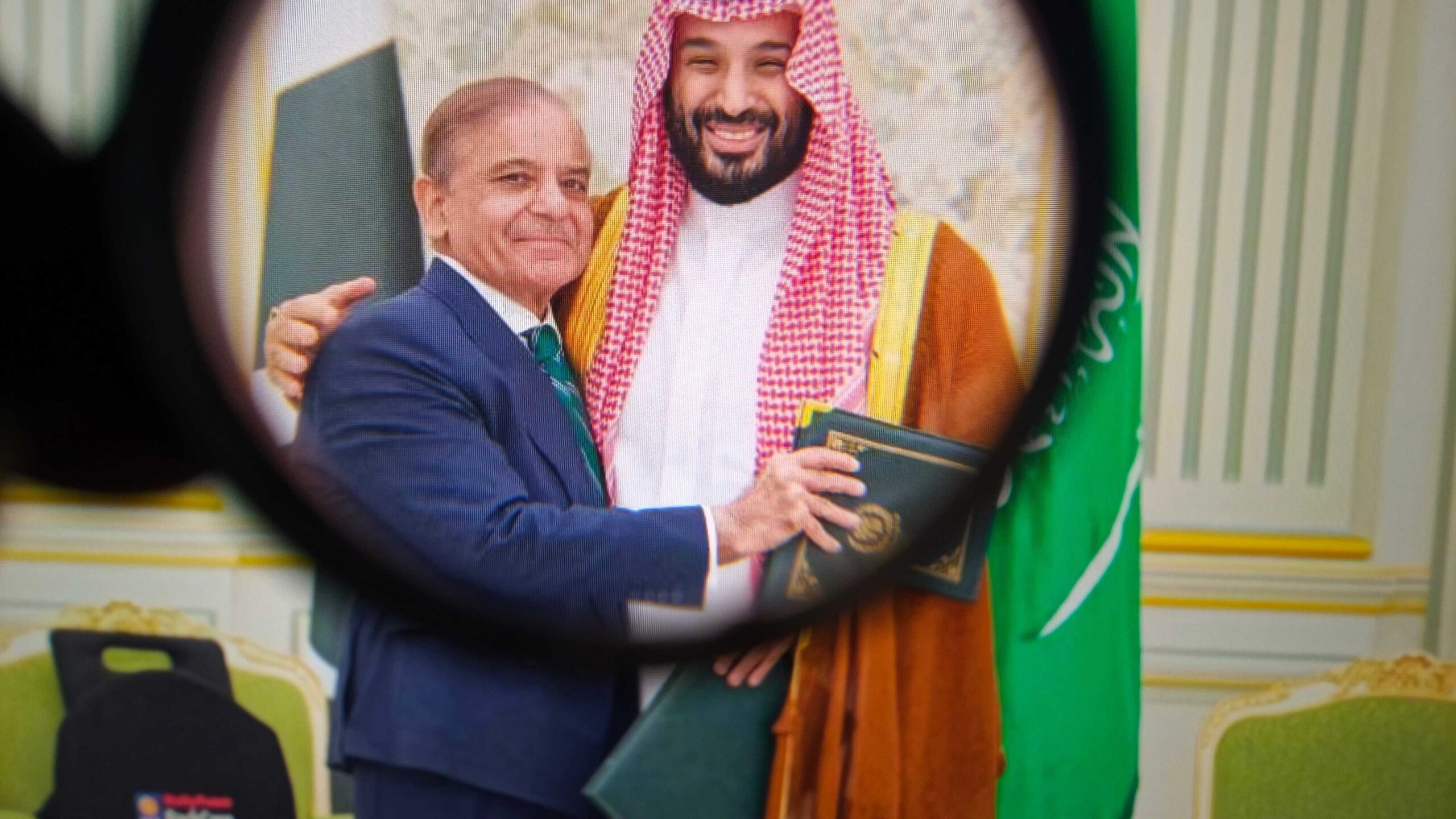
Saudi Arabia’s Strategic Mutual Defense Agreement (SMDA) with Pakistan[v] commits the parties to treat aggression against one as aggression against both. While an embryonic framework lacks defined response mechanisms and clear command integration, it signals Riyadh’s preference for formalized deterrence.
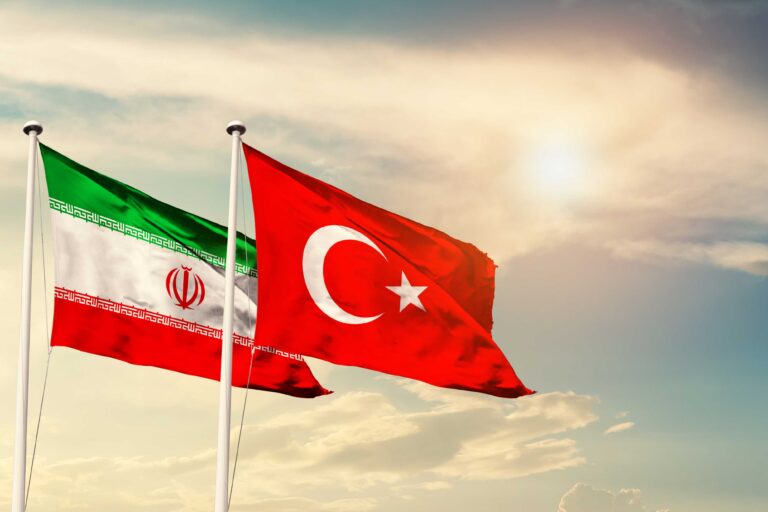
Reports of Türkiye’s interest in joining the SMDA[vi] or building a standalone trilateral security alliance[vii] along with Saudi Arabia and Pakistan magnifies the Abu Dhabi’s divergence. If realized, Ankara’s accession – as a NATO member with the alliance’s second-largest military[viii], a rapidly advancing defense industry and expanding military footprint[ix] across the Eastern Mediterranean and the Caucasus – would add substantial operational and strategic weight to the treaty.
Signed in September 2025[x], the SMDA’s formulation echoes NATO’s Article 5 even as it excludes explicit nuclear undertakings or predefined protocols. Still, observers believe that it could evolve into a more formal collective defense structure over time[xi] with subsequent agreements defining the role of deterrence and the scope of collective response. Turkish participation, especially if it catalyzes interest from additional states, would strengthen this perception.
The SMDA’s origins lie in Crown Prince Mohammed bin Salman’s pursuit of greater strategic autonomy[xii], accelerated by U.S. inaction following the 2019 attacks on Saudi oil facilities. Since then, Riyadh has broadened diplomatic engagement with rivals including Iran and explored parallel security arrangements to reduce dependence on America’s protective umbrella.
Israel’s military operations across multiple theaters, including strikes targeting Hamas leadership in Qatar, crystallized anxieties about the reliability of external deterrence. For Gulf states, the concern was Washington’s apparent inability – or unwillingness – to restrain a close ally from trespassing the sovereignty of another U.S. partner, which could have ignited a wider regional conflict.
As Ellie Geranmayeh of the European Council on Foreign Relations anticipated the looming reckoning, “If you are an Arab country that hosts U.S. bases or a NATO member like Türkiye and then a major U.S. ally attacks Qatar, you are going to deeply question that American security umbrella you’ve paid top dollar for.”[xiii]
Similar doubts have surfaced in Europe. Germany’s exploration[xiv] and France’s conditional consideration of extending nuclear deterrence to other European states[xv] last year emphasized growing unease even among core NATO allies. Türkiye’s interest in the SMDA mirrors comparable skepticism.
For Riyadh, the pact enhances leverage over Washington, bolstering resistance to U.S. pressure to normalize relations with Israel[xvi] without tangible progress[xvii] toward a Palestinian state. For economically strained Pakistan, it offers prospects of translating strategic configuration into material gains[xviii] – arms exports, increased Saudi investment and deeper defense-industrial cooperation. Türkiye’s calculus is strategic, aimed at expanding regional influence and diversifying security options beyond NATO.
These shifts have unsettled peripheral actors. In India, the SMDA has drawn close scrutiny from policymakers[xix] and analysts[xx] about its long-term structural implications. The emerging Saudi–Pakistan–Türkiye triad, Indian critics argue[xxi], could reshape power balances across the Middle East and adjacent regions central to India’s energy security, trade routes and strategic interests.
The implications extend into the South Caucasus, a geostrategic corridor linking Europe, the Middle East and Asia. An expanded SMDA would intersect with the existing Azerbaijan-Pakistan-Türkiye political-military axis, complicating India’s efforts to deepen economic and strategic engagement.[xxii]
At the same time, Ankara’s strong ties with Baku and its strengthening relations with Tbilisi could provide Riyadh alternative investment and transit pathways into Central Asia via the Middle Corridor[xxiii], reinforcing the bloc’s strategic coherence beyond the Middle East.
Yet, conflating the multilateral defense alliance with ideological cohesion or strategic revisionism[xxiv] misreads the nature of contemporary alignment. From Saudi-UAE rifts over Yemen and divergent positions on Somaliland’s recognition – Saudi Arabia and Türkiye on one side and the UAE and Israel on the other – to their respective outreach to Pakistan and India reveal that regional geopolitics is driven by economic and strategic interests, not ideological affinity.
Whether the SMDA matures into a broader collective framework or remains limited, Türkiye’s interest reflects an adaptive response to eroding security guarantees. By contrast, the UAE–India partnership embodies a different logic, integrating defense cooperation with trade and technology without binding automatic defense commitments.
These contrasting approaches indicate that the Middle East is entering a period of competitive fragmentation. Saudi Arabia is pursuing a more institutionalized model of deterrence while the UAE’s flexible hedging emphasizes optionality over commitment. With little prospect for coordination between these parallel alignments, they risk calcifying into rival blocs – weakening deterrence, raising the stakes for miscalculation and heightening the likelihood of regional escalation.
[i] Embassy of India, Abdu Dhabi, United Arab Emirates (2025). “India-UAE Bilateral Defence Cooperation”, retrieved from: https://www.indembassyuae.gov.in/defence-relation.php#:~:text=Bilateral%20defence%20cooperation%20between%20India,Defence%20Cooperation%20in%20June%202003.
[ii] Cafiero, G. (2025). “Israel, the UAE, and Yemen’s South: The Politics of Unlikely Alliances”, Arab Center Washington DC, 14 November 2025, retrieved from: https://arabcenterdc.org/resource/israel-the-uae-and-yemens-south-the-politics-of-unlikely-alliances/.
[iii] Middle East Eye (2026). “Prominent Saudi academic accuses UAE of being Israel’s ‘trojan horse’”, Middle East Eye, 23 January 2026, retrieved from: https://www.middleeasteye.net/news/prominent-saudi-academic-accuses-uae-being-israels-trojan-horse.
[iv] Patel, S. and Elimam, A. (2026). “India, UAE sign $3 billion LNG deal, agree to boost trade and defence ties at leaders’ meeting”, Reuters, 19 January 2026, retrieved from: https://www.reuters.com/world/india/india-uae-agree-boost-trade-defence-ties-finalise-lng-deal-leaders-meeting-2026-01-19/.
[v] Saudi Press Agency (2025). “Joint Statement Issued Following Pakistan Prime Minister State Visit to Saudi Arabia”, 25 March 2025, retrieved from: https://www.spa.gov.sa/en/w2399706?
[vi] Hacaoglu, S., Mangi, S. and Kozok, F. (2026). “Turkey Said to Seek Membership of Saudi-Pakistan Defense Pact”, Bloomberg, 9 January 2026, retrieved from: https://www.bloomberg.com/news/articles/2026-01-09/turkey-said-to-seek-membership-of-saudi-pakistan-defense-pact.
[vii] TRT World (2026). “Turkiye, Pakistan, Saudi Arabia defence deal ‘in pipeline’”, 16 January 2026, retrieved from: https://www.trtworld.com/article/0ddf25688812.
[viii] Al Jazeera (2025). “Turkiye’s booming defence industry – a quick look”, 17 March 2025, retrieved from: https://www.aljazeera.com/news/2025/3/17/heres-a-look-at-turkiyes-booming-defence-industry.
[ix] Alhas, A.M. (2025). “Analysis: Turkey pursues deals, bases, training to bolster global military”, BBC Monitoring, 9 May 2025, retrieved from: https://monitoring.bbc.co.uk/product/b0003u88.
[x] Saudi Press Agency (2025). “Joint Statement Issued Following Pakistan Prime Minister State Visit to Saudi Arabia”, 17 September 2025, retrieved from: https://www.spa.gov.sa/en/w2399706?
[xi] Ashtakala, D., Horschig, D. and Schiff, B. (2025). “Could the Pakistani-Saudi Defense Pact Be the First Step Toward a NATO-Style Alliance”, 6 October 2025, retrieved from: https://www.csis.org/analysis/could-pakistani-saudi-defense-pact-be-first-step-toward-nato-style-alliance.
[xii] El Yaakoubi, A. (2023). “Saudi crown prince acts to realign Mideast dynamics amid concern over US support”, Reuters, 4 April 2023, retrieved from: https://www.reuters.com/world/middle-east/saudi-crown-prince-acts-realign-mideast-dynamics-amid-concern-over-us-support-2023-04-03/.
[xiii] Dagher, S. et al. (2025). “Israel’s Qatar Attack Has Gulf Doubting US security Pledge”, Bloomberg, 10 September 2025, retrieved from: https://www.bloomberg.com/news/articles/2025-09-10/israel-s-qatar-attack-has-gulf-questioning-us-security-guarantee.
[xiv] Reuters (2025). “Germany’s Mertz wants European nuclear weapons to boost US shield”, 9 March 2025, retrieved from: https://www.reuters.com/world/europe/germanys-merz-wants-european-nuclear-weapons-boost-us-shield-2025-03-09/.
[xv] Hairsine, K. (2025). “Macron open to deploying French nuclear weapons in Europe”, DW, 14 May 2025, retrieved from: https://www.dw.com/en/macron-open-to-deploying-french-nuclear-weapons-in-europe/a-72534138.
[xvi] MEMO (2025). “Report: Tensions soared during Trump-bin Salman meeting over normalization push”, 26 November 2025, retrieved from: https://www.middleeastmonitor.com/20251126-report-tensions-soared-during-trump-bin-salman-meeting-over-normalisation-push/.
[xvii] Roll Call (2025). “Remarks: Donald Trump Holds a Bilat with Mohammed bin Salman of Saudi Arabia”, retrieved from: https://rollcall.com/factbase/trump/transcript/donald-trump-remarks-bilat-mohammed-bin-salman-saudi-arabia-november-18-2025/.
[xviii] Shahid, A. and Sayeed, S. (2026). “Exclusive: Pakistan, Saudi in talks on JF-17 jets-for-loans deal, sources say”, Reuters, 8 January 2026, retrieved from: https://www.reuters.com/world/asia-pacific/pakistan-saudi-talks-jf-17-jets-for-loans-deal-sources-say-2026-01-07/.
[xix] Vaish, A. (2025). “India Says ‘Will Study Implications’ Of Pakistan-Saudi Arabia Defence Deal”, Outlook, 18 September 2025, retrieved from: https://www.outlookindia.com/national/india-says-will-study-implications-of-pakistan-saudi-arabia-defence-deal.[xx] Pandya, A. (2025). “Could Saudi-Pakistan Defense Cooperation Spark War with India?”, Middle East Forum, 22 October 2025, retrieved from: https://www.meforum.org/mef-observer/could-saudi-pakistan-defense-cooperation-spark-war-with-india.
[xxi] India Today (2026). “Turkey in talks to join Pakistan-Saudi Muslim Nato. Should India be concerned?”, 13 January 2026, retrieved from: https://www.indiatoday.in/world/story/pakistan-news-turkey-in-talks-to-join-pak-saudi-nato-like-defence-deal-should-india-be-worried-bloomberg-2851070-2026-01-13.
[xxii] Chalikyan, N. (2025). “India and the South Caucasus: Infrastructure, Arms, and Geopolitical Competition”, ORF America, 16 October 2025, retrieved from: https://orfamerica.org/newresearch/india-and-the-south-caucasus-infrastructure-arms-and-geopolitical-competition.
[xxiii] Amwaj Media (2025). “The burgeoning Gulf Arab footprint in the South Caucasus”, 21 March 2025, retrieved from: https://amwaj.media/en/article/the-burgeoning-gulf-arab-footprint-in-the-south-caucasus.
[xxiv] Restelli, S. (2026). “Two Security Architectures, One Region: Why the India-UAE-Israel Axis Matters”, 20 January 2026, retrieved from: https://blogs.timesofisrael.com/two-security-architectures-one-region-why-the-india-uae-israel-axis-matters/.