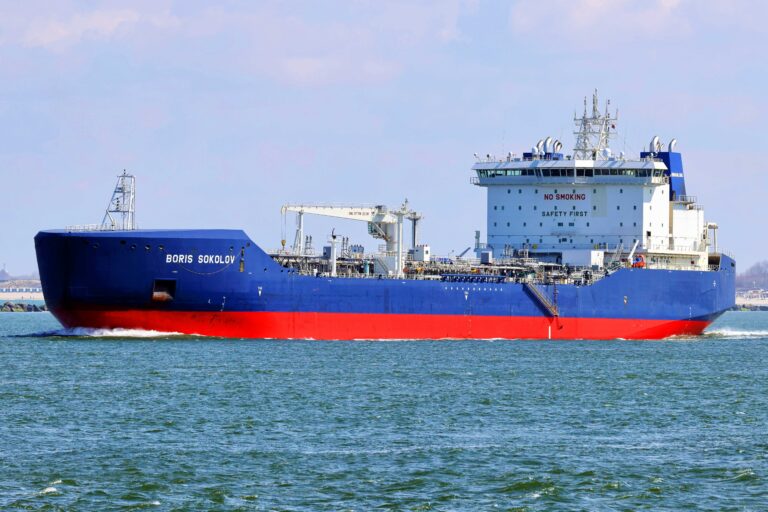
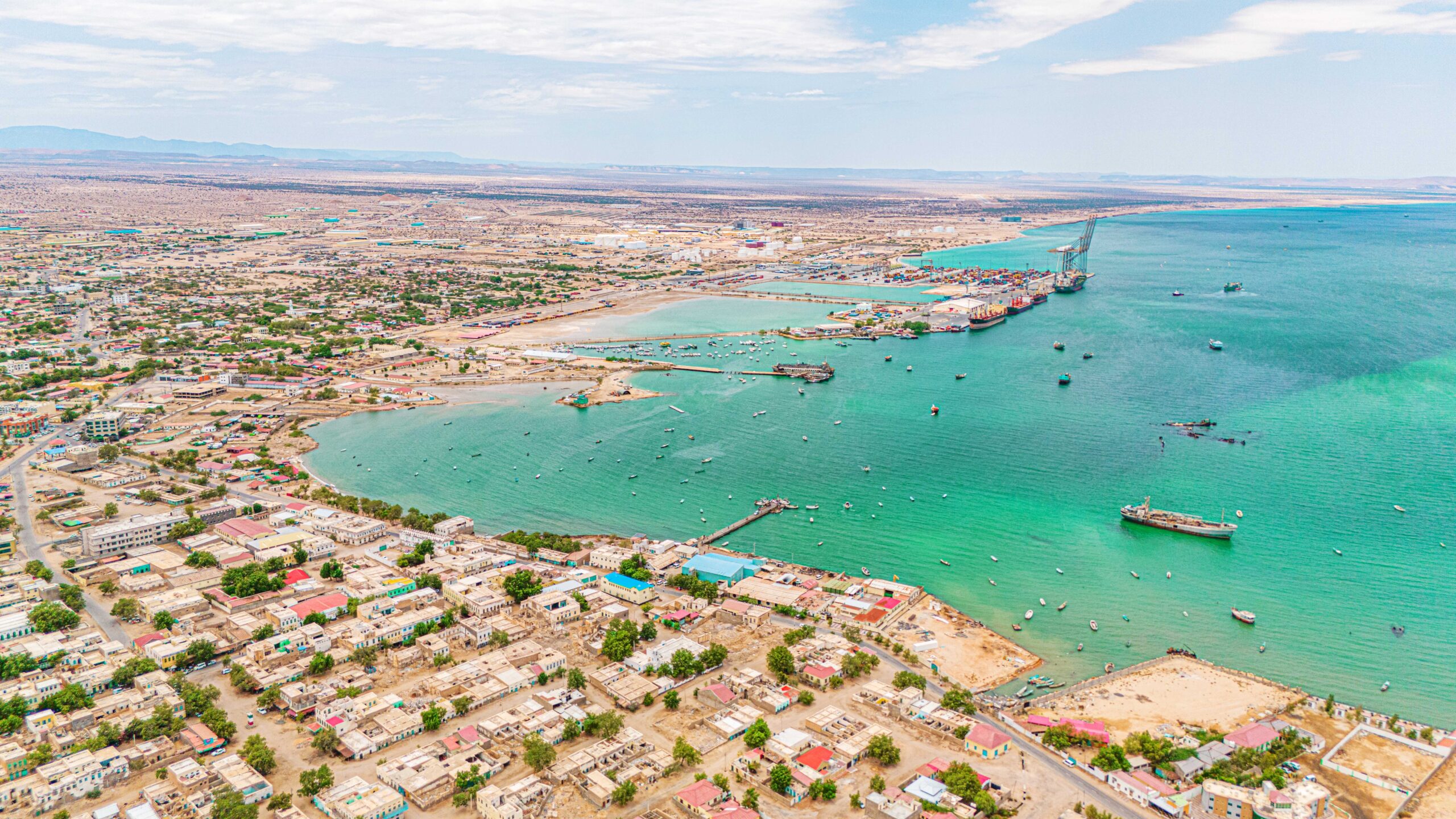
In 1962, Egyptian President Gamal Abdel Nasser warned the Red Sea would never become a “playground for foreign ambitions.” Six decades later, it has become exactly that. What was once a shortcut has become the world’s most critical maritime chokepoint, with 15% of global trade and 30% of seaborne-traded oil transiting the Bab el-Mandeb Strait annually.[i] This represents a flow of goods worth almost $3 billion daily.[ii]
Yet, since 7th October 2023, this vital artery for global commerce has become a hunting ground. Yemen’s Iranian-backed Houthi rebels, framing their campaign as an act of solidarity with the population of the Gaza Strip, have enforced a de facto no-go zone through a relentless barrage of drone strikes, missile attacks, and commando raids against Israeli-linked and later US- and UK-affiliated vessels. Economically, over one-third of global container traffic now skirts the Cape of Good Hope, a 14-day detour[iii] that has spiked shipping costs by 300%.
It is within this context that Israel’s recognition of Somaliland on 26th December 2025 should be analysed.
Somaliland is a self-governing territory that has operated in a state of de facto independence since 1991, without a single UN member’s recognition – save Israel since the end of last year. It possesses its own government, currency, and military, functioning in stark contrast to the fragile, yet internationally recognised Federal Government of Somalia in Mogadishu. The latter claims sovereignty over Somaliland while battling the insurgency of the al-Shabaab terrorist group[iv], still estimated to control 30% of Somalia’s territory.
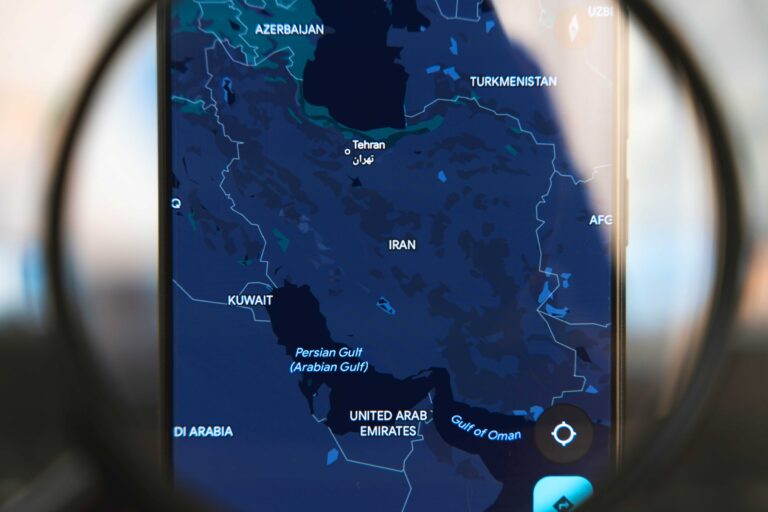
Strategically perched across the Bab el-Mandeb from Houthi-controlled parts in Yemen, Somaliland’s coastline offers a vantage point geographically closer to Iran than to Tel Aviv. Dismissing Israel’s move as symbolic is to misunderstand the new Middle East. Somaliland matters because Yemen matters. And Yemen matters because Iran remains active.
Why Somaliland is a game-changer for Israel
Somaliland’s strategic value to Israel rests on its unique geography and military-ready infrastructure. Together, they offer Tel Aviv a decisive advantage in its contest with Iran.
First, facing Yemen, Somaliland’s coastline sits just 250 km from Houthi-controlled territory. In practical terms, a potential Israeli presence here would place strike capabilities within 45 minutes of Houthi launch sites and four hours from key Iranian nuclear facilities, halving the flight time that was required from Israeli soil during the recent “12-day war”.[v] Crucially, it would allow operations without reliance on costly and complex mid-air refuelling, a vulnerability Iran has long sought to exploit.
Timing is key. Since 7th October, Tehran’s “Axis of Resistance” has been systematically degraded across every front but one. Hamas lies militarily shattered in Gaza, its command structure dismantled. Hezbollah bleeds under daily Israeli strikes, its Syria-Iran supply lines severed. Iranian militias in Iraq are deterred into near-dormancy.
At present, only the Houthis remain operationally intact, leveraging Yemen’s terrain, long-range strike capabilities, and maritime access to sustain attacks on shipping lines. They are Iran’s last credible proxy and thus Israel’s most urgent unresolved threat. This is the real meaning of the Somaliland to open a new front to encircle, weaken, and neutralise Tehran’s final regional lever.
Somaliland's Berbera military airfield ... could support strategic bombers, refuelling aircraft, and drones for intelligence, surveillance and reconnaissance (ISR)
Second, geography alone means little without the means to exploit it. On Somaliland’s coast, Berbera’s military airfield is crucial. Its 4,185m-long Soviet-built runway, the longest in the Horn of Africa[vi] and bigger than major international hubs like London Heathrow, was designed to launch behemoths like the Tu-95 Bear strategic bomber, making it perfectly capable to handle today’s modern military aircraft.
This confirm that today it could support strategic bombers, refuelling aircraft, and drones for intelligence, surveillance and reconnaissance (ISR), enabling round-the-clock monitoring of Bab el-Mandeb and rapid strikes against the Houthis. Given the stakes at hand, Israel will almost certainly pursue installation of combat aircraft in the coming weeks and months.
Israel’s move also serves as a counterweight to rivals and unlocks strategic options. Turkey, the most vocal and persistent critic of Israel’s war in Gaza, projects power in Somalia, across the contested border, via its TURKSOM military base in Mogadishu[vii] and control over the country’s port infrastructure. Simultaneously, Somaliland offers an escape from neighbouring Djibouti, where French and Chinese bases would cramp Israel’s operational freedom. Instead, if Israel establishes a footprint in Somaliland, it would gain complementary strategic depth to U.S. bases, present in Djibouti, opening the door to closer intelligence cooperation and dual-track operations.
The UAE's gamble: Choosing Israel over Saudi Arabia?
The United Arab Emirates has been the silent architect of this strategic realignment. Over the past decade, the UAE emerged as Israel’s most loyal Arab partner, unburdened by the symbolic constraints pertaining to Islam that weigh down on Saudi Arabia. This alliance has solidified since the UAE signed the Abraham Accords. The two countries recently signed a $2.3 billion defence deal.[viii]
Adjacent to the strategic airfield of Berbera in Somaliland lies a deep-water port 65% owned by the Emirati logistics giant DP World through a 30-year, $442 million concession.[ix] Berbera is not an isolated case. It fits into a wider Emirati footprint that stretches from military bases in Assab in Eritrea, to 3,500 active military troops in the Socotra archipelago, in between Yemen and Somaliland in the Arabian Sea and across a long list of takeovers from Sudan to the eastern Mediterranean. Through this latticework of controlling strategic commercial and military positions, Abu Dhabi has built the capacity to shape the Bab el-Mandeb corridor.
DP World simultaneously holds a majority stake in the port of Bosasso in the neighbouring Puntland region of Somalia[x], the very state that claims sovereignty over Somaliland. This double-dealing strategy of the UAE is about hedging. Alongside Israel, the UAE’s recognition of Somaliland can also be expected in the coming weeks. The UAE plays all sides of fractured geographies to ensure influence regardless of political outcomes. Ports over capitals. Access over allegiance. Proxies over formal alliances. This posture has made the UAE a pivotal enabler for Israel’s southern repositioning. By securing logistics, access, and deniability, Abu Dhabi lowers the political and operational cost of Israeli engagement in the Red Sea theatre.
Yet, Abu Dhabi’s assertive autonomy has come at a cost. The deeper the UAE leans into this strategy, the wider the rift with its longtime ally, Saudi Arabia, grows.
Riyadh has become increasingly weary watching its neighbour back factions – militarily, economically, or politically – whose objectives collide with the Kingdom’s priorities. Libya was tolerable. Sudan raised concerns. Somalia suggested a pattern. But Yemen crossed a red line. The UAE’s support for southern separatist forces directly undermines Saudi Arabia’s objective of restoring a unified, internationally recognised Yemeni state under its supervision.
Saudi Arabia’s Crown Prince Mohammed bin Salman (MBS), who once viewed Emirati President Mohammed bin Zayed (MBZ) as a mentor, now views his neighbour’s ambitions with growing apprehension.
Yemen is Riyadh’s red line the UAE will not cross
Yemen has never been a unified political space. Long before the current war, the country was split between a conservative, tribal, Saudi-facing north and a Marxist, Soviet-backed, maritime-oriented south. The 1990 unification papered over this divide but never erased it.
Today, that old fault line is reactivating, not because of the war with the Houthis, but because of a falling-out within the anti-Houthi camp itself. The trigger has been the ambitions of the UAE-backed Southern Transitional Council (STC), whose push for southern secession challenges Saudi Arabia’s core objective of a stable, unified Yemen on its southern border.
UAE-backed STC fields around 90,000 men, prioritising ports, islands, and coastal corridors[xi] rather than national control. In the north, the Houthis control the capital of the country, Sana’a and rule over two-thirds of Yemen’s population with an estimated 200,000 fighters[xii] and a heavy arsenal of missiles, drones, and naval assets supplied by Iran. Their forces’ structure is no longer that of a guerrilla movement.
The fate of STC leader Aidarous al-Zubaidi captures this. For years, al-Zubaidi played a dual game, exercising real power on the ground while sitting within the Saudi-backed Presidential Leadership Council (PLC) to lend institutional legitimacy to his separatist project. That balancing act has now collapsed. Stripped of his PLC status and accused of treason, al-Zubaidi just got exfiltrated from Yemen. Interestingly, he exited via the very UAE-controlled port of Berbera in Somaliland, before flying to the UAE.[xiii]
A less fragmented southern Yemen ... creates a cleaner, cheaper and more predictable battlefield, lowering the risk that any future Israeli or joint action against the Houthi detonates into intra-coalition chaos.
On the ground, the Saudi response was immediate and decisive. Saudi-backed forces moved to retake key military positions in Hadhramout[xiv], rolling back STC gains in a matter of days. The message was clear: parallel chains of command will no longer be tolerated.
The UAE is quietly dialling down its support to the STC, to avoid confrontation with Saudi forces. Saudi-backed forces allegedly even announced that the STC had decided to disband after talks held in Riyadh[xv], which the latter denied and continues to do so.[xvi]
The most urgent confrontation in Yemen is no longer north vs. south. It is Saudi Arabia vs. the UAE by proxy means.
Yet, this Saudi consolidation of control has an unintended beneficiary: Israel. By forcing the STC’s dissolution and reasserting a single chain of command, Riyadh is “cleaning the room” for its own reasons. The side effect, however, is a less fragmented southern Yemen. This creates a cleaner, cheaper and more predictable battlefield, lowering the risk that any future Israeli or joint action against the Houthi detonates into intra-coalition chaos. Saudi Arabia is trying to control Yemen’s disorder; in doing so, it is inadvertently creating the precise conditions that make Israeli military options against the Houthis more viable and less costly.
Conclusion
In this configuration, Israel emerges as a strategic winner. Timing is uniquely opportune. Tehran is reeling from its most significant internal unrest since the Mahsa Amini uprising, with economic collapse and a cratering rial fuelling nationwide anger that has exposed the regime’s brittle legitimacy.
With internal fractures accelerating and legitimacy eroding, the old clerical order is giving way to a harder, more militarised configuration centred on the Islamic Revolutionary Guard Corps (IRGC), the very network that underwrites Iran’s external proxies. In practical terms, Israel faces an Iran that is weaker at home, more fragile abroad, and less able to absorb the costs of opening another military front, making the present moment analytically optimal to apply decisive force in the weeks ahead.
[i] Van Trump, K. (2024). “How Red Sea Hazards are Impacting Global Trade… Including Agriculture”, 9 January 2024, retrieved from: https://www.vantrumpreport.com/2024/01/09/how-red-sea-hazards-are-impacting-global-trade-including-agriculture/.
[ii] Banerjee, A. (2025). “Red Sea attacks: Multiple vessels targeted, global concerns over trade impact escalate”, CNBC, 8 July 2025, retrieved from: https://www.cnbctv18.com/world/red-sea-attacks-multiple-vessels-targeted-global-concerns-over-trade-impact-escalate-19633765.htm.
[iii] Van Trump, K. (2024). “How Red Sea Hazards are Impacting Global Trade.
[iv] United Nations (2024). “Somalia: UN official reports on electoral progress, ongoing security challenges”, 3 October 2024, retrieved from: https://news.un.org/en/story/2024/10/1155306.
[v] The Jerusalem Post (2024). “Over 100 aircraft and a 200 km journey to Iran”, 26 October 2024, retrieved from: https://www.jpost.com/middle-east/iran-news/article-826126.
[vi] Atqnews (2021). “Africa: Somaliland’s Berbera Airport now Open for Commercial Aviation Operation with Africa’s longest Runway”, 23 November 2021, retrieved from: https://atqnews.com/africa-somalilands-berbera-airport-now-open-for-commercial-aviation-operation-with-africas-longest-runway/.
[vii] Daily Sabah (2025). “TURKSOM military base trains Somali forces since 2017”, 9 October 2025, retrieved from: https://www.dailysabah.com/politics/diplomacy/turksom-military-base-trains-somali-forces-since-2017/amp.
[viii] Intelligence Online (2025). “Revealed: the mystery client behind Elbit Systems’ mega-contract in Gulf”, 15 December 2025, retrieved from: https://www.intelligenceonline.com/middle-east-and-africa/2025/12/15/revealed-the-mystery-client-behind-elbit-systems–mega-contract-in-gulf,110577942-art.
[ix] Stevis, M. and Fitch, A. “Dubai’s DP World Agrees to Manage Port in Somaliland for 30 Years”, retrieved from: https://financialcrisis.wsj.com/scoops/dubais-dp-world-agrees-to-manage-port-in-somaliland-for-30-years/.
[x] Ahmed, M.O. (2023). “Dubai’s DP World Will Finish $336 Million Somali Port Expansion This Year”, Bloomberg, retrieved from: https://www.bloomberg.com/news/articles/2023-08-17/dp-world-expansion-of-somali-port-will-finish-end-of-year.|
[xi] Ibid.
[xii] Ardemagni, E. (2025). “The balance of power in Yemen after the US-Houthi cease-fire”, Middle East Institute, 30 June 2025, retrieved from: https://mei.edu/publication/balance-power-yemen-after-us-houthi-cease-fire/.
[xiii] Al Jazeera (2026). “Saudi-led coalition says STC’s al-Zubaidi fled to UAE via Somaliland”, 8 January 2026, retrieved from: https://www.aljazeera.com/amp/news/2026/1/8/saudi-led-coalition-says-stcs-al-zubaidi-fled-to-uae-via-somaliland.
[xiv] Al Jazeera (2026). “Yemen’s Saudi-backed government retakes southern areas from STC: What next?”, 12 January 2026, retrieved from: https://www.aljazeera.com/amp/news/2026/1/12/yemens-saudi-backed-government-retakes-southern-areas-from-stc-what-next.
[xv] Arab News (2026). “STC announces dissolution”, 9 January 2026, retrieved from: https://www.arabnews.com/node/2628748/middle-east.
[xvi] Al-Monitor (2026). “Yemen’s main separatist group denies disbanding”, 10 January 2026, retrieved from: https://www.al-monitor.com/originals/2026/01/yemens-main-separatist-group-denies-disbanding.